Key Takeaways
-
The orthodontic journey consists of three critical stages: planning (digital scans and personalized treatment plan), active treatment (12–24 months of teeth movement), and retention (ongoing retainer wear to prevent relapse).
-
Clear aligners require 20–22 hours daily wear for effectiveness and work best for mild to moderate cases, while traditional braces are superior for complex alignment issues and require no patient compliance beyond maintenance.
-
Retention phase is often underestimated but essential—skipping retainer wear causes relapse where teeth drift back to original positions, potentially undoing months of treatment progress.
-
Clear aligners offer nearly invisible appearance and no dietary restrictions, making them ideal for adults and professionals, while braces remain more cost-effective and work 24/7 without patient compliance concerns.
-
Active treatment follows a specific sequence: alignment and leveling (3–6 months), bite correction and space closure (6–12 months), and finishing details (3–6 months), with timelines varying based on case complexity.
-
Adults represent one of the fastest-growing orthodontic patient groups in 2026, with modern treatment options now designed to fit professional lifestyles, whether addressing relapse or pursuing first-time straightening.
Thinking about starting your orthodontic journey? You’re not alone! In 2026, more people than ever are choosing to invest in their smiles — and the big question is almost always the same: braces or clear aligners? Both options can give you a beautifully straight smile, but they work differently and suit different lifestyles. Whether you’re a busy professional, a teen heading to prom, or a parent researching options for your child, this guide will help you understand exactly what each path looks like — and which one might be the best fit for you.
The good news? There’s no wrong answer. Both braces and clear aligners have come a long way, and today’s orthodontic options are more comfortable, efficient, and effective than ever. Let’s break it all down together so you can walk into your consultation feeling confident and informed.

What Is the Orthodontic Journey, Exactly?
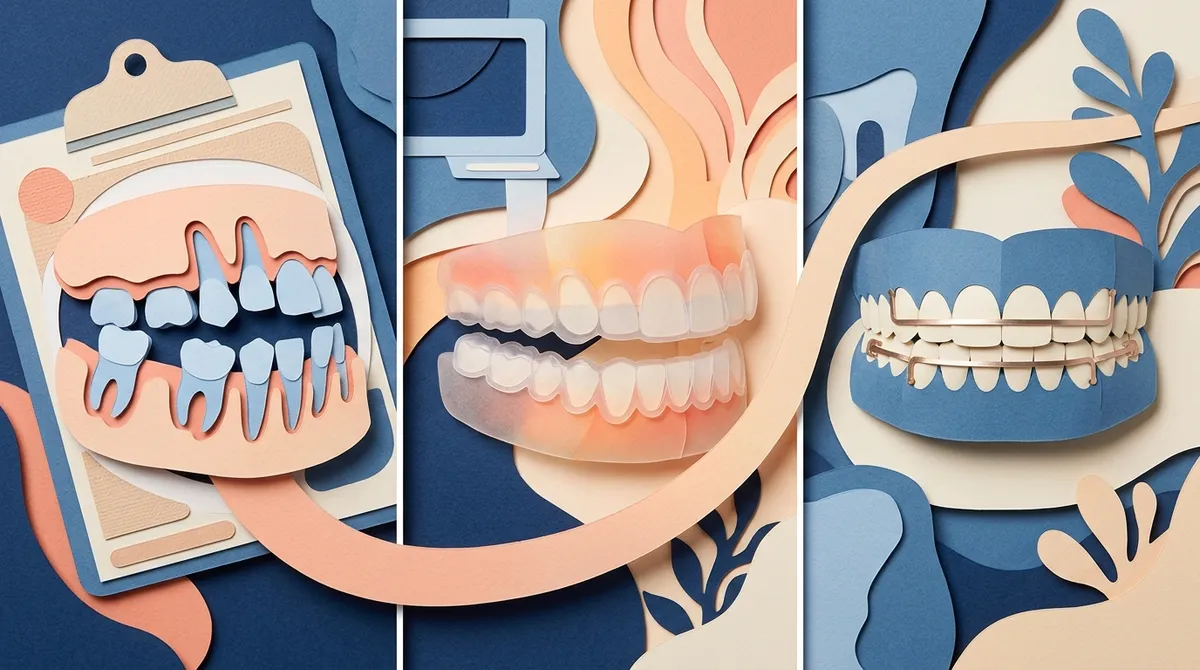
The orthodontic journey is a structured process that takes your smile from where it is now to where you want it to be. It’s not just about straightening teeth — it’s about improving your bite, your oral health, and your confidence. Most patients go through three main stages: planning, active treatment, and retention.
Here’s a simple breakdown of those stages:
- Planning and Records: This is your starting point. Your orthodontist takes digital scans, X-rays, and photos to fully understand your teeth, jaw, and bite. Then they create a personalized treatment plan just for you.
- Active Treatment: This is the main phase where your teeth actually move. Whether you choose braces or clear aligners, this stage typically lasts 12–24 months.
- Retention: Once your braces come off or you finish your aligners, you’ll wear a retainer to keep your new smile in place. This phase is ongoing and super important!
Whether you go with braces or aligners, these three stages are part of every patient’s experience. To learn more about what to expect from day one, check out Your First Visit at Brockway Orthodontics.
Braces vs. Clear Aligners: A Side-by-Side Comparison
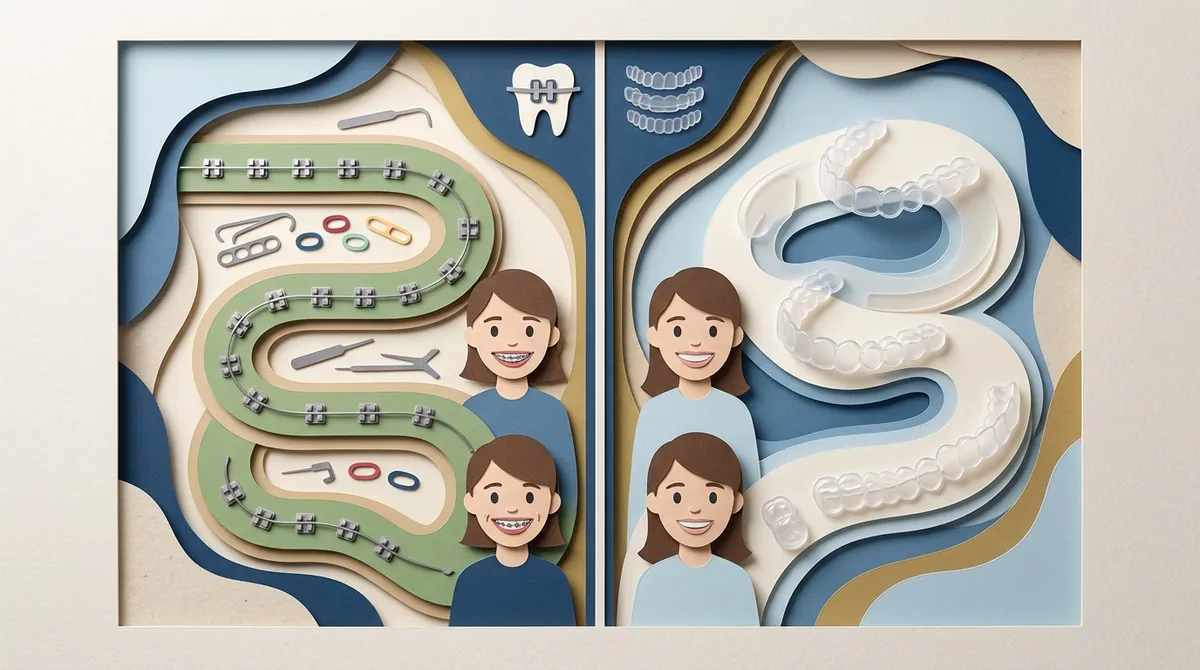
Let’s get into the heart of the comparison. Here’s a quick overview of how braces and clear aligners stack up across the most important categories:
| Feature | Traditional Braces | Clear Aligners |
|---|---|---|
| Visibility | Visible metal or ceramic brackets | Nearly invisible plastic trays |
| Removability | Fixed (cannot be removed) | Removable for eating and brushing |
| Treatment Time | 12–24 months average | 6–24 months depending on case |
| Best For | Complex cases, younger patients | Mild to moderate cases, adults, teens |
| Dietary Restrictions | Yes (avoid hard/sticky foods) | None (remove aligners to eat) |
| Maintenance | Regular brushing around brackets | Clean aligners daily |
| Comfort | May cause initial soreness | Generally smooth and comfortable |
As you can see, both options have real strengths. Your best choice depends on your specific dental needs, lifestyle, and personal preferences. For a deeper dive into your options, explore our full range of orthodontic services.
The Active Treatment Phases: What Happens Step by Step
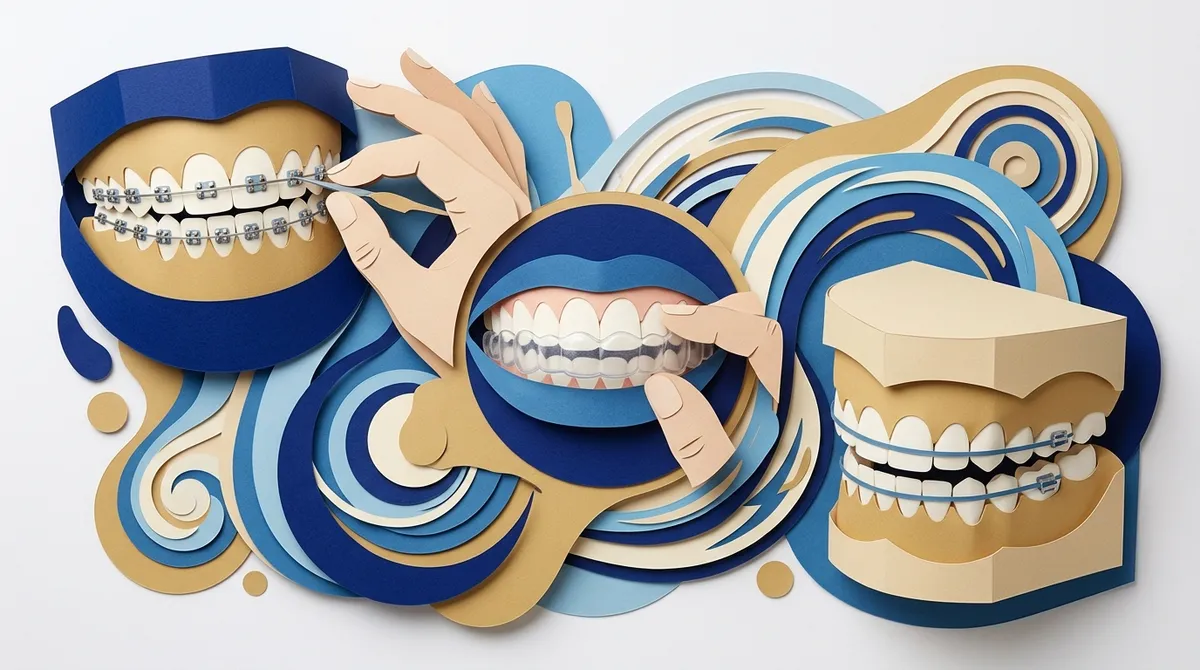
Whether you choose braces or aligners, your active treatment follows a similar sequence. Here’s what the journey looks like in more detail:
- Consultation and Records (1 Visit): Digital scans, X-rays, and a full evaluation with your orthodontist to build your personalized plan.
- Preparation (1–4 Weeks): Some patients need spacers, expanders, or even minor extractions before treatment begins.
- Alignment and Leveling (3–6 Months): Your teeth begin shifting into proper position using gentle, consistent forces.
- Bite Correction and Space Closure (6–12 Months): Elastics, expanders, or specialized attachments help fix overbites, underbites, crossbites, and close gaps.
- Finishing and Detailing (3–6 Months): Fine adjustments are made to perfect your tooth positioning and bite alignment.
- Debonding or Final Aligner: Braces come off (a 1–2 hour appointment!) or you complete your final aligner tray.
- Retention: You receive a retainer and enter the long-term maintenance phase to protect your results.
The retention phase is often underestimated, but it’s one of the most important steps. Skipping your retainer can lead to relapse — meaning your teeth slowly drift back toward their original positions.
Braces: The Classic Path Through Your Orthodontic Journey
Braces have been the gold standard of orthodontic treatment for decades — and for good reason. They are incredibly effective at treating a wide range of alignment and bite issues, including complex cases that aligners may not fully address.
Who Is a Great Candidate for Braces?
Braces work beautifully for a variety of patients. Here’s who tends to benefit most:
- Children and teens undergoing adolescent treatment or early orthodontic treatment
- Patients with severe crowding, large gaps, or significant bite problems
- Anyone who doesn’t want to worry about remembering to wear their appliance
- Patients looking for a cost-effective treatment option
- Kids and teens who might misplace removable trays
The Florida Association of Orthodontists notes that early evaluation — ideally around age 7 — can help identify issues that are far easier to treat when caught early. Braces are often the first recommendation for growing patients.
Pros and Cons of Braces
| Pros | Cons |
|---|---|
| Highly effective for complex cases | Visible on teeth |
| No risk of losing the appliance | Food restrictions apply |
| Works 24/7 without patient compliance | Cleaning around brackets takes more effort |
| Often more affordable upfront | Initial soreness after adjustments |
Want to learn everything about braces before your first appointment? Head over to All About Braces for a complete guide.
Clear Aligners: The Modern Path Through Your Orthodontic Journey
Clear aligners have transformed the orthodontic world. They’re discreet, comfortable, and incredibly convenient for patients who want flexibility during their treatment. If you’ve ever wished you could straighten your teeth without anyone noticing, aligners might be your perfect match.
Who Is a Great Candidate for Clear Aligners?
Clear aligners are a fantastic option for many patients. You might be a great fit if you:
- Are a teen or adult who wants a nearly invisible treatment option
- Have mild to moderate crowding, spacing, or bite issues
- Lead an active social or professional life and value discretion
- Want the freedom to eat whatever you like during treatment
- Are committed to wearing your aligners 20–22 hours per day
At Brockway Orthodontics, we proudly offer Spark™ Clear Aligners — one of the clearest, most comfortable aligner systems available in 2026. Spark aligners are also stain-resistant, making them a top choice for coffee lovers and busy professionals alike!
If you’re curious about other aligner options, you can also explore our guide to the best Invisalign alternatives for straightening your teeth.
Pros and Cons of Clear Aligners
| Pros | Cons |
|---|---|
| Nearly invisible appearance | Requires strong patient compliance |
| Removable for eating and hygiene | Not ideal for very complex cases |
| No food restrictions | Trays must be cleaned regularly |
| Smooth, comfortable fit | Easy to misplace if not careful |
What About Adult Patients?
It’s never too late to start your orthodontic journey! Adults are one of the fastest-growing groups seeking orthodontic treatment in 2026. Whether you’re correcting a relapse from previous treatment or straightening your smile for the first time, there are excellent options designed specifically for you.
Clear aligners tend to be especially popular with adults who prefer discretion, but braces are also a perfectly valid choice — especially for more complex cases. Learn more about adult orthodontic treatment and how it can fit into your life seamlessly. The American Dental Association also emphasizes that orthodontic treatment at any age can significantly improve both oral health and overall well-being.
If you’re a professional worried about appearances during treatment, or someone retreating after relapse, check out our dedicated page on adult orthodontics in Clearwater for more details on what to expect.
Timeline Comparison: How Long Does Each Journey Take?
One of the most common questions we hear is: “How long will this take?” Here’s a realistic look at timelines for both treatment paths:
- Consultation and planning: 1 visit (same for both options)
- Preparation phase: 1–4 weeks (same for both)
- Alignment and leveling: 3–6 months
- Bite correction: 6–12 months
- Finishing and detailing: 3–6 months
- Total active treatment: 12–24 months (varies by case complexity)
- Retention: Ongoing (long-term retainer wear)
Keep in mind that clear aligner timelines can vary more based on patient compliance. Wearing your aligners the recommended 20–22 hours per day is key to staying on schedule. If you’re curious about financing your treatment or understanding insurance coverage, our financing and insurance page is a great place to start.
Starting Your Orthodontic Journey at Brockway Orthodontics
No matter which path you choose, the most important first step is getting a professional evaluation. At Brockway Orthodontics in Clearwater, Florida, we love helping patients of all ages find the treatment that fits their life, goals, and budget. Dr. Brockway and the team offer personalized care in a warm, welcoming environment — because your smile deserves nothing less. See what our patients say about us on Google and discover why so many families in Clearwater trust us with their smiles.
We also invite you to follow along on our smile transformation stories and connect with our community on Instagram! It’s a fun way to see real results and get inspired before your own journey begins.
Whether you’re a parent exploring options for your child, a teen ready to ditch the gaps, or an adult finally prioritizing your smile, we’re here to guide you every step of the way. Schedule your free consultation today and let’s figure out the best path forward — together.
FAQs
Q: How long does the orthodontic journey typically take?
A: Most patients complete their active orthodontic treatment in 12–24 months, depending on the complexity of their case and the treatment type chosen. After active treatment ends, the retention phase begins — and that’s an ongoing commitment to wearing your retainer to keep your beautiful new smile in place!
Q: What happens during the first orthodontic consultation?
A: Your first visit is all about getting to know your smile! Your orthodontist will take digital scans, X-rays, and photos to fully evaluate your teeth, bite, and jaw alignment. From there, they’ll build a personalized treatment plan designed just for you — no two smiles are the same!
Q: Are clear aligners as effective as braces?
A: For mild to moderate cases, clear aligners can be just as effective as braces! However, more complex alignment and bite issues may be better suited to traditional braces. The best way to find out which is right for you is to schedule a consultation with your orthodontist.
Q: Can adults start an orthodontic journey?
A: Absolutely — and more adults are doing it than ever in 2026! Whether you’re treating a relapse or straightening your smile for the first time, there are wonderful options designed to fit adult lifestyles, including discreet clear aligners and modern braces. It’s truly never too late!
Q: Why is the retention phase so important?
A: The retention phase protects all the hard work you put into your orthodontic journey! Without wearing a retainer consistently, teeth have a natural tendency to drift back toward their original positions — a process called relapse. Wearing your retainer as directed ensures your gorgeous smile lasts a lifetime.
Our Service Area