
Key Takeaways
-
Teeth start moving soon after braces are placed, but changes are gradual, and there is no universal timetable for when you will first notice a difference.
-
Most fixed-brace cases take about 18 months to 2 years, with the American Association of Orthodontists giving a typical range of 12 to 24 months.
-
Severity of crowding, bite problems, age, and missing teeth all affect your timeline, so a personal exam matters more than online averages.
-
Missed appointments and broken brackets or wires can extend treatment, so keeping every visit and following instructions helps you stay on schedule.
-
Clear aligners only work when worn consistently, so your daily habits play a bigger role in their timeline than with fixed braces.
-
Retainers are essential after braces come off, since teeth tend to drift back toward their original positions without them.
You just got the green light for orthodontic treatment, and now the big question hits: how long do braces take to work? It is the first thing most patients ask, and honestly, it is the first thing we wondered too when we talked with families about their smile goals. The good news? Teeth start moving soon after your braces go on. The honest news? There is no single magic number.
Most people notice small changes along the way, but the full result takes time. Many fixed-brace cases land around 18 months to 2 years. Some finish faster. Some take longer. And if you are weighing braces against clear aligners, the timeline is one of the biggest things you will want to compare.
In this friendly guide, we will walk through what to expect with braces, how clear aligners stack up, and what really decides your timeline. You will also see why your orthodontist’s exam matters more than any online average. Let’s dive in!
How Long Do Braces Take to Work? The Quick Answer
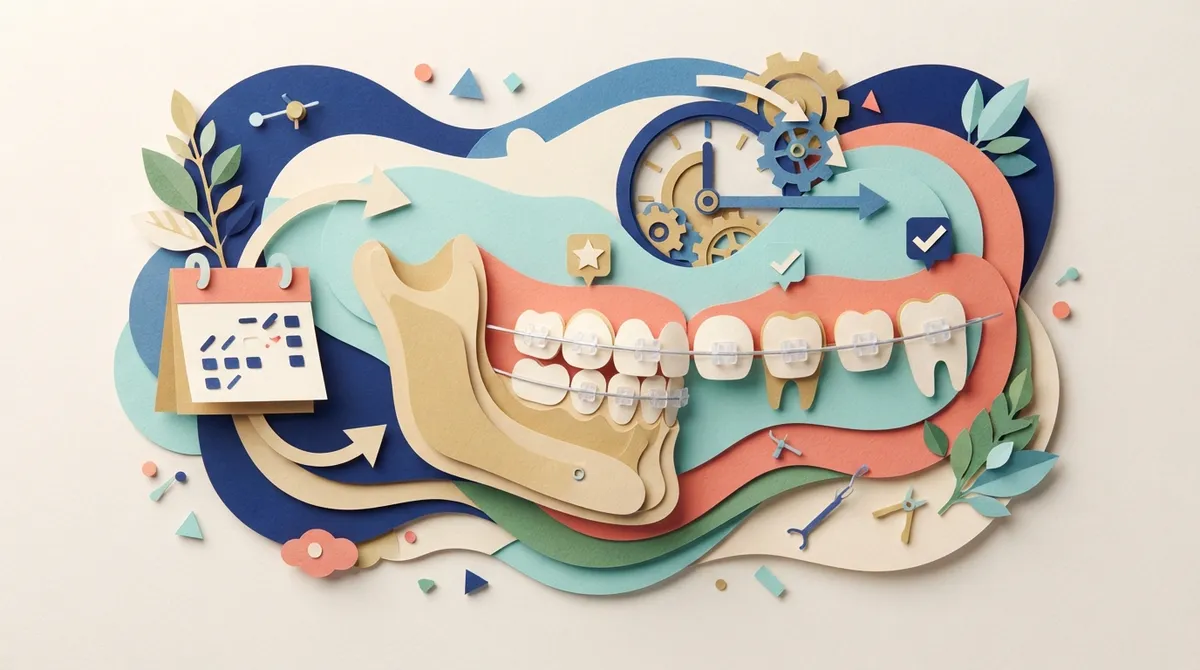
Here is the short version. Braces begin moving your teeth right after they are placed. But the movement is gradual, so you may see small changes before your treatment is fully done.
Research does not give us one reliable number for when you will first see a difference. That is because every mouth is different. Some patients notice a shift in a few months. Others need longer to see it clearly.
What we can say is this: the total treatment time for fixed braces is often around 18 months to 2 years. The American Association of Orthodontists gives a wider typical range of 12 to 24 months. Cleveland Clinic describes an average of about two years.
Why There Is No One-Size-Fits-All Timeline
Think of your teeth like a group of friends trying to line up for a photo. Some are right where they should be. Others need a lot of coaxing. The more movement your teeth need, the longer it takes.
Your orthodontist estimates your timeline after an exam and diagnostic records. That personal plan is far more useful than any average you read online. If you want to see what that first conversation looks like, take a peek at your first visit at our practice.
Braces vs. Clear Aligners: Timeline Comparison
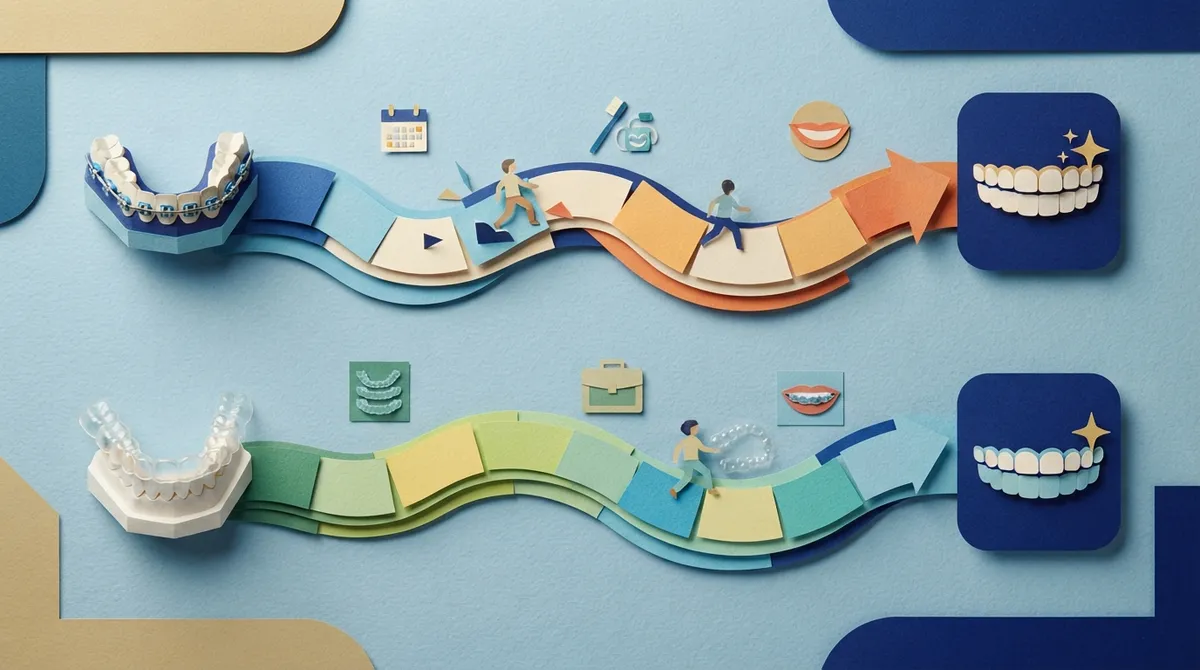
Many families are choosing between traditional braces and clear aligners. Both can straighten teeth well. They just work a little differently, and the timeline can vary depending on your case.
Here is a simple side-by-side look at what matters most when it comes to timing.
| Factor | Traditional Braces | Clear Aligners |
|---|---|---|
| Typical treatment length | About 12 to 24 months for many cases | Depends on the case and the plan your orthodontist sets |
| Best for | Mild to complex bite and alignment issues | Mild to moderate alignment concerns |
| Wear style | Fixed to teeth, working around the clock | Removable, but results depend on steady wear |
| What can slow you down | Broken brackets, missed visits | Not wearing trays as directed |
| Visit schedule | Every 4 to 12 weeks, based on stage | Check-ins set by your orthodontist |
Notice something important here. Braces work every minute of the day because they are attached to your teeth. Aligners only work when you wear them. That means your habits play a bigger role with aligners.
Where Braces Often Shine
Fixed braces are a strong choice for tougher cases. If you have a big bite problem, many missing teeth, or a case that needs precise control, braces give your orthodontist a lot of power. You can learn more about how they work in our guide to all about braces.
Where Clear Aligners Often Shine
Clear aligners are popular with teens, young adults, and busy professionals who want a more discreet look. At Brockway Orthodontics, we offer Spark™ Clear Aligners as a more affordable alternative to other well-known aligner brands. We also offer metal braces and ceramic (clear) braces, so there is an option for nearly every smile and budget.
Not sure which path fits you? Our post on clear aligners vs. braces breaks it down even further.
What Decides How Long Your Braces Take?
So what makes one smile finish in a little over a year while another takes closer to three? Quite a few things come into play. Here are the big ones.
- Severity of crowding or spacing: More movement needed usually means more time.
- Bite problems: Overbites, underbites, and crossbites can add time because the jaws and teeth have to work together.
- Your age: Growing kids and teens may respond differently than adults, and your orthodontist will plan around that.
- Missing teeth or special needs: Complex cases, such as many missing teeth or treatment that includes jaw surgery, often take longer.
- Your daily habits: Brushing well and following instructions helps keep treatment on track.
Minor corrections may take just a few months. Complex cases can run 2.5 to 3 years or more. NHS hospital orthodontic guidance puts complex treatment involving many missing teeth or jaw surgery in that longer range.
Kids, Teens, and Adults
Parents often ask whether timing is different for children. There is no simple rule, but timing and growth can shape the plan. If your child is young, early treatment may help guide growth and make later care smoother. For older kids, our adolescent treatment options fit the teen years.
Adults are welcome, too! Many of our patients are busy professionals who want a straighter smile without a big disruption to work life. Our adult treatment options are built with that in mind.
A Typical Braces Journey, Step by Step
It can help to picture your treatment as a series of stages. Here is a simple way to think about it.
- Consultation and records: Your orthodontist examines your teeth and bite, then creates a plan.
- Braces are placed: Your appliances go on, and teeth begin to move gradually.
- Regular adjustments: You return every so often so your orthodontist can check progress and fine-tune things.
- Finishing details: The last bit of treatment polishes your bite and tooth positions.
- Braces come off and retention begins: Your braces are removed, and you start wearing retainers.
That last step matters a lot. Taking braces off is not the end of the story. Retention is its own phase, and it should not be confused with the time you wear braces.
How Often Will You Visit?
Most patients see their orthodontist on a regular schedule. The American Association of Orthodontists says visits may happen every 4 to 12 weeks, depending on your stage of treatment. NHS hospital guidance commonly gives 6 to 8 weeks.
Showing up for these visits is one of the easiest ways to stay on schedule. Each visit lets your orthodontist adjust things so your teeth keep moving the right way.
Why Retainers Matter After Braces
Here is something every patient should know. Once your braces are off, your teeth want to drift back toward where they started. Retainers help hold your new smile in place.
Think of it like finishing a big home project. You would not skip the final touches that protect all your hard work! Wearing your retainer as directed is how you protect the time and effort you put into treatment.
If you want the full story, check out our page on retainers. And if you have ever wondered how to wear one the right way, this guide on wearing a retainer after braces is a great place to start.
A Note for Relapse Patients
Maybe you wore braces years ago and your teeth have shifted since. You are not alone, and it is not too late. Many adults come back for a refresh. The timeline for retreatment is often different from your first round, and your orthodontist can tell you what to expect after a fresh exam.
How to Keep Your Braces on Schedule
You cannot control everything about your timeline, but you can control a lot. Small daily habits add up. Here are some friendly tips that make a real difference.
- Keep every scheduled appointment, since missed visits can extend treatment.
- Protect your braces from broken brackets and bent wires, which can slow progress.
- Follow your orthodontist’s instructions on elastics, wear time, and care.
- Brush and floss well to help prevent dental problems that could interfere with treatment.
- Avoid sticky or very hard foods your orthodontist warns about.
Good oral hygiene matters for another reason, too. Healthy teeth and gums are happier teeth and gums, and that is especially important for patients who care a lot about oral health. If you want a helpful refresher, our guide on how to brush teeth with braces walks you through it.
What About Costs and Payment?
Timeline and budget often go hand in hand. A longer treatment can mean more planning on the financial side. We believe your smile should feel within reach, so we offer ways to make care easier on your wallet. Learn more about financing and insurance to see what options may fit your family.
Can Braces Really Work in 6 Months or 1 Year?
This is one of the most common questions we hear. The honest answer is that it depends on your teeth. Minor corrections may take only a few months. Some cases finish in under 12 months, according to Cleveland Clinic. But bigger changes need more time.
Be careful with promises that sound too fast. Moving teeth safely takes time because your bone and gums need to adapt. Rushing can cause problems. Our post on speed traps that sabotage fast teeth straightening explains what to watch for.
The best approach is a personal plan built by a trained orthodontist. Dr. Brockway takes the time to listen to your goals, explain your options in plain language, and set realistic expectations. You can read more about her background on the Meet Dr. Brockway page.
Why Choose Brockway Orthodontics in Clearwater
If you are looking for an orthodontist in Clearwater, Florida, Brockway Orthodontics is a warm, family-friendly place to start. Dr. Brockway offers treatments for the whole family, from teens getting their first braces to adults exploring a more discreet option.
We use modern technology, including digital impressions instead of messy molds and 3D imaging that helps us plan your care with precision. In certain cases, we can even provide same-day treatments so you can get started without a pile of extra visits.
Want to hear from real patients? You can visit us on Google — Brockway Orthodontics to see what families in our Clearwater community are saying. You can also explore more about our services and take a look at our office. For more reading on credentials and care, the Florida Association of Orthodontists is a helpful resource, and the American Dental Association offers general oral health guidance. For a deeper dive on timing, see our friendly timeline guide.
Final Thoughts: Your Timeline Is Personal
So, how long do braces take to work? Teeth begin to move soon after your braces go on, but the full journey usually takes about 12 to 24 months, and sometimes longer for complex cases. Clear aligners can be a great fit for many mild to moderate cases, and your habits play a big role in how quickly you finish.
The most reliable timeline comes from an exam with an orthodontist who listens. Come as you are, ask all your questions, and leave with a plan that feels right for you and your family.
Ready to find out what your own timeline looks like? Book your free consultation online and let’s get your smile journey started. Prefer to chat first? You can always contact us, and our friendly team will be happy to help.
FAQs
Q: How soon will I see a difference after getting braces?
A: Teeth start moving soon after your braces are placed, but the change is gradual. There is no reliable universal timetable for when you will first notice a difference, so every smile is a little different. Your orthodontist can point out your progress at each visit!
Q: How long do braces take to straighten teeth?
A: Many fixed-brace cases take about 18 months to 2 years, and the American Association of Orthodontists gives a typical range of 12 to 24 months. Minor corrections can be faster, while complex bite or jaw cases can take several years. Your orthodontist will give you a personal estimate after your exam.
Q: What can make braces treatment take longer?
A: Missed appointments, broken brackets or wires, and not following your orthodontist’s instructions can all add time. More complex starting problems, like big bite issues or many missing teeth, can also lengthen treatment. Staying on top of your care is the best way to keep things moving.
Q: How often do I need orthodontist appointments while wearing braces?
A: Most patients visit every 4 to 12 weeks, depending on their stage of treatment, according to the American Association of Orthodontists. NHS hospital guidance commonly mentions every 6 to 8 weeks. Your orthodontist will set the schedule that fits your plan.
Q: Do I need to wear a retainer after braces?
A: Yes! Retainers help keep your teeth in their new positions after your braces come off. Retention is a separate phase from wearing braces, and your orthodontist will tell you exactly how and when to wear yours.
Our Service Area