Key Takeaways
-
Wait until active orthodontic treatment ends before whitening to avoid uneven shade patches where brackets covered teeth; this prevents costly retreatment and frustration.
-
Professional whitening uses stronger peroxide formulas (15-43% in-office or 10-16% take-home) that work differently than drugstore strips and require a pre-treatment exam to catch cavities or gum disease.
-
Clear aligner patients have more flexibility but must use a separate custom whitening tray rather than putting gel directly in aligners, which can damage the plastic and irritate gums.
-
Professional guidance prevents enamel and gum damage that unsupervised high-strength whitening can cause; results typically last over a year with good habits and maintenance.
You want a bright, white smile. That makes total sense! But if you’re wearing braces or clear aligners, timing matters a lot. Professional teeth whitening can give you amazing results, but only when it’s done at the right moment in your orthodontic journey. Let’s walk through everything you need to know so you get a smile that’s both straight and dazzling.
At Brockway Orthodontics, we love helping patients in Clearwater feel confident about every part of their smile transformation, not just the alignment. Whether you’re a parent researching braces for your teen, an adult considering Spark™ Clear Aligners, or someone getting back into treatment after a relapse, understanding whitening timing will save you money, frustration, and uneven results down the road.

What Is Professional Teeth Whitening, Really?
Professional teeth whitening uses special gels with peroxide to break up stains on your teeth. The two most common ingredients are hydrogen peroxide and carbamide peroxide. These aren’t the same as whitening strips you grab at the drugstore.
A dental professional checks your teeth and gums first. This step matters because it catches problems like cavities, gum disease, or cracks before they turn into bigger issues. According to the American Dental Association, this pre-treatment exam helps prevent unnecessary sensitivity or irritation.
In-Office vs. Take-Home Whitening
There are two main paths for professional whitening, and each works a bit differently.
- In-office whitening uses stronger gel, often between 15% and 43% hydrogen peroxide
- Take-home trays use gentler formulas, usually 10% to 16% carbamide peroxide
- In-office visits can brighten teeth by 3 to 8 shades in about 30 to 60 minutes
- Take-home trays work more gradually over several days or weeks
- Both methods require a dentist’s guidance for safe, even results
Why Whitening and Braces Don’t Always Mix
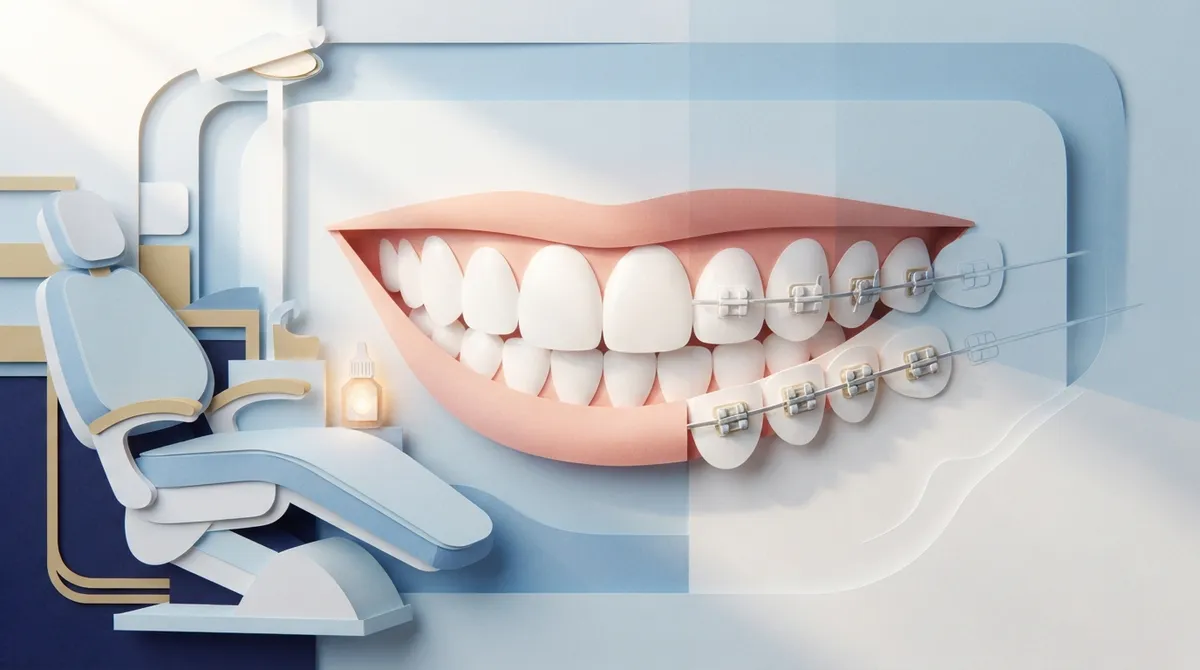
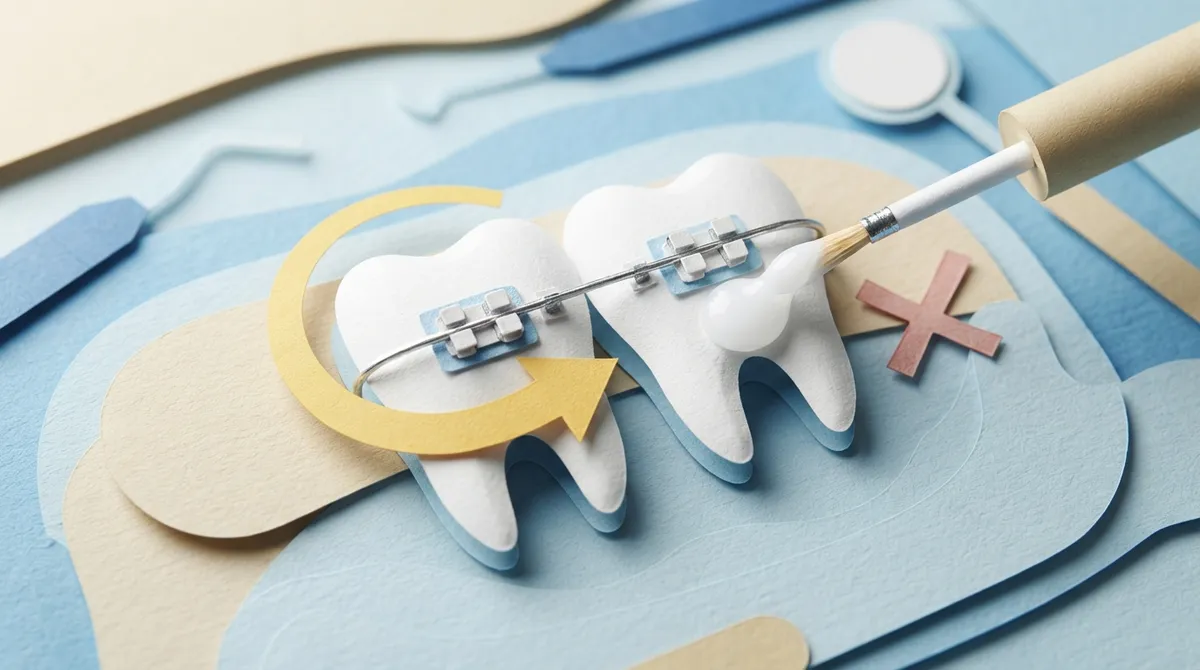
Here’s the tricky part. If you have traditional metal or ceramic brackets, whitening gel can’t reach the enamel underneath them. That means the covered areas stay their original color while everything around them lightens.
Picture taking off a bandage after a day at the beach. The skin underneath is lighter than the tanned skin around it. The same uneven effect happens with teeth whitening done during active bracket treatment.
What Happens With Ceramic or Ceramic Braces
Ceramic and other tooth-colored materials don’t respond to whitening gel at all. Composite fillings, crowns, veneers, and bonding stay exactly the same shade no matter how much gel you apply. This mismatch becomes obvious once natural teeth around them get brighter.
If you’re weighing options like traditional braces versus clear aligners, this is one more reason many patients lean toward removable options for easier whitening flexibility later.
Steps to Plan Whitening Around Your Orthodontic Treatment
Getting your timing right doesn’t have to be complicated. Follow these steps for the best results.
- Finish your active orthodontic treatment, including bracket or aligner removal
- Schedule a professional cleaning to remove any leftover plaque or buildup
- Ask your orthodontist or dentist for a full oral health assessment
- Discuss your whitening goals and any tooth sensitivity concerns
- Choose between in-office whitening or a custom take-home tray
- Follow the exact concentration and duration your provider recommends
- Plan your retainer schedule around whitening sessions if needed
This sequence helps you avoid mismatched shades and unnecessary discomfort. Our team can walk you through this process during your first visit or any follow-up appointment.
Whitening Options for Clear Aligner Patients
Good news if you’re using clear aligners. You have a bit more flexibility because the trays come out. But there’s a catch worth knowing.
Never put whitening gel directly into your aligner trays unless your provider specifically tells you to do this. Aligners are designed to move teeth, not hold bleaching gel. Using them the wrong way can damage the plastic or irritate your gums.
Instead, your dentist may give you a separate custom whitening tray. This keeps your aligner treatment on track while still letting you brighten your smile safely. Patients using Spark™ Clear Aligners often appreciate this added flexibility compared to fixed braces.
Comparing Whitening Methods at a Glance
| Method | Typical Concentration | Time to Results | Best For |
|---|---|---|---|
| In-office whitening | 15% to 43% hydrogen peroxide | 30 to 60 minutes | Fast results before big events |
| Take-home trays | 10% to 16% carbamide peroxide | 1 to 3 weeks | Gradual, gentle whitening |
| During braces (brackets) | Not typically recommended | N/A | Should wait until brackets removed |
| During clear aligners | Separate custom tray only | Varies by provider | More flexible, still needs guidance |
Common Side Effects and How to Handle Them
Whitening is generally safe, but some people notice mild side effects. Knowing what’s normal helps you feel prepared.
- Temporary tooth sensitivity to hot or cold foods
- Mild gum irritation if gel touches soft tissue
- Increased sensitivity with overuse or incorrect application
- Rare enamel irritation from products with very high concentrations
The American Dental Association notes that sensitivity and gum inflammation are the most commonly reported issues. If you notice pain that doesn’t go away in a day or two, contact your dental provider right away.
Tips to Reduce Sensitivity
A few simple habits can make a big difference during your whitening process.
- Use a sensitivity toothpaste a week before starting treatment
- Avoid extremely hot or cold drinks right after whitening sessions
- Follow your dentist’s exact timing instructions, never extend it on your own
- Take breaks between sessions if you notice discomfort
How Long Do Results Actually Last?
Many patients ask this question, and it’s a fair one. The American Dental Association reports that results can last more than a year with good care. But this varies a lot from person to person.
Coffee, tea, red wine, and tobacco all speed up staining. Good brushing habits, regular cleanings, and occasional touch-ups help maintain your bright smile longer. If you recently finished treatment, check out our guide on proven ways to get white teeth after braces for more maintenance tips.
Why Professional Guidance Beats DIY Whitening
It’s tempting to grab whitening strips at the store, especially if you’re busy. But orthodontic patients face unique risks that store-bought products don’t address.
Products with high concentrations of peroxide should only be used under professional supervision. The Florida Association of Orthodontists and dental regulatory groups emphasize that unsupervised, high-strength whitening can cause real harm to gums and enamel. A trained provider checks your restorations, gum health, and enamel condition first, something a store shelf simply can’t do.
Whitening Timing Table for Different Treatment Stages
| Treatment Stage | Whitening Recommendation | Why It Matters |
|---|---|---|
| Active metal or ceramic braces | Wait until brackets are removed | Prevents uneven shade patches |
| Active clear aligner treatment | Use separate whitening tray if approved | Protects aligner fit and function |
| Right after bracket removal | Schedule professional cleaning first | Removes plaque buildup for even results |
| Wearing retainers | Whiten before retainer fitting when possible | Ensures retainer matches new shade |
Bringing It All Together for Your Best Smile
Professional teeth whitening works best as part of a bigger plan, not a rushed decision. Talking with your orthodontist about timing helps you avoid mismatched results and unnecessary sensitivity. Whether you’re exploring braces for your teen, considering adult treatment options, or finishing up retainer wear, we’re here to help you plan the perfect timing for a bright, even smile.
Dr. Brockway and her team genuinely care about every part of your smile journey here in Clearwater. We’re proud to be a trusted resource for families across Pinellas County, and we’d love to help you plan your next steps. You can also follow us on Instagram or connect with us on Facebook to see real patient smiles and updates from our office.
Curious what other patients say about their experience? Feel free to visit us on Google — Brockway Orthodontics and read through their reviews.
Ready to talk about your smile goals, including whitening timing around your treatment plan? Book appointment online today and let’s map out your path to a healthy, bright smile together.
FAQs
Q: Can I whiten my teeth while wearing braces?
A: We totally understand wanting a brighter smile right away, but it’s best to wait until your brackets come off. Whitening gel can’t reach the enamel under brackets, so you’d end up with uneven patches once treatment finishes. Trust us, waiting a little longer is worth it for a smile that’s evenly bright all over!
Q: When is the best time to whiten teeth after braces are removed?
A: The sweet spot is right after a professional cleaning, once any leftover plaque is gone. This gives your dentist a clear view of your enamel and helps whitening gel work evenly. Many of our Clearwater patients schedule this cleaning and whitening consult together for convenience.
Q: Can I whiten my teeth while using clear aligners?
A: You’ve got more flexibility here since aligners are removable, which is wonderful news! Just don’t put whitening gel directly into your aligner trays unless your dentist says it’s okay. We can provide a separate whitening tray so your aligner treatment stays right on track.
Q: Does teeth whitening work on fillings, crowns, or ceramic braces?
A: Unfortunately, no, whitening gel only affects natural tooth enamel, not restorations. Composite fillings, crowns, veneers, and ceramic materials stay the same shade no matter what. This is why we recommend planning your restorative work and whitening together so everything matches beautifully.
Q: What should I do if my teeth or gums hurt after whitening?
A: A little sensitivity is common and usually fades within a day or two, so don’t panic! Try a sensitivity toothpaste and avoid very hot or cold foods for a bit. If discomfort lingers longer than expected, give your dental provider a call so they can check things out.
Our Service Area