Key Takeaways
-
Invisalign and traditional braces have overlapping price ranges ($3,000-$7,500 for braces vs $3,000-$8,000 for Invisalign), so cost depends more on your specific case complexity than on treatment type chosen.
-
Always request a complete written quote that includes diagnostic records, refinements, office visits, and retainers—advertised starting prices often exclude essential services that will be billed separately.
-
Treatment decisions should prioritize clinical appropriateness over cost: traditional braces suit complex cases requiring precise control, while clear aligners work best for mild-to-moderate issues with committed daily wear (20-22 hours).
-
Many dental insurance plans cover both Invisalign and braces equally under orthodontic benefits, and both typically qualify for FSA/HSA pre-tax funds, making actual out-of-pocket costs comparable between options.
If you’ve been Googling this question at midnight, you’re not alone! It’s one of the most common things parents, teens, and adults ask us at our Clearwater office. The short answer? It’s complicated, and anyone who tells you a flat “yes” or “no” isn’t giving you the whole picture. Let’s break it down together, in plain terms, so you can walk into your consultation feeling confident instead of confused.
Here’s the good news: both braces and clear aligners have overlapping price ranges. That means the real cost depends more on your smile’s specific needs than on which treatment you pick. At Brockway Orthodontics, we believe you deserve honest numbers, not sales pressure. So grab a cup of coffee, and let’s talk about what actually drives the cost of straightening your teeth.
Is Invisalign Cheaper Than Braces? Quick Answer
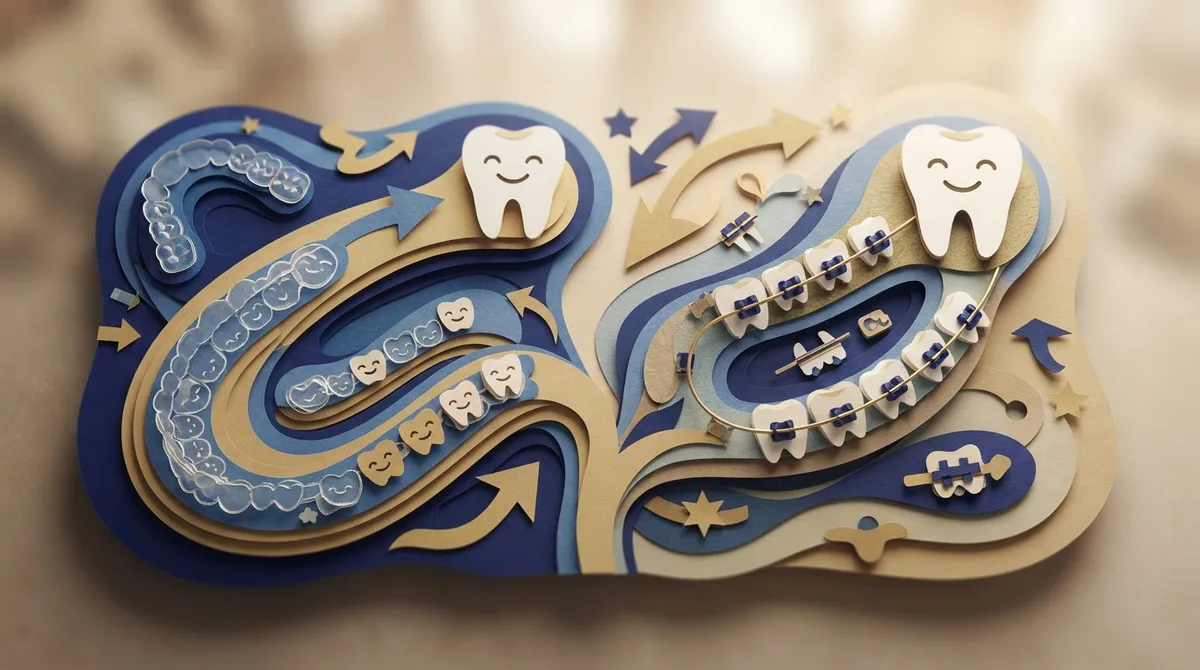
Nope, Invisalign isn’t automatically cheaper. In the United States, traditional metal braces typically run about $3,000 to $7,500, while Invisalign usually falls between $3,000 and $8,000. See that overlap? That’s the key thing to understand right away.
Some recent 2026 pricing comparisons show averages just a few hundred dollars apart, like $6,121 for braces versus $6,373 for Invisalign. But these are general averages, not guarantees. Your actual price will depend on your unique bite, your treatment goals, and where you live.
Why the Price Ranges Overlap So Much
Think of it like buying a car. A basic sedan and a basic SUV might both cost around $30,000, but the final price depends on trim level, features, and dealership. Orthodontic treatment works the same way. The appliance itself (braces or aligners) is just one small piece of the puzzle.
- How complex your case is (mild crowding versus a full bite correction)
- How long treatment will take
- Where you live and the local cost of care
- Your orthodontist’s experience and reputation
- Whether your plan includes retainers, refinements, and follow-up visits
This is exactly why we always recommend getting a personalized quote instead of relying on national averages. Every mouth is different, and so is every treatment plan.
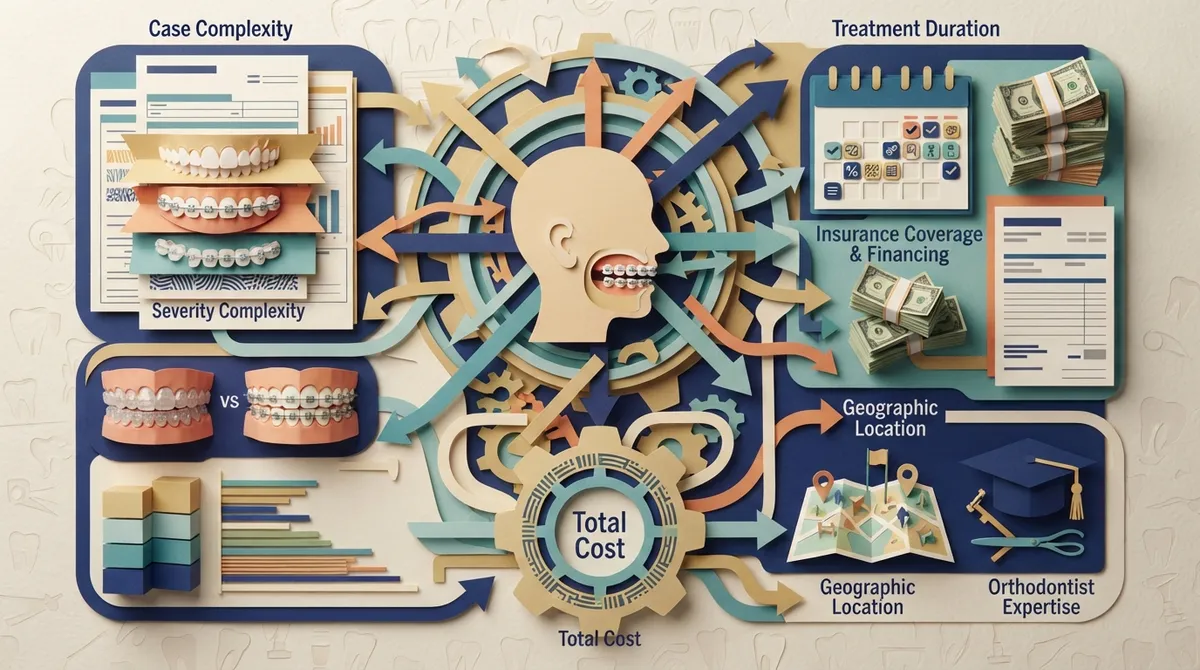
What Really Drives Your Total Cost
Let’s get specific. When you sit down for your first visit, your orthodontist will look at several factors before quoting a price.
- Case complexity: Simple spacing or minor crowding costs less to fix than a severe overbite or jaw misalignment.
- Treatment length: Braces often take 12 to 24 months, while aligners may take 6 to 18 months in certain cases. Longer treatment usually means more visits and higher costs.
- Appliance type: Metal braces, ceramic braces, and clear aligners like Spark™ all have different material and lab costs.
- Your compliance: Aligners need about 20 to 22 hours of daily wear. Skipping wear time can extend treatment and add cost.
- Extra needs: Attachments, refinements, and replacement aligners can all add to your final bill.
This is why comparing a “limited” aligner plan (for very mild movement) to full comprehensive braces isn’t really an apples-to-apples comparison. Always ask what’s included in any quote you receive.
Braces vs. Invisalign: A Side-by-Side Look
| Factor | Traditional Braces | Invisalign / Clear Aligners |
|---|---|---|
| Average U.S. Cost | $3,000 – $7,500 | $3,000 – $8,000 |
| Typical Treatment Time | 12 – 24 months | 6 – 18 months (case dependent) |
| Daily Wear Requirement | Worn full-time, fixed to teeth | 20-22 hours per day, removable |
| Best For | Complex bite issues, severe crowding | Mild to moderate cases, discreet needs |
| Visibility | Visible metal or subtle ceramic | Nearly invisible |
Numbers like these come from sources including Invisalign’s own cost comparison page, which reports similar ranges for both options without insurance. Keep in mind these are general guides, not personal quotes.
Does Insurance Cover Invisalign the Same as Braces?
Great question! Many dental insurance plans treat Invisalign and braces under the same orthodontic benefit. That means your coverage might not change based on which appliance you pick. However, plans vary a lot.
- Some plans cover a percentage of treatment costs
- Others cap coverage at a lifetime maximum dollar amount
- Some have age restrictions or waiting periods
- A few plans exclude certain treatments altogether
Invisalign notes that dental insurance may contribute up to roughly $3,000 toward treatment, though this depends entirely on your individual plan. Our financing and insurance team can help you figure out exactly what your plan will cover before you commit to anything.
What About FSA or HSA Funds?
Good news here too! Both braces and Invisalign typically qualify as eligible expenses under Flexible Spending Accounts (FSA) and Health Savings Accounts (HSA). This can be a smart way to use pre-tax dollars toward your treatment. Just double check your specific account rules, since details can vary.
What’s Included in a Real Treatment Quote
Here’s where a lot of people get surprised. That advertised starting price you saw online? It often doesn’t include everything you’ll actually need. A complete, honest quote should include:
- Initial consultation and diagnostic records (X-rays, scans, photos)
- The full treatment plan, not just a “limited” version
- Attachments or refinements if your case needs adjusting mid-treatment
- Office visits throughout your treatment timeline
- Retainers after treatment is complete
- Any replacement aligners if trays are lost or damaged
When you’re comparing quotes from different offices, always ask what’s bundled in and what might be billed separately later. This is the single best way to avoid sticker shock down the road. Our team walks you through every line item during your orthodontic consultation in Clearwater so there are no surprises.
Which Option Is Better for Complex Cases?
This is where things get really important. Price shouldn’t be the only factor in your decision. Some tooth movements and bite problems respond better to traditional braces because of the precise control they offer.
Severe crowding, significant bite misalignment, or certain jaw issues may need the steady force that braces provide. Clear aligners like our Spark™ Clear Aligners work wonderfully for mild to moderate cases, but they do require consistent wear to succeed. If you tend to lose things or forget to pop your trays back in after lunch, that’s worth discussing honestly with your orthodontist.
The clinically appropriate choice should always come from a professional evaluation, not a price tag. According to the American Dental Association, treatment decisions should be based on your specific oral health needs first.
A Simple Way to Decide
Ask yourself these questions before your consultation:
- Do I have mild spacing or crowding, or something more complex?
- Can I commit to wearing aligners nearly all day, every day?
- Do I want a nearly invisible option for work or social events?
- Am I comfortable with a fixed appliance I don’t have to think about daily?
Your answers will help guide the conversation with your orthodontist, and honestly, that conversation matters way more than any online price chart.
Why Clearwater Families Trust Brockway Orthodontics
We know choosing between braces and clear aligners feels like a big decision, and it is! That’s why Dr. Brockway takes time with every patient to explain your options in plain language. No confusing jargon, no pressure, just honest guidance about what will actually work for your smile and your budget.
We proudly serve families throughout Clearwater, offering everything from traditional metal braces to ceramic braces to our popular Spark™ Clear Aligners, which give you a more affordable path to a straighter smile without sacrificing quality care. Whether you’re a parent bringing in your teenager, a busy professional wanting something discreet, or an adult ready for a second chance at a great smile after relapse, we’ve got a treatment plan that fits.
Curious what past patients think? You can visit us on Google — Brockway Orthodontics to read real reviews from real families in our community. We also love connecting with patients on Facebook and sharing smile transformations on Instagram.
Tips for Comparing Costs Wisely
Before you commit to any orthodontic office, here are some smart steps to take:
- Ask for a full written quote, including retainers and follow-up visits
- Confirm whether the quote covers comprehensive or limited treatment
- Check what your insurance actually covers, not just what you assume
- Ask about payment plans or monthly financing options
- Compare quotes from at least two offices before deciding
Our guide on how to compare Invisalign and braces costs wisely goes even deeper into this topic if you want more detail. We also recommend checking resources from the Florida Association of Orthodontists for general guidance on choosing qualified care in our state.
Payment Plans Make It Easier
Nobody should have to choose a treatment based on cash flow alone. That’s why we offer flexible financing and insurance options designed to fit real family budgets. Monthly payment plans can spread out the cost so a great smile feels achievable, not overwhelming.
Ready to Get Your Personalized Quote?
At the end of the day, the only way to really know if Invisalign or braces will cost less for you is to get a personalized treatment plan. Averages and charts are helpful starting points, but your smile is one of a kind, and your quote should be too.
Our friendly team at Brockway Orthodontics is here to answer every question, explain every cost, and help you feel confident in your decision. Ready to see what your smile journey could look like? Book your appointment online today, and let’s start planning your best smile together. Have questions first? Contact us anytime, we’d love to hear from you!
FAQs
Q: Is Invisalign cheaper than braces without insurance?
A: Not necessarily! Without insurance, both options typically fall in similar price ranges, roughly $3,000 to $7,500 for braces and $3,000 to $8,000 for Invisalign. Your final cost really depends on your specific case, not the appliance type.
Q: What is the average cost of Invisalign compared with metal braces?
A: Recent 2026 estimates show averages just a few hundred dollars apart, like around $6,121 for braces versus $6,373 for Invisalign. These are general figures though, so your personalized quote at Brockway Orthodontics will give you the real numbers for your smile.
Q: Does dental insurance cover Invisalign the same as braces?
A: Often, yes! Many plans cover both under the same orthodontic benefit, though coverage details like percentages, maximums, and age limits vary widely. We’re happy to help you check your specific plan’s benefits.
Q: Which is better for severe crowding, Invisalign or traditional braces?
A: For severe crowding or complex bite issues, traditional braces often provide more precise control. Clear aligners like Spark™ work beautifully for mild to moderate cases, but your orthodontist can help determine the best fit for your unique smile.
Q: What costs are included in an Invisalign treatment quote?
A: A complete quote should include your consultation, diagnostic scans, the full treatment plan, any needed refinements, office visits, and retainers afterward. Always ask what’s bundled in before comparing prices between offices.
Our Service Area