
Key Takeaways
-
MARPE and SARPE are the two main adult palate expansion options: MARPE uses miniscrews to avoid surgery with ~92.5% success rate, while SARPE combines expansion with surgical bone releases for more severe cases, offering greater predictability but requiring anesthesia and recovery.
-
MARPE produces approximately 2.33mm of true skeletal widening plus 6.55mm of dental expansion, but about 55.76% comes from tooth movement rather than pure bone expansion, meaning some dental tipping is a common side effect.
-
Proper diagnosis requires CBCT 3D imaging to assess bone thickness, root positions, and miniscrew placement options—not all narrow jaws are equally treatable, so careful case selection by experienced providers is critical for success.
-
After expansion reaches the target width, a multi-month retention phase must follow to stabilize new bone structure, and most adult patients need additional orthodontic treatment (braces or aligners) to perfect tooth alignment and bite.
-
Adult palate expansion carries different risk profiles: MARPE shows more dental and gum complications like tooth tipping, while SARPE carries surgical risks like bleeding and swelling—no reliable evidence yet proves one method universally superior.
-
Bold claims about palate expanders curing adult sleep apnea or snoring are misleading; while nasal dimensions may change, functional breathing benefits remain uncertain without proper medical evaluation involving both orthodontists and sleep specialists.
Here’s something you might not know: your upper jaw can actually be too narrow, even after you’ve stopped growing. If you’ve been told you need a palate expander adults treatment, you probably have questions swirling in your head. Is this even possible once you’re done growing? Does it hurt? Will you need surgery? Take a breath. You’re in good company, and we’re here to walk you through it in plain, friendly language.
A narrow upper jaw isn’t just a kid problem. Plenty of grown-ups deal with crowded teeth, a crossbite, or a bite that just doesn’t feel right. The good news is that orthodontic care has come a long way. Today, there are real options for adults who need more room up top. Let’s break down what those options look like, how they compare, and how to figure out which one might fit your smile goals.
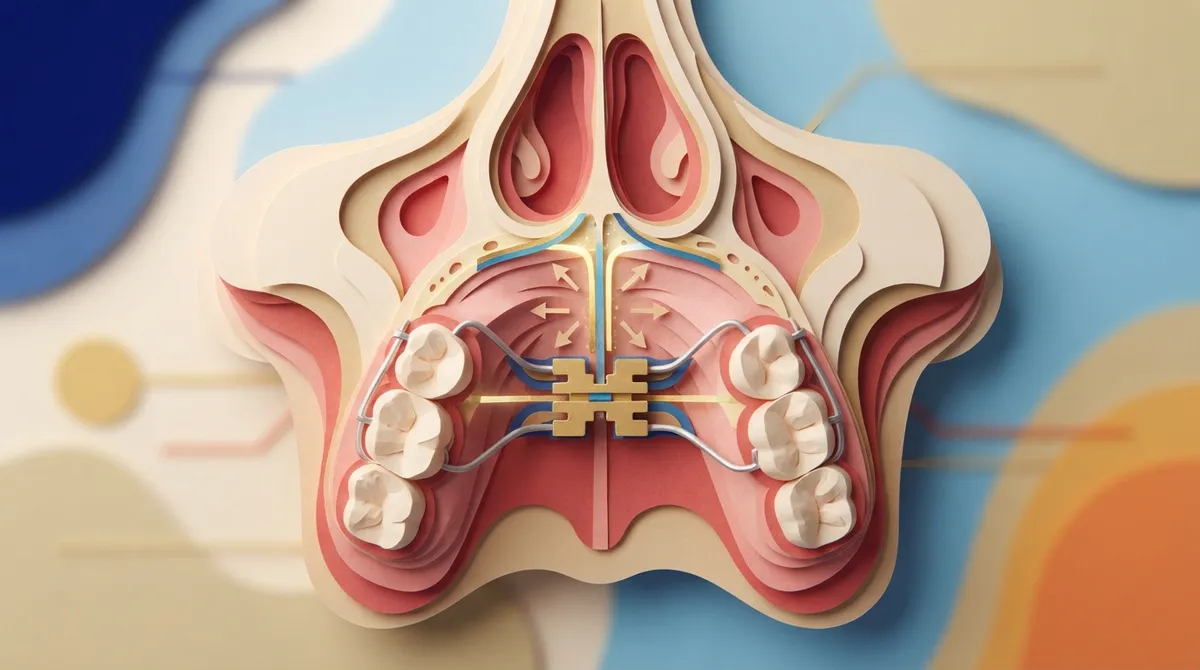
What Does a Palate Expander Actually Do?
Think of your upper jaw like an archway made of bone. In kids, that archway has a soft seam running down the middle called the midpalatal suture. It hasn’t fully hardened yet, so a simple expander can gently widen it over time. This is why traditional childhood orthodontics can reshape the jaw so effectively during those growing years.
By the time you’re an adult, that seam has usually fused solid. Your bones have matured, and the surrounding facial structures have locked into place. This doesn’t mean expansion is impossible. It just means the approach has to be smarter and more targeted. This is exactly why adult orthodontic treatment looks different from what we’d recommend for a teenager.
A transverse maxillary deficiency, which is the technical name for a narrow upper jaw, can cause a few different problems. You might notice a posterior crossbite, where your upper back teeth sit inside your lower teeth instead of outside them. You might have crowding that never seems to resolve, even with regular braces. Or you might just have an arch that’s too small for your tongue and teeth to comfortably fit.

MARPE vs. SARPE: The Two Main Adult Options
When a grown patient needs real skeletal widening, orthodontists typically consider two paths: MARPE and SARPE. They sound like alphabet soup, but the difference matters a lot.
MARPE: Miniscrew-Assisted Rapid Palatal Expansion
MARPE uses tiny temporary anchors, called miniscrews, placed directly into the roof of your mouth. These anchors grab onto bone instead of just your teeth. This helps push the expansion force toward your jawbone itself, rather than just tipping your teeth outward.
This matters because tooth-only expanders in adults tend to cause more dental tipping and gum stress than real bone movement. MARPE tries to get around that problem without surgery.
SARPE: Surgically Assisted Rapid Palatal Expansion
SARPE combines orthodontic expansion with a small surgical procedure performed by an oral and maxillofacial surgeon. The surgeon creates tiny releases in the bone, which reduces resistance so the expander can widen the arch more predictably.
This option involves anesthesia, a recovery period, and surgical risks. But for patients with more severe constriction or previous expansion failures, it’s often considered the more reliable route.
MARPE vs SARPE: Quick Comparison Table
| Factor | MARPE | SARPE |
|---|---|---|
| Surgery Required | No | Yes |
| Best For | Selected adults with adequate bone thickness | Severe constriction or failed prior expansion |
| Recovery | Minimal downtime | Days to weeks of recovery |
| Reported Success Rate | About 92.5% in studies (very low evidence quality) | Considered more predictable for severe cases |
| Common Side Effects | Tooth tipping, screw irritation | Swelling, bleeding, anesthesia risks |
A 2021 systematic review looking at eight MARPE studies found a mean success rate around 92.5 percent among late adolescents and adults. That sounds encouraging, but the researchers were honest about a catch: the overall evidence quality was rated very low because many of the studies had a real risk of bias. In plain terms, we have promising early results, but not rock-solid proof yet.
What the Numbers Actually Show
Let’s talk real measurements, because numbers can help make this less abstract. That same 2021 review found MARPE produced an average of 2.33 millimeters of true skeletal widening, alongside 6.55 millimeters of dental expansion between molars. Treatment length varied a lot, ranging anywhere from 20 to 126 days depending on the specific protocol used.
A 2022 meta-analysis dug even deeper into the skeletal side of things. It found pooled changes of roughly 2.39 millimeters in zygomatic width (that’s the cheekbone area), 2.68 millimeters in nasal width, and 3.12 millimeters in an area called jugular width. At the back of the palate, researchers measured expansion changes as high as 4.56 millimeters.
Here’s an important detail: about 55.76 percent of the measured expansion at one key reference point was truly skeletal bone movement. The rest came from dental tipping. This tells us MARPE genuinely does widen bone in many patients, but it’s rarely a purely skeletal result. Some tooth movement usually comes along for the ride.
- MARPE tends to show more dental tipping as a side effect
- SARPE tends to carry more surgical complications like bleeding or swelling
- Both approaches require careful case selection by an experienced provider
- Neither is a guaranteed fix for every type of narrow jaw
Understanding the Risks Before You Decide
No orthodontic treatment is completely risk-free, and palate expansion for adults is no exception. Being informed helps you have a much better conversation with your provider.
A 2025 scoping review analyzed 26 studies looking specifically at complications from MARPE and SARPE. The researchers found a clear pattern. Dental and gum-related side effects, including tooth tipping, showed up more often with MARPE. Surgical complications, understandably, were reported more with SARPE. This doesn’t mean one option is universally safer. It just means the types of risks are different, and your own anatomy plays a huge role in which risks apply to you.
Possible complications across both approaches can include:
- Pain or pressure sensations, especially in the first few days
- Temporary changes to speech or swallowing while you adjust
- Irritation of the palate tissue from the appliance itself
- Inflammation around miniscrews if you choose MARPE
- Uneven or asymmetric expansion in some cases
- Gum recession or other periodontal changes
- Relapse, where the jaw partially narrows again over time
- Surgical risks like bleeding, infection, or anesthesia reactions with SARPE
A later evidence review tried to settle the MARPE versus SARPE debate once and for all. It found only three comparative studies involving a combined 84 participants. The certainty of evidence was judged very low, and researchers concluded there’s no reliable basis yet for calling one method superior. Translation: this is still an evolving area of orthodontic science, and your specific case matters more than any headline statistic.
How Your Orthodontist Figures Out the Right Path
You won’t just walk in and get fitted for an expander on day one. A proper diagnostic workup takes time, and that’s a good thing. It usually includes a full clinical exam, photographs, a bite assessment, and dental records. Many adult cases also call for CBCT imaging, a type of 3D scan that shows bone thickness, root positions, and how much room is actually available for miniscrews or surgical planning.
At Brockway Orthodontics, we lean on modern technology to make this process as smooth as possible. Digital scans replace messy molds, and detailed imaging helps Dr. Brockway map out your treatment with real precision. If you’re wondering what a first appointment feels like, our first visit guide walks through exactly what to expect.
What Happens After Expansion?
Whether you go with MARPE or SARPE, expansion is really just the first chapter. Once your jaw reaches the target width, your provider will usually keep the expander in place for several months. This retention period lets the new bone stabilize so it doesn’t just spring back.
After that consolidation phase, most patients still need additional orthodontic work. Widening the jaw creates space, but it doesn’t automatically straighten every tooth or perfect your bite. That’s where traditional braces or Spark Clear Aligners often come into the picture, fine-tuning tooth position once the foundation is set.
Long-term success also depends on wearing your retainer exactly as recommended. Skipping retention is one of the fastest ways to lose the progress you worked so hard to achieve.
A Word About Breathing and Sleep Claims
You may have seen bold claims online about palate expanders curing snoring or sleep apnea in adults. We want to be straight with you here. Some studies do show measurable changes in nasal dimensions after expansion. However, functional breathing benefits and long-term outcomes remain genuinely uncertain in adult populations.
Palate expansion should never be marketed as a universal fix for adult sleep apnea, chronic snoring, or nasal congestion. If airway concerns are part of your story, that conversation should involve both your orthodontist and appropriate medical specialists working together. The American Dental Association and the Florida Association of Orthodontists both emphasize evidence-based, individualized treatment planning rather than one-size-fits-all promises.
Questions Worth Asking Your Orthodontist
Before committing to any expansion treatment, it helps to walk in prepared. Here are smart questions to bring to your consultation:
- Is my problem truly skeletal, or mostly a dental crowding issue?
- Which technique do you recommend for my case, and why?
- How much of my expansion will likely be bone versus tooth movement?
- What does the retention and follow-up phase look like?
- What periodontal risks apply specifically to my gum health?
- How many adult expansion cases have you personally treated?
A good orthodontist won’t dodge these questions. They’ll welcome them, because informed patients make better partners in their own care.
Why Choose Brockway Orthodontics for Adult Care
Adult orthodontics deserves the same warmth and attention we give our younger patients, just with treatment plans built around grown-up lives and grown-up anatomy. Dr. Brockway takes time to really listen, whether you’re a busy professional squeezing appointments into a packed calendar or someone who’s dealt with a narrow bite for years and finally decided to address it.
We proudly serve Clearwater and the surrounding Pinellas County community, and we love getting to know each patient’s story. Curious what other patients have experienced? You can visit us on Google — Brockway Orthodontics to read real reviews from real people. You can also follow along on Facebook or catch behind-the-scenes smile moments on Instagram.
If you’ve been putting off addressing a narrow jaw, crowding, or a crossbite because you assumed it was “too late” for adult treatment, we want you to know that’s simply not true. Our full range of services includes thoughtful, individualized options for grown-up smiles at every stage.
Your Next Step Toward a Wider, Healthier Smile
Choosing between MARPE and SARPE isn’t something you should figure out alone from an internet search. It takes a real exam, real imaging, and a real conversation with someone who understands both the science and your personal goals. Whether your case calls for a nonsurgical approach or a surgically assisted plan, getting expert guidance early makes all the difference.
Ready to find out which path fits your smile? Book your appointment online today and let’s talk through your options together. Or if you have questions first, feel free to get in touch with our friendly team. Your wider, more comfortable smile is closer than you think.
FAQs
Q: Can adults really get a palate expander?
A: Yes, absolutely! While your jaw bones are more mature than a child’s, options like MARPE and SARPE were designed specifically for adult anatomy. Your orthodontist will figure out which approach fits your unique jaw structure best.
Q: What’s the real difference between MARPE and SARPE?
A: MARPE uses tiny bone-anchored screws to widen your jaw without surgery, while SARPE pairs expansion with a small surgical procedure. Think of MARPE as the gentler first option and SARPE as the more predictable choice for tougher cases.
Q: Is adult palate expansion painful?
A: Most patients feel pressure and mild discomfort rather than sharp pain, especially in the first few days. Any soreness typically fades quickly, and your orthodontic team will guide you through managing it comfortably.
Q: How long does an adult palate expander stay in?
A: After active widening, most patients wear the expander for several months during a retention phase. This lets the new bone structure stabilize before moving on to any additional alignment treatment.
Q: Will a palate expander fix my breathing or snoring?
A: We’d love to say yes across the board, but the honest answer is it’s uncertain. Some studies show nasal changes after expansion, but it shouldn’t be treated as a guaranteed fix for sleep apnea or snoring without a proper medical evaluation.
Our Service Area