Key Takeaways
-
Book an orthodontic check-up by age 7; an initial evaluation is not the same as starting treatment, and many children simply need monitoring or nothing at all.
-
Ask for a written estimate that spells out what's included, such as retainers, scans, emergency visits, and follow-up care, so you compare the full cost rather than a low quote.
-
Check your dental plan's orthodontic lifetime maximum, age limits, waiting periods, and network status, since it is usually separate from the annual dental maximum.
-
Compare payment plans by total amount paid, not just the monthly payment, since low monthly figures can hide longer terms or added financing charges.
-
Ask whether eligible orthodontic expenses can be paid from an HSA or FSA, and keep receipts while never claiming the same expense twice.
-
Start a small monthly savings habit early, since most children begin comprehensive treatment between ages 9 and 14, giving you time to prepare.
Let’s be honest: nobody wakes up excited to budget for braces. But if you’re a parent, knowing what’s coming can turn a stressful surprise into a manageable plan. The good news? You have more time and more options than you might think.
Planning for a child’s future orthodontic costs starts with understanding one big thing: a first visit is not the same as starting treatment. The American Association of Orthodontists (AAO) recommends a check-up by age 7, but many kids don’t need braces right then. Some need nothing. Some need a little monitoring. A few benefit from early treatment.
In this guide, we’ll walk you through a simple, friendly plan. You’ll learn when to get an evaluation, what affects the price, how to read your insurance, and which payment tools can help. Think of it as a roadmap, so you can focus on what matters most: your child’s healthy, happy smile.

Start With an Early Evaluation (Not a Big Bill)
The first step in planning for a child’s future orthodontic costs is simply learning what your child’s mouth is doing. The AAO recommends an orthodontic check-up by age 7, or sooner if you or your dentist notice a concern.
Here’s the part that surprises many parents: an evaluation does not mean treatment has to start at that age. It’s a look-and-learn visit. Your orthodontist checks how the teeth and jaws are growing and tells you what to expect.
After an early visit, most families land in one of three places:
- No treatment needed. Your child’s bite looks healthy, and you can relax.
- Monitoring. Your child’s growth is watched over time, often at low or no cost, until the right moment arrives.
- Interceptive (early) treatment. A specific developing problem is better handled early, such as a narrow upper jaw or a harmful bite pattern.
Many children begin full treatment later, often between ages 9 and 14, once more permanent teeth have come in. The exact timing depends on your child’s own development. If you’re curious about what the first appointment looks like, our page on your first visit walks you through it step by step.
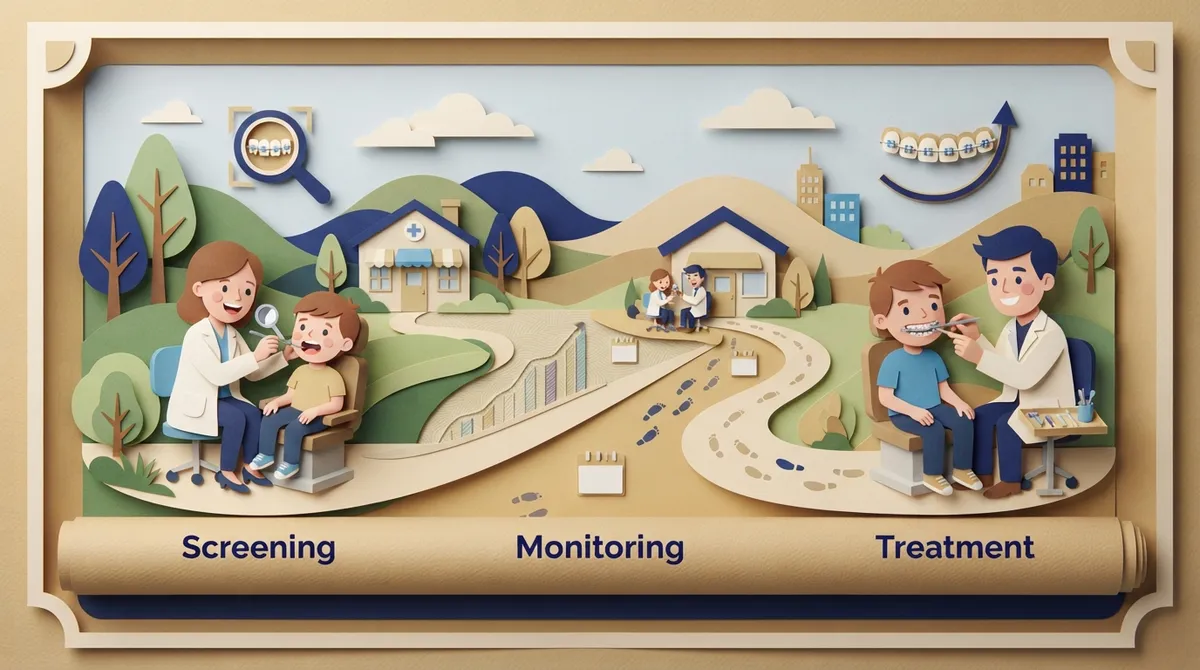
Know the Three Stages: Screening, Monitoring, and Treatment
One reason orthodontic costs feel confusing is that people lump everything together. Splitting it into stages makes budgeting far easier.
| Stage | What Happens | Budget Impact |
|---|---|---|
| Screening / Evaluation | First check-up to review growth, teeth, and bite | Often small or none; ask your practice |
| Monitoring | Periodic check-ins while your child grows | Usually low; confirm if visits are included |
| Interceptive Treatment | Early care for a specific developing problem | A separate cost; may reduce later needs |
| Comprehensive Treatment | Braces or aligners to align teeth and bite | The largest cost; varies by case |
Seeing it this way helps you save in phases instead of facing one big number all at once. If your child is young, you may have years to prepare. Our guide on when your child should see an orthodontist offers more on timing.
What Really Drives Orthodontic Costs?
You may have searched “how much do braces cost for a child?” and found a wide range of answers. That’s because there is no single national price that fits every family. Costs depend on several factors, and a local, written estimate is always more useful than a general number you find online.
Here are the main things that shape the price:
- Diagnosis and complexity. A mild spacing issue is different from a significant bite problem.
- Treatment length. Longer treatment usually means more visits and a higher cost.
- Type of appliance. Metal braces, ceramic (clear) braces, and clear aligners can each be priced differently.
- Location. Costs vary from one area to another.
- What the fee includes. This is a big one, and we’ll dig into it next.
To understand how choices affect your budget, you may like reading about the factors that determine how much braces cost.
Ask for a Written Estimate and Know What’s Included
Before you commit, ask for a written treatment estimate. It protects you and helps you compare apples to apples. A clear estimate should answer a few key questions.
Here’s a simple checklist to bring to your consultation:
- What is the total fee for the full course of treatment?
- Does the fee include initial records, such as scans and photos?
- Are retainers included, and how many sets?
- What happens if a bracket breaks or you need an emergency visit?
- Is there a charge for refinements or extra aligner trays?
- What follow-up care is covered after treatment ends?
Those “small” extras can add up. A lower quote that leaves out retainers may end up costing more than a fuller quote that includes them. Retainers matter too, since they protect your child’s results. You can learn more about them on our retainers page.
Decode Your Dental Insurance Before Treatment Starts
Insurance can help a lot, but only if you understand the rules. Don’t assume your plan covers braces just because it covers cleanings. Call your insurer and ask these questions before treatment begins:
- Is my child covered for orthodontia at all?
- Is our orthodontist in network?
- What is the lifetime orthodontic maximum?
- Is there an age limit for coverage?
- Are there waiting periods or exclusions?
- How are benefits paid out?
Here’s a common mix-up: a plan’s annual dental maximum is not the same as its orthodontic lifetime maximum. They are often two separate numbers. Orthodontic benefits may also be paid over time rather than as one upfront reimbursement.
Also ask what happens if treatment spans more than one plan year, or if your employer switches insurance mid-treatment. Then compare the insurer’s estimated benefit with your orthodontist’s fee so you know your true out-of-pocket cost. For a deeper look, see our article on how to use dental insurance to help pay for braces.
Compare Payment Plans the Smart Way
Most practices offer flexible ways to pay, which makes planning for a child’s future orthodontic costs much less scary. Typical options include a down payment, monthly installments, and sometimes a discount for autopay.
When you compare plans, ask about:
- The down payment amount
- The monthly payment and how many months it runs
- Any financing charges or interest
- Autopay discounts
- Policies for missed appointments
- What happens if you need to transfer treatment
Here’s the golden rule: compare the total amount you’ll pay, not just the monthly payment. A low monthly number can hide a longer plan or added charges. Brockway Orthodontics keeps things clear and family-friendly, and you can explore our approach on the financing and insurance page. If you’re hunting for flexible options, our guide to navigating orthodontic payment plans can help too.
Use Tax-Advantaged Accounts to Stretch Your Budget
Here’s a tip many parents overlook. Eligible orthodontic expenses may be payable from a Health Savings Account (HSA) or a health Flexible Spending Account (FSA), depending on your account and plan rules.
Using pre-tax dollars can lower your real cost. A few smart habits will keep you on track:
- Check your plan’s rules on eligible expenses and timing.
- Keep good records and receipts.
- Coordinate reimbursements with your insurance.
- Never claim the same expense twice.
Because the details vary, confirm everything with your plan administrator or a tax professional. A short phone call now can save headaches later.
Build a Simple Savings Timeline by Your Child’s Age
Since many kids start comprehensive treatment between ages 9 and 14, you can plan ahead in easy steps. Think of it like saving for a school trip, just a little at a time.
- Ages 4 to 6: Keep up with regular dental visits and healthy habits. Start a small monthly savings habit or contribute to an eligible account if you have one.
- Age 7: Schedule an orthodontic check-up. Ask what to expect and when treatment might begin.
- Ages 8 to 10: Review your insurance orthodontic benefits. Learn the lifetime maximum and any age limits.
- Ages 10 to 13: If treatment is likely, collect written estimates and compare payment plans.
- Treatment start: Set up your down payment, autopay, and tax-advantaged account claims.
Every family’s path looks a little different, and that’s okay. The goal is simply to avoid surprises. Our orthodontics for kids guide shares more about what parents can expect along the way.
Choose the Right Treatment for Your Child and Your Budget
The type of appliance you choose can affect both comfort and cost. Brockway Orthodontics offers several options, so you can find a good fit for your child’s needs and your budget.
- Metal braces. A time-tested choice that works for many kinds of bite and alignment concerns. Learn more on our all about braces page.
- Ceramic (clear) braces. A less noticeable look for teens who want something more discreet.
- Spark™ Clear Aligners. A more affordable alternative to Invisalign for suitable cases. Explore Spark™ Clear Aligners to see if they fit your child.
Not every option works for every child, and that’s why a personal evaluation matters. For younger patients, you can also read about our early treatment approach and our adolescent treatment options.
Why Local, Family-Focused Care Helps You Plan
Planning is easier when your orthodontist explains things in plain language and treats you like a partner. At Brockway Orthodontics, Dr. Brockway takes the time to listen to your concerns and answer your questions, so you feel informed from start to finish. You can learn more about her on the Meet Dr. Brockway page.
Modern tools help too. Digital impressions replace messy molds, and 3D imaging supports precise planning. In certain cases, same-day treatment can even save your family extra trips. Families across Clearwater trust Brockway Orthodontics for clear, honest guidance. Curious what neighbors say? You can visit us on Google and read Brockway Orthodontics reviews.
For extra background on what to expect, the American Dental Association offers helpful general oral health resources, and the Florida Association of Orthodontists shares information for local families. The American Association of Orthodontists also explains why that age 7 check-up matters.
A Quick Parent Checklist for Cost Planning
Want the short version? Here’s a handy checklist you can save or screenshot.
- Book an orthodontic check-up by age 7 (or sooner if you notice a concern).
- Remember: an evaluation is not the same as starting treatment.
- Get a written estimate and ask what is included.
- Call your insurer about orthodontic coverage, limits, and waiting periods.
- Compare the total cost of payment plans, not just the monthly fee.
- Ask about HSA or FSA eligibility and keep your receipts.
- Choose the appliance that fits your child’s needs and your budget.
Ready to Take the Next Step?
Planning for a child’s future orthodontic costs doesn’t have to feel overwhelming. When you start with an early evaluation, ask the right questions, and compare your options, you stay in control of the process. Your child gets the care they need, and your family gets peace of mind.
You don’t have to figure it all out alone. The friendly team at Brockway Orthodontics is happy to review your child’s needs, explain your choices, and help you build a plan that fits your budget. Book your appointment online today, or contact us with any questions. We can’t wait to meet your family!
FAQs
Q: When should my child first see an orthodontist?
A: The American Association of Orthodontists recommends a first check-up by age 7, or sooner if you or your dentist spot a concern. Don’t worry, though. A first visit is just an evaluation, and it doesn’t mean your child has to start treatment right away.
Q: How much do braces cost for a child?
A: There’s no single price that fits every child, since costs depend on the diagnosis, treatment length, appliance type, and your location. The best move is to ask for a written estimate from your orthodontist so you can see exactly what’s included, like retainers and follow-up visits.
Q: Does dental insurance cover braces for kids?
A: Some plans do, but not all. Call your insurer and ask about orthodontic coverage, your lifetime orthodontic maximum, age limits, waiting periods, and whether your orthodontist is in network. Remember that an annual dental maximum is usually different from the orthodontic lifetime maximum.
Q: Can I use an HSA or FSA to pay for my child’s braces?
A: In many cases, yes! Eligible orthodontic expenses may be payable from an HSA or health FSA, depending on your plan’s rules. Keep your receipts, avoid claiming the same expense twice, and check with your plan administrator or a tax professional to be sure.
Q: Is early orthodontic treatment really necessary?
A: Not always. Many children don’t need early treatment and simply start later, often between ages 9 and 14. But for certain developing problems, early care can make things easier down the road, which is why an early evaluation is so helpful.
Our Service Area