Key Takeaways
-
Most people wear braces for 12 to 24 months on average, but treatment ranges from 6 months for mild cases to 36+ months for severe crowding, bite problems, or jaw growth issues requiring multiple phases.
-
Patient cooperation is crucial—missing appointments, not wearing elastics, or breaking brackets can add months to treatment, while consistent compliance with instructions helps keep treatment on schedule.
-
Severity of crowding, bite alignment problems, age, jaw growth, tooth extractions, and oral health are the main factors that determine your personalized braces timeline, not general averages.
-
After braces come off, retainers are non-negotiable; wear them full-time for 3-6 months, then nightly for up to a year, and eventually a few nights per week indefinitely to prevent teeth from shifting back.
-
Clear aligners typically offer shorter treatment times (6-18 months) compared to traditional braces (12-24 months), but only work well for mild to moderate cases and require high compliance—wearing them 20-22 hours daily.
-
Adults may need slightly longer treatment than teenagers because their jaws have finished growing and teeth move more slowly through mature bone, but most still complete treatment within the standard 12-24 month range.
If you’re asking “how long do you have to wear braces for,” you’re definitely not alone. It’s one of the very first questions patients ask us here at Brockway Orthodontics, and honestly, it’s a great question to ask! Everyone wants a straighter smile, but nobody wants to guess how long the journey will take. The good news? While every mouth is different, there are clear patterns that help us predict your timeline pretty accurately.
Most people wear braces for about 12 to 24 months. But that’s just an average, and your treatment could look quite different depending on your specific needs. Some folks finish in under a year, while others with more complex bite issues might need closer to three years. In this friendly guide, we’ll break down exactly what affects your braces timeline, compare short treatments to long ones, and help you understand what to expect at every stage. Grab a cup of coffee and let’s dig in together!

How Long Do You Have to Wear Braces For, Really?
Let’s start with the numbers straight from the experts. The American Association of Orthodontists says most patients wear braces for 12 to 24 months. Meanwhile, NHS guidance in the UK commonly cites an average of 18 to 24 months for good results. Some NHS sources even give a wider range of 6 to 30 months, depending on cooperation and complexity.
So why such a big range? Because braces aren’t one-size-fits-all. Your treatment time depends on your unique bite, your age, and how well you follow instructions along the way. Think of it like baking bread. Some recipes need just 30 minutes to rise, while others need overnight fermentation for the best results. Both create delicious bread, just on different schedules.
Short Treatment Timelines: 6 to 12 Months
Shorter treatment times usually happen when the case is mild. This might include small gaps, minor crowding, or slight bite adjustments. If you’re a good candidate for a shorter timeline, here’s what usually applies:
- Minimal crowding or spacing between teeth
- No need for tooth extractions
- Healthy gums and strong tooth roots
- Good jaw alignment already in place
- Excellent cooperation with elastics and appointments
Teens and adult professionals who want a quick smile refresh before a big event often fall into this category. If you’re curious whether your case might qualify for a faster path, our first visit is the perfect time to find out.
Long Treatment Timelines: 24 to 36+ Months
On the other end of the spectrum, some patients need two to three years (or occasionally longer) to reach their best smile. This usually applies to cases involving:
- Severe crowding that needs extra room to be created
- Significant bite problems like deep overbites or underbites
- Jaw growth issues in growing children and teens
- Cases requiring tooth extractions
- Multiple phases of treatment for younger patients
If this sounds like your situation, don’t worry. Longer treatment doesn’t mean something went wrong. It simply means your smile needed more careful, gradual movement to get it right. Dr. Brockway and our team specialize in fixing deep overbites and other complex bite issues with patience and precision.
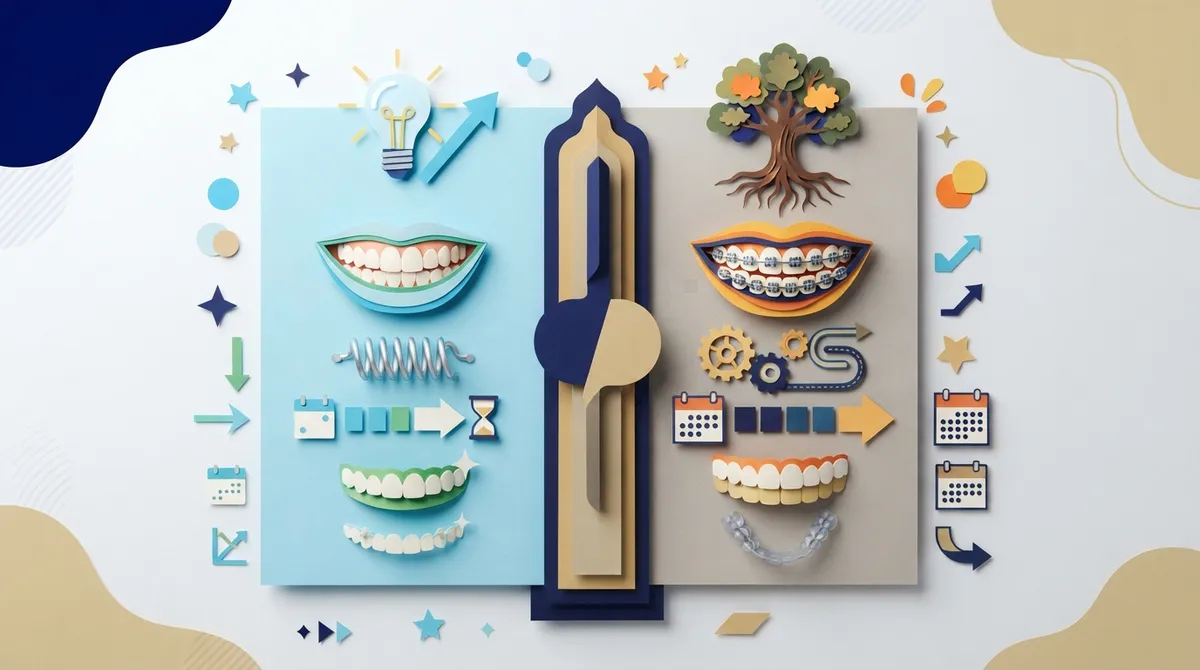
Braces Timeline Comparison Table
| Treatment Length | Typical Case Type | Common Patients |
|---|---|---|
| 6-12 months | Mild crowding or spacing | Teens, adults wanting quick fixes |
| 12-24 months | Moderate crowding, bite issues | Most patients, all ages |
| 24-36 months | Severe crowding, jaw growth needs | Growing children, complex adult cases |
| 36+ months | Multi-phase treatment, surgery-involved cases | Young children, severe skeletal issues |
What Factors Actually Decide Your Braces Timeline?
Your orthodontist looks at several things before giving you a personalized estimate. Here are the biggest factors that affect how long you’ll wear braces:
- Severity of crowding or spacing: More crowded teeth need more time to shift into place.
- Bite alignment: Overbites, underbites, and crossbites often require extra adjustment time.
- Age and jaw growth: Growing jaws in kids and teens can actually work in your favor, but sometimes require phased treatment.
- Tooth extractions: If teeth need to be removed for space, this can add time to the plan.
- Number of teeth being moved: Moving just a few teeth is quicker than realigning an entire arch.
- Oral health: Healthy gums and bone support faster, safer tooth movement.
- Patient cooperation: This one is huge, and we’ll talk more about it below!
Why Patient Cooperation Matters So Much
Here’s something we tell every patient at our Clearwater office: you’re part of the treatment team! Missing appointments, breaking brackets, or skipping your elastics can genuinely add months to your timeline. It’s like trying to follow a recipe but skipping steps. The end result probably won’t turn out the way you hoped.
Here are simple habits that help keep your treatment on schedule:
- Attend every adjustment appointment (usually every 4-12 weeks)
- Wear rubber bands or other appliances exactly as instructed
- Avoid hard, sticky, or crunchy foods that can break brackets
- Brush and floss carefully to keep gums healthy
- Call us right away if something feels loose or broken
We know life gets busy, especially for parents juggling school schedules and after-school activities. That’s part of why we offer flexible consultations and appointment times that work with your family’s routine.
Braces vs. Clear Aligners: Does Treatment Time Differ?
Many patients wonder if choosing Spark™ Clear Aligners instead of traditional braces changes their treatment timeline. The honest answer is: it depends on your case. Here’s a quick comparison to help you understand the differences.
| Feature | Traditional Braces | Clear Aligners |
|---|---|---|
| Average Treatment Time | 12-24 months | 6-18 months |
| Best For | Complex bite issues, severe crowding | Mild to moderate cases |
| Visibility | Visible metal or ceramic brackets | Nearly invisible trays |
| Patient Compliance Needed | Moderate (avoid certain foods) | High (must wear 20-22 hrs/day) |
For adult professionals who want a more discreet option without sacrificing effectiveness, Spark™ Clear Aligners offer a fantastic and affordable alternative to other clear aligner brands. Curious which option fits your lifestyle best? Check out our detailed comparison of traditional braces versus clear aligners to learn more.
What Happens After Your Braces Come Off?
Here’s something many patients don’t realize: braces are only half the story! Once your braces come off, you’ll enter what’s called the retention phase. This is just as important as the active treatment itself.
Why Retainers Are Non-Negotiable
After your teeth move into their new positions, the surrounding gum and bone tissue need time to catch up. Research shows the periodontal ligament can take about 18 months to fully reorganize after tooth movement. During this time, your teeth are still a bit like freshly planted trees. They need support until their roots settle in firmly.
NHS England guidance recommends supervised retention for at least 12 months, though many orthodontists (including our team) recommend wearing retainers long term, sometimes indefinitely, to keep that beautiful smile exactly where it belongs. Skipping your retainer, even for a few weeks, can allow teeth to shift back. Nobody wants that after all the hard work you put in!
Here’s a simple breakdown of typical retainer wear over time:
- First 3-6 months: Full-time wear, removing only to eat and brush
- 6-12 months: Nighttime wear only, as recommended by your orthodontist
- Long-term: A few nights per week indefinitely to maintain your results
Learn more about keeping your smile straight for years to come on our retainers page.
Braces Timelines by Age Group
Your age plays a real role in how long treatment might take. Let’s break it down for our main patient groups.
Children and Adolescents
Kids and teens sometimes need two phases of treatment, especially if early intervention is recommended around age 7. This lets us guide jaw growth before all the permanent teeth arrive. If your child needed early treatment, their adolescent treatment phase might be shorter since some groundwork was already done.
Adults
Adults can absolutely get beautiful results with braces or aligners! Since jaw growth is complete, treatment sometimes takes a bit longer because teeth move more slowly through mature bone. Still, plenty of adults finish comfortably within the 12-24 month average. Our adult treatment options are designed with busy schedules and discretion in mind.
Relapse Patients
If you had braces years ago and your teeth have shifted back, you’re definitely not alone, and there’s no judgment here! Retreatment timelines vary, but many relapse cases move faster than a first-time treatment since the teeth have “muscle memory” of their original positions. We treat many patients in Clearwater who come back to us for a smile refresh, and we’re always happy to help.
Tips to Help Your Braces Journey Go Smoothly
Want to help keep your treatment on the shorter end of the timeline? Here are our top recommendations:
- Never skip a scheduled adjustment appointment
- Wear your elastics exactly as prescribed, every single day
- Brush after every meal to avoid plaque buildup around brackets
- Avoid chewing ice, hard candy, or sticky snacks
- Ask questions at every visit so you understand your progress
- Wear your retainer faithfully once treatment is complete
Following these simple steps can make a real difference in your final treatment time. For more helpful guidance, the American Dental Association offers excellent resources on maintaining oral health during orthodontic treatment.
Why Choose Brockway Orthodontics for Your Treatment Journey?
Dr. Brockway and our entire team are passionate about making your orthodontic journey as smooth, informed, and comfortable as possible. We use modern technology, including digital impressions and 3D imaging, so we can create a precise, personalized treatment plan from day one. This technology often helps us estimate your timeline more accurately right from your very first consultation.
We proudly serve families throughout Clearwater and the greater Pinellas County area, offering everything from traditional metal braces to ceramic braces and Spark™ Clear Aligners. Whether you’re a parent bringing in your seven-year-old for an early check, a teen prepping for graduation photos, or an adult professional ready for a confident new smile, we’re here for every stage of your journey. You can explore all our orthodontic services to see what fits your needs best.
Don’t just take our word for it. Feel free to visit us on Google — Brockway Orthodontics to read what our patients and their families have to say about their experience with us. We also recommend checking out the Florida Association of Orthodontists for additional trusted information about orthodontic care standards in our state.
Ready to Find Out Your Personal Timeline?
The only way to know exactly how long you’ll need braces is to get a personalized evaluation. Every smile is different, and guessing based on general averages only gets you so far. Our team loves walking patients through this process step by step, answering every question with patience and care.
Ready to get your questions answered and start your journey toward a confident new smile? Book your appointment online today and let’s map out your personalized treatment timeline together. You can also contact our friendly Clearwater team with any questions before your visit. We can’t wait to help you smile with confidence!
FAQs
Q: How long do braces take to straighten teeth?
A: Most patients see their teeth fully straightened within 12 to 24 months, though mild cases can wrap up in as little as 6 months. Complex cases involving crowding or bite issues sometimes take up to three years. Your orthodontist can give you a personalized estimate after your first exam.
Q: Can braces come off earlier than expected?
A: Absolutely, especially if you’re diligent about wearing your elastics and never miss an appointment! Great cooperation really does speed things along. That said, your orthodontist will only remove braces once your teeth and bite have reached the ideal, healthy position.
Q: Do adults have to wear braces longer than teenagers?
A: Sometimes, yes, since adult jaws have finished growing and teeth can move a bit more slowly through mature bone. But plenty of adults finish comfortably within the standard 12-24 month range. Every case is different, so age alone doesn’t determine your exact timeline.
Q: How long do you need to wear a retainer after braces?
A: Retainers are typically worn full-time for the first few months, then nightly for up to a year. After that, most orthodontists recommend wearing them a few nights a week indefinitely to protect your results. Think of it as ongoing maintenance for the smile you worked so hard to achieve!
Q: What happens if I miss an orthodontic appointment or don’t wear my elastics?
A: Skipping appointments or elastics can really slow down your progress, sometimes adding weeks or even months to your treatment. Your teeth need consistent, gentle pressure to move correctly, and missed steps interrupt that process. If you ever miss a step, just give our office a call so we can help get you back on track.
Our Service Area