Key Takeaways
-
Call your orthodontist about any loose, broken, or shifted appliance, even if it doesn't hurt, so the team can decide how soon you need a repair.
-
Ongoing or severe pain, or soreness that doesn't ease after a few days, is not expected during treatment and warrants a call to your orthodontist.
-
For a poking wire, cover the sharp end with orthodontic wax for temporary comfort, but never trim or bend it yourself with household tools.
-
Seek emergency care first for heavy bleeding, trouble breathing or swallowing, suspected jaw fracture, or a knocked-out permanent tooth, then contact your orthodontist.
-
When you call, share the problem, when it started, any pain or bleeding, whether eating is affected, and your next appointment date to help the team triage.
-
Calling early protects your progress: a loose bracket or shifted wire can slow tooth movement and lengthen your overall treatment time.
Braces and aligners are a journey, and most of it is smooth sailing. But every so often, something feels off. A wire pokes your cheek. A bracket pops loose during dinner. Your teeth ache more than you expected. Then comes the big question: do you wait for your next visit, or do you pick up the phone?
Here is the friendly truth. Knowing when to call your orthodontist instead of waiting can save you pain, protect your progress, and keep your treatment on schedule. Many appliance problems are not true emergencies. Still, a quick call helps your care team decide what is safe to wait on and what needs attention sooner.
In this guide, we will walk through the common signs that mean it is time to call, what you can safely do at home, and when you need urgent medical care instead. Whether you are a parent juggling school pickups, a teen heading into a big event, or an adult balancing a busy career, you will find clear, simple answers here.

The Simple Rule: When in Doubt, Call
Think of your orthodontist’s office as a helpful hotline for your smile. A short call costs you nothing, and the team can tell you whether to sit tight or come in sooner. It is always better to ask than to guess.
The American Association of Orthodontists notes that ongoing or severe pain is not expected during treatment. The NHS also advises contacting your orthodontist if braces are broken or if symptoms are not settling. In other words, you are never bothering anyone by calling.
At Brockway Orthodontics, our team would much rather hear from you early than have a small issue turn into a bigger one. Contact us anytime you are unsure, and we will point you in the right direction.
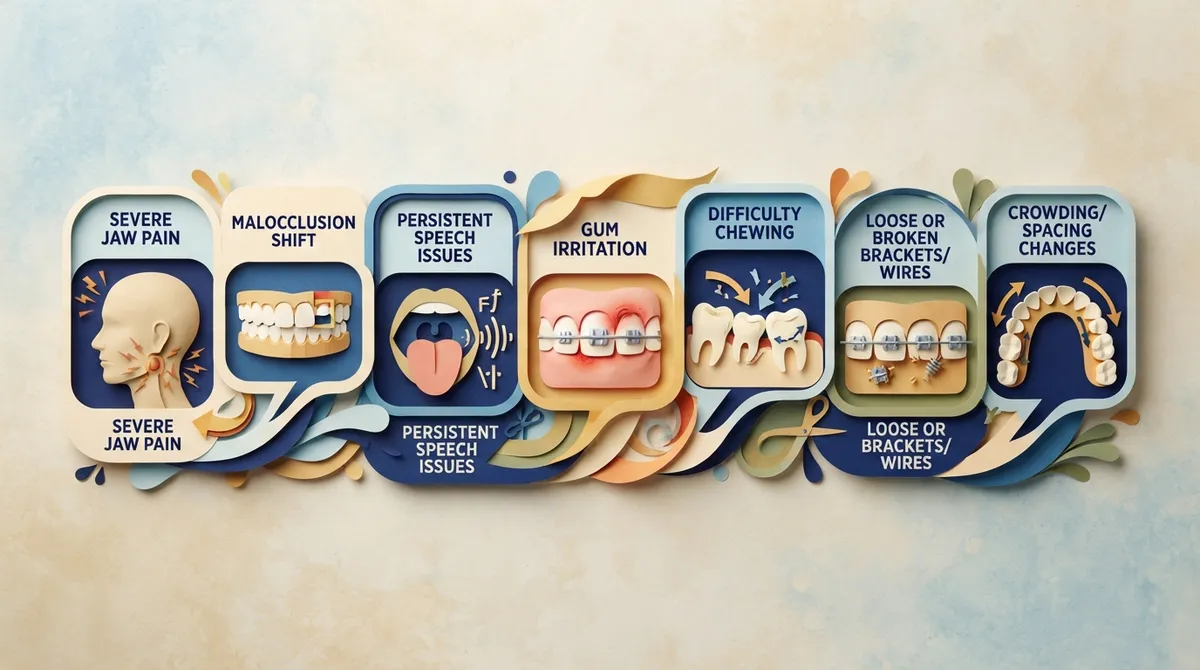
7 Signs It Is Time to Call Your Orthodontist
Not sure whether your situation counts? Use this list as a quick check. If any of these sound familiar, call the office rather than waiting for your next appointment.
- A bracket, band, or wire is loose or broken. Even if it does not hurt, call so the team can decide how soon you need a repair.
- A wire is poking or cutting your cheek or gums. Wax may help for now, but you should still check in.
- Pain is severe, getting worse, or lasting beyond a few days. Some soreness is normal, but it should ease up.
- Your gums look very red, swollen, or painful. This can signal irritation or an oral hygiene issue that needs attention.
- Eating has become difficult. If an appliance problem makes it hard to chew or swallow comfortably, call.
- An appliance has shifted out of place. Moved parts can interfere with how your teeth are supposed to move.
- Something is irritating your mouth and you cannot get comfortable. Constant sores or rubbing deserve a professional look.
Treatment works best when everything stays on track. Ignoring a small break can slow your progress, which means more time in braces. That is a frustrating way to spend your months.
Common Problems and What to Do
Here is a quick reference table to help you sort out what is happening and how urgently to respond. Remember, this is a guide, not a diagnosis. Your orthodontist makes the final call.
| Problem | What You Can Do at Home | When to Call |
|---|---|---|
| Loose or broken bracket (no pain) | Avoid hard and sticky foods. Cover sharp edges with wax. | Call the office. They will triage based on damage and your next visit date. |
| Poking wire | Cover the end with orthodontic wax. | Call, especially if it keeps injuring your cheek or gums. |
| Soreness after an adjustment | Eat soft foods. Use appropriate over-the-counter relief. | Call if pain is severe, worsening, or lasts more than a few days. |
| Swollen, painful gums | Rinse gently and keep brushing carefully. | Call if redness, swelling, or pain stays or grows. |
| Difficulty eating | Stick to soft, easy foods. | Call promptly so the issue can be fixed. |
What About a Broken Bracket?
This one comes up all the time. A loose or broken bracket without pain or injury may not need an immediate trip to the office. But please do not assume it can wait without checking first.
When you call, the team will ask a few questions about the damage, your symptoms, and when your next appointment is scheduled. Based on that, they will tell you whether to come in sooner or hold tight. If you want a deeper look at how to tell the difference, our guide on broken brackets versus poking wires breaks it down nicely.
The Poking Wire: Annoying, Not Always an Emergency
A poking wire feels dramatic, but it is usually fixable. You can often cover the sharp end with a small ball of orthodontic wax. This gives your cheek or gums a break until the office can help.
Still, call the team for advice, especially if the wire keeps hurting your mouth or you cannot get comfortable. Resist the urge to trim it yourself or bend it back with household tools. It may feel like a quick fix, but it can cause bigger problems. We cover this in detail in DIY wire fix versus an orthodontist visit.
How Much Soreness Is Normal?
Some tenderness is part of the deal. Your teeth are moving, and that can feel achy for a few days after braces are placed or adjusted. Soft foods and over-the-counter pain relief often take the edge off.
But here is the key: that soreness should improve, not get worse. Reach out to your orthodontist if:
- The pain is severe or keeps building
- It does not get better after a few days
- Appropriate over-the-counter measures are not helping
If you are curious about what to expect, our article on whether braces hurt shares what most patients feel along the way.
When It Is an Emergency, Not an Orthodontic Call
Some situations go beyond an appliance problem. These need immediate emergency medical or dental care first. Your orthodontist is an important part of your care team, but safety always comes first.
Seek urgent care right away for any of these:
- Heavy or uncontrolled bleeding
- Trouble breathing or swallowing
- A suspected broken jaw or major facial trauma
- A knocked-out or severely displaced permanent tooth
Once the urgent need is handled, let your orthodontist know what happened. They can then check your braces or aligners and adjust your plan. For local help with true orthodontic urgencies, see our page on the emergency orthodontist in Clearwater.
Advice for Different Patients
For Parents of Kids and Teens
Kids are active. Sports, snacks, and school life can all lead to a loose bracket or a bent wire. Teach your child to speak up the moment something feels wrong, and keep a small pack of orthodontic wax in their backpack. If you are unsure, call us. We are happy to guide you through it. Our overview of orthodontics for kids has more parent-friendly tips.
For Teens and Young Adults
Big event coming up? Graduation, prom, or a photo shoot? Do not wait on a broken appliance. A quick repair visit can keep your treatment moving so you smile with confidence on the day that matters.
For Busy Adult Professionals
Your schedule is packed, so a quick phone call can save you a long delay. Tell the office what is going on, and they can often suggest the smartest way to fit in a repair. Many adults are discovering that adult treatment can fit into a demanding lifestyle with the right support.
For Retreatment and Aligner Patients
If you wear a retainer or aligners and something cracks, gets lost, or no longer fits, call right away. Teeth can shift when appliances go unused. Our guide on what to do if your retainer breaks walks through the next steps.
What to Say When You Call
Being ready with the right details helps the team help you faster. Here is what to share:
- Describe the appliance and the problem. Say which part is loose, broken, or poking.
- Tell them when it started. A sudden break and a slow change mean different things.
- Mention pain or bleeding. Be specific about how strong it feels.
- Share whether eating or speaking is affected. This helps them judge urgency.
- Note your next appointment date. They may suggest waiting or coming in sooner.
Follow any after-hours instructions the practice gives you. And please do not attempt risky repairs or use household glue. It can damage your braces and your mouth, and it often makes the repair harder.
Smart Steps You Can Take While You Wait
While you wait for guidance or an appointment, a few safe habits can keep you comfortable:
- Keep orthodontic wax handy to cover sharp spots
- Choose soft foods and skip anything hard, sticky, or crunchy
- Keep brushing gently to protect your gums
- Use appropriate over-the-counter pain relief as directed
- Save any part that comes off and bring it to your visit
Good habits go a long way. Our foods to avoid with braces guide can help you prevent many breaks before they happen.
Why Calling Early Protects Your Smile
It might seem easier to tough it out. But small problems can snowball. A loose bracket can stop teeth from moving the way they should. A shifted wire can irritate your mouth and affect your bite. Waiting too long may lengthen your treatment time.
Picking up the phone is the simplest way to protect the time and money you have already invested. At Brockway Orthodontics, Dr. Brockway and our team take the time to listen and explain your options in plain, friendly language. We want you to feel comfortable, informed, and supported at every step. You can read what patients say about us when you visit our Brockway Orthodontics location on Google.
For more insight on telling urgent from routine, check out emergency versus routine orthodontics. And for general oral health guidance, the American Dental Association offers helpful resources, while the Florida Association of Orthodontists shares information on orthodontic care across the state. You can also explore the American Association of Orthodontists’ guide to what to expect during orthodontic treatment.
Final Thoughts: Trust Your Instincts and Call
You know your mouth best. If something feels wrong, painful, or just plain strange, trust that feeling. Most issues are simple to fix, and a quick call helps you get the right answer fast.
To recap, call your orthodontist when an appliance breaks or shifts, a wire is injuring your mouth, pain is severe or lasts beyond a few days, your gums are very swollen, or eating becomes hard. Head to emergency care for heavy bleeding, breathing or swallowing trouble, major facial trauma, or a knocked-out permanent tooth.
Have a concern right now? Do not wait and wonder. Reach out to Brockway Orthodontics today, or book an appointment online to get started. Your smile is worth the call.
FAQs
Q: When should I call my orthodontist about a broken bracket?
A: Call as soon as you notice it, even if it does not hurt. A loose or broken bracket without pain may not need an immediate visit, but the office can tell you whether to come in sooner or wait for your next appointment.
Q: Is a poking braces wire an emergency?
A: Usually not, but it is worth a call. You can often cover the sharp end with orthodontic wax for comfort, then ask your orthodontist for advice, especially if the wire keeps hurting your cheek or gums.
Q: How long is braces pain normal after an adjustment?
A: Some soreness for a few days is common and should slowly get better. If the pain is severe, getting worse, or not improving after a few days, give your orthodontist a call.
Q: When should I go to the emergency room for a braces problem?
A: Head to emergency care right away for heavy bleeding, trouble breathing or swallowing, a suspected broken jaw or major facial injury, or a knocked-out or badly displaced permanent tooth. Call your orthodontist once the urgent care is handled.
Q: What should I tell my orthodontist when I call about a problem?
A: Share which part of your appliance is affected, when it started, whether you have pain or bleeding, and if eating or speaking is harder. Mention your next appointment date too, so the team can decide how quickly to see you.
Our Service Area