Key Takeaways
-
Hot water can soften heat-sensitive thermoplastic retainers, causing them to twist, bend, or shrink so they no longer fit your teeth properly.
-
Always clean your retainer with cool or lukewarm water, a soft dedicated toothbrush, and a drop of mild dish soap, as recommended by the American Association of Orthodontists.
-
Avoid hidden heat sources too: boiling water, dishwashers, steam, hot cars, sunny windowsills, and hair dryers can all warp a retainer.
-
If your retainer feels loose, tight, or uneven after heat exposure, stop wearing it, never force it in or reheat it, and contact your orthodontist for a fit check.
-
There is no single safe maximum temperature for all retainers, so follow your orthodontist's specific care instructions for your appliance type.
-
Store your retainer in its case, never wrap it in a napkin, and keep the case somewhere cool rather than in a hot car.
You finally finished braces or aligners, and your smile looks amazing. Now there’s one little piece of plastic standing between you and a shifted smile: your retainer. So when it feels grimy, it’s tempting to grab the hottest water from the tap and give it a good scrub. Please don’t. It turns out that why hot water can warp retainers is one of the most common questions we hear from patients, parents, and teens alike.
Here’s the short version. Many removable retainers are made from heat-sensitive plastic that is shaped to fit your teeth. Heat can change that shape, and a retainer that no longer fits well can’t do its job. The good news is that keeping your retainer clean is easy, and it never requires hot water.
In this friendly guide, we’ll explain what happens to the plastic, what temperatures to avoid, how to clean your retainer the safe way, and what to do if you’ve already had a hot water mishap. Let’s keep that smile right where you worked so hard to put it.
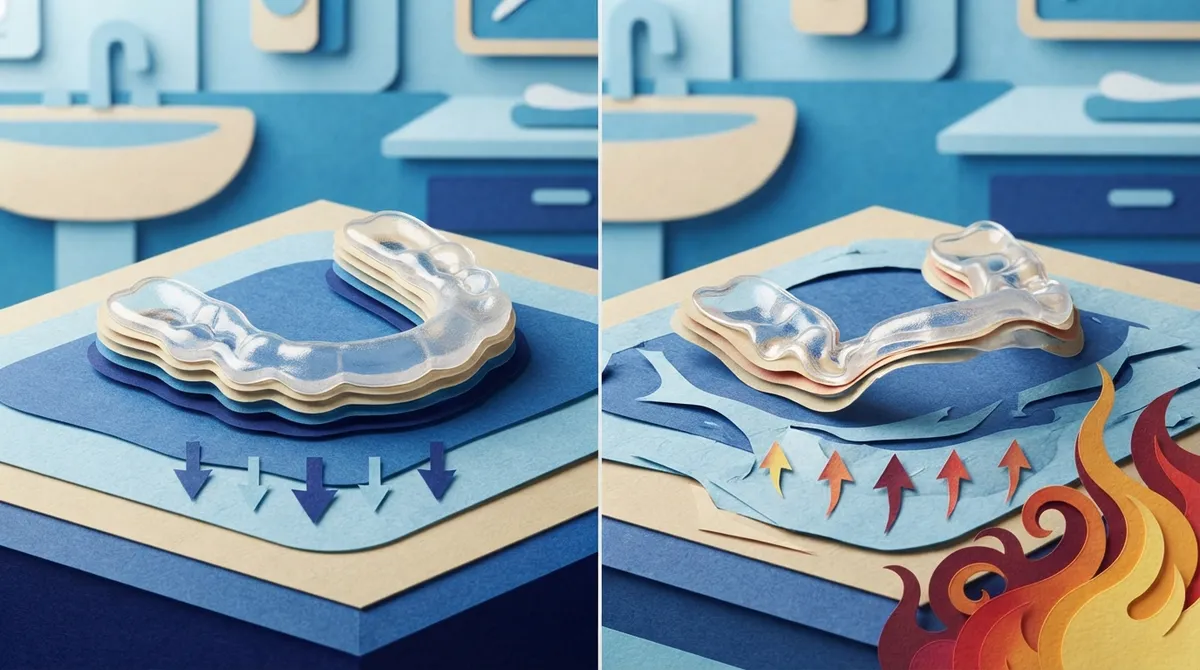
Why Hot Water Can Warp Retainers: The Simple Science
Think about a plastic water bottle left on a sunny dashboard. It gets soft, bendy, and a little misshapen. Your retainer works in a similar way, just on a much smaller and more precise scale.
Many removable retainers, especially clear, vacuum-formed ones, are made from thermoplastic materials. These are plastics that soften when heated. That quality helps manufacturers mold them to the exact shape of your teeth. It also means heat can undo that careful shaping later on.
What Happens to the Plastic
When thermoplastic gets too warm, it can soften or relax. As it does, the retainer may twist, bend, or shrink slightly out of its original form. Even a small change matters because your teeth are very sensitive to pressure. A retainer that is a hair off can feel too tight, too loose, or uneven when you put it in.
Why Fit Matters So Much
A retainer is custom-made to hold your teeth in their new positions. If heat changes the shape, it may no longer seat fully or apply the gentle, steady hold your teeth need. That can allow teeth to drift. A distorted retainer shouldn’t be treated as if it still works, even if it looks fine at a glance.
The American Association of Orthodontists advises rinsing removable retainers with lukewarm water and avoiding hot water because it can damage or warp them. That’s solid, simple guidance to follow.
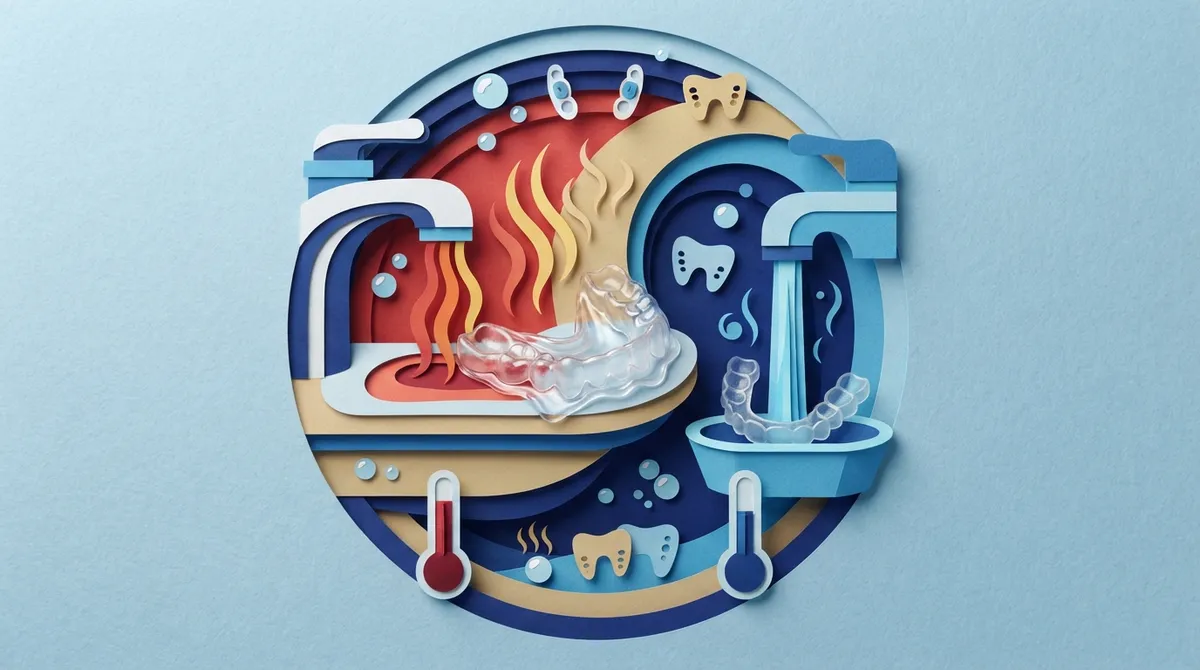
How Hot Is Too Hot for Your Retainer?
This is where many people get stuck. They want a number. The honest answer is that there isn’t one single safe maximum temperature for every retainer. Different materials and designs react differently to heat, so the safest approach is to follow your orthodontist’s instructions and stick with lukewarm water.
One 2023 laboratory study looked at six thermoplastic retainer materials. Researchers put them through 10,000 thermal cycles, using water baths at 5°C and 55°C with 15-second dwell times. That is roughly one year of mouth use in a lab setting. They found that mechanical properties changed in ways that depended on the material.
It’s important not to over-read that study. It was a laboratory test, not a clinical safety limit. It doesn’t prove that a quick dip at 55°C will warp every retainer, and it doesn’t mean cooler water is risk-free for every material. What it does show is that heat and temperature swings can affect these plastics over time. That’s one more reason to play it safe.
Quick Water Temperature Guide
| Water Type | Safe for Plastic Retainers? | Notes |
|---|---|---|
| Cool water | Yes | Great for rinsing right after you remove your retainer |
| Lukewarm water | Yes | Recommended by the AAO for cleaning |
| Hot tap water | Not recommended | Can soften or distort heat-sensitive plastic |
| Boiling water | Never | High risk of warping or ruining the retainer |
Hidden Heat Sources That Can Warp a Retainer
Hot water from the sink isn’t the only culprit. Retainers get ruined in sneaky ways all the time. Keep an eye out for these common heat traps:
- Boiling water: Some people try to sanitize their retainer this way. Please skip it.
- The dishwasher: High heat and strong cycles can distort plastic fast.
- Steam: A steamy kitchen or bathroom can be too much for some retainers.
- A hot car: Leaving your retainer case on the dashboard or in the cup holder on a Florida summer day can be a disaster.
- Sunny windowsills: Direct sunlight can warm plastic more than you’d expect.
- Heaters and hair dryers: Direct heat sources can soften the material quickly.
If you live in a warm place, like we do here in Clearwater, the car tip is a big one. Florida heat can turn a parked car into an oven in minutes. Keep your retainer case in a bag or somewhere cool instead.
Do All Retainers React to Heat the Same Way?
Not exactly. Retainer materials and designs differ, and so do their care needs. Here is a simple overview to help you understand the main types.
| Retainer Type | Typical Material | Heat Sensitivity |
|---|---|---|
| Clear removable retainer | Thermoplastic | Often heat-sensitive, so avoid hot water |
| Hawley retainer | Acrylic and wire | Care needs differ, so ask your orthodontist |
| Fixed (bonded) retainer | Wire attached to teeth | Not removed, so brushing and flossing matter most |
Because every appliance is a little different, ask your orthodontist about your specific retainer. You can learn more about the types we offer on our retainers page or read our guide on fixed vs. removable retainers to see which style might suit your lifestyle.
How to Clean Your Retainer the Safe Way
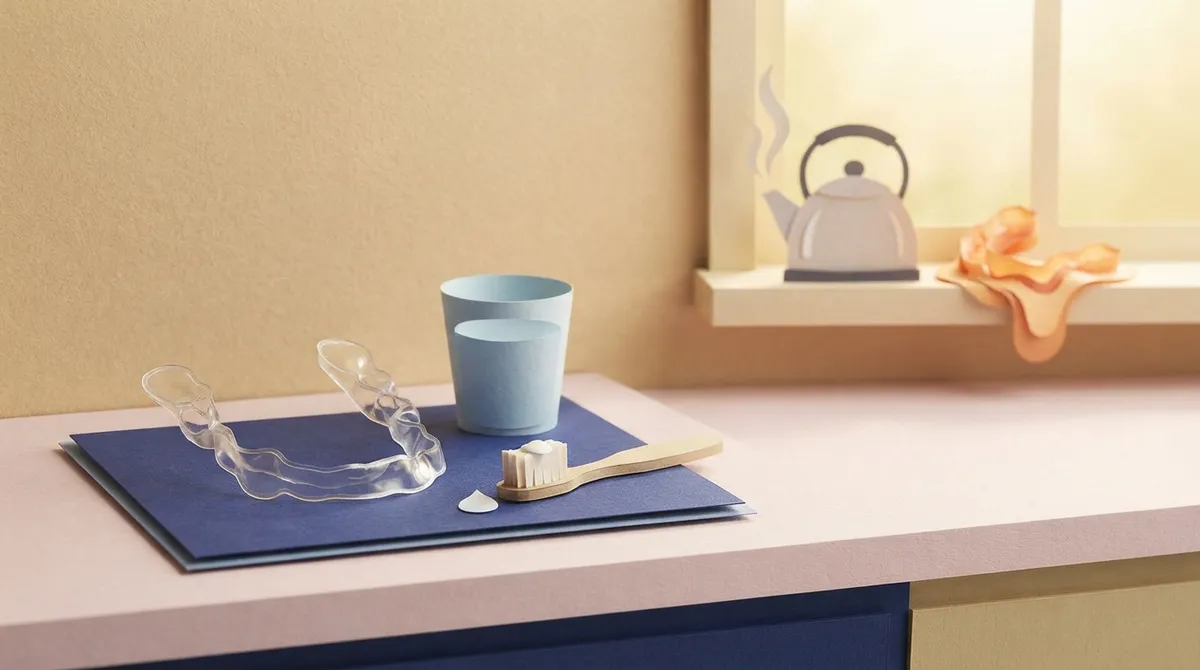
Good news: a clean retainer doesn’t need heat at all. The AAO recommends gentle daily cleaning with a dedicated toothbrush and dish soap. For a deeper clean now and then, you can use a compatible retainer-cleaning product and follow the label.
Your Daily Cleaning Routine
- Rinse right away. After you take your retainer out, rinse it with cool or lukewarm water to wash off saliva and loose debris.
- Add a drop of mild dish soap. Use a soft toothbrush that you only use for your retainer.
- Brush gently. Clean all surfaces, including the inside, where plaque likes to hide.
- Rinse well. Use lukewarm water until all the soap is gone.
- Let it air dry briefly, then store it. Place your retainer in its case, away from heat.
Tips for Periodic Deep Cleaning
- Use a retainer cleaner made for your type of appliance.
- Follow the product directions and soak times exactly.
- Rinse thoroughly before putting your retainer back in your mouth.
- Skip harsh scrubs, bleach, and mouthwash with alcohol, which can dull or damage the plastic.
Brushing your own teeth well matters too. A clean mouth keeps your retainer cleaner and your smile healthier. If you need a refresher, our post on how to care for braces and retainers the right way covers the basics in a friendly, step-by-step style.
What to Do If Your Retainer Has Been Exposed to Hot Water
Oops moments happen. Maybe your teen rinsed it under the hot tap, or it spent a few hours in a warm car. Don’t panic, but do act thoughtfully.
Signs your retainer may have warped include:
- It feels loose or wobbly on your teeth
- It feels tighter than usual or pinches
- It doesn’t snap fully into place
- It looks bent, cloudy, or uneven
If you notice any of these, follow these steps:
- Stop wearing it. A poor-fitting retainer can’t hold your teeth reliably.
- Don’t force it in. Pushing a warped retainer onto your teeth can put uneven pressure on them.
- Don’t try to reshape it with heat. This usually makes things worse.
- Call your orthodontist. They can look at the fit and tell you whether it can still be used or needs to be replaced.
If something has gone wrong, it’s better to ask early. Teeth can shift sooner than most people expect, especially in the first months after treatment. Our guide on what to do if your retainer breaks has more helpful steps for retainer emergencies, and you can also read about retainer replacement facts to know what to expect.
Why Retainers Matter So Much After Treatment
After braces or clear aligners, your teeth are in new spots, but the bone and gums around them need time to settle. Retainers keep everything stable during that period and beyond. Wearing yours as directed is one of the easiest ways to protect your investment.
For parents, this is a great thing to teach teens early. A retainer is small, easy to misplace, and easy to damage. Talk about proper cleaning and storage together, and keep a spare plan in mind in case something happens.
For adults who’ve had treatment before and are dealing with shifting, we see this often too. Relapse is common when retainers are worn out of shape or not used consistently. If that sounds like you, our adult treatment options can help you get back on track.
Easy Habits to Keep Your Retainer Safe
A few simple routines can save you a lot of hassle and money. Try these friendly reminders:
- Always keep your retainer in its case when it’s not in your mouth.
- Never wrap it in a napkin. It’s the number one way retainers end up in the trash.
- Use lukewarm or cool water only.
- Keep it away from pets, who love to chew them.
- Store the case in a cool place, never in a hot car.
- Bring your retainer to your checkups so we can make sure the fit is still great.
If you’re ever unsure about what’s safe, just ask. Our team loves answering questions, and there’s no such thing as a silly one. You can also browse our frequently asked questions for quick answers.
Care Tips From Your Orthodontic Team in Clearwater
At Brockway Orthodontics, we believe that understanding your treatment helps you feel confident about your care. Dr. Brockway and our team take time to explain how to look after your retainer so there are no surprises later. That includes cleaning, storage, and what to do if something goes wrong.
Following guidance from trusted professional groups also helps. The American Dental Association shares helpful oral health information, and the Florida Association of Orthodontists offers resources for patients across our state. Pairing that with advice from your own orthodontist gives you the best of both worlds.
Want to see what other families say about their experience? You can visit our Brockway Orthodontics location on Google and read real patient reviews from the Clearwater community.
Final Thoughts: Keep It Lukewarm, Keep It Straight
So, why can hot water warp retainers? Because many of them are made from heat-sensitive plastic that was shaped to fit your teeth perfectly. Heat can change that shape, and a changed shape means a less effective retainer. The fix is simple: use lukewarm water, a soft brush, and a little dish soap, and keep your retainer away from heat of any kind.
If your retainer has already met some heat and feels off, don’t force it or try to fix it yourself. Reach out and let us take a look. Protecting your smile is what we do, and we’re always happy to help.
Ready for personalized advice? Book your appointment online or contact us today, and let’s keep your smile looking its best for years to come.
FAQs
Q: Why does hot water warp clear retainers?
A: Most clear retainers are made from thermoplastic, a plastic that softens when it gets warm. Heat can let the retainer relax out of the exact shape made for your teeth, so it may stop fitting well. That’s why lukewarm water is the safer choice.
Q: What water temperature should I use to clean my retainer?
A: Stick with cool or lukewarm water. The American Association of Orthodontists recommends lukewarm water and says to avoid hot water. There’s no single safe temperature for every retainer, so follow your orthodontist’s advice for your specific appliance.
Q: What should I do if I accidentally put my retainer in hot water?
A: Don’t worry, but stop wearing it if it feels loose, tight, or uneven. Don’t force it into place or try to reshape it with heat. Give our office a call so we can check the fit and let you know whether it needs to be replaced.
Q: Can a dishwasher, hot car, or sunlight warp a retainer?
A: Yes, they can. Dishwashers, steam, hot cars, heaters, and even sunny windowsills can expose your retainer to enough heat to change its shape. Keep it in its case and store it somewhere cool, especially during warm Florida days.
Q: Are Hawley retainers affected by heat the same way as clear plastic retainers?
A: Not always. Hawley retainers use acrylic and wire, while clear retainers use thermoplastic, so their care needs can differ. It’s still smart to avoid hot water and ask your orthodontist for care instructions tailored to your retainer.
Our Service Area