Key Takeaways
-
Most traditional braces patients are seen every 6 to 8 weeks, though sources range from 4 to 12 weeks depending on treatment stage.
-
Your orthodontist sets your exact adjustment interval based on your teeth, bite, and how quickly you respond, so always follow your personal schedule.
-
Not every visit involves a wire change; some appointments are quick progress checks or simple elastic tie replacements.
-
Mild soreness after an adjustment is normal and usually fades in a few days, but severe or lasting pain should prompt a call to your orthodontist.
-
Call your orthodontic office right away if a wire or bracket breaks, rather than waiting for your next visit, since breakages can slow progress.
-
Never stretch the gap between visits on your own; if you need to reschedule, contact the office so your treatment stays on track.
If you just got braces, one question probably pops up fast: how often are braces adjusted? You are not alone. Patients of all ages ask us this. Parents want to plan school and work schedules. Teens want to know how many visits will clash with sports and games. Adults want to fit appointments around busy careers.
Here is the quick answer. Most people see their orthodontist about every 6 to 8 weeks. But your own schedule may be shorter or longer, depending on your plan. In this guide, we walk through 15 things that help you know what to expect in 2026. We keep it simple and friendly, so you can feel ready for every visit.

The Quick Answer: How Often Are Braces Adjusted?
For traditional braces, adjustment visits usually happen about every 6 to 8 weeks. The National Health Service (NHS) in the UK gives this same range. The exact timing is set by your orthodontist for your own treatment plan.
Other trusted sources give a wider window. The American Association of Orthodontists (AAO) says visits may be anywhere from 4 to 12 weeks, depending on your stage of treatment. Its patient guidance also describes visits around every 6 to 10 weeks.
Here is a simple look at those ranges:
| Source | Typical Visit Range |
|---|---|
| NHS patient guidance | Every 6 to 8 weeks |
| AAO braces overview | Every 4 to 12 weeks |
| AAO living with braces | Every 6 to 10 weeks |
| UK Health Research Authority summary | Often 6 to 8 weeks; practices range from about 4 to 10 weeks |
The big takeaway? There is no one magic number. Your orthodontist picks the schedule that fits you best.
15 Things to Know About Braces Adjustments
1. Every 6 to 8 Weeks Is the Common Rhythm
Most patients with traditional braces land in the 6 to 8 week range. This gives teeth enough time to move, and it lets your orthodontist check progress without rushing. Think of it like a garden. You do not dig up the plants every day. You give them time to grow, then you check in.
2. Your Schedule Is Personal
Two people with braces can have different calendars. Your orthodontist sets your interval based on your teeth, your bite, and how you respond. At Brockway Orthodontics, Dr. Brockway builds each plan around the patient, not a one-size-fits-all rule. Always follow the schedule you are given.
3. It Is More Than Just “Tightening”
Many people call these visits “tightening.” But the real job is bigger. Your orthodontist checks how your teeth are moving. They also look at the health of your teeth and gums. Adjustment visits are monitoring visits too.
4. What Usually Happens at a Visit
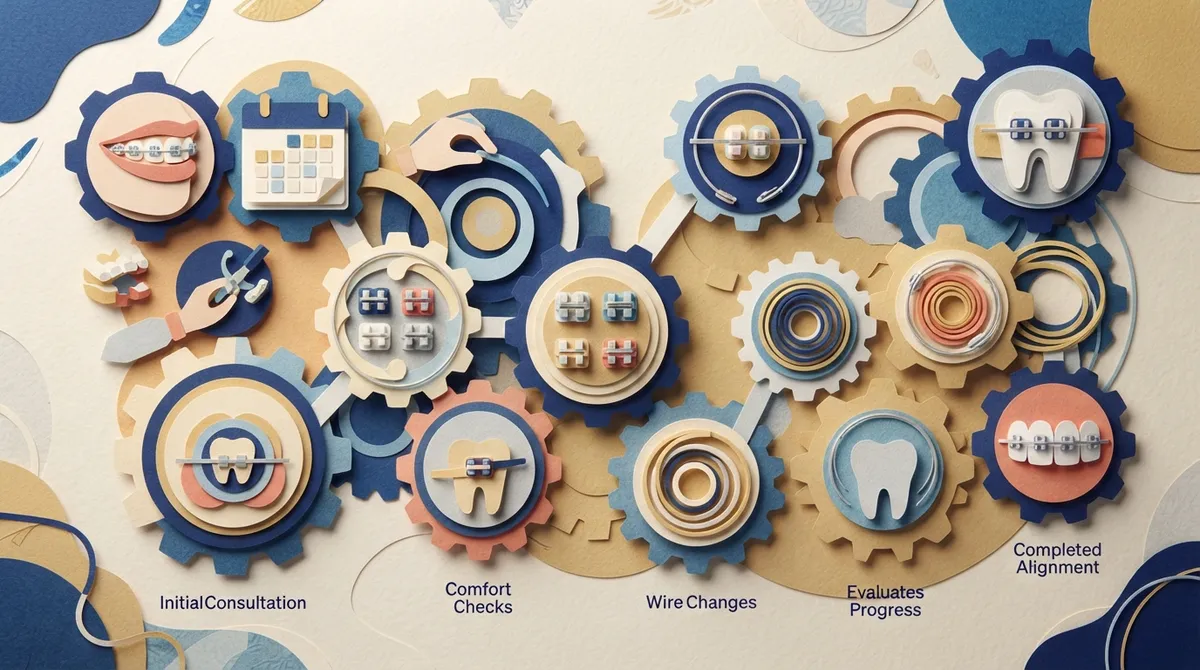
A typical adjustment visit may include a few simple steps:
- Your orthodontist removes the colored elastic ties or other small parts.
- They check how your teeth have moved since the last visit.
- They change or adjust the archwire if the plan calls for it.
- They put on fresh elastic ties, often in a color you pick.
- They review brushing and care, then set your next visit.
5. Not Every Visit Needs a New Wire
Here is something many patients do not know. Not every appointment involves a wire change. Some visits are quick checks. Others involve bigger changes. Your plan guides what happens each time.
6. Treatment Stage Changes the Timing
Early in treatment, your orthodontist may want to see you on a steady schedule. Later, as teeth settle into their final spots, the plan can change. Some phases need closer follow-up. Others allow more time between visits.
7. The Type of Appliance Matters
Braces are not all the same. Metal braces, ceramic braces, and other options use different mechanics. These details can affect how often you come in. You can learn more about your choices on our All About Braces page.
8. Your Teeth’s Response Counts
Every mouth moves at its own pace. If your teeth respond quickly, your plan may stay on track with fewer surprises. If they move more slowly, your orthodontist may tweak the schedule. This is normal and nothing to worry about.
9. Some Cases Need Closer Follow-Up
Complex cases or special treatment steps may call for shorter gaps between visits. Your orthodontist might ask to see you sooner for a specific clinical reason. If that happens, it simply means they want to guide your progress carefully.
10. A Little Soreness Is Normal
After an adjustment, mild pressure or soreness is common. It usually fades in a few days. Soft foods, warm salt water rinses, and over-the-counter relief (if your orthodontist approves) can help. For food ideas, see our friendly guide on what you can eat with braces.
11. Severe Pain Is Not Normal
Mild soreness is fine. But severe or lasting pain is a sign to call your orthodontist. The same goes for a broken wire or bracket that is poking or hurting you. Do not wait it out. Reach out and let your team help.
12. Do Not Skip Visits
It is tempting to skip an appointment when life gets busy. But missed visits can slow your progress. Repeated breakages can also add time to your treatment. Keeping your scheduled visits is one of the best ways to finish on time. Wondering about your overall timeline? Read how long braces take to work.
13. Do Not Stretch the Gap on Your Own
Can you go longer than eight weeks between visits? Only if your orthodontist says so. Waiting longer by yourself can delay treatment. If you need to move an appointment, call the office and talk it through.
14. Clear Aligners Work a Bit Differently
Clear aligners do not use wires and brackets, so check-ins can look different. You switch trays at home on a set plan, and your orthodontist checks progress at planned visits. Our Spark™ Clear Aligners are a more affordable alternative to Invisalign, and your visit rhythm is built around your plan.
15. Your Retainer Is Part of the Plan Too
Adjustments are not the end of the story. Once braces come off, retainers help hold your new smile in place. Learn more about retainers and why they matter for years to come.
What Can Change Your Appointment Schedule?
Here are the main things that shape how often you come in:
- Treatment stage: Early, middle, and finishing phases can each need different timing.
- Appliance type: Different braces and tools use different mechanics.
- Tooth response: Teeth move at different speeds for different people.
- Case complexity: Tricky bite or spacing issues may need closer checks.
- Breakages or missed visits: These can add extra visits or extend treatment.
Tips for Different Patients
For Parents of Kids and Teens
Plan appointments ahead of time. Try to book the next visit before you leave the office. This helps you avoid clashes with school events and sports. If your child has a broken bracket, call right away. For more on kids’ care, see our page on adolescent treatment.
For Teens and Young Adults
Big events like graduation or prom can feel like deadlines. Share your dates with your orthodontist early. They can tell you what is realistic. Staying on schedule and wearing any elastics as directed gives you the best shot at finishing on time.
For Busy Adult Professionals
Short, regular visits can fit into a work week more easily than you think. Ask about early or late appointment times. If you want to explore options, our adult treatment page has more details.
For Relapse Patients and Health-Conscious Patients
If you had braces before and your teeth shifted, retreatment plans are often tailored. Your visit schedule may look different from your first round. Share your health history and any gum concerns so your orthodontist can plan carefully.
How Long Does an Adjustment Visit Take?
Most adjustment visits are fairly short. Many patients are in and out much faster than their first day with braces. The exact time depends on what your orthodontist needs to do. A simple check takes less time than a visit with a wire change. Ask your team at your last visit how long to plan for next time.
What to Do Between Visits
You play a big role in your results. Here are some easy habits that help:
- Brush after meals and floss daily with tools made for braces.
- Avoid hard, sticky, and chewy foods that can break brackets.
- Wear elastics or other items exactly as directed.
- Use orthodontic wax if a bracket or wire rubs your cheek.
- Call the office quickly if something breaks or hurts.
Not sure what counts as urgent? Our guide on emergency vs. routine orthodontics can help you decide.
Why Visiting Brockway Orthodontics Feels Different
At Brockway Orthodontics in Clearwater, Florida, we want every visit to feel comfortable. Dr. Brockway takes time to listen and explain what is happening at each step. We use modern tools like digital impressions and 3D imaging, which help us plan with care. In certain cases, we even offer same-day treatments so you can start sooner.
Want to hear from real patients? Visit us on Google — Brockway Orthodontics to see what our Clearwater families say. You can also learn about the standards of care in our field through the Florida Association of Orthodontists and general oral health tips from the American Dental Association.
Wrapping It Up
So, how often are braces adjusted? For most people, it is about every 6 to 8 weeks, with some plans running shorter or longer. The best schedule is the one your orthodontist sets for you. Keep your visits, care for your braces, and call us if something feels off. Your smile is worth the effort, and we are cheering you on every step of the way.
Ready to start your smile journey or have questions about your next adjustment? Book your appointment online today, or contact us and our friendly team will help.
FAQs
Q: How often do you need to get braces adjusted?
A: Most people with traditional braces visit about every 6 to 8 weeks. Some plans run as short as 4 weeks or as long as 10 to 12 weeks. Your orthodontist sets the right timing for your own teeth.
Q: Do braces wires need to be changed at every adjustment?
A: Nope! Not every visit includes a wire change. Some appointments are quick progress checks or involve small tweaks like fresh elastic ties. Your treatment plan decides what happens each time.
Q: Is it normal for teeth to hurt after braces are adjusted?
A: Yes, mild pressure or soreness is very common and usually fades in a few days. Soft foods can help you feel better. If the pain is severe or does not go away, give your orthodontist a call.
Q: What should I do if my braces wire or bracket breaks between appointments?
A: Call your orthodontic office right away instead of waiting for your next visit. Broken parts can slow your progress or cause injury. Orthodontic wax can ease any rubbing until you are seen.
Q: Can I go longer than eight weeks between braces adjustments?
A: Only if your orthodontist says it is okay. Stretching the gap on your own can delay your treatment. If you need to reschedule, call the office and we will find a time that works.
Our Service Area