Key Takeaways
-
The most common reasons one tooth sits behind another are dental crowding (not enough jaw space) and a retained baby tooth that hasn't fallen out on schedule.
-
A permanent tooth behind a baby tooth, often called the "shark teeth" look, is frequently just a timing issue, but a dentist or orthodontist should check whether the baby tooth is loosening.
-
Do not pull a baby tooth yourself; a professional exam can determine whether it is loose enough to remove and whether the adult tooth has room to move into position.
-
Crowding rarely fixes itself because jaw space usually does not increase on its own, so a tooth behind its neighbors often needs orthodontic evaluation and space planning.
-
Early loss of a baby tooth can let neighboring teeth drift into the gap, leaving less room for the permanent tooth underneath.
-
A good rule of thumb is to see an orthodontist around age 7, or sooner if a tooth is painful, swollen, or not erupting as expected, since growth gives more treatment options.
Have you ever looked in the mirror, or at your child’s smile, and spotted one tooth hiding behind its neighbor? It’s a super common sight, and it can leave parents, teens, and adults alike scratching their heads. Is it a big deal? Will it fix itself? Honestly, those are great questions!
The short answer is that why one tooth may sit behind another usually comes down to one of two things: not enough room in the mouth (crowding) or a baby tooth that hasn’t left the party yet (a retained baby tooth). Sometimes it’s a mix of both, and sometimes there’s another cause entirely.
In this friendly guide, we’ll compare the most common explanations side by side, show you what’s normal and what’s worth a closer look, and walk you through how an orthodontist figures out what’s going on. You’ll also learn what treatment options may help, whether you’re 8 or 48. Let’s dive in!
The Quick Answer: Why One Tooth May Sit Behind Another
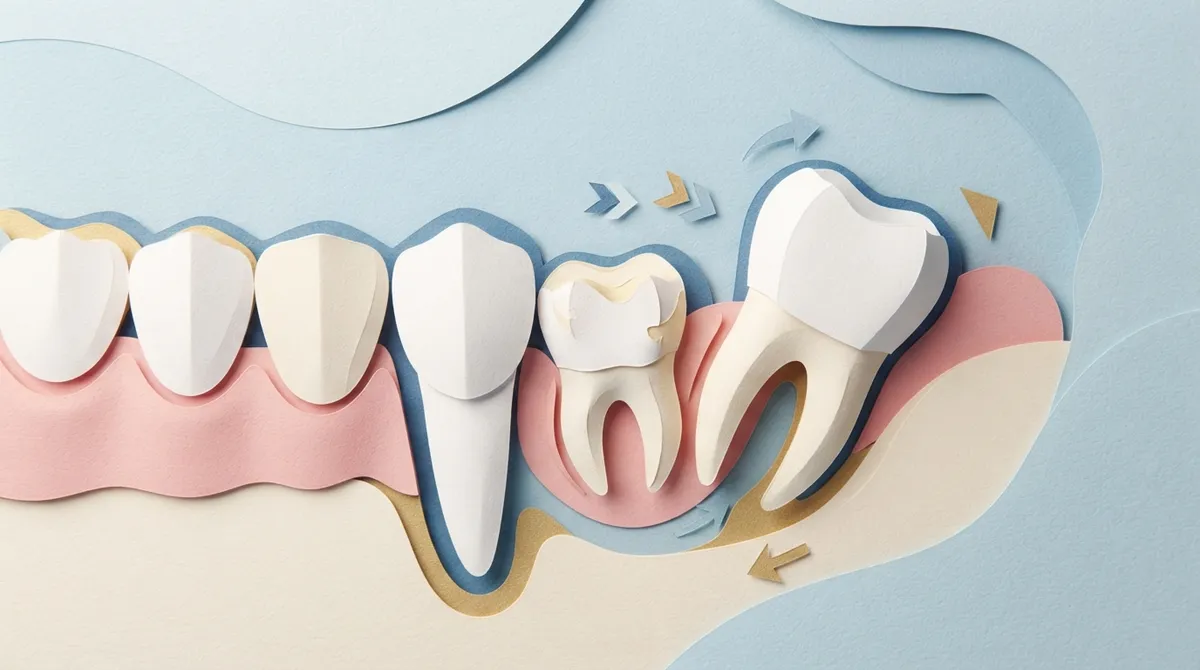
A tooth that sits behind another is often a sign of dental crowding. That means the dental arch (the curved shape of your teeth) doesn’t have enough space for every tooth to line up neatly. When space runs short, a tooth can get pushed toward the tongue, twist sideways, or get partly blocked from coming in.
But crowding isn’t the only suspect. A tooth can also end up behind another because of:
- A retained baby tooth that hasn’t fallen out on schedule
- An altered eruption path, where the adult tooth grows in at an unusual angle
- Early loss of a baby tooth, which lets neighbors drift into the gap
- An obstruction, such as an extra tooth blocking the way
The right answer depends on age, how the teeth are developing, and how much space is available. That’s why a quick check with an orthodontist is so helpful.
Crowding vs. Retained Baby Tooth: A Side-by-Side Comparison
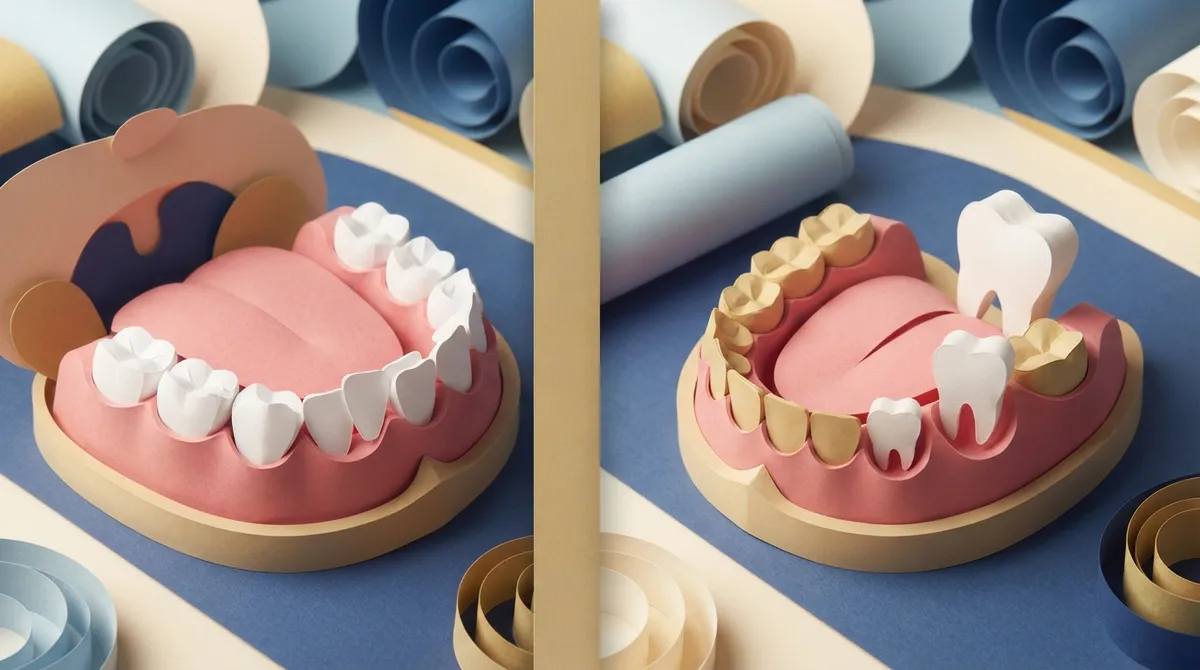
These two causes can look similar at first glance, but they behave differently. Here’s how they stack up.
| Factor | Dental Crowding | Retained Baby Tooth |
|---|---|---|
| Main cause | Not enough room in the jaw for all teeth | Baby tooth hasn’t fallen out before the adult tooth arrives |
| Who it affects | Kids, teens, and adults | Mostly children in the mixed-teeth stage |
| Common look | Overlapping, twisted, or tucked-in teeth | Adult tooth growing behind a baby tooth |
| Will it fix itself? | Rarely, since space usually doesn’t increase on its own | Sometimes, once the baby tooth loosens and falls out |
| Typical next step | Orthodontic evaluation and space planning | Check whether the baby tooth is loosening; remove if indicated |
| Family link | Often runs in families | Less often hereditary |
Keep in mind that every mouth is different. This table gives you the big picture, but only a hands-on exam can tell you what’s happening in your own smile.
Cause #1: Dental Crowding and Jaw Size
When Teeth Are Bigger Than the Space
One of the most frequent reasons for a tooth sitting behind its neighbor is a mismatch between tooth size and jaw size. Picture trying to park ten cars in a lot that only fits eight. Something has to give! In the mouth, that “something” is often a tooth that gets nudged inward or outward.
This mismatch can run in families. If a parent had crowded teeth, a child may be more likely to see it too. If you’re curious about the bigger picture, our guide on what causes crowding in children’s developing teeth walks through it in plain language.
Signs Crowding May Be Involved
- Several teeth overlap or twist, not just one
- Teeth feel tight when flossing
- A tooth looks “tucked in” toward the tongue
- Family members have had similar spacing issues
If that sounds familiar, you might find it helpful to read about the 5 signs you need an orthodontist for crowded teeth.
Cause #2: A Retained Baby Tooth
The Classic “Shark Teeth” Look
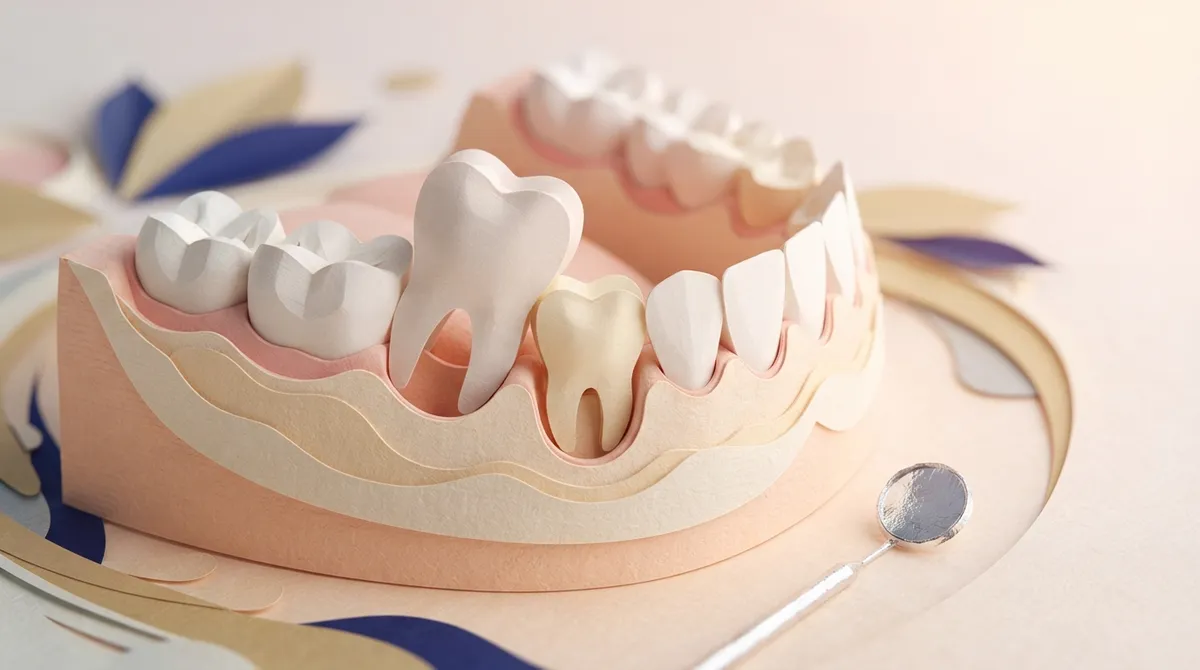
Parents often call this the “shark teeth” look. A permanent front tooth pops up behind a baby tooth that’s still firmly in place. It can look alarming, but it doesn’t always mean something is wrong. Often, the baby tooth is simply running a little late.
A dentist or orthodontist can check whether the baby tooth is loosening and whether the adult tooth has room to move into position. If the baby tooth is slow to leave, removing it may be recommended so the permanent tooth can settle forward. That decision should come from a professional exam, not guesswork.
Want more detail? Our article on 10 retained baby teeth questions parents ask covers the most common worries.
When Early Tooth Loss Plays a Role
Here’s a twist: sometimes the problem is the opposite. If a baby tooth is lost too early, neighboring teeth can drift into the empty space. That leaves less room for the permanent tooth underneath, which may then erupt behind or beside its neighbors. You can learn more in why early loss of baby teeth matters for smiles.
Cause #3: An Unusual Eruption Path or Obstruction
Teeth don’t always follow the same road map. Sometimes an adult tooth takes an altered path as it comes in, landing behind another tooth. In other cases, something physically gets in the way, such as an extra tooth (called a supernumerary tooth) or another obstruction.
Because these causes aren’t visible from the outside, an orthodontist may use dental X-rays or other imaging to look beneath the gums. This helps them spot a tooth that’s unerupted, impacted, or blocked. If you’re wondering what those images can reveal, take a peek at what orthodontic X-rays can help evaluate.
How Age Changes the Story
The same-looking tooth can mean different things at different ages. Let’s compare.
Children (Roughly Ages 6 to 12)
Kids are in a busy stage called mixed dentition, where baby and adult teeth share the mouth. A tooth behind another is common here, and many cases are simply timing. Still, it’s smart to have it checked. The jaw is growing, which gives an orthodontist more options to guide teeth into place. Our guide to age 7 vs. waiting explains why early visits can be so useful.
Teens
By the teen years, most baby teeth are gone. A tooth sitting behind another is more likely tied to crowding or an eruption issue than a retained baby tooth. Teens often care a lot about how their smile looks, so modern options like braces and clear aligners can be a great fit.
Adults
Adults can have crowding that was never treated, or teeth that shifted after past orthodontic care. If you wore braces years ago and a tooth has slipped behind its neighbor, you’re definitely not alone. Our post on orthodontic relapse warning signs may sound very familiar!
How an Orthodontist Finds the Cause
Figuring out why one tooth sits behind another is a bit like detective work. Here’s a typical process.
- Look at tooth position. The orthodontist checks where each tooth sits and whether any are rotated or tucked in.
- Measure available space. They compare how much room there is with how much room the teeth need.
- Check the bite. They see how the upper and lower teeth meet.
- Review the eruption stage. For children, they note which teeth are in, which are loose, and which are still on the way.
- Assess jaw growth. Growth can change the options available.
- Use imaging when needed. X-rays or scans help find hidden teeth, extra teeth, or blocked pathways.
Many practices also use digital scanning, which is far more comfortable than old-school goopy molds. At Brockway Orthodontics in Clearwater, Dr. Brockway uses modern technology like digital impressions and 3D imaging to plan treatment with precision. You can read about how intraoral scanning works if you’re curious.
Treatment Options: Braces vs. Clear Aligners (and More)
Treatment is always individualized. Depending on the cause, the plan might involve simply watching and waiting, or something more active. Here are the main paths.
- Monitoring: For a developing tooth in a growing child, an orthodontist may simply keep an eye on it as baby teeth fall out.
- Removing a retained baby tooth or obstruction: When indicated, this can clear the way for the adult tooth.
- Creating space: In growing kids, an appliance such as an expander may help. Learn more in our palatal expander guide.
- Aligning teeth: Braces or clear aligners can gently move the tooth into its proper place.
How Braces and Aligners Compare for a Tooth Behind Another
| Feature | Braces (Metal or Ceramic) | Clear Aligners |
|---|---|---|
| Best for | More complex crowding or rotations | Mild to moderate crowding |
| Visibility | Metal is noticeable; ceramic blends in more | Nearly invisible |
| Removable? | No, fixed in place | Yes, but must be worn consistently |
| Eating | Some food limits apply | Take them out to eat |
| Cleaning | Takes extra care around brackets | Brush and floss as usual |
Neither option is automatically “better.” The best choice depends on how far the tooth needs to move, your age, and your lifestyle. Brockway Orthodontics offers metal braces, ceramic (clear) braces, and Spark™ Clear Aligners, a more affordable alternative to Invisalign, so families can find a good fit. For a deeper comparison, check out braces vs. clear aligners for crowded teeth, or see how aligners work in how removable aligners straighten teeth.
Does It Matter If I Leave It Alone?
Mild crowding doesn’t automatically mean treatment is necessary. Plenty of people live happily with a slightly tucked-in tooth. That said, there are a few things worth keeping in mind.
- Brushing and flossing get trickier. Overlapping teeth can trap plaque and food in spots that are hard to reach.
- Bite and wear. Teeth that don’t line up well may affect how your bite comes together.
- Comfort and confidence. Some people simply feel better about their smile once a tooth is aligned.
It’s also worth speaking up sooner if a tooth is painful, swollen, injured, or doesn’t seem to be coming in as expected. Those signs deserve a professional look. If you ever have a sudden problem, our guide on when you need an emergency orthodontist appointment can help you decide what to do.
A Quick Look at Care at Home
While you wait for an appointment or during treatment, good habits go a long way. Try these simple tips:
- Brush twice a day, angling the bristles toward the tucked-in tooth.
- Floss daily, using a floss threader or water flosser if the gap is tight.
- Skip the urge to wiggle or push on the tooth yourself.
- Keep regular dental checkups on the calendar.
If you’re in braces or aligners, our tips on how to brush teeth with braces are a helpful refresher.
Why Brockway Orthodontics Is a Great Place to Start
If a tooth is hiding behind another in your family, Dr. Brockway and her team in Clearwater, Florida are happy to take a look. She takes the time to listen to your concerns, explain what she sees in simple terms, and walk you through your options so you feel comfortable every step of the way. We welcome kids, teens, and adults, so the whole family can come together.
Curious what other families think? See what our patients say, and visit our Brockway Orthodontics location on Google to read reviews. You can also learn more about the doctor in who the Brockway orthodontist in Clearwater, FL is. For national guidance on dental health, the American Dental Association offers helpful resources, and you can find orthodontic information through the Florida Association of Orthodontists. Our own team is also active on Facebook if you’d like to say hello.
The Takeaway
So, why one tooth may sit behind another? Most often it’s crowding, a retained baby tooth, or an unusual eruption path, and sometimes a combination. The good news is that there are plenty of ways to help, from simply monitoring a growing child to using braces or clear aligners to guide the tooth into place.
You don’t have to figure it out alone. A quick visit can give you a clear answer and a plan that fits your life. Ready to find out what’s going on with that tucked-in tooth? Book your appointment online or contact us with any questions. We’d love to help you smile with confidence!
FAQs
Q: Why is my permanent tooth growing behind my baby tooth?
A: This usually happens when the baby tooth hasn’t fallen out yet, so the adult tooth takes the path of least resistance and comes in behind it. It’s often just a timing thing, but it’s smart to have a dentist or orthodontist check whether the baby tooth is loosening and whether the new tooth has enough room.
Q: Will a tooth that erupts behind another move into place on its own?
A: Sometimes it will, especially if a baby tooth falls out and the adult tooth can drift forward into the open space. If crowding is the cause, though, the tooth often needs a little help from an orthodontist, since space doesn’t usually appear on its own.
Q: Should a baby tooth be removed if an adult tooth is coming in behind it?
A: Not always, so please don’t try to pull it yourself! A dentist or orthodontist can tell whether the baby tooth is already loose and whether removing it would help the adult tooth settle into position.
Q: When should a child see an orthodontist about a tooth erupting out of position?
A: A good rule of thumb is to book a visit around age 7, or sooner if you spot a tooth coming in behind another, or if a tooth is painful, swollen, or not erupting as expected. Early checks give the orthodontist more options while your child’s jaw is still growing.
Q: Can crowded teeth cause problems with brushing, flossing, or the bite?
A: They can! Overlapping teeth are harder to clean well, which can make it easier for plaque to hang around, and some crowded teeth don’t line up neatly when you bite down. Mild crowding doesn’t always need treatment, but an orthodontist can help you decide what makes sense for you.
Our Service Area