Key Takeaways
-
Adults can get braces too: there is no general upper age limit for moving teeth, as long as teeth and gums are healthy.
-
The AAO recommends an initial orthodontic evaluation by about age 7, but this is a check-up to monitor growth, not a sign that braces must start then.
-
Braces soreness is normal for a few days after fitting or adjustments; sharp, constant, or worsening pain usually signals a loose wire or broken bracket.
-
Most patients wear braces about 12 to 24 months, though complex cases take longer and adjustment visits typically occur every 6 to 8 weeks.
-
Braces themselves don't automatically cause cavities, but poor cleaning and frequent sugary or acidic foods can; hard, sticky, and chewy foods can break brackets.
-
Retainers are essential, not optional, because teeth can shift after treatment and retainers help protect your results.
If you have ever heard that braces hurt all the time, last forever, or are only for kids, you are not alone. Braces myths and facts get mixed up in school hallways, family group chats, and late-night internet searches. The truth? Modern orthodontic care is far more comfortable, flexible, and personalized than many people expect.
Whether you are a parent wondering when your child should start, a teen planning for graduation photos, or an adult thinking about a smile upgrade in 2026, this guide is for you. We will sort the braces myths and facts into five simple groups, so you can feel confident about your next step.
At Brockway Orthodontics in Clearwater, Florida, we hear these questions every week. We love clearing them up, because a well-informed patient is a happy patient. Let’s dive in!
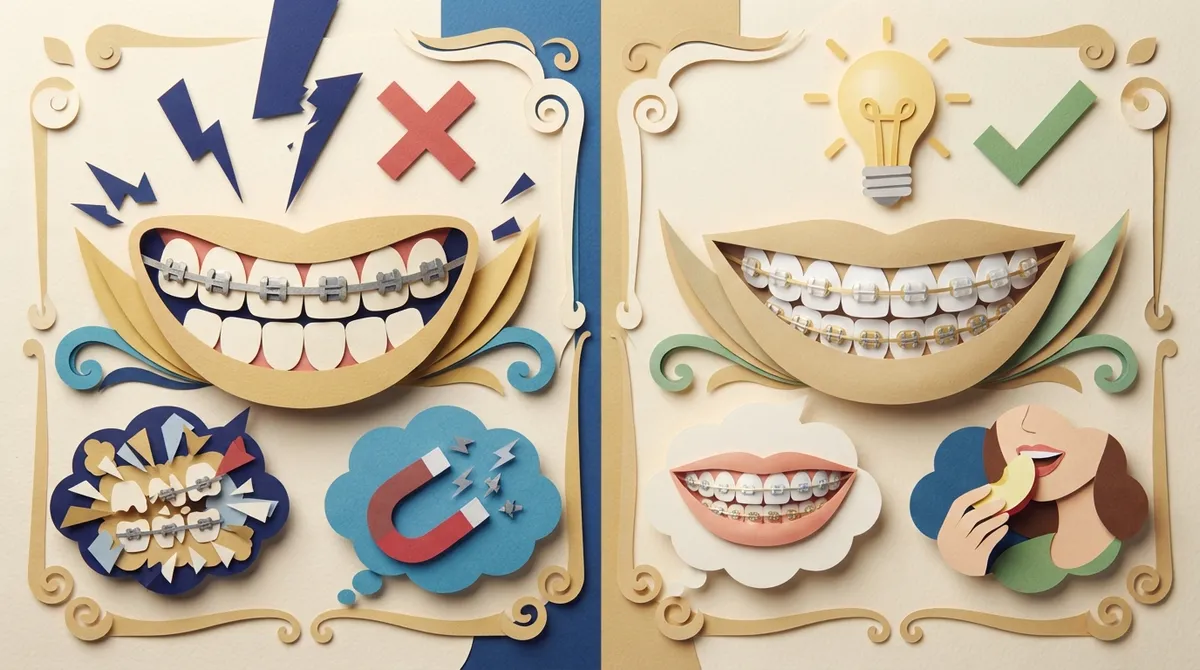
Quick Look: Braces Myths vs. Facts at a Glance
Short on time? This table gives you the big picture. We will explain each one in more detail below.
| Common Myth | The Fact |
|---|---|
| Braces are only for kids and teens. | Adults can be treated too, if teeth and gums are healthy. |
| Everyone needs braces at the same age. | Timing is individual. A first check-up around age 7 is just an evaluation. |
| Braces hurt constantly. | Soreness is usually mild and temporary after fitting or adjustments. |
| Braces always take years. | Many patients wear them about 12 to 24 months. Complex cases can take longer. |
| Retainers are optional. | Retainers help protect your results because teeth can shift. |

1. Myth: Braces Are Only for Kids and Teens
This might be the most common of all the braces myths and facts. Picture a classic middle school smile with metal brackets. That image sticks with people for life.
The Fact: Adults Can Absolutely Get Braces
Orthodontic care can benefit adults as well as children. According to guidance from the American Association of Orthodontists (AAO) and the NHS, there is no general upper age limit for moving teeth. What matters most is that your teeth and gums are healthy enough for treatment.
Age can change the treatment plan, since adult bone is more settled than a growing teen’s. But that does not stop you from getting a straighter, healthier smile. Many busy professionals choose discreet options, such as ceramic braces or Spark™ Clear Aligners, to fit treatment into a full work and social life.
Curious if you are too old? Our article 8 Truths About Whether You’re Too Old for Braces answers that question in detail. You can also explore our adult treatment options.
Who Else Benefits?
- Parents of children and teens: Early planning can make later treatment simpler.
- Young adults: Many choose treatment before graduations, weddings, or big life events.
- Relapse patients: If your teeth shifted after past treatment, retreatment may help.
- Health-conscious patients: Straighter teeth can be easier to clean and keep healthy.
2. Myth: Every Child Should Get Braces at the Same Age
Some parents worry they are “behind” if their child does not have braces by a certain birthday. Others worry that age 7 is too early. Both worries come from the same myth.
The Fact: Timing Is Personal
The AAO recommends an initial orthodontic evaluation by about age 7. This is a check-up, not a promise that braces will start then. Many children begin full treatment later, once more permanent teeth have come in.
Think of it like a pediatrician visit. We are watching how the jaw and teeth are growing, so we can spot problems early and pick the best moment to act. Some kids need early help. Many simply need to be monitored.
Want to know more? Read How to Know When Your Child Should First See an Orthodontist, or learn about our early treatment and adolescent treatment programs.
3. Myth: Braces Hurt All the Time
Many people picture braces as a daily struggle. This fear keeps some folks from even booking a consultation. Let’s put it to rest.
The Fact: Soreness Is Real but Temporary
It is normal to feel pressure or tenderness for a few days after braces are fitted or adjusted. Your teeth are moving, so they may feel a little sore, much like muscles after a new workout. Soft foods, a cool drink, and orthodontic wax can help a lot.
What is not expected? Sharp, constant, or worsening pain. If that happens, please call your orthodontist. A loose wire or broken bracket is often the cause, and it is usually an easy fix.
Tips to Feel More Comfortable
- Eat soft foods for the first few days after an adjustment.
- Use orthodontic wax on any bracket or wire that rubs your cheek or lip.
- Rinse with warm salt water to soothe sore spots.
- Ask your orthodontist before taking any pain medicine.
- Call the office if the discomfort feels sharp or does not improve.
Want the full story? Check out Do Braces Hurt? What Clearwater Patients Can Expect and 14 Things to Expect Your First Week With Braces.
4. Myth: Braces Always Take Several Years
Some people think braces mean four or five years of metal. Others expect a quick fix in a few months. Neither picture is fully accurate.
The Fact: Treatment Time Varies
The AAO reports that many people wear braces for about 12 to 24 months. NHS guidance also commonly gives a range of about one to two years. Complex cases can take longer.
Several things affect your timeline:
- The type of bite or alignment problem
- How far your teeth need to move
- The type of appliance you use
- How well you follow your orthodontist’s advice
Adjustment visits usually happen every 6 to 8 weeks, according to NHS patient guidance. The AAO gives a broader range of about 4 to 12 weeks, depending on your treatment stage. These are general ranges, not guarantees. Your own plan will be personalized.
For a deeper look, see How Long Do Braces Take to Work?
Habits That Can Slow You Down
| Habit | Why It Matters |
|---|---|
| Missing appointments | Progress can pause and treatment may run longer. |
| Eating hard or sticky foods | Brackets can break, which interrupts tooth movement. |
| Skipping elastics or aligner wear | Teeth may not move as planned. |
| Poor brushing and flossing | Plaque buildup can cause gum or enamel problems. |
5. Myth: Braces Damage Teeth and You Can Eat Anything
Here are two myths that sit on opposite sides of the same coin. One says braces ruin your teeth. The other says braces change nothing about what you can eat. Both miss the mark.
The Fact About Tooth Health
Braces themselves do not automatically cause cavities. However, plaque and food can collect around brackets and wires. If cleaning is poor, or if you often have sugary or acidic foods and drinks, you may get cavities or lasting white marks on the enamel.
The good news is that good habits protect your smile. Brush carefully after meals, clean between your teeth, and keep up with routine dental check-ups. Our guides on how to brush teeth with braces and oral hygiene with braces walk you through it step by step. The American Dental Association also offers helpful general advice on daily oral care.
The Fact About Food
You cannot eat everything with traditional braces. Hard, sticky, and chewy foods can bend wires, pop brackets, or get stuck. Most patients are advised to avoid or change these foods.
- Foods to avoid or modify: hard candy, caramel, popcorn kernels, ice, whole raw carrots, and tough bagels.
- Safer choices: yogurt, pasta, soft fruits, cooked vegetables, eggs, and tender meats.
- Drinks: limit sugary and acidic drinks, and rinse with water after having them.
Need ideas? Visit What Can You Eat With Braces? Your Friendly Food Guide or Foods to Avoid With Braces.
Bonus Myths: Retainers and Broken Brackets
Myth: Once Braces Come Off, Your Teeth Stay Straight Forever
This one catches many people off guard. The fact is that teeth can shift after treatment. Retainers help hold your new smile in place, and your orthodontist will tell you which type to wear and how often.
If you have ever skipped your retainer and noticed your teeth moving, you are not alone. Some of our patients come back for retreatment because of relapse, and we are happy to help. Learn more about retainers or read How to Wear a Retainer After Braces and Keep Your Smile.
Myth: A Broken Bracket or Missed Visit Is No Big Deal
Broken parts and missed appointments can slow your progress and may extend treatment time. If a bracket is loose or a wire is poking, call your orthodontist instead of trying to fix it yourself. A quick visit can keep things on track. Our guide on DIY wire fixes versus an orthodontist visit explains why.
How to Choose the Right Treatment for You
Once the myths are cleared up, the next question is usually, “Which option fits me?” The answer depends on your bite, your goals, and your lifestyle.
| Option | Good to Know |
|---|---|
| Metal braces | Reliable and effective for many bite types. Learn more in All About Braces. |
| Ceramic (clear) braces | Tooth-colored brackets that blend in more than metal. |
| Spark™ Clear Aligners | Removable and nearly invisible, and a more affordable alternative to Invisalign. |
Not sure which path is best? Compare options in Clear Aligners vs. Braces: Which One Is Right for You? Cost matters too, and we offer flexible financing and insurance support to help.
Why Clearwater Families Trust Brockway Orthodontics
Dr. Brockway is more than a qualified orthodontist. She takes time to listen to your worries and your dreams for your smile. You can meet Dr. Brockway and learn about her approach to care.
We treat the whole family, from kids and teens to adults, and we explain every step in plain, friendly language. Our office uses modern tools, including digital impressions instead of messy molds and 3D imaging for precise planning. In certain cases, we even offer same-day treatment to fit your busy schedule. Take a peek at our office to see where the magic happens.
Still curious? You can also read what neighbors say about us on Google. Visit us on Google — Brockway Orthodontics to see reviews from real Clearwater patients. For trusted professional standards, the Florida Association of Orthodontists is another helpful resource for families in our state.
Ready to Separate Myth From Fact for Your Own Smile?
The best way to know what braces can do for you is to talk with an orthodontist who listens. Your first visit is relaxed, friendly, and full of answers. Take a look at Your First Visit to see what to expect.
Whether you are a parent planning for your child, a teen with big events ahead, or an adult ready for a change, we would love to help. Book your free consultation online today, or contact us with any questions. Your best smile is closer than you think!
FAQs
Q: Are braces only for kids, or can adults get them?
A: Adults can get braces too! There is no general upper age limit for moving teeth, as long as your teeth and gums are healthy. Many adults choose discreet options like ceramic braces or clear aligners.
Q: At what age should a child first see an orthodontist?
A: The American Association of Orthodontists recommends an initial evaluation by about age 7. This is just a check-up to watch growth, not a sign that braces must start right away. Many kids begin treatment later.
Q: Do braces hurt, and how long does soreness last?
A: Most people feel mild pressure or tenderness for a few days after braces are put on or adjusted. Soft foods and orthodontic wax can help. If pain is sharp or keeps getting worse, call your orthodontist.
Q: How long do braces usually take to straighten teeth?
A: Many patients wear braces for about 12 to 24 months, though your timeline depends on your bite, your plan, and how well you follow instructions. Complex cases can take longer, so your orthodontist will give you a personal estimate.
Q: Do I really have to wear a retainer after braces?
A: Yes, retainers help protect your results, because teeth can shift after treatment. Your orthodontist will recommend the best type and wear schedule for you. Think of your retainer as a small habit that protects a big investment.
Our Service Area