Key Takeaways
-
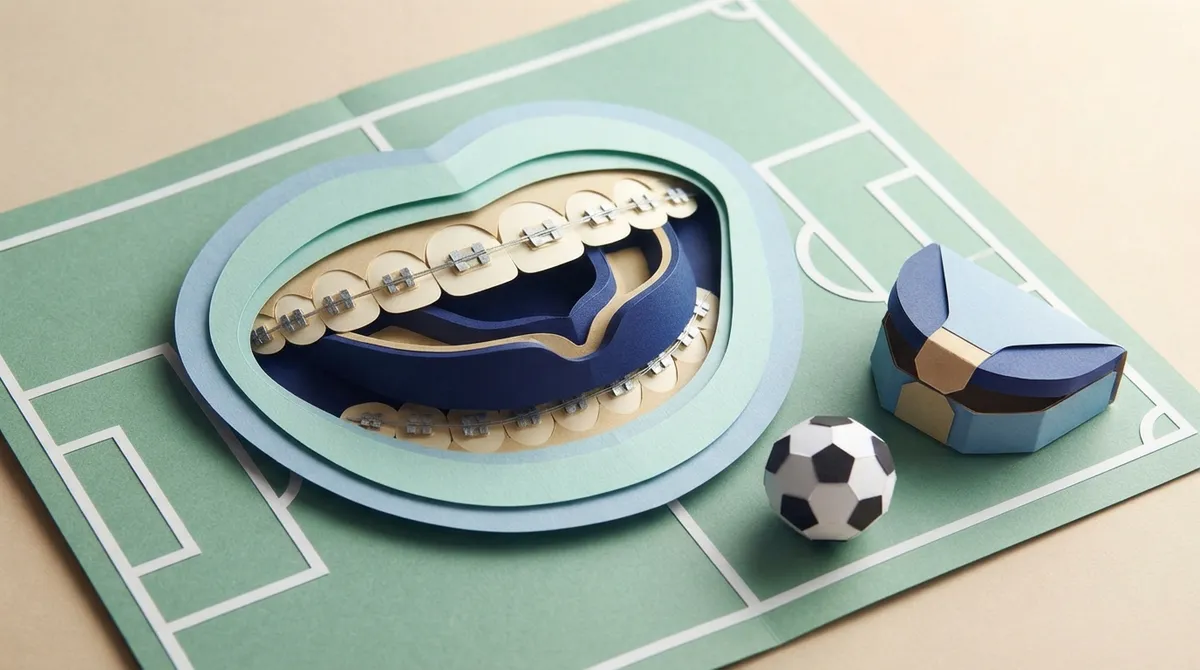
Yes, you can and should wear a mouthguard with braces: it cushions blows that could push lips and cheeks into brackets and wires, though it cannot prevent every injury.
-
Orthodontic-specific or custom-made guards are usually the best choice because they fit over brackets and leave room for tooth movement during treatment.
-
Boil-and-bite guards can work in a pinch but risk poor fit as teeth shift, so check the fit often and switch to an orthodontic or custom guard for long-term use.
-
Test fit at home: the guard should cover upper teeth and brackets, stay put when you shake your head or open and close your mouth, and let you talk and breathe easily.
-
Replace your guard if it is cracked, torn, worn thin, loose, or no longer matches how your teeth have moved, and wear it at both practices and games.
-
Rinse the guard after each use, brush it gently, air dry it, and store it in a ventilated hard case away from heat; avoid hot water, which can warp it.
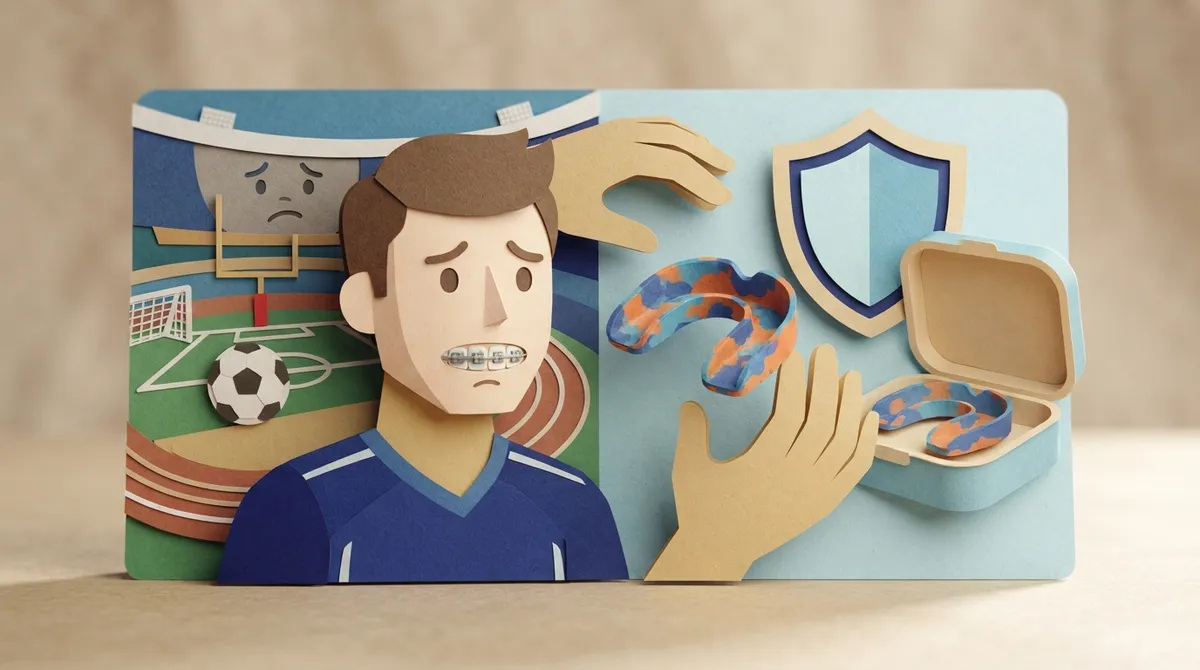
Picture this: it’s game day, your braces are shiny, and your jersey is on. Then someone asks, “Wait, can you even play with braces?” Good news. You absolutely can. But there’s one piece of gear you shouldn’t skip, and that’s a mouthguard.
If you have braces, a hard hit to the face can do more than bruise your pride. Brackets and wires sit right against your lips and cheeks. A good guard helps protect your soft tissue, your teeth, and your braces. It cannot prevent every injury, but it lowers the risk in a big way.
Most patients and parents have the same worries. What kind of guard should you buy? Will it fit over brackets? How do you keep it clean? These sports mouthguard questions for patients with braces come up at almost every practice season. Below, we walk through the five biggest ones in plain, friendly language. Whether you are a parent buying gear for a young athlete, a teen on the team, or an adult who plays in a rec league, you will find clear answers here.
Question 1: Do I Really Need a Mouthguard With Braces?
Short answer: yes. Orthodontic guidance, including advice from the American Association of Orthodontists, recommends that athletes with fixed braces wear a mouthguard during sports. The reason is simple. Without one, a blow to the mouth can push your lips and cheeks into brackets and wires. That can cut the inside of your mouth, sometimes badly.
A guard also adds a cushion between your upper and lower teeth. This helps lower the risk of chipped teeth, jaw injuries, and broken brackets. It is not a magic shield, though. No mouthguard can promise zero injuries.
Which Sports Call for a Mouthguard?
Contact and collision sports are the obvious ones. But many other activities carry risk too. Think about a stray elbow in basketball or a soccer ball to the face.
- Football, hockey, and lacrosse: High contact, so a guard is a must.
- Basketball and soccer: Elbows, falls, and flying balls happen fast.
- Baseball and softball: A bad hop or a collision on the bases can hurt.
- Skateboarding, biking, and gymnastics: Falls can slam your face into hard surfaces.
- Martial arts and wrestling: Close contact means more chances for impact.
A good rule of thumb: if you could take a hit to the face, wear the guard. Also, some leagues and schools require one. Rules vary by location and level of play, so check with your coach or league.
Practice Counts, Too
Many injuries happen during practice, not just games. Wear your guard at both. It only works if it is in your mouth when the unexpected happens.
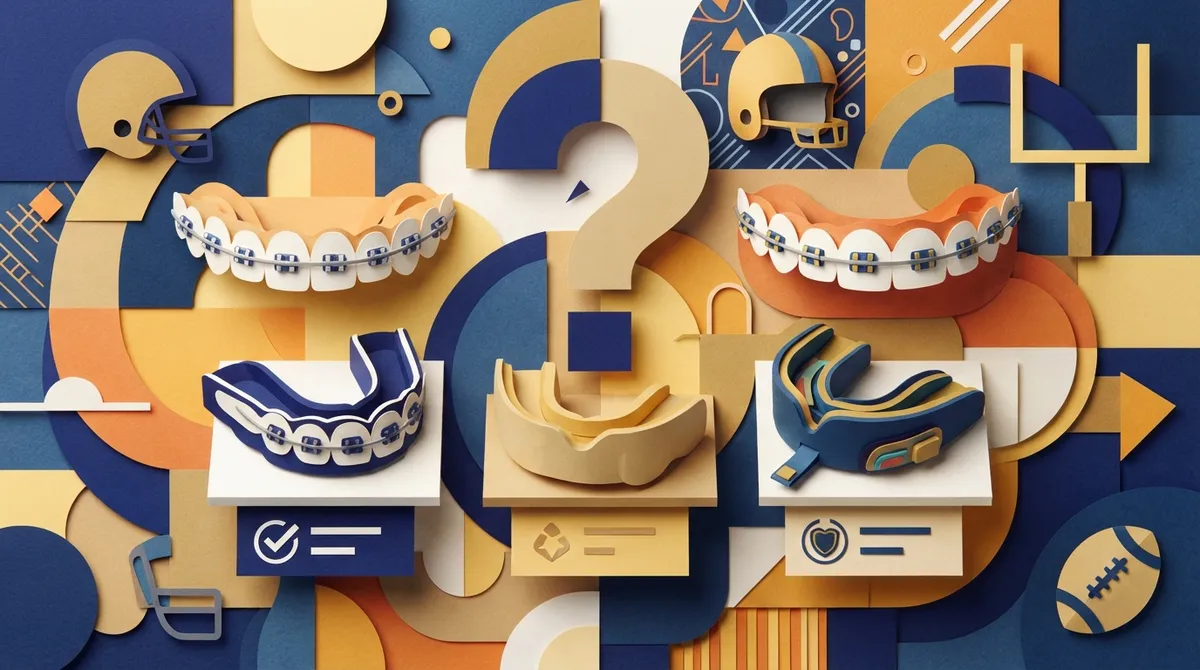
Question 2: What Type of Mouthguard Works Best for Braces?
This is the question we hear most. Not every guard plays nicely with brackets and wires. Here is a simple comparison to help you sort through the options.
| Mouthguard Type | How It Works | Fit With Braces | Typical Cost Level |
|---|---|---|---|
| Stock (ready-made) | Comes pre-formed, no adjusting | Often bulky and loose; may not fit over brackets well | Lowest |
| Boil-and-bite | Softened in hot water, then bitten into | Can work in some cases, but may fit poorly as teeth shift | Low to moderate |
| Orthodontic-specific | Made to fit over braces with extra room | Designed to accommodate brackets and wires | Moderate |
| Custom-made | Built from an impression or digital scan of your mouth | Best fit and comfort; can allow space for tooth movement | Highest |
What Makes a Guard Good for Braces?
Look for a guard that:
- Fits over your brackets without pressing hard on them.
- Stays in place without you biting down to hold it.
- Lets you breathe and talk with ease.
- Leaves room for your teeth to keep moving during treatment.
- Feels comfortable enough that you will actually wear it.
Orthodontic-specific or custom guards are usually the smartest choice because they are built with braces in mind. If you are not sure which one fits your sport and your treatment stage, ask your orthodontist. At Brockway Orthodontics in Clearwater, Dr. Brockway and the team are happy to look at your guard and tell you if it is a good match.
Question 3: Can I Use a Boil-and-Bite Mouthguard With Braces?
You may have seen boil-and-bite guards at the sporting goods store. They are cheap and easy to find. So can you use one? Sometimes, but with some big cautions.
These guards are shaped by biting into softened material. With braces, that can go wrong. You might press the material too hard against your brackets. Or you might bite down so hard that the guard ends up too tight. A guard that squeezes your braces can also add pressure on your teeth in ways you do not want.
The Moving Teeth Problem
Here is the tricky part. Your teeth are changing position during treatment. A guard that fits perfectly today may not fit well a few months from now. That is just part of how braces work.
If you do use a boil-and-bite guard, keep these tips in mind:
- Follow the package directions exactly, and never use water that is too hot.
- Do not force a guard that causes pain or digs into your gums.
- Check the fit often, especially after adjustment visits.
- Stop using it if it feels loose, tight, or hard to breathe through.
Think of it this way: a boil-and-bite guard is better than no guard at all in a pinch. But an orthodontic or custom guard is usually the better pick for the long haul.
Question 4: How Do I Know If My Mouthguard Fits Right?
A guard only protects you if it fits well. A loose one can slip out when you need it most. A tight one can cause sore spots and make you want to ditch it. So how do you check?
Try this quick fit check at home:
- Put the guard in and close your mouth gently.
- Make sure it covers your upper teeth and brackets fully.
- Shake your head side to side. The guard should stay put.
- Open and close your mouth. It should not pop out on its own.
- Talk and breathe. You should be able to do both without much trouble.
If it passes all five, you are likely in good shape. If it fails any, it is time for a closer look.
How Thick Should It Be?
Guidance from the British Orthodontic Society mentions around 4 mm of material over vulnerable areas as one thing to think about when choosing a guard. That is UK professional advice, not a rule that applies everywhere. The key idea is that the guard should have enough cushion to absorb impact without being so bulky that it is hard to wear.
When to Replace It
Guards do not last forever. Swap yours out if it is:
- Cracked, torn, or worn thin
- Loose or no longer snug
- Causing pain or rubbing your cheeks
- No longer a match for how your teeth have moved
Growing kids and teens may need a new guard more often. Their mouths change fast, and so do their braces. Many parents also find that a fit check at each orthodontic visit makes this easy to stay on top of. If you want help planning visits, our guide on why orthodontic checkups matter explains how regular appointments keep treatment on track.
Question 5: How Do I Clean, Store, and Care for My Mouthguard?
A mouthguard lives in your mouth and then in your gym bag. That means it can pick up germs fast. A little daily care goes a long way, and it is easy to build into your routine.
Simple Cleaning Steps
- Rinse the guard with cool water right after you use it.
- Brush it gently with a soft toothbrush and a little mild soap or toothpaste.
- Rinse again and let it air dry fully.
- Store it in a hard case with air holes so it can breathe.
Avoid hot water, since it can bend or warp the guard. Keep it away from hot cars, direct sun, and the family dog. Follow the maker’s cleaning tips and your orthodontist’s advice too.
Don’t Forget Your Braces Care
Wearing a guard does not replace good brushing. Plaque can build up under and around brackets, and a damp guard can trap more of it against your teeth. Brush and floss before you put your guard in. If you need a refresher, our post on how to brush teeth with braces walks through the steps.
Also think about fuel. Athletes with braces need snacks that are easy on brackets and wires. Check out these braces-friendly snacks for sports practice for ideas that will not cause a mid-game emergency.
What to Do If You Get Hurt Playing
Even with a great guard, accidents can happen. Here is what to do if you take a hit to the mouth:
- Check for injury: Look for bleeding, loose or chipped teeth, or sharp wire ends.
- Rinse gently: Use warm water. Do not poke at the area.
- Protect your lips and cheeks: A bit of orthodontic wax over a poking wire can help until you are seen.
- Call your orthodontist or dentist: This is especially important if a tooth is hurt, there is bleeding, or a bracket or wire is damaged.
Do not wait to see if it gets better, because a mouthguard lowers risk but does not remove the need for a check-up after trauma. If you are unsure whether something counts as urgent, read our guide on when you need an emergency orthodontist appointment. You can also learn what to try first with these orthodontic emergency fixes.
What About Clear Aligners and Sports?
Some patients wear clear aligners instead of braces. Aligners are not a replacement for a sports guard. Most athletes take their aligners out during play and wear a regular mouthguard instead. Ask your orthodontist what is best for your sport and your treatment plan. For more on this topic, see our post on playing school sports with clear aligners.
Ready to Play With Confidence?
Braces should never keep you off the field, court, or rink. With the right mouthguard, a snug fit, and good daily care, you can play hard and protect your smile at the same time. Remember the big points: wear a guard at practice and games, choose one made to fit braces, check the fit often, and call your orthodontist if you get hurt.
Dr. Brockway believes every patient should feel confident and informed, and that includes knowing how to protect a new smile during sports. Bring your guard to your next visit and we will check the fit with you. Have questions or need to schedule? Book your appointment online or contact our Clearwater team. You can also see what our Brockway Orthodontics patients say on Google, and for general oral health resources, the American Dental Association is a trusted place to start. Now go get that win!
FAQs
Q: Can you wear a mouthguard with braces?
A: Yes, and you should! A mouthguard helps shield your lips and cheeks from brackets and wires and lowers the risk of dental and braces injuries. It can’t stop every injury, but it makes a big difference.
Q: What is the best mouthguard for sports if I have braces?
A: Orthodontic-specific or custom-made guards are usually the best fit because they are built to go over brackets and leave room for tooth movement. Your orthodontist can help you pick one that suits your sport and treatment stage.
Q: How often should I replace my mouthguard while wearing braces?
A: Replace it whenever it is cracked, torn, worn thin, loose, or no longer fits securely. Growing kids and patients whose teeth are moving may need a fresh fit check or a new guard more often.
Q: Should I wear a mouthguard at practice as well as games?
A: Yes! Injuries can happen at any time, and practices are just as busy as games. Wear your guard every time you play, and follow any rules set by your league or school.
Q: What should I do if I break a bracket or hurt my mouth playing sports?
A: Rinse gently with warm water, check for bleeding or loose teeth, and call your orthodontist or dentist right away. A mouthguard lowers risk but does not replace an exam after a blow to the mouth.
Our Service Area