
Key Takeaways
-
Most braces problems (85% of cases) are urgent but not medical emergencies and can be resolved with a phone call and home care like orthodontic wax and soft foods.
-
True orthodontic emergencies requiring immediate medical care are heavy bleeding, trouble breathing, suspected broken jaw, knocked-out teeth, or severe facial swelling—call emergency services first, then your orthodontist.
-
Common urgent problems like poking wires, loose brackets, and broken bands can often wait 1-2 weeks if painless; call your orthodontist to confirm rather than assuming you need an immediate visit.
-
When calling for emergency care, provide your appliance type, problem description, onset time, pain level, and a clear photo to help the office triage and potentially offer same-day solutions.
-
Simple at-home fixes—covering sharp spots with wax, gently redirecting wires with a cotton swab, eating soft foods, and salt water rinses—can keep you comfortable while awaiting professional care.
-
Prevent most emergencies by avoiding hard, sticky, and chewy foods, wearing sports mouthguards, maintaining regular visits for early issue detection, and never attempting DIY wire cuts or bracket gluing.
It happens to almost everyone with braces. You bite into something crunchy, and suddenly a bracket pops off. Or you feel a sharp little wire poking your cheek at 9 p.m. on a Friday. Your first thought is probably, “Is this an emergency?”
Take a deep breath. Most braces problems feel scary but are very fixable. Many can be handled with a quick phone call and a few simple steps at home. Others do need prompt care. Knowing the difference saves you stress, time, and sometimes a trip you did not need to make.
In this friendly guide, we will walk through what counts as a true emergency, what you can do at home, and how to get an emergency orthodontist appointment when you need one. Whether you are a parent juggling a busy household, a teen with a big event coming up, or an adult professional with a packed calendar, you will find clear answers here.
What Counts as an Orthodontic Emergency?
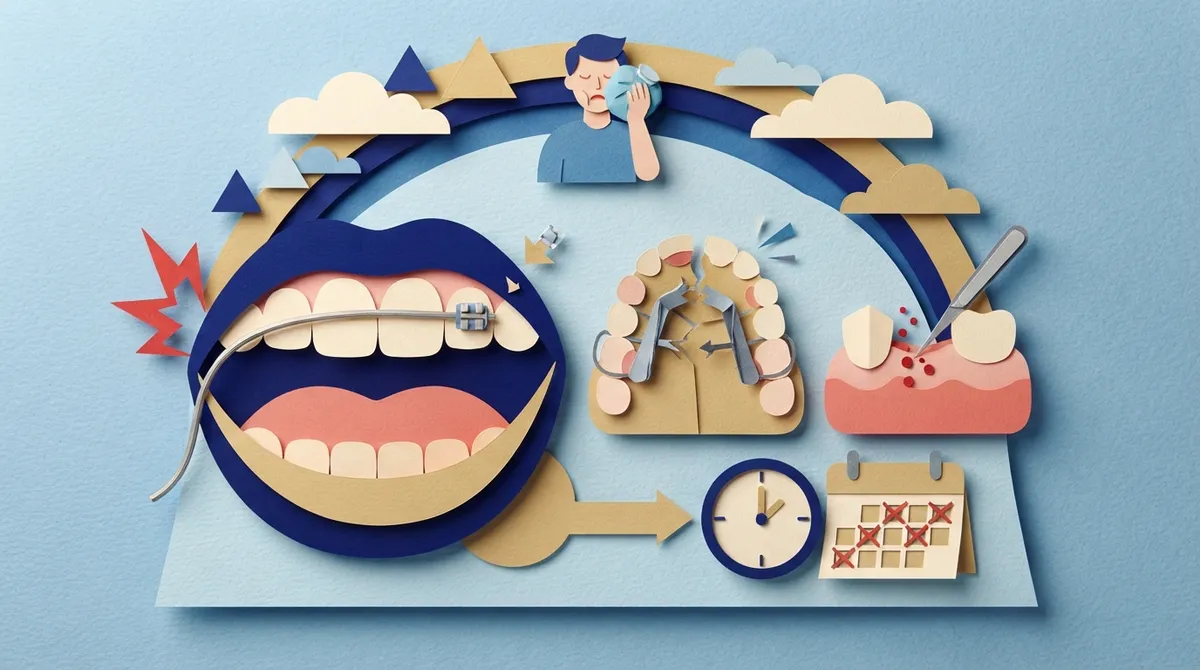
An emergency orthodontist appointment is an unscheduled visit for a problem with braces, aligners, or another appliance that needs attention before your next planned check-up. Here is the good news: many problems are urgent but not true medical emergencies. Your orthodontist can often sort this out by phone.
Research backs this up. A 2020 review of orthodontic urgencies reported that about 85% of patients experience some kind of urgency during treatment. So if it happens to you, you are in very good company.
Common Reasons to Call Your Orthodontist
- A wire that is poking your cheek, lip, or gum
- A loose or broken bracket or band
- A broken appliance or a removable appliance that no longer fits
- Pain that basic comfort measures cannot manage
In one study summarized in the 2020 review, orthodontists most often reported bracket breakage (67.6%), archwire breakage causing injury (60.5%), and broken molar tubes or bands (44.1%) as reasons for urgent care. A 2022 study also found broken or movable brackets in 55.6% of patients reporting problems, and long or poking wires in 35.2%. These numbers come from specific studies, so they will not match every practice. Still, they show which problems are most common.
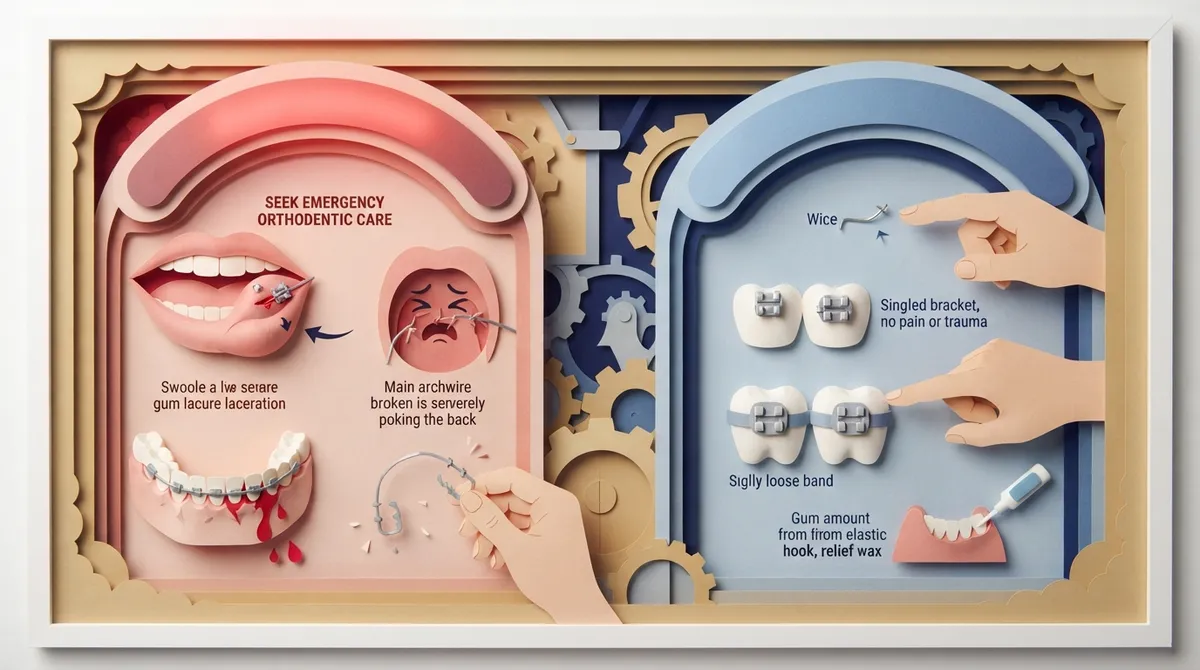
When to Skip the Orthodontist and Seek Emergency Care
Some situations are bigger than braces. If any of these happen, get emergency medical or dental care first. Then call your orthodontist afterward about your appliance.
- Heavy bleeding that will not stop
- Trouble breathing or swallowing
- A suspected broken jaw or major facial injury
- A knocked-out or badly displaced permanent tooth
- Severe pain with facial swelling or fever
Also pay attention if a piece of your appliance may have been swallowed or inhaled. If there is choking, coughing, or trouble breathing, seek urgent medical help right away. Do not treat a possible airway problem like a routine braces repair.
Urgent vs. Can-Wait: A Quick Comparison
Not sure where your problem falls? This table gives a general guide. Your treating orthodontist makes the final call, so always check with the office.
| Problem | Usually How Urgent? | What to Do First |
|---|---|---|
| Wire poking cheek or gum | Call soon | Cover with orthodontic wax; call the office |
| Loose bracket, no pain or injury | Often can wait for advice | Keep it clean; call for guidance |
| Broken bracket or band causing irritation | Call soon | Wax over sharp spots; call the office |
| Removable appliance no longer fits | Call soon | Stop forcing it; call the office |
| Severe pain, swelling, or fever | Urgent medical or dental care | Seek care now, then call your orthodontist |
| Heavy bleeding or trouble breathing | True emergency | Go to emergency care right away |
Want to dig deeper into this question? Our guide on emergency vs. routine orthodontics breaks it down even further. You can also read about whether a broken bracket or poking wire is a real emergency.
Is a Broken Bracket or Loose Wire Really an Emergency?
Often, no. A broken bracket or wire does not automatically mean you need an immediate visit. NHS patient guidance notes that a wire that is not hurting may sometimes be left until your next visit. One hospital advises that a broken bracket may wait if a routine appointment is within two weeks.
These are examples, not universal rules. Every treatment plan is different. A loose bracket might slow your progress, but it rarely harms you. A poking wire that cuts your cheek is a different story. When in doubt, call. Our team would much rather hear from you early than have you worry at home.
What You Can Do at Home Before Your Visit
While you wait for your appointment, a few gentle steps can keep you comfortable. Orthodontic guidance commonly recommends these simple measures.
- Cover sharp spots with orthodontic wax. Roll a small piece into a ball and press it over the bracket or wire that is bothering you.
- Nudge a poking wire gently. If you can do it safely, use a clean cotton swab or a pencil eraser to tuck the wire toward your tooth.
- Eat soft foods. Think yogurt, mashed potatoes, pasta, and smoothies. Skip anything hard, sticky, or chewy.
- Keep everything clean. Brush gently and rinse with warm salt water to soothe sore spots.
- Call your orthodontist. Get case-specific advice before you try anything more.
One important rule: never force an appliance or try a repair that could cause injury. Please do not cut a wire or glue a bracket yourself. If you are tempted by a DIY fix, check out our look at DIY wire fixes vs. an orthodontist visit first. For more ideas, see these orthodontic emergency fixes to try before panicking.
How to Request an Emergency Orthodontist Appointment
When you call, being prepared helps the team help you faster. Think of it like telling a friend exactly what happened.
What to Tell the Office
- What kind of appliance you have (braces, aligners, retainer, expander)
- What the problem is and when it started
- Whether you have pain, bleeding, or an injury
- Whether a piece is loose or missing
A clear photo can also help the office triage your problem. Snap a picture of the bracket or wire in good light and send it if the office asks for one.
Also follow your practice’s after-hours instructions. Whether you need an orthodontist, a general dentist, or an emergency service depends on the problem and local arrangements. For Clearwater families, our page on emergency orthodontist care in Clearwater explains how we help. If you are near the beach, see how to handle a braces emergency in Clearwater Beach.
Tips for Different Patients
Parents of Kids and Teens
Kids are active, and sports, snacks, and slumber parties can all lead to a broken bracket. Keep a small kit at home with orthodontic wax, a travel toothbrush, and our phone number. Teach your child to tell you right away if something feels sharp. If your child plays sports, ask us about a mouthguard that works with braces. Parents can also learn what to expect in our guide to orthodontics for kids.
Teens and Young Adults
Big event coming up, like prom or graduation? Do not hide a broken bracket and hope for the best. A quick call can get you fixed up and looking great. Teens with Spark™ Clear Aligners should also call if an aligner cracks or stops fitting.
Adult Professionals and Retreatment Patients
Your schedule is full, so you want fast and simple. Call early, share a photo, and ask what can wait. If you wear a retainer after past treatment and it breaks, do not just stop wearing it. Read what to do if your retainer breaks to protect your results.
How to Prevent Orthodontic Emergencies
You cannot stop every mishap, but a few habits go a long way.
- Avoid hard, sticky, and chewy foods. Our foods to avoid with braces list is a handy reference.
- Do not chew on pens, ice, or fingernails.
- Wear a mouthguard for sports.
- Keep up with your regular visits so small issues are caught early.
- Follow care instructions for brushing and cleaning your appliance.
Your overall experience matters too. Learning how to get the most out of your orthodontics care helps keep your treatment on track.
Why Choose Brockway Orthodontics When Something Goes Wrong
At Brockway Orthodontics, we know a braces problem never shows up at a convenient time. Dr. Brockway and our team listen carefully, explain your options in plain language, and get you comfortable again. In certain cases, we can even offer same-day help so you do not have to rearrange your whole week.
We treat families, from kids to teens to adults, with braces, ceramic braces, and Spark™ Clear Aligners. You can see what our patients say by checking out reviews on Google for our Brockway Orthodontics location in Clearwater. Want more helpful orthodontic tips? Follow along with the Brockway Orthodontics Facebook page. For general oral health guidance, the American Dental Association is a trusted resource. And if you want to learn more about specialists in our field, visit the Florida Association of Orthodontists.
Ready for Help? Reach Out Today
A broken bracket or poking wire does not have to ruin your week. Cover sharp spots with wax, stick to soft foods, and give us a call so we can tell you whether you need to come in right away or can wait. If anything feels serious, like heavy bleeding, trouble breathing, or major facial injury, go to emergency care first.
Need to talk to someone now? Contact our team and we will help you figure out the next step. If you would like to start a new treatment plan with a friendly, caring team, you can also book an appointment online. We cannot wait to help you smile with confidence again.
FAQs
Q: What counts as an orthodontic emergency?
A: True emergencies include heavy bleeding, trouble breathing or swallowing, a suspected broken jaw, a knocked-out permanent tooth, or severe pain with swelling or fever. Go to emergency care for these. Most braces problems, like a poking wire or loose bracket, are urgent but can be handled with a quick call to your orthodontist.
Q: Can I wait until my next appointment to fix a broken bracket?
A: Sometimes, yes! If the bracket is not painful and is not hurting your mouth, it can often wait for advice or your next visit. Every case is different, though, so give our office a call and we will tell you what is best for you.
Q: What should I do if my braces wire is poking my cheek?
A: Cover the sharp spot with orthodontic wax. If you can do it safely, gently nudge the wire toward your tooth with a clean cotton swab or pencil eraser. Then call your orthodontist, since you should not force or cut the wire yourself.
Q: Should I go to the emergency room or call my orthodontist?
A: Call your orthodontist for appliance problems like loose brackets or poking wires. Head to the emergency room for heavy bleeding, trouble breathing, major facial trauma, or a swallowed appliance piece. Call your orthodontist afterward about your braces.
Q: What should I tell the orthodontist when requesting an urgent appointment?
A: Describe your appliance, what the problem is, and when it started. Mention any pain, injury, or missing pieces. A clear photo can help our team decide how quickly we need to see you.
Our Service Area