Key Takeaways
-
Digital scans are usually more comfortable than traditional molds because they avoid trays of impression material, reducing gagging and unpleasant taste, though scanning still requires keeping your mouth open.
-
Neither method is universally more accurate; research shows digital scans are accurate enough for many routine orthodontic uses, but results depend on scanner, technique, operator, and task.
-
Digital impressions let your team preview results on screen immediately and rescan only problem areas, while a bad traditional mold often means starting over with a full tray.
-
Digital files can shorten the overall workflow by traveling electronically to labs instead of being shipped as physical casts, even if chairside scanning can take longer.
-
Digital scans support clear aligner planning, retainer design, and treatment tracking, making them well suited to modern orthodontic tools.
-
Traditional molds remain a useful backup when scanning is difficult, a patient cannot hold still, a specific appliance requires a physical cast, or equipment is unavailable.
Remember the first time you bit down into a tray of cold, goopy material at the dentist? Maybe you gagged a little. Maybe you counted the seconds until it was over. If that memory made you wince, you are definitely not alone. For decades, traditional dental molds were simply part of getting braces or aligners. Today, there is another way to capture your smile, and it feels very different.
When it comes to digital impressions versus traditional dental molds, the big question is how each method works, how it feels, and whether one is truly better for your orthodontic care. The honest answer is a little nuanced. Digital scanning is often more comfortable and fast to review. Yet traditional molds still have a place in some cases.
In this friendly guide, we will walk through five ways digital impressions can shine, plus the times when a classic mold still makes sense. Whether you are a parent planning for your child, a teen eyeing aligners, or an adult who wants a discreet fix, you will leave knowing what to expect and what to ask. Let’s dive in!
What Are Digital Impressions and Traditional Molds?
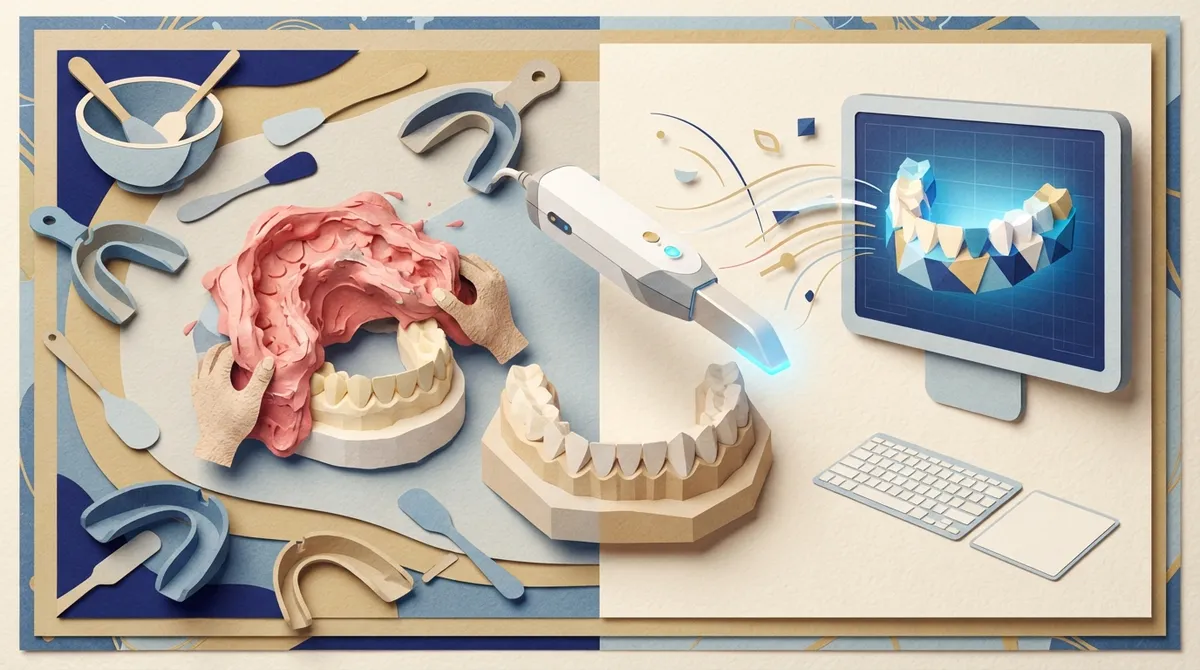
Before we compare the two, let’s make sure we are speaking the same language. Both methods do the same job. They record the shape of your teeth and how your bite fits together so your orthodontist can plan treatment.
How a Traditional Dental Mold Works
A traditional mold, often called a conventional impression, uses a tray filled with soft impression material. The tray goes over your teeth, the material sets, and it creates a physical negative of your mouth. That negative is then used to pour a stone cast. Orthodontic offices may use this method to document teeth and bite relationships.
How a Digital Impression Works
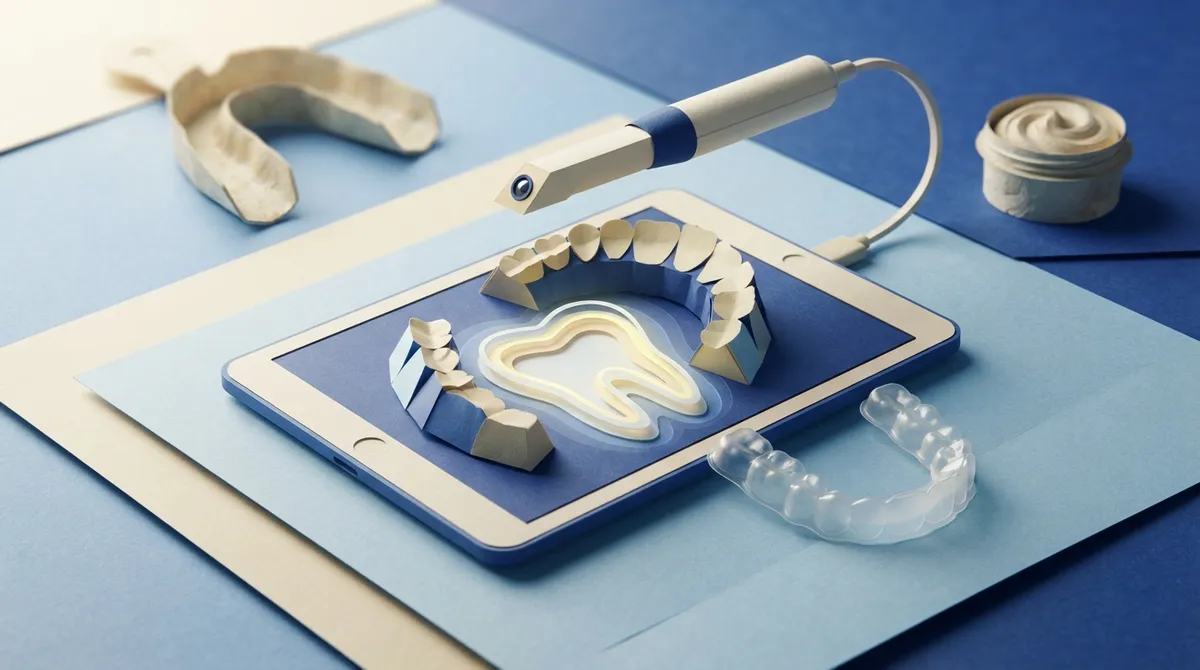
A digital impression uses a small handheld wand called an intraoral scanner. The wand glides over your teeth and captures images that build a 3D model on a screen. There is no tray and no setting time. Your care team can view the result right away.
| Feature | Digital Impression | Traditional Mold |
|---|---|---|
| Tool used | Handheld intraoral scanner | Tray with impression material |
| Result | 3D digital model | Physical negative and stone cast |
| Review | Immediate on screen | After pouring and handling the cast |
| Retakes | Rescan selected areas | Often repeat the whole impression |
| Lab sharing | Send file electronically | Ship physical mold or cast |
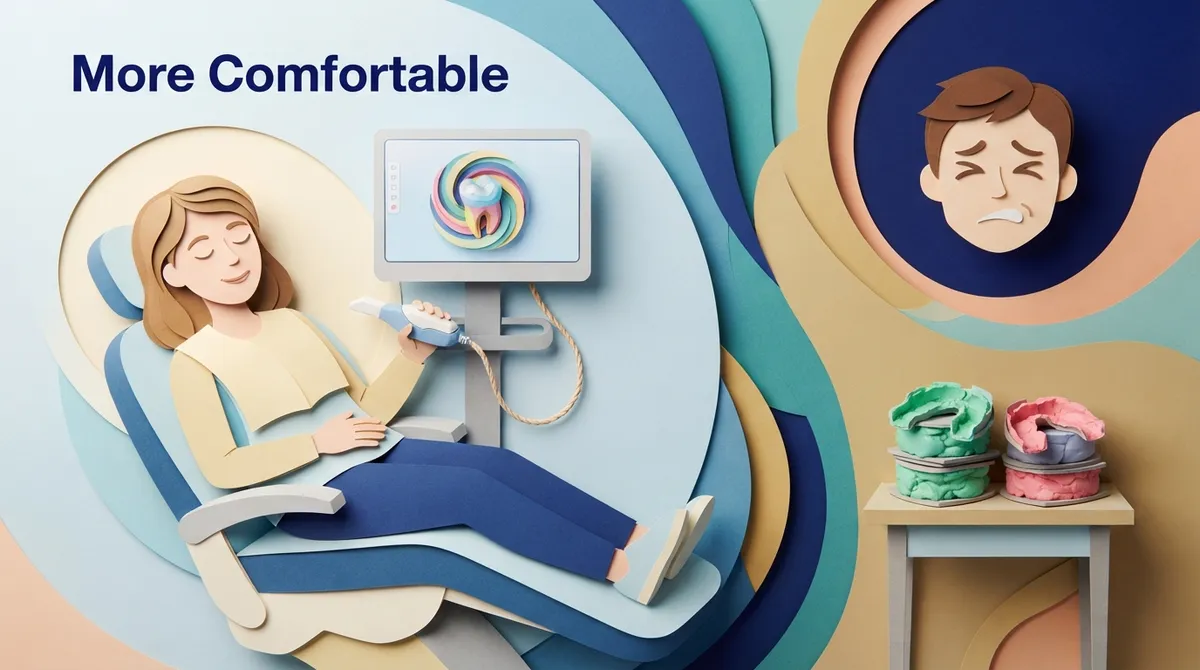
1. Digital Impressions Are Usually More Comfortable
Comfort is the number one reason patients ask for scanning. Patients commonly prefer intraoral scanning because it avoids a tray filled with impression material. That means less gagging, less trouble breathing, and no unpleasant taste or texture.
For kids and anxious teens, this can make a huge difference. A child who dreads the “goop” might feel much calmer when the wand looks more like a tiny camera. Parents often tell us that a stress-free first visit sets a positive tone for the whole journey.
That said, we want to be honest. Comfort is not guaranteed. Scanning can take time and requires your mouth to stay open. Some hard-to-reach areas can be tricky, and a few patients still find it tiring. A 2022 orthodontic critical review noted that patient preference generally favored digital scanning, but individual experience can vary.
Who Benefits Most from Scanning Comfort?
- Children and teens who dislike the feel of impression material
- Adults with a strong gag reflex
- Anyone with breathing sensitivity or anxiety in the dental chair
- Patients who have had a bad experience with trays before
2. You Can See Results Right Away
One of the coolest parts of a digital impression is the instant preview. As the scanner moves along your teeth, a 3D picture builds on the screen. Your orthodontist can check for missing areas and rescan just the spot that needs it.
With a traditional mold, problems like bubbles or distortions may not show up until after the material sets. A bad impression often means starting over with a full tray. Digital scanning lets the team fix a small gap on the spot instead.
Many families also love seeing their own smile in 3D. It turns a clinical step into a fun “aha!” moment. Teens and young adults especially enjoy watching their treatment take shape on screen, which can boost excitement about starting braces or aligners.
3. Digital Files Can Speed Up the Workflow
Time is a bit more complicated than you might think. Time comparisons are not uniform across studies. In some cases, scanning may take longer than taking the impression itself. However, it avoids steps such as pouring and handling a physical cast. Reviews report favorable overall efficiency in many digital workflows.
The result depends on what you measure. If you only count chairside capture, a mold might look faster. If you count the full path from visit to finished appliance, digital files often come out ahead because they travel electronically instead of being shipped.
This matters for busy adult professionals and parents juggling school and work. Fewer delays can mean fewer extra trips. At Brockway Orthodontics, we use digital impressions instead of messy molds and 3D imaging to help plan treatment precisely, and in certain cases we can offer same-day treatments. If you are curious about the tech behind this, take a look at 10 Facts About Medit Intraoral Scanning for Ortho (2026).
4. Scans Support Modern Aligners, Retainers, and Planning
Digital files fit naturally into today’s orthodontic tools. They support measurements, treatment planning, aligner production, and communication with a dental laboratory without first shipping a physical mold.
That is great news if you are considering clear aligners. A scan can be used to design custom trays and map how your teeth may move step by step. Brockway Orthodontics offers Spark™ Clear Aligners, a more affordable alternative to Invisalign, along with metal braces and ceramic (clear) braces. To see how aligners create change, read How Do Removable Aligners Straighten Teeth in 2026?
Scans also help with retainers. A saved digital model can make it easier to plan a replacement later on. If you want to learn more about keeping your results, check out 13 Best Retainers to Protect Your Smile in 2026.
Common Uses for Digital Scans in Orthodontics
- Creating a baseline record before treatment begins
- Planning clear aligner treatment
- Designing retainers
- Tracking changes during treatment
- Sharing information with a dental lab
5. Accuracy Is Strong, but Not a Simple Win
Here is where we get a little nerdy, but stay with us! Many people assume digital is always more accurate. The real picture is more balanced. Orthodontic evidence generally finds digital scans sufficiently accurate for many routine diagnostic and appliance workflows. Yet comparative accuracy findings are mixed.
Results depend on the scanner model, scanning technique, operator experience, and the clinical task. Neither method is universally more accurate.
What the Research Says
A 2022 systematic review reported similar average trueness for digital and alginate full-arch impressions. It found a 0.09 mm 3D deviation between methods, with precision below 0.1 mm for both. A 2023 systematic review of digital 3D intraoral scanning in orthodontics included 35 studies. It found accuracy results were mixed, while reproducibility and patient comfort were generally favorable for scanning.
A 2024 systematic review and meta-analysis of full-arch scans reported broadly similar accuracy between the two methods. It also noted substantial heterogeneity in the pooled results, which shows that study methods and clinical conditions vary. These are study-level findings, not a guarantee for every patient or scanner.
| Study | Key Takeaway |
|---|---|
| 2022 systematic review | 0.09 mm 3D deviation between digital and alginate; precision under 0.1 mm for both |
| 2023 systematic review (35 studies) | Accuracy mixed; reproducibility and comfort generally favorable |
| 2024 meta-analysis | Broadly similar full-arch accuracy; high variation between studies |
One more detail worth knowing: full-arch accuracy deserves extra care. Small errors can add up across a long scan. That is why technique and training matter so much. A skilled team and quality equipment make a real difference.
When Traditional Molds Still Make Sense
We love technology, but we also believe in using the right tool for the job. Traditional impressions remain a practical option when scanning is unavailable, unsuitable, or unsuccessful.
- Scanning is difficult: Some mouths have areas that are hard to reach or capture clearly.
- A patient cannot hold still: Very young children or patients who tire easily may struggle with a longer scan.
- A specific appliance calls for it: Certain situations may work better with a physical cast.
- Equipment limits: Digital scanning requires equipment, software, staff training, and a reliable workflow.
Conventional impressions also require care. Your team must pick the right tray, handle the material properly, allow setting time, and produce a cast. Done well, they can give reliable results. The goal is never to chase the newest gadget. It is to choose the method that gives you the best outcome and comfort.
Which Option Fits You or Your Family?
The best method depends on the clinical task, the equipment, and the operator. Here is a quick way to think about it for different people in your household.
- Parents of kids and teens: Scanning may feel friendlier and less scary. It can help your child feel relaxed at the first visit. See also Digital Scans vs. Goop Impressions for Kids: Which Wins?
- Teens and young adults: If you want a modern, discreet look, digital files pair well with clear aligner planning.
- Adult professionals: Quick review and fewer lab delays can help you fit treatment around a busy schedule.
- Relapse patients: A new scan can capture where your teeth sit today so your team can plan the next step.
- Health-conscious patients: Ask how your orthodontist will handle special needs, such as gum concerns, during scanning.
Questions to Ask Your Orthodontist
- Do you use an intraoral scanner, or traditional molds, or both?
- Will my treatment plan rely on a digital file?
- What happens if a scan is hard to capture?
- Can I choose a digital scan instead of a mold?
If you are preparing for a first visit, you may also enjoy How to Prepare for Your Orthodontist Consultation Clearwater.
Why Brockway Orthodontics Leans Toward Digital
At Brockway Orthodontics in Clearwater, Florida, comfort and clarity come first. Dr. Brockway takes the time to listen to your goals and explain your options in a friendly, easy-to-understand way. Our practice uses digital impressions instead of messy molds, along with 3D imaging that helps plan your treatment precisely.
We offer care for the whole family, from teens getting their first braces to adults exploring a discreet smile makeover. Dr. Brockway also loves being part of the Clearwater community, and building relationships with families matters just as much to her as creating beautiful smiles. Curious what neighbors think? Visit us on Google — Brockway Orthodontics and read reviews from local patients.
You can also learn more about professional standards through the American Dental Association and the Florida Association of Orthodontists, both helpful resources for families who like to do their homework.
Final Thoughts: Choose Comfort and Confidence
So, which wins in the debate of digital impressions versus traditional dental molds? For many patients, digital scanning offers a more comfortable, convenient experience with strong, dependable results. Traditional molds still work well and remain a smart backup when scanning is not the best fit. The winner is whichever approach gives you accurate records and a stress-free visit.
If you are ready to see what a modern, gentle orthodontic visit feels like, we would love to meet you. Book your free consultation online and let us show you your smile in 3D. Have questions first? Just contact us, and our friendly team will be happy to help.
FAQs
Q: Are digital dental impressions more accurate than traditional molds for braces or clear aligners?
A: Not always, and that is the honest answer! Research shows digital scans are accurate enough for many routine orthodontic uses, but results are mixed. Accuracy depends on the scanner, the technique, the operator, and the specific task, so neither method is universally better.
Q: Are digital impressions more comfortable than dental molds?
A: Many patients say yes. Scanning avoids the tray filled with impression material, which can reduce gagging and that unpleasant taste or texture. It is not perfect for everyone, though, since scanning can take time and requires keeping your mouth open.
Q: How long does a digital orthodontic scan take compared with a traditional impression?
A: It varies. In some studies, the scan itself takes longer than taking an impression, but digital skips steps like pouring and handling a cast. Many digital workflows come out more efficient overall, depending on whether you count just the visit or the whole process.
Q: Are traditional dental molds still used in orthodontics?
A: Yes! Traditional impressions remain a practical option when scanning is unavailable, unsuitable, or unsuccessful. Your orthodontist will choose the method that fits your needs and gives the most reliable result.
Q: Can I request a digital scan instead of a traditional dental mold?
A: Absolutely, it never hurts to ask! Whether it is an option depends on whether your orthodontist has a scanner and whether scanning suits your situation. At Brockway Orthodontics, we use digital impressions instead of messy molds, so just let us know your preference.
Our Service Area