Key Takeaways
-
Most orthodontic treatment takes 12-24 months, but timelines vary from 6 months for mild cases to 3+ years for severe crowding or bite issues like overbites and underbites.
-
Patient compliance is critical—missing appointments, breaking brackets, or not wearing clear aligners 20-22 hours daily can add months to treatment, so consistency directly impacts your timeline.
-
Treatment severity matters most: mild spacing takes 6-12 months, moderate crowding 12-24 months, and severe cases requiring bite correction need 24-36+ months regardless of age.
-
Adults typically complete treatment within the same 12-24 month range as teens because case complexity outweighs age; denser bone only slightly slows tooth movement.
-
The retention phase is lifelong for most patients—skipping retainer wear after braces are removed is the top cause of relapse, so nightly retainer use protects your results permanently.
-
Regular orthodontist visits every 4-8 weeks are essential for progress checks and adjustments; missing appointments significantly delays completion and requires a professional evaluation for accurate timeline estimates.
One of the first questions people ask when starting their orthodontic journey is a simple one: how long do braces take? It’s a fair question! Whether you’re a parent planning ahead for your child, a teen thinking about prom photos, or an adult ready to finally tackle that smile you’ve always wanted — knowing what to expect makes everything feel less overwhelming. The honest answer is that treatment time varies quite a bit from person to person. Most people finish in 12 to 24 months, but some cases wrap up in as few as 6 months, while more complex situations can take up to 3 years. The good news? Every month brings you closer to a healthier, more confident smile. Let’s walk through exactly what affects your timeline and what the journey looks like from start to finish.
What Is the Average Treatment Time for Braces?
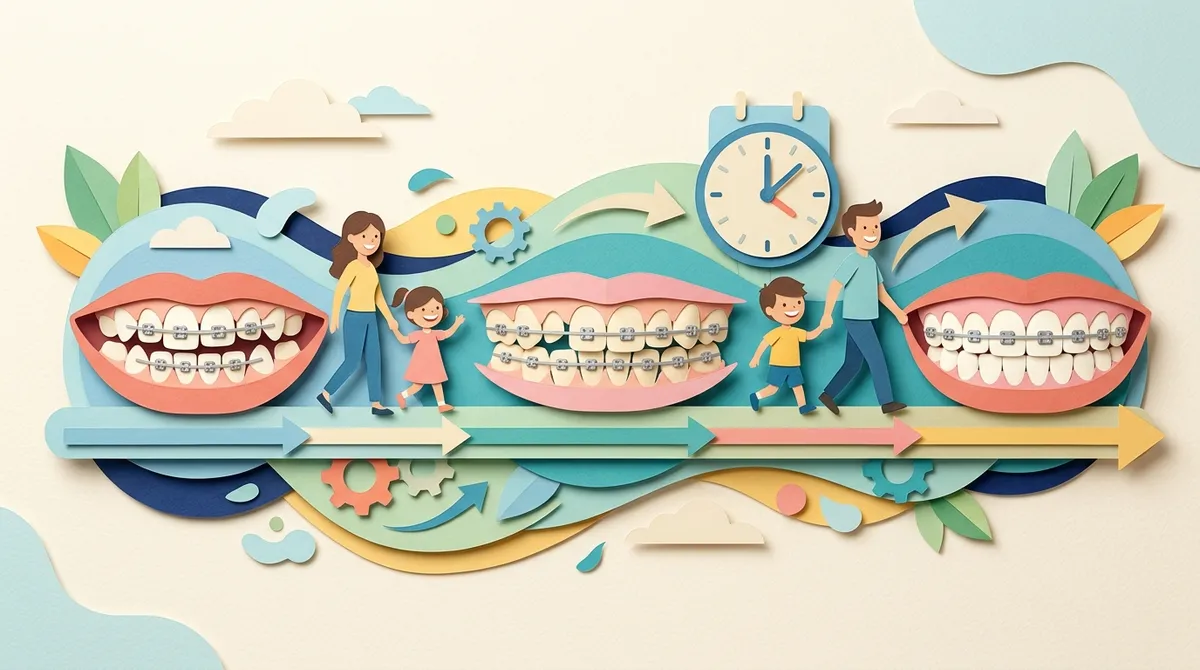
Most orthodontic patients spend between 12 and 24 months in braces. That’s the sweet spot for mild to moderate alignment issues. Studies of fixed dental braces show the range can be anywhere from 14 to 33 months depending on the case. So while 12–24 months is a great starting point for planning, your specific timeline will depend on what your teeth and bite actually need.
Here’s a quick breakdown of how case complexity affects how long braces take:
| Case Type | Estimated Treatment Time | Examples |
|---|---|---|
| Mild | 6 to 12 months | Minor crowding, small gaps |
| Moderate | 12 to 24 months | Moderate crowding, bite issues |
| Severe | 24 to 36+ months | Severe crowding, overbite, underbite, crossbite |
Not sure which category you fall into? The best way to find out is with a professional evaluation. At your first visit with Dr. Brockway, you’ll get a clear picture of your treatment needs and a realistic timeline estimate.

Key Factors That Affect How Long Braces Take
Every smile is unique, and that means every treatment plan is too. Several factors work together to determine your total time in braces. Understanding these can help set realistic expectations and even help you play an active role in keeping things on track.
1. The Severity of Your Alignment Issues
This is the biggest factor. Simple spacing or mild crowding moves teeth a shorter distance, so treatment tends to finish faster. More complex cases — like a deep overbite, underbite, crossbite, or severely crowded teeth — require more gradual movement and additional time. You can learn more about one common example in our article on how braces fix a deep overbite.
2. The Type of Braces or Aligners You Choose
Different appliance types can mean different timelines. Traditional metal braces, ceramic braces, and clear aligners each have their strengths. Some cases respond faster with one type over another. Check out our friendly comparison guide on clear aligners vs. braces to see which option might work best for your situation.
3. Your Age
Teens and children often see faster tooth movement because their jaws are still developing. That said, adults can absolutely achieve beautiful results — treatment may just take a bit longer in some cases. If you’re an adult curious about your options, our adult orthodontic treatment page has you covered.
4. Patient Compliance
This one is fully in your hands! If you’re wearing clear aligners, keeping them in for 20–22 hours per day is essential. For braces, avoiding foods that can break brackets and showing up to every adjustment appointment on time all add up. Skipping appointments or breaking brackets can add months to your treatment.
Curious what common missteps to avoid? Our guide on braces treatment mistakes you should never make is a great read before you get started.
The Full Orthodontic Treatment Timeline
Braces treatment isn’t just about the time you wear the appliances. There’s a full journey from your first appointment all the way through the retention phase. Here’s what to expect at each stage:
- Consultation and Records: Your orthodontist takes X-rays, photographs, and digital scans to fully understand your smile. This is where your personalized treatment plan is created.
- Appliance Placement: Braces are bonded to your teeth, or your first set of clear aligners is delivered. Treatment officially begins!
- Active Treatment Phase: This is the bulk of your time in braces. You’ll visit your orthodontist every 4 to 8 weeks for adjustments and progress checks.
- Debanding (Braces Removal): Once your teeth have moved to their target positions, the braces come off. This is a very exciting day!
- Retention Phase: Retainers are fitted to hold your teeth in place. This phase is just as important as the treatment itself.
To get a deeper look at what each phase involves, our detailed overview of all about braces is a helpful resource to explore.
How Often Do You Visit the Orthodontist During Treatment?
During your active treatment phase, you’ll typically come in for adjustments every 4 to 8 weeks. These visits are quick but important. Your orthodontist will check progress, change wires or archwires, and make any tweaks needed to keep things moving in the right direction.
Missing appointments can slow things down significantly. Each visit builds on the last, so staying consistent is key to finishing on time. The American Dental Association also emphasizes that regular professional check-ins are essential throughout any dental or orthodontic treatment for the best outcomes.
| Appointment Type | Frequency | Purpose |
|---|---|---|
| Adjustment Visit | Every 4 to 8 weeks | Wire changes, bracket checks, progress review |
| Progress Records | Periodically (as needed) | X-rays or photos to assess tooth movement |
| Retainer Fitting | At debanding appointment | Custom retainer made to hold final result |
| Retainer Check | As recommended | Ensure retainer fits and teeth remain stable |
Do Braces Take Longer for Adults Than for Teens?
This is a common question, and the answer is: sometimes, but not always. Adults have fully developed jaws and denser bone tissue, which can mean tooth movement is slightly slower. However, many adults complete treatment within a very similar timeframe to teenagers. The complexity of the case matters far more than age alone.
In 2026, more adults than ever are choosing orthodontic treatment. If you’ve been on the fence, our article on why so many adults are getting orthodontic treatment in 2026 explores exactly why this trend is growing. Whether you’re 25 or 55, a healthy, straight smile is always worth it.
Braces vs. Clear Aligners: Does the Appliance Type Change the Timeline?
Great question! Both traditional braces and clear aligners can achieve excellent results, but the timeline can differ depending on the case. Here’s a helpful side-by-side look:
| Appliance Type | Typical Timeline | Best For | Key Note |
|---|---|---|---|
| Metal Braces | 12 to 24 months | All case types, including complex | Very precise control over tooth movement |
| Ceramic Braces | 12 to 24 months | Mild to moderate cases, aesthetic preference | Tooth-colored brackets blend with your smile |
| Spark™ Clear Aligners | 6 to 18 months (varies) | Mild to moderate cases, adults and teens | Requires 20–22 hours of wear per day |
At Brockway Orthodontics, we offer metal braces, ceramic braces, and Spark™ Clear Aligners — a modern, comfortable, and affordable alternative that our patients love. Dr. Brockway will help you choose the right option for your goals, lifestyle, and budget.
For a deeper dive on this topic, our comparison of traditional braces vs. clear aligners breaks it all down in a friendly, easy-to-follow way.
What Happens After Braces Come Off?
Here’s something many people don’t realize: treatment doesn’t end when your braces are removed! The retention phase is a critical part of your orthodontic journey. Without a retainer, teeth have a natural tendency to shift back toward their original positions — a process called relapse.
After your braces come off, you’ll be fitted with a retainer. Most patients wear retainers full-time at first and then transition to nights only. Some people wear retainers indefinitely to protect their results. Think of it as the insurance policy for your new smile! Learn everything you need to know about keeping your smile stable on our retainers page.
Here are a few key things to remember about the retention phase:
- Retainers help teeth settle into their new bone positions after active treatment ends.
- Skipping retainer wear is the most common cause of orthodontic relapse.
- If your retainer breaks or doesn’t fit well, get it checked promptly — our guide on what to do if your retainer breaks is a quick and helpful read.
- Both removable and fixed (bonded) retainers are available depending on your needs.
- The retention phase is lifelong for most patients — but wearing a retainer at night is easy once you get used to it!
Tips to Help Keep Your Treatment on Track
Want to finish as close to your estimated timeline as possible? Here are some simple but powerful ways to stay on track throughout your treatment:
- Keep every scheduled appointment. Missing or rescheduling appointments too often is one of the top reasons treatment takes longer than expected.
- Follow your orthodontist’s instructions. Whether it’s wearing rubber bands, using a prescribed appliance, or caring for your aligners properly, compliance matters a lot.
- Protect your brackets and wires. Avoiding hard, sticky, and crunchy foods helps prevent broken brackets, which can set back your progress. Our guide on foods to avoid with braces has all the details.
- Wear aligners as directed. If you’re using clear aligners, wearing them 20–22 hours per day is non-negotiable for staying on schedule.
- Maintain good oral hygiene. Healthy gums and teeth move more predictably. Brush well, floss daily, and keep up with your regular dental cleanings.
You might also find our article on 9 speed traps that sabotage fast teeth straightening really eye-opening — it covers some surprising habits that can slow down your results.
Starting Your Braces Journey in Clearwater, FL
If you’re ready to find out exactly how long braces might take for your specific smile, the next step is a consultation with an experienced orthodontist. At Brockway Orthodontics, Dr. Brockway takes the time to truly understand your goals and create a personalized treatment plan just for you. The Florida Association of Orthodontists recognizes the importance of individualized care — and that’s exactly what you’ll find here.
Our practice uses modern technology, including digital impressions and 3D imaging, so your treatment plan is precise right from day one. We also offer same-day treatments in certain cases, flexible financing and insurance options, and a welcoming environment that makes every visit feel easy. Whether you’re exploring options for your child through our early treatment program or looking into adult orthodontics in Clearwater, we’re here for you every step of the way.
When you’re not in the office, feel free to connect with us online! You can follow our journey and patient stories on Instagram for tips, updates, and smile transformations that will inspire you. And if you want to hear directly from our patients, visit us on Google — Brockway Orthodontics to read real reviews from the families and individuals we’ve had the privilege of treating.
Life in Clearwater is full of sunshine, outdoor adventures, and opportunities to smile. Whether you’re spending the day at the beach with neighbors from Gulfside Adventures or relaxing poolside with friends from Panther Pools, your smile is always in the spotlight. Now is a wonderful time to invest in it.
Your Smile Is Worth Every Month
Understanding how long braces take helps you plan, stay motivated, and make the most of your treatment. Whether your journey is 6 months or 2+ years, each adjustment appointment and every careful day of wear is moving you closer to the smile you deserve. The process takes time, but the confidence that comes with it lasts a lifetime.
Ready to get a personalized estimate and start your smile journey? We’d love to meet you! Schedule your free consultation with Dr. Brockway today and take the very first step toward a healthier, happier smile. There’s no pressure — just a friendly conversation about your goals and what’s possible for your unique smile.
FAQs
Q: How long do braces take to straighten teeth?
A: For most people, braces take between 12 and 24 months to fully straighten teeth. Mild cases can wrap up in as little as 6 months, while more complex cases involving bite issues or severe crowding may take up to 3 years. Your orthodontist will give you a personalized estimate after evaluating your smile!
Q: Do braces take longer for adults than for teenagers?
A: Sometimes, but not always! Adults have denser bone, which can slightly slow tooth movement, but case complexity matters much more than age. Many adults complete treatment in the same 12–24 month range as teens. The good news is that it’s never too late for a beautiful smile.
Q: What factors make braces take longer?
A: The biggest factors include the severity of crowding or bite issues, the type of appliance used, patient age, and compliance with treatment instructions. Missing appointments, breaking brackets, or not wearing clear aligners as directed can all add extra time to your treatment — so staying consistent really pays off!
Q: Can braces work in less than a year?
A: Yes! Mild cases involving minor crowding or small gaps can sometimes be treated in as little as 6 to 12 months. However, most people need at least a year for full correction. A consultation with your orthodontist is the best way to find out if a shorter timeline is possible for you.
Q: How long do you have to wear retainers after braces?
A: Most patients wear retainers full-time immediately after braces come off, then transition to nights only after a few months. Many orthodontists recommend wearing retainers indefinitely at night to keep your smile stable long-term. It’s a small commitment that protects all the hard work you put into your treatment!