Key Takeaways
-
Most people wear braces for 18-24 months on average, with research showing 19.9-22 months as the typical timeline, though individual cases range from 12 months to 2.5+ years.
-
Tooth extraction cases take significantly longer (20.6 months average) compared to non-extraction cases (14.2 months), so discuss extraction necessity with your orthodontist early.
-
Patient compliance directly impacts treatment speed—attending all appointments, wearing elastics as instructed, and maintaining oral hygiene can help you finish closer to the shorter end of your timeline.
-
Bite complexity and severity of crowding are major factors determining your personal timeline; mild cases move faster than severe crowding, overbites, underbites, or crossbites requiring correction.
-
Retention after braces removal is a long-term commitment to prevent tooth shifting, with most orthodontists recommending an ongoing wearing schedule that typically starts full-time then transitions to nights.
-
Clear aligners and traditional braces have similar treatment timelines depending on case complexity, so your specific bite and alignment needs matter more than the appliance type chosen.
If you or your child just got braces (or you’re about to), there’s one question on everyone’s mind: how long do you have to wear braces? It’s totally normal to want a clear answer before you commit to the journey ahead. The good news? While every smile is unique, there are real numbers and helpful patterns that can give you a solid idea of what to expect.
At Brockway Orthodontics in Clearwater, we hear this question every single day from parents, teens, and busy adults alike. We love answering it because it means you’re already thinking ahead about your treatment and your future smile. In this guide, we’ll break down the real timelines, what affects them, and how you can even help your treatment go faster. Let’s get into it!

The Short Answer: What’s the Average Braces Timeline?
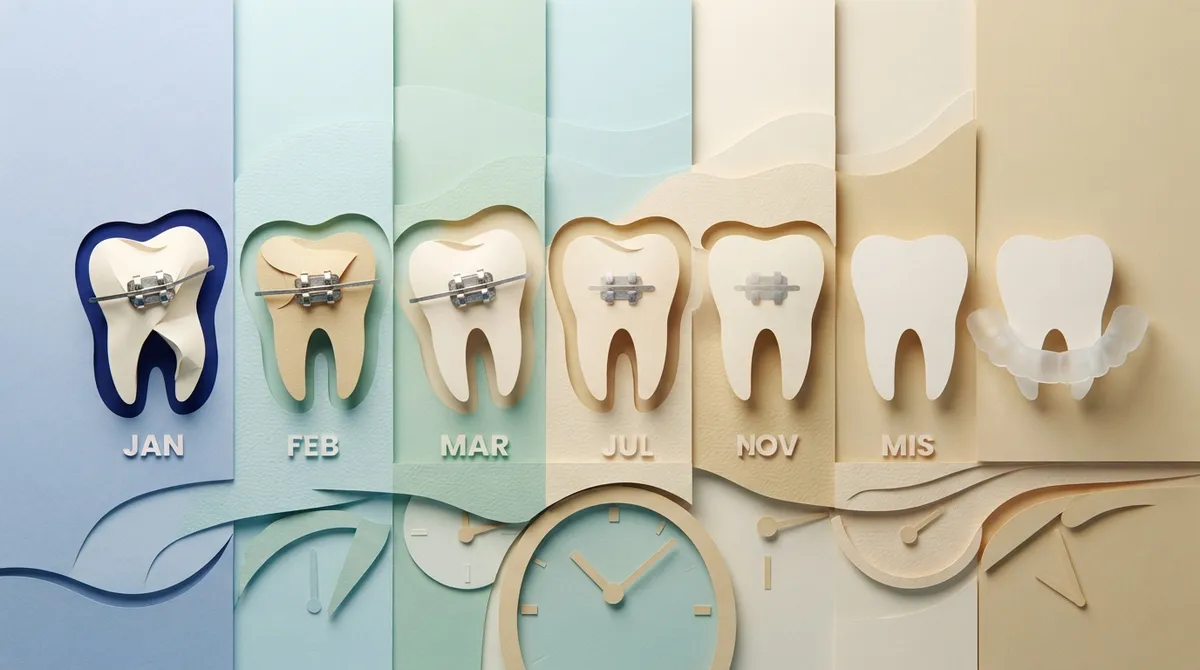
Most people wear braces for about 18 to 24 months. That’s the general range you’ll hear most often from orthodontists across the country. But treatment time can be shorter or longer, ranging anywhere from 12 months to 2.5 years or more, depending on your specific case.
A well-known 2016 review looked at 22 different studies involving over 1,000 patients. It found the average treatment time was 19.9 months, with individual studies reporting anywhere from 14 to 33 months. A more recent 2025 review of clinical trials found a similar average of 22 months. These numbers aren’t just guesses. They come from real patient data collected over years of orthodontic research.
The Florida Association of Orthodontists notes that treatment length always depends on the individual, which is why a consultation with a trained specialist matters so much. No online chart can replace a real exam of your teeth and bite.
What Actually Determines How Long You’ll Wear Braces?
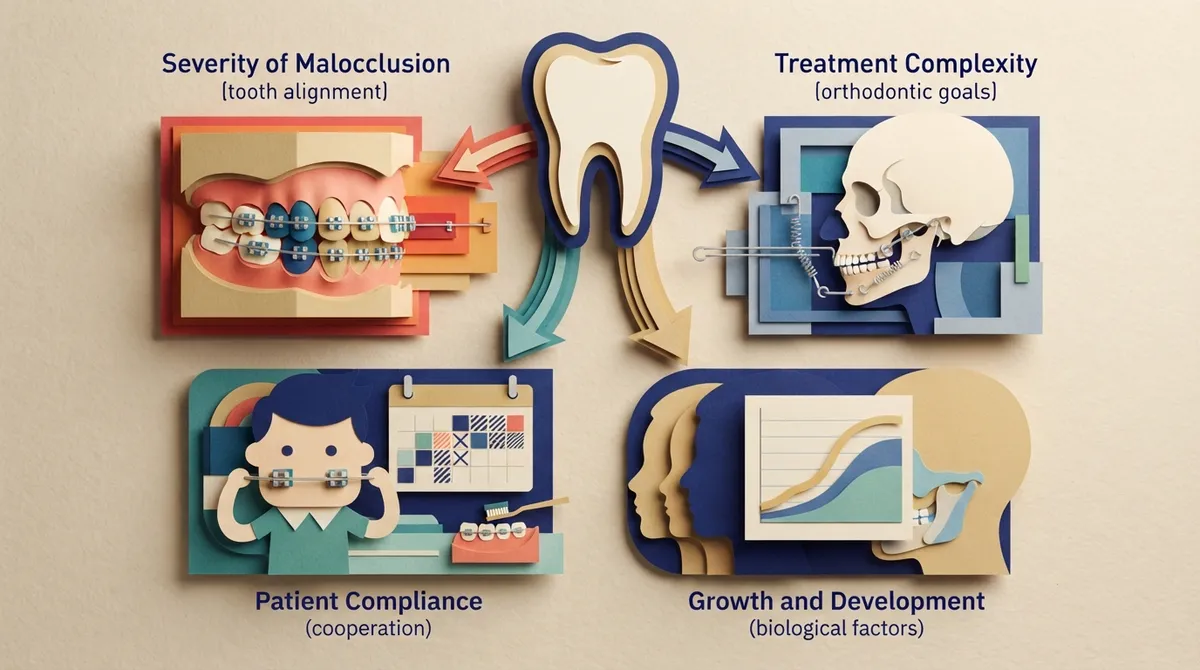
Braces aren’t one-size-fits-all, and neither is treatment time. Here are the biggest factors that affect your personal timeline.
1. How Crowded or Spaced Out Your Teeth Are
Mild crowding or small gaps usually move faster than severe crowding. If your teeth are significantly overlapped or there’s a lot of extra space, it simply takes more time to shift everything into place.
2. Your Bite Alignment
Straight teeth are only part of the goal. Orthodontists also need to fix how your upper and lower teeth meet. Problems like overbites, underbites, or crossbites often require extra time to correct properly. Learn more about how braces fix a deep overbite and why bite correction takes patience.
3. Whether You Need Extractions
A 2025 meta-analysis found that extraction cases averaged about 20.6 months, while non-extraction cases averaged around 14.2 months. If teeth need to be removed to make room, your treatment plan will likely take a bit longer.
4. Impacted or Missing Teeth
Sometimes a tooth doesn’t erupt properly or is stuck below the gumline. These situations require more planning and often add time to your overall treatment.
5. Your Age
Here’s something that might surprise you: age alone doesn’t decide your treatment length. What matters more is your bone development, oral health, and how complex your case is. That said, growing jaws in kids and teens sometimes respond a little differently than fully developed adult jaws. Adults considering treatment can learn more in our guide on adult treatment options.
6. How Well You Follow Instructions
This one is huge, and it’s completely in your control! Missing appointments, breaking brackets, skipping rubber bands, or not brushing well can all slow things down. We’ll talk more about this below because it truly matters.
Average Treatment Times: A Quick Comparison
Sometimes it helps to see the numbers laid out clearly. Here’s a simple breakdown based on recent research studies.
| Treatment Type | Average Duration | Source |
|---|---|---|
| Fixed braces (general average) | 19.9 months | 2016 systematic review |
| Fixed braces (updated meta-analysis) | 22.0 months | 2025 review of clinical trials |
| Extraction cases | 20.6 months | 2025 meta-analysis |
| Non-extraction cases | 14.2 months | 2025 meta-analysis |
| Comprehensive fixed treatment | 24.9 months | 2017 systematic review |
| Initial lower teeth alignment only | 3.4 months (100.7 days) | 2022 systematic review |
Keep in mind that alignment (getting teeth to look straight) is just one phase. Orthodontists also need time to fine-tune your bite and make sure everything fits together for the long run. That’s why total treatment time is usually much longer than just the visible straightening phase.
How Often Will You Visit the Orthodontist?
During treatment, you’ll have regular check-ins so your orthodontist can adjust your wires and track your progress. According to general guidance, these visits typically happen every 4 to 10 weeks. The exact schedule depends on:
- The type of braces you have (metal, ceramic, or clear aligners)
- What stage of treatment you’re in
- Your orthodontist’s specific treatment plan
- Whether any issues come up between visits
At Brockway Orthodontics, we use modern digital tools to plan your visits efficiently, so you spend less time waiting and more time living your life. Curious about what to expect? Check out our page on your first visit to get a feel for how we do things.
Can You Speed Up Your Braces Treatment?
While there’s no magic switch to finish early, there are real ways to help your treatment move along as smoothly and quickly as possible. Here’s a simple numbered list to keep you on track.
- Show up to every appointment. Skipping visits delays your adjustments and can add months to your timeline.
- Wear your elastics as instructed. If your orthodontist gives you rubber bands, wearing them exactly as directed helps your bite correct on schedule.
- Take care of your brackets and wires. Avoid hard, sticky, or chewy foods that can break your appliances.
- Brush and floss consistently. Poor oral hygiene can lead to gum problems that slow down treatment.
- Follow your orthodontist’s specific instructions. Every treatment plan is different, so personalized advice matters more than general tips you find online.
Simple habits like these really do add up. Patients who stay consistent often finish closer to the shorter end of their estimated timeline.
Braces vs. Clear Aligners: Does Treatment Time Differ?
Many patients ask if clear aligners take less time than traditional braces. The truth is, it depends on your case. Both options can achieve excellent results, but each works a little differently.
At Brockway Orthodontics, we offer Spark™ Clear Aligners, a more affordable and comfortable alternative to other clear aligner brands. Many patients love that Spark aligners are nearly invisible and removable for eating and brushing. To explore all your choices, take a look at our full breakdown of all about braces and how each option compares.
If you’re an adult exploring a discreet option that fits a busy professional life, our team can walk you through which treatment might get you to your goal fastest, based on your specific bite and alignment needs.
What Happens After Your Braces Come Off?
Here’s something a lot of people don’t realize: taking off your braces isn’t the finish line. It’s actually the start of a new, equally important phase called retention.
Retainers help keep your teeth from shifting back to their old positions. Since teeth can naturally move over time (even for people who never had braces), wearing a retainer is generally a long-term commitment. Your orthodontist will tell you exactly how often you need to wear yours, whether that’s full-time at first and then just nights later on, or a different schedule based on your case.
We take retainers seriously at Brockway Orthodontics because we want your results to last a lifetime. Learn more about how to protect your investment on our retainers page.
Braces Timelines for Kids, Teens, and Adults
While the biology of tooth movement is similar at any age, the way treatment is planned can look a little different depending on life stage.
- Kids and early treatment: Some children benefit from early orthodontic care around age 7, which can guide jaw growth and reduce the need for more extensive treatment later. Learn more about early treatment options.
- Teens: This is the most common age group for braces, often because most permanent teeth have come in and jaw growth is still happening. Check out our page on adolescent treatment for more details.
- Adults: Many adults choose braces or clear aligners to finally get the smile they’ve always wanted. Treatment can take just as long as it would for a teen, though some adults may need extra attention to gum health or previous dental work.
No matter your age, the Clearwater community trusts Dr. Brockway to create a treatment plan that fits your life and your goals. She takes the time to really listen to what you want from your smile, something we believe makes all the difference in your experience.
Why Personalized Care Matters for Your Timeline
Every mouth is different, so cookie-cutter treatment plans just don’t work. That’s why we always start with a full evaluation. Using digital impressions and 3D imaging (no messy molds required!), our team can map out your treatment with real precision from day one.
This kind of planning helps us give you a much more accurate timeline right from your first visit, rather than a vague estimate. It also allows us to catch potential complications early, which can help avoid delays down the road.
According to the American Dental Association, regular dental checkups alongside orthodontic care can also help keep your treatment on track by catching any oral health issues early. We always encourage our patients to keep up with their general dentist visits during treatment too.
Ready to Get Your Own Timeline?
The only way to know exactly how long you’ll need braces is through a personal evaluation. Every smile has its own story, and yours deserves a plan built just for you.
If you’re in the Clearwater area and ready to find out your specific timeline, we’d love to meet you. You can book your appointment online today and get started with a friendly, no-pressure consultation. Our team will walk you through your options, answer your questions, and help you feel confident about the road ahead.
Want to see what our patients are saying first? Visit us on Google — Brockway Orthodontics to read real reviews from Clearwater families just like yours. You can also follow along with patient stories and smile transformations on our Instagram or connect with us on Facebook.
Whether you’re a parent exploring options for your child, a teen dreaming of a confident new smile, or an adult finally ready to invest in yourself, Dr. Brockway and her team are here to guide you every step of the way. If you have more questions before your visit, feel free to get in touch with our team anytime.
FAQs
Q: How long do you have to wear braces on average?
A: Most people wear braces for about 18 to 24 months, though it can range from 12 months to 2.5 years or more. It really depends on your specific bite and how much your teeth need to move. The best way to get a real answer is with a personal evaluation, which we’re always happy to provide!
Q: Can braces come off earlier than expected?
A: Sometimes, yes! If your case is straightforward and you’re great about following instructions, wearing your elastics, and showing up to appointments, your treatment might wrap up on the shorter end of your estimated timeline. Every little bit of cooperation helps your smile move faster.
Q: Do braces take longer for adults than teenagers?
A: Not necessarily. Age itself isn’t the biggest factor. What matters more is the complexity of your case, your oral health, and how well you follow your treatment plan. Plenty of adults finish treatment in a similar timeframe to teens, especially with modern options like Spark Clear Aligners.
Q: Do tooth extractions make orthodontic treatment take longer?
A: They can. Research shows extraction cases average around 20.6 months, compared to about 14.2 months for non-extraction cases. This happens because there’s extra healing and space management involved, but it’s often worth it for the best long-term results.
Q: How long do you need to wear a retainer after braces?
A: Retainers are generally a long-term commitment since teeth can shift naturally over time, even years after treatment. Your orthodontist will give you a personalized wearing schedule, which often starts full-time and eventually moves to nights only. We’ll help you stay on track so your smile stays beautiful for good!
Our Service Area