Key Takeaways
-
The AAO recommends a first orthodontic checkup by age 7, or sooner if you or your dentist notice a concern; the visit is an evaluation, not a commitment to braces.
-
After the first exam, expect one of three paths: no treatment needed, monitoring over time with regular check-ins, or early (interceptive) treatment for a specific problem.
-
Warning signs that warrant an early look include early or late baby tooth loss, difficulty chewing, mouth breathing, prolonged thumb sucking, crossbites, and jaws that shift or click.
-
Early treatment is chosen for specific issues such as crossbite, severe crowding, jaw growth differences, or blocked teeth, and many developing bite problems are best treated after more permanent teeth arrive.
-
Phase 1 early treatment may be followed by a rest period and a later Phase 2 with full braces or aligners, or sometimes no further treatment at all.
-
Ask for a clear, written cost breakdown and a follow-up plan at your consultation, and confirm the clinician is a qualified orthodontist before choosing a Clearwater provider.
Picture this: your seven-year-old grins at you over breakfast, and you notice one front tooth sitting a little crooked. Or maybe your child still sucks a thumb, or a permanent tooth seems to be sneaking in behind a baby tooth. You wonder, is it time to call an orthodontist? Or is it too soon?
If that sounds familiar, you’re in good company. Early orthodontic care in Clearwater for parents is one of the most common topics families ask us about. The good news is that it’s simpler than it sounds. An early visit is mostly about looking, learning, and making a smart plan. It doesn’t mean your child is getting braces tomorrow.
In this guide, we’ll walk through when to schedule that first visit, what an evaluation involves, which problems may benefit from early treatment, and how to choose a Clearwater orthodontist you feel good about. Grab a coffee, and let’s dive in.

What Does Early Orthodontic Care Actually Mean?
Early orthodontic care is simply an evaluation of how your child’s teeth, bite, and jaws are developing. Think of it like a growth check-up for the smile. The orthodontist watches how things are coming in, then decides whether to wait, monitor, or treat.
The American Association of Orthodontists (AAO) recommends a first orthodontic checkup by age 7, or sooner if you or your dentist notice a concern. Here’s the key point many parents miss: that visit is an evaluation, not a commitment to start treatment.
After the exam, your orthodontist will usually suggest one of three paths:
- No treatment needed right now. Everything looks healthy, and you can relax.
- Monitoring over time. Your child’s growth is checked at regular visits so any change is caught early.
- Early (interceptive) treatment. A specific problem is treated while your child is still growing.
Many children land in the first two groups. Only certain cases need early action, and a good orthodontist will explain exactly why.
Why Age 7 Is the Magic Number
Around age 7, most kids have a mix of baby teeth and permanent teeth. Experts call this mixed dentition. The American Academy of Pediatric Dentistry describes this stage as starting at about age 6, and it can last several years depending on the child.
This mixed stage is a perfect window for an evaluation. Your orthodontist can see:
- How permanent teeth are coming in
- How the upper and lower jaws line up
- Whether there is enough room for teeth still to come
- Early signs of bite problems
It’s a little like checking a garden in spring. You can spot what needs help before the whole thing gets crowded. If you’d like more detail on timing, our guide on age 7 versus waiting breaks it down nicely.
Signs Your Child May Need an Early Evaluation
You don’t have to wait until age 7 if something seems off. Trust your parent instincts. Here are common signs worth mentioning to your dentist or orthodontist:
- Baby teeth that come out very early or very late
- Difficulty chewing or biting
- Mouth breathing or snoring
- Thumb or finger sucking that continues past the toddler years
- Teeth that look crowded or have noticeable gaps
- A jaw that shifts or makes sounds when your child opens and closes
- Upper and lower teeth that don’t meet in a normal way
- Permanent teeth that seem blocked or are coming in at odd angles
Spotting one of these doesn’t mean something is wrong. It just means a quick look from a specialist is a smart idea. For more on this, see how to know when your child should first see an orthodontist.
Problems Early Orthodontic Treatment May Address
Early treatment is never one-size-fits-all. It’s chosen for a specific issue in a specific child. According to the AAO, early treatment may be considered for concerns such as:
| Concern | What It Means | Why Early Care May Help |
|---|---|---|
| Crossbite | Some upper teeth bite inside the lower teeth | Can guide jaw growth and prevent uneven wear or shifting |
| Significant crowding | Too little room for teeth | May create space for permanent teeth to come in |
| Spacing issues | Large gaps between teeth | Helps the orthodontist plan for proper tooth position |
| Jaw growth differences | Upper and lower jaws grow at different rates | Growth is easier to guide while a child is still developing |
| Impacted or poorly erupting teeth | A tooth is stuck or coming in the wrong place | Early help can guide it into a better path |
| Harmful oral habits | Thumb sucking or tongue thrusting | Habits can affect how teeth and jaws develop |
Not every developing bite problem needs early intervention. Many issues are best treated later, after more permanent teeth arrive. A thoughtful orthodontist weighs the risks and benefits of treating now versus waiting.
If you’re curious about specific bite issues, we’ve written about crossbite treatment and what causes crowding in children’s developing teeth.
What Happens at Your Child’s First Orthodontic Visit?
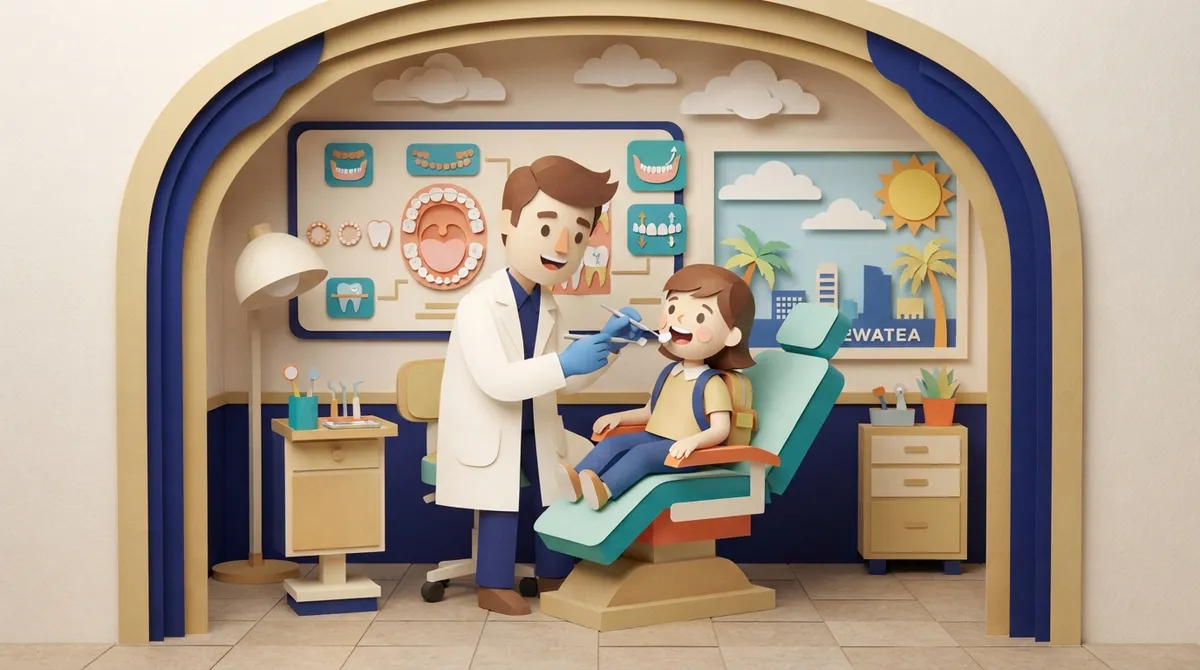
The first visit tends to be much easier than parents expect. Kids are often curious, and our team keeps things warm and relaxed. While every practice is a little different, here’s a typical flow:
- A friendly welcome. You and your child meet the team and get comfortable.
- A look at your child’s history. We ask about health, habits, and any concerns you’ve noticed.
- A gentle exam. The orthodontist checks teeth, bite, and jaw alignment.
- Records or images, if needed. This can include digital scans or X-rays to see what’s happening below the gums. Modern tools like digital impressions mean no goopy molds.
- A clear conversation. You learn what was found and what the options are, including doing nothing for now.
Want to be ready? Our tips on your child’s first orthodontic visit can help you and your little one feel prepared.
Understanding Phase 1 Treatment
When early treatment is recommended, it’s often called Phase 1. This stage uses simple tools chosen for your child’s needs. Depending on the diagnosis, the orthodontist might use:
- A palatal expander to widen a narrow upper jaw
- Partial braces on a few teeth
- A removable or fixed appliance to guide growth or correct a habit
After Phase 1, many children take a rest period while the rest of their permanent teeth come in. Some later need a second phase, often with full braces or aligners. Others may not need more treatment at all. It really depends on how the child grows.
If you want to understand the two-step approach better, take a peek at these phase one vs phase two orthodontics facts. And if an expander is on the table, our palatal expander guide explains how it works.
Early Treatment vs. Waiting: How to Decide
This is the question parents ask most. The honest answer is that timing depends on the diagnosis, your child’s growth, and how ready they are to take part in treatment. A child who needs to wear an appliance must be willing to cooperate, and that matters too.
Here’s a simple way to think about it:
- Treat now when a problem could get harder to fix, or when guiding growth early offers a clear benefit.
- Monitor when teeth look mostly healthy but may change as more adult teeth arrive.
- Wait when the best results come after most permanent teeth have erupted.
Skipping an evaluation altogether is where families sometimes run into trouble. Missing the window for guiding growth can make later treatment longer or more complex. Learn more in these mistakes parents make skipping early orthodontic treatment.
Questions to Ask Your Orthodontist
A great orthodontist welcomes your questions. Both the AAO and the American Academy of Pediatric Dentistry encourage decisions based on the individual child. Before you leave an evaluation, consider asking:
- What exactly is the diagnosis, and what is causing it?
- What are my options, including waiting?
- What are the benefits and risks of treating now?
- How long will treatment likely last?
- What is the follow-up plan if we monitor instead of treat?
- What will it cost, and how does insurance apply?
Writing these down before your visit is a handy trick. It keeps the appointment focused and helps you feel confident about the plan.
What About Cost and Insurance?
Let’s be real: cost matters to every family. Pricing for early treatment varies by provider, diagnosis, the type of appliance used, and your insurance plan. We don’t have a single reliable Clearwater price to quote, because every child’s needs are different.
The best move is to ask for a clear, written breakdown at the consultation. Ask what the evaluation includes, whether there’s a fee, and how payments can be spread out. Many families find that flexible options make care much easier to manage. You can explore ideas in our posts on braces payment plans and using dental insurance to help pay for braces.
How to Choose an Orthodontist for Your Child in Clearwater
Finding the right fit is just as important as the treatment itself. Marketing claims can sound great, but nothing replaces an individualized exam. Here’s what to look for:
- Specialist training. Confirm the clinician is a qualified orthodontist. Our guide on what makes a specialist orthodontist different explains why this matters.
- A clear consultation. Know what the first visit includes and whether it’s free.
- Honest communication. The doctor should explain options, not push one path.
- A kid-friendly feel. Your child should feel welcome and comfortable.
- Clear follow-up. You should know how monitoring and check-ins work.
At Brockway Orthodontics, Dr. Brockway takes time to listen to your concerns and explain things in plain, friendly language. She cares about families in our community, and that shows in the way every visit is handled. Our office uses modern tools like digital impressions and 3D imaging, which keeps visits comfortable and planning precise. You can also learn more about the Brockway orthodontist in Clearwater, or see what other families say when you visit us on Google — Brockway Orthodontics.
Helping Your Child Feel Ready
A little preparation goes a long way. Kids often feel nervous about anything new, so here are a few friendly tips:
- Describe the visit as a simple “tooth check-up,” not a big procedure.
- Let them know the orthodontist is just counting and looking at teeth.
- Bring a list of any habits, like thumb sucking, you’ve noticed.
- Share your own questions ahead of time so the visit stays smooth.
Your calm and positive attitude is contagious. When you treat it like an adventure, your child usually follows your lead. For a bit more help getting ready, check out how to prepare for your first visit to an orthodontist.
Taking the Next Step
Early orthodontic care is really about peace of mind. Whether your child needs a gentle appliance, a watchful eye, or nothing at all, an evaluation gives you real answers instead of guesses. The AAO’s age 7 guideline exists because catching things early gives you more options.
If your child is around age 7 or you’ve spotted something that makes you wonder, we’d love to meet your family. Book your child’s consultation online and let’s take a look together. You can also contact us with any questions first. For general dental health guidance, the American Dental Association is a trusted resource, and the Florida Association of Orthodontists offers helpful information for Florida families.
Here’s to healthy, happy smiles for your little one, and plenty of confident grins ahead!
FAQs
Q: When should my child first see an orthodontist?
A: The American Association of Orthodontists recommends a first checkup by age 7, or sooner if you or your dentist notice a concern. Think of it as a friendly growth check, not a promise of braces. It simply gives you a clear picture of how your child’s smile is developing.
Q: Does an orthodontic checkup at age 7 mean my child will need braces?
A: Not at all! Many children only need monitoring, and some need nothing at that stage. Treatment is recommended only when there’s a specific reason to act early, and your orthodontist will explain exactly why.
Q: What is Phase 1 orthodontic treatment, and will my child need a second phase?
A: Phase 1 is early treatment that uses tools like an expander or partial braces to address a specific problem while your child is still growing. Some kids need a second phase after more permanent teeth come in, while others may not. It all depends on how your child develops.
Q: How much does early orthodontic treatment cost in Clearwater, and does insurance help?
A: Costs vary based on the diagnosis, the type of appliance, and your insurance plan, so there isn’t one set price. The best step is to ask for a clear, written breakdown at your consultation, along with any payment options. Our team is happy to walk you through coverage and flexible plans.
Q: How do I know if my child needs treatment now or just monitoring?
A: Your orthodontist looks at tooth eruption, bite, jaw alignment, and growth to decide. If a problem could become harder to fix later, early treatment may make sense. If things look healthy, regular monitoring is often the smart, low-stress choice.
Our Service Area