Key Takeaways
-
The first orthodontist visit is a consultation and assessment, not a commitment to treatment—braces are typically not placed that day, giving you time to learn your options without pressure.
-
Bring your insurance card, ID, past dental records, and a written list of questions and goals to maximize the value of your consultation and ensure all concerns are addressed.
-
The orthodontist will examine your bite, jaw alignment, and tooth position, and may take X-rays, photos, or digital scans to create a personalized treatment plan suited to your specific needs.
-
First appointments typically last 20 minutes to two hours depending on whether records are taken and case complexity—ask the office in advance how long to plan for to avoid scheduling conflicts.
-
Treatment options include metal braces, ceramic braces, and clear aligners like Spark, with average treatment lasting 22 months; the orthodontist will explain benefits, risks, and costs upfront with available payment plans.
-
After treatment, retainers are essential to keep teeth in their new positions, so discuss retainer plans early to avoid surprises and ensure long-term results.
Walking into an orthodontist’s office for the first time can feel a little like stepping into the unknown. Will they put braces on right away? Will it hurt? How long will it take? If you are asking these questions, you are in good company. Almost every parent, teen, and adult feels a few butterflies before that first appointment.
Here is the good news: your first visit is mostly a friendly conversation and a careful look at your smile. It is a chance to learn what is going on with your teeth and bite, and to find out what your options are. No pressure, no surprises.
In this guide, we walk you through what to expect at the orthodontist, from the first hello to the treatment plan. You will learn what happens at the consultation, which records may be taken, how treatment works, and what questions to ask. By the end, you will feel ready and relaxed.
The First Orthodontist Visit in a Nutshell
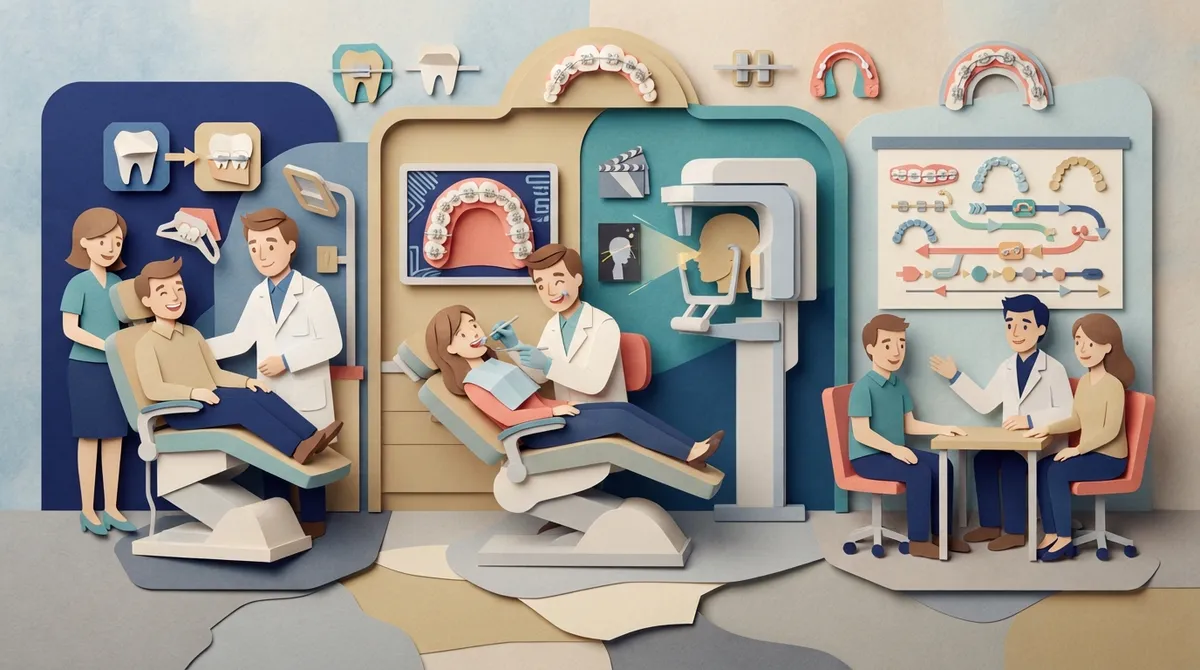
A first orthodontic appointment is usually an assessment and consultation. It is not a commitment to treatment, and braces are not automatically put on that day. The orthodontist looks at your teeth, bite, and jaws, then explains what they see and what should happen next.
Every practice and every patient is a little different. Visit length, the records needed, and costs can vary. In general, you can expect these basics:
- A warm welcome and a chat about your goals and concerns
- A review of your dental and medical history
- An exam of your teeth, bite, jaws, and sometimes your facial profile
- Photos, X-rays, or a digital scan, if needed
- A clear explanation of findings and options
- Talk about timing, cost, and next steps
At Brockway Orthodontics, we want every visit to feel comfortable and welcoming. You can read more about the process on our Your First Visit page.
Step-by-Step: What Happens at Your First Appointment
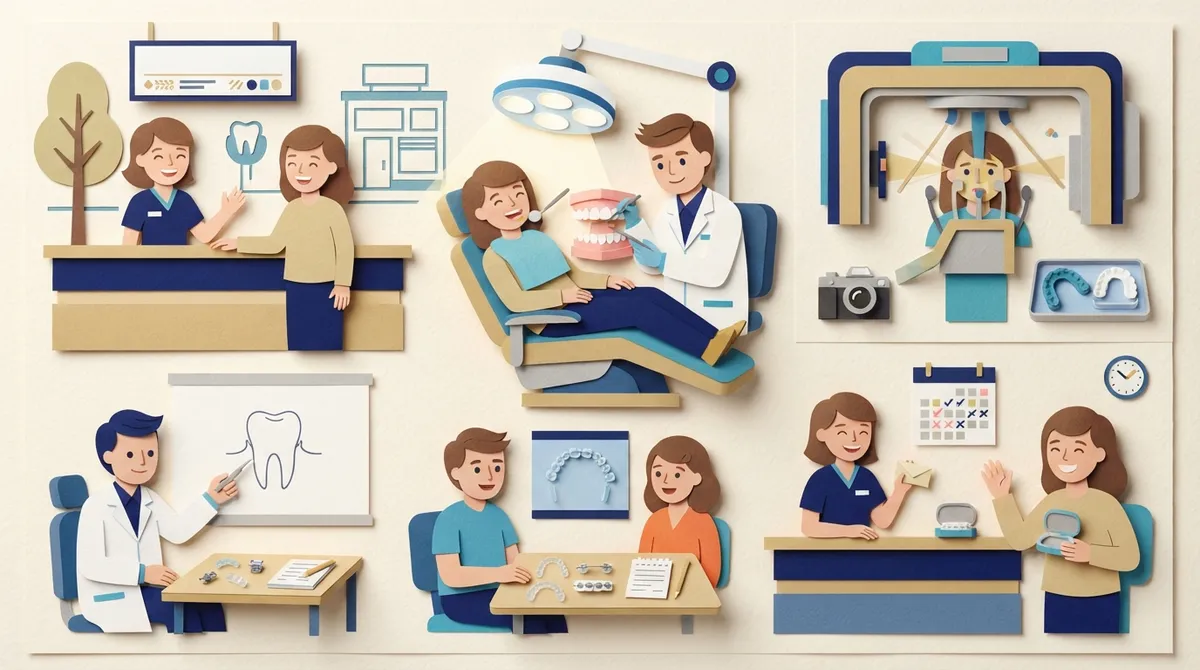
Let’s walk through a typical first visit, one step at a time.
- Check-in and paperwork. You will fill out forms about your health, dental history, and insurance. Bring any records you have, plus your insurance card.
- A friendly conversation. The team asks what brought you in. Are you worried about crooked teeth, gaps, or a bite that feels off? This is your time to share your goals.
- The exam. The orthodontist checks how your teeth fit together, how your jaws line up, and how your teeth are growing in.
- Records. Photos, X-rays, or a digital scan may be taken. These help show tooth positions, roots, and jaw relationships.
- The explanation. The orthodontist shares what they found and talks through the options that fit your needs.
- Next steps. You learn about timing, costs, and what comes next. You can ask questions and take time to decide.
Many people are surprised by how relaxed this all feels. Most of it is talking, looking, and learning.
The Exam: What the Orthodontist Looks For
During the exam, the orthodontist gathers the full picture of your oral health. They may look at:
- How your upper and lower teeth meet when you bite
- Crowding, gaps, or rotated teeth
- Overbites, underbites, crossbites, and open bites
- Jaw position and how your jaws move
- Habits like thumb sucking or mouth breathing
- The health of your gums and any cavities
Teeth and gums need to be healthy for orthodontic care to work well. If you have a cavity or gum problem, you may need to see your family dentist first. That is completely normal, and it helps protect your results.
Curious about how an orthodontist differs from a dentist? Our guide on orthodontist vs. dentist explains it in plain language.
X-Rays, Photos, and Scans: Will You Need Them?
Many patients ask, “Will I need X-rays at my first visit?” The answer depends on your case. Records help the orthodontist see what is happening below the surface and plan the best path forward.
| Type of Record | What It Shows | What It Feels Like |
|---|---|---|
| Photographs | Smile, face, and teeth from several angles | Quick and painless, like a few snapshots |
| X-rays | Tooth roots, jaw position, and teeth still under the gums | Fast and comfortable, just bite on a small sensor |
| Digital scan | A 3D model of your teeth and bite | A small wand moves over your teeth, no gooey molds |
Not every patient needs every record at the first visit. Your orthodontist will take what is useful for your situation. At our practice, modern tools like digital impressions and 3D imaging make this part comfortable and precise.
Explaining Your Options and Treatment Plan
After the exam and records, the orthodontist explains what they found. This is where you learn about the different ways to straighten your smile. The right choice depends on your diagnosis and circumstances, not just looks or preference.
Common options include:
- Metal braces: Time-tested and effective for many bite and alignment issues. Learn more on our All About Braces page.
- Ceramic (clear) braces: Tooth-colored brackets that blend in more with your smile.
- Clear aligners: Removable, nearly invisible trays. We offer Spark™ Clear Aligners, an affordable alternative to Invisalign.
- Other appliances: Expanders or other tools for younger patients or special cases.
Not sure which path is best? Our comparison of traditional braces vs. clear aligners can help you start thinking it through.
The orthodontist should also share the expected benefits, limits, and risks of treatment, plus a likely timeline. You may get a written plan and fee estimate. And remember: you can take time to think it over.
How Long Does the First Visit Take?
This is one of the most common questions, and the honest answer is: it varies. Some clinics describe an initial assessment of around 20 minutes. Others suggest allowing up to two hours for a more detailed consultation with records and scans.
A few things affect the length:
- Whether X-rays, photos, or scans are taken that day
- How many questions you have
- How complex your case is
- Whether you are seeing the doctor alone or with family
When you book, ask the team how long to plan for. That way you can arrange your schedule and avoid rushing.
What About Costs?
Cost is a big part of any treatment decision, and a good orthodontic office will talk about it openly. Fees depend on the type of treatment, how long it lasts, and your insurance. Many practices offer payment plans to spread out the cost.
You can learn more about how we make care fit your budget on our Financing and Insurance page. If you are curious about pricing in general, our friendly guide on how much braces cost in 2026 breaks it down.
What Happens After the First Visit?
Once you decide to move forward, the next step is usually to schedule the start of treatment. In some cases, same-day treatment may be possible, but for most patients, there is a short wait while the plan is prepared.
Starting Treatment
If you choose braces, the orthodontist places brackets and wires on your teeth. If you choose aligners, you receive your first set of trays and learn how to wear and care for them. Either way, the team teaches you how to clean your teeth and what foods to avoid.
Regular Adjustment Visits
Treatment involves periodic check-ins. According to the NHS, patients with fixed braces commonly attend adjustment visits every 6 to 8 weeks. The British Orthodontic Society says routine visits are usually every 4 to 10 weeks, depending on the treatment. These visits keep your progress on track.
How Long Will Treatment Last?
A 2025 American Association of Orthodontists survey report lists a median treatment time of 22 months. That is only an average, though. Your own timeline depends on your case. Our guide on how long braces take goes deeper.
Retainers: The Finishing Touch
After your teeth are in their new spots, retainers help keep them there. Retainer plans should be discussed early, so there are no surprises. Visit our Retainers page to learn more about options.
What to Expect for Different Ages
Orthodontic care is not just for teens. People of all ages can benefit, and the first visit looks a little different depending on who is in the chair.
Kids and Parents
The American Association of Orthodontists recommends a first check-up by age 7. That does not mean every child needs braces then. An early look helps spot developing problems and decide whether to watch and wait or begin early care. Parents can learn more about early treatment and read our guide on when your child should first see an orthodontist.
Teens and Young Adults
Teens often want to know about looks, comfort, and how braces fit into school and sports. Our adolescent treatment options include braces and clear aligners, so there is something for different lifestyles.
Adults
It is never too late to improve your smile. Many adults worry about looks at work or feel unsure about starting. Discreet options like ceramic braces and clear aligners are popular. Explore our adult treatment page or read about why so many adults are getting treatment in 2026.
Patients Who Need Retreatment
If you had braces years ago and your teeth have shifted, you are not alone. Relapse is common, especially when retainers were not worn as directed. A fresh exam can show whether a simple fix or a new round of treatment makes sense.
What to Bring and Questions to Ask
A little prep makes your visit smoother and more useful. Here is what to bring:
- Your insurance card and ID
- A list of medicines and health conditions
- Past dental records or X-rays, if you have them
- Your referral, if your dentist gave you one (though you do not always need one)
- A list of your questions and goals
And here are some great questions to ask your orthodontist:
- What is causing my bite or alignment problem?
- What treatment options fit my needs, and why?
- How long will treatment likely take?
- What will it cost, and what payment plans are available?
- How often will I need appointments?
- What are the risks or limits of treatment?
- What will I need to do after treatment to keep my results?
For more preparation tips, check out our post on how to prepare for your first orthodontist consultation.
Tips to Feel Calm and Confident
Nervous? That is totally normal. A few small steps can help you feel at ease:
- Brush and floss before your visit so your teeth feel fresh
- Arrive a few minutes early to settle in
- Write down questions so you do not forget them
- Bring a family member or friend for support
- Remember, there is no pressure to decide that day
You can also take a peek at the space before you go. Our office page shows what to expect when you walk in.
Why Choose Brockway Orthodontics
Brockway Orthodontics is proud to be a trusted choice for families in Clearwater, Florida. Dr. Brockway takes time to listen to your concerns and dreams for your smile. She explains everything in a friendly, easy-to-follow way, so you always know what to expect.
We offer care for the whole family, from kids and teens to adults. Our options include metal braces, ceramic braces, and Spark™ Clear Aligners. We use modern tools like digital impressions and 3D imaging for comfort and precision. In some cases, same-day treatment is possible for busy families.
Want to hear from other patients? You can visit us on Google and read Brockway Orthodontics reviews. You can also see how we fit into local care through our post on how to choose an orthodontist in Clearwater. As a member of the professional community, we stay connected with groups like the Florida Association of Orthodontists and follow health guidance from the American Dental Association. You can also see what the American Association of Orthodontists says about the first appointment.
Ready for Your First Visit?
Knowing what to expect at the orthodontist takes away most of the worry. Your first visit is a friendly chat, a careful exam, and a clear plan, all at your own pace. Whether you are a parent thinking about your child’s smile, a teen hoping for straighter teeth, or an adult ready for a change, we are here to help.
Ready to take the first step? Book your appointment online and see what Brockway Orthodontics can do for your smile. Have a question first? Just contact us, and our friendly team will be happy to help.
FAQs
Q: Do orthodontists put braces on at the first appointment?
A: Usually not! The first visit is mainly a consultation where the orthodontist checks your teeth and bite, takes any needed records, and talks through your options. In some cases, same-day treatment may be possible, but most people start treatment at a later visit.
Q: How long does an orthodontist consultation take?
A: It depends on your needs. Some consultations take about 20 minutes, while others run up to two hours if photos, X-rays, or scans are done. It is always smart to ask the office how much time to plan for.
Q: What should I bring to an orthodontist consultation?
A: Bring your insurance card, a list of medicines and health conditions, and any past dental records or X-rays you have. It also helps to bring a list of questions and goals so you get the most out of your visit.
Q: At what age should a child first see an orthodontist?
A: The American Association of Orthodontists recommends a first check-up by age 7. This does not mean your child needs braces then. It simply lets the orthodontist spot early issues and decide whether to monitor or treat.
Q: Will I need X-rays or a scan at my first orthodontist visit?
A: Possibly! It depends on your case. X-rays, photos, or a digital scan help your orthodontist see tooth roots, jaw position, and bite, and they are quick and comfortable. Your orthodontist will take only what is helpful for you.
Our Service Area