Key Takeaways
-
Floss at least once a day, ideally at night, since plaque hides around brackets and wires and brushing alone doesn't reliably clean those spaces.
-
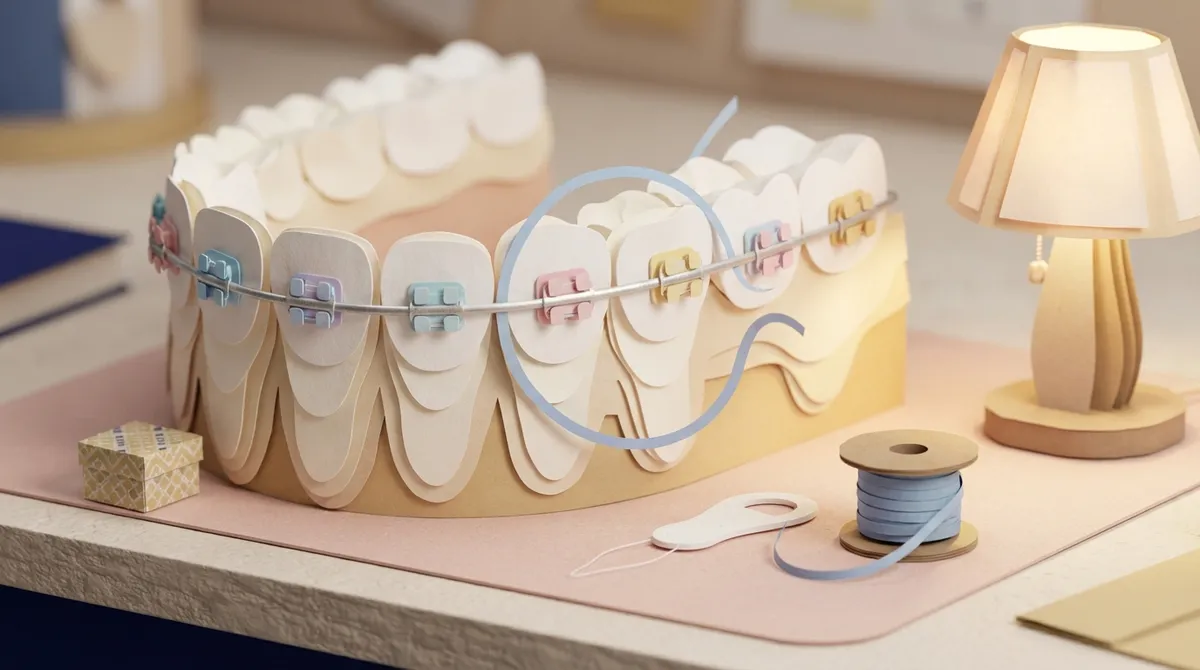
Pull off about 18 inches of floss and thread it under the archwire using a floss threader or the stiff end of orthodontic floss, then pull it through until it clears the wire.
-
Ease floss down between teeth without snapping it, curve it into a C-shape around each tooth, and move gently just below the gumline on both neighboring teeth.
-
Use a fresh section of floss for each space and never yank floss upward against the wire, which can loosen brackets or bend the archwire.
-
Water flossers and interdental brushes are useful add-ons, but they work best alongside regular floss since research on water jets for braces is mixed.
-
If floss gets stuck, wiggle it gently and slide it out to the side; if a wire or bracket comes loose, call your orthodontic team rather than fixing it yourself.
Let’s be honest: the first time you try to floss with braces, it can feel like trying to thread a needle while wearing oven mitts. You are not alone! Almost everyone who gets braces wonders how on earth to get floss past that archwire. The good news? It gets much easier with a little practice and the right tools.
Here is why it matters. Brushing alone does not reliably clean the tight spaces between your teeth or the area under your gumline. Plaque loves to hide in those spots, especially around brackets and wires. Daily flossing helps keep your gums healthy and your teeth cavity-free while your braces do their work.
In this friendly guide, we will walk you through exactly how to floss with braces, step by step. We will also cover handy tools, common mistakes, and what to do if something goes wrong. Whether you are a parent helping a child, a teen starting treatment, or an adult who is new to braces, you will find tips that make flossing simple.

Why Flossing With Braces Matters So Much
Braces create lots of new nooks and crannies where food and plaque can collect. Brackets, wires, and bands all make cleaning harder. That is why flossing becomes even more important during orthodontic treatment, not less.
Skipping floss can lead to inflamed gums, bad breath, and even white spots on your teeth once the braces come off. Those spots are early signs of enamel damage, and no one wants a straight smile with spots on it!
Oral health is a real concern for kids and teens in general. According to the CDC’s 2024 Oral Health Surveillance Report, about 10% of U.S. adolescents aged 12 to 19 had at least one untreated cavity in permanent teeth. The CDC also reports that half of U.S. children aged 6 to 9 have had a cavity. These numbers describe general risk, not the effect of braces specifically, but they remind us why good habits matter.
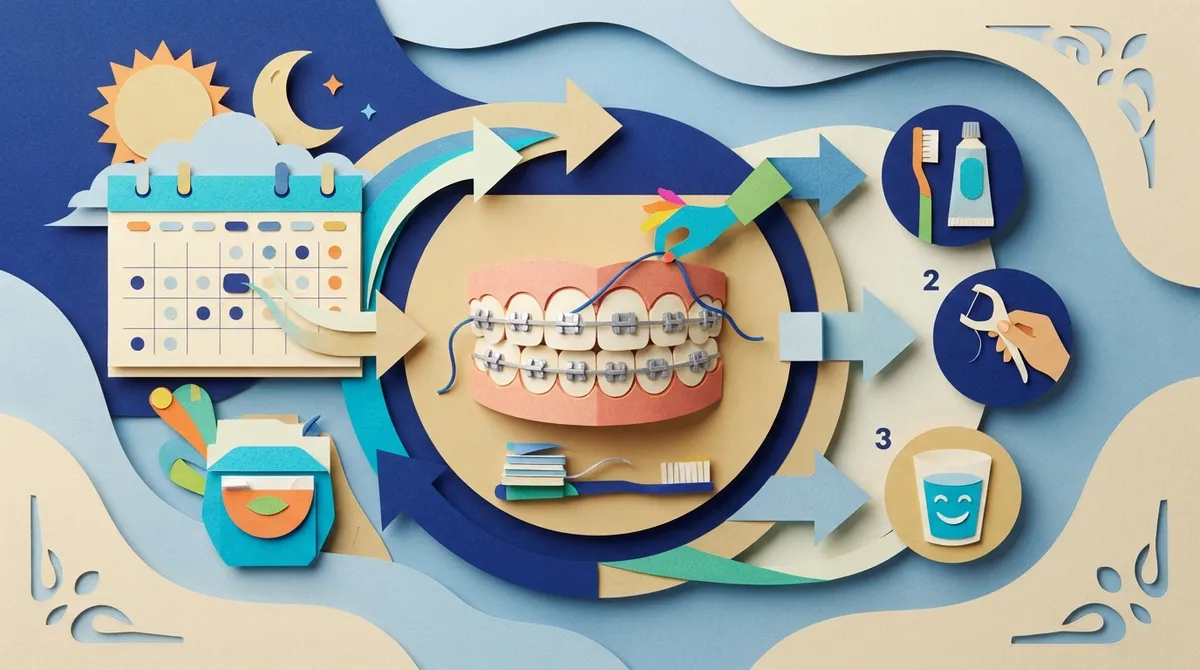
How Often Should You Floss With Braces?
The short answer: at least once a day. The American Association of Orthodontists recommends daily flossing during treatment. Always follow any specific instructions from your orthodontist, since your needs may be a little different.
Many patients find that flossing at night works best. Your teeth stay clean while you sleep, and you are less rushed than in the morning. Pick a time that fits your routine and stick with it.
What You Need Before You Start
Regular floss alone will not get the job done with braces. The wire gets in the way. Here are the tools that make life easier:
- Floss threaders: Small, flexible loops that guide floss under the archwire.
- Orthodontic floss: Floss with a stiff end that works like a built-in threader.
- Superfloss: A three-part floss with a stiff end, a spongy section, and regular floss.
- Orthodontic flossers: Handheld tools designed to slide under the wire.
- Interdental brushes: Tiny brushes that clean between teeth and around brackets.
- Water flosser: A device that sprays a stream of water around the gumline and between teeth.
You do not need all of these. Many people pick one or two that feel comfortable. If you are not sure what to choose, ask your orthodontic team at your next visit.
How to Floss With Braces: Step-by-Step
Here is the classic method using a floss threader or orthodontic floss. Take your time at first. Most people speed up quickly after a week or two.
- Cut a piece of floss. Pull off about 18 inches. This gives you enough length to use a clean section for each space.
- Thread the floss. Pass the floss through the loop of a floss threader, or use the stiff end of orthodontic floss. Slide it under the archwire, between two teeth.
- Pull the floss through. Gently pull the floss until it clears the wire. Take the threader off and hold the floss with your fingers.
- Slide it between the teeth. Ease the floss down between two teeth. Do not snap it down, because that can hurt your gums.
- Make a C-shape. Curve the floss around one tooth in a “C.” Move it up and down along the tooth surface. Go gently just below the gumline.
- Switch to the neighboring tooth. Repeat the C-shape and gentle up-and-down motion on the tooth next door.
- Remove the floss carefully. Slide it out the same way it went in. Do not yank it upward against the wire.
- Repeat for every space. Use a fresh section of floss as you go, and do not skip the teeth in the back.
It might take 10 to 15 minutes in the beginning. That is normal! With practice, many people cut that time down quite a bit.
Quick Tip for Getting Floss Under the Wire
If the threader keeps slipping, try holding the wire gently with one finger while you guide the floss underneath. A small mirror and good lighting also help you see what you are doing.
Flossing Tools Compared
Every mouth is different, and so is every person’s comfort level. This table gives you a quick look at the most common options.
| Tool | Best For | Pros | Things to Keep in Mind |
|---|---|---|---|
| Floss threader | Traditional braces | Low cost, works with any floss | Takes practice to use quickly |
| Orthodontic floss | Daily use | Built-in stiff end, no extra tool | Can be harder to find in some stores |
| Superfloss | Around wires and bridges | Spongy section cleans well | Slightly more expensive |
| Orthodontic flosser | Busy people and kids | Easy to hold and guide | May not reach every space |
| Interdental brush | Wider gaps and brackets | Quick and simple | Not for very tight spaces |
| Water flosser | Extra cleaning | No threading needed | Use alongside, not always instead of, floss |
Can a Water Flosser Replace Regular Floss?
Water flossers are popular with braces wearers, and for good reason. They do not need to be threaded under the wire. You simply aim the stream at the gumline and between teeth at a comfortable setting, following the manufacturer’s directions.
That said, the research is mixed. Studies comparing cleaning tools in orthodontic patients are often short, and a 2024 systematic review of water jets in orthodontic patients found no significant overall improvement in oral health across the included trials. Results vary by study. In other words, no single tool is proven best for everyone.
A smart approach is to use a water flosser as a helpful add-on. Where floss can reach, it is still a great choice. If you want to learn more about other ways to keep your teeth clean, check out our guide on 11 ways to properly clean your teeth with braces.
Are Interdental Brushes Safe With Braces?
Yes, they can be a great tool when used gently. These tiny brushes slide between teeth and around brackets to clear out trapped food. They work especially well for spaces that feel too wide or awkward for floss alone.
Choose a size that fits comfortably without forcing it. If a brush feels too tight, go down a size. If you are ever unsure, your orthodontic team can show you the right way to use one during your visit.
Common Flossing Mistakes to Avoid
Everyone makes a few mistakes when they are starting out. Here are the big ones to watch for:
- Snapping the floss. Forcing it down into the gums can cause cuts and soreness.
- Pulling hard on the wire. This can loosen brackets or bend the archwire.
- Skipping spaces. It is tempting to rush, but every gap counts.
- Using the same section of floss. Fresh floss helps avoid spreading bacteria.
- Giving up too soon. It feels awkward at first, but it really does get easier.
If your gums bleed a little in the first week or two, that is common as they adjust. Keep flossing gently. If bleeding continues or gets worse, let your orthodontist know.
What to Do If Floss Gets Stuck
It happens to the best of us! If floss catches on a bracket or wire, stay calm. Do not yank it.
- Stop pulling and take a breath.
- Gently wiggle the floss back and forth to loosen it.
- Slide it out to the side instead of straight up.
- If it is still stuck, cut the floss close to the tooth and gently remove the remaining piece.
If a wire or bracket comes loose during flossing, do not try to fix it yourself. Call your orthodontic team. For more on what counts as urgent, take a look at our article on emergency vs. routine orthodontics.
Flossing Tips for Every Type of Patient
For Parents Helping Kids and Teens
Younger kids often need a hand. Try making flossing a family routine so it feels fun instead of like a chore. Orthodontic flossers or pre-threaded options can make it much easier for small hands. A reward chart or a favorite song playing in the background can turn flossing into a habit. You can also read more about braces for teens to help your child feel confident throughout treatment.
For Teens and Young Adults
You have a lot going on, from school to sports to social events. Keep a travel floss pack in your backpack so you can clean up after lunch. A clean smile means you will be ready for photos, graduations, and every big moment.
For Busy Adult Professionals
Between work and meetings, flossing can slip down the list. Try keeping an orthodontic flosser at your desk and another at home. A quick evening routine keeps your treatment on track so you can finish on time. Adults who have braces or aligners can learn more on our adult treatment page.
For Clear Aligner Patients
If you use clear aligners instead of braces, flossing is simpler because there is no wire in the way. You can use regular floss as usual after taking your trays out. Curious about this option? Learn more about Spark™ Clear Aligners.
Build a Complete Daily Cleaning Routine
Flossing is just one part of a healthy routine. Here is a simple plan that works well for most braces wearers:
- Brush after meals, or at least morning and night, using a soft-bristle toothbrush and fluoride toothpaste.
- Floss once a day, using a threader or your favorite tool.
- Rinse with water after eating if you cannot brush right away.
- Use an interdental brush or water flosser as a helpful extra.
- Keep up with your adjustment visits.
Want a refresher on brushing technique? Our guide on how to brush teeth with braces walks you through it. You can also pair your routine with smart food choices by reading about foods to avoid with braces.
Do Not Skip Your Dental Cleanings
Even the best home care benefits from professional help. The American Association of Orthodontists advises professional cleanings at least every six months, or more often if your dentist recommends it. These visits remove buildup that home care might miss and help catch small problems early.
For general guidance on oral health, the American Dental Association offers helpful resources for patients of all ages. And for local information on orthodontic care in our state, the Florida Association of Orthodontists is another trusted source.
Can Poor Flossing Cause Cavities or White Spots?
Yes, it can. When plaque stays on your teeth around brackets, it can wear away enamel over time. This may lead to cavities or chalky white spots that remain after your braces come off.
The good news is that consistent brushing and flossing greatly lowers that risk. If you want to brighten your smile once treatment is done, you might like our tips on getting white teeth after braces.
Why Families Trust Brockway Orthodontics
At Brockway Orthodontics, we believe that understanding your care is the key to feeling confident. Dr. Brockway and our friendly team take time to show every patient how to brush and floss with braces, so you never feel left guessing. We offer metal braces, ceramic braces, and Spark™ Clear Aligners for kids, teens, and adults in Clearwater, Florida.
You can meet Dr. Brockway and learn more about our approach. Want to see what other patients say? Visit us on Google — Brockway Orthodontics to read reviews from our Clearwater community.
Your Flossing Journey Starts Today
Flossing with braces may feel tricky at first, but you can absolutely do it. Start with the right tools, take it slow, and use gentle, steady motions. Within a few weeks, it will feel like second nature. Your future smile will thank you for the effort!
Need a little hands-on help? We are happy to show you the best technique at your next visit. Book your appointment online and let our team help you feel confident about your braces care, or contact us with any questions.
FAQs
Q: How often should you floss with braces?
A: Aim to floss at least once a day, ideally at night so your teeth stay clean while you sleep. Your orthodontist may give you extra tips based on your needs, so be sure to follow their advice. A little daily effort goes a long way!
Q: What is the easiest way to floss with braces?
A: Many people find orthodontic floss or an orthodontic flosser the simplest option, since they slide under the wire without extra steps. A floss threader works great too once you get the hang of it. Try a few tools and see which one feels most comfortable for you.
Q: Can you use a water flosser instead of floss with braces?
A: A water flosser is a helpful tool because it does not need to be threaded under the wire, but it works best as a partner to regular flossing rather than a total replacement. Studies on this are mixed, so there is no one-size-fits-all answer. Ask your orthodontic team what fits your smile best.
Q: What should you do if floss gets stuck in your braces?
A: Stay calm and do not yank it. Gently wiggle the floss to loosen it, then slide it out to the side. If it will not budge, cut the floss near the tooth and call your orthodontist if a wire or bracket feels loose.
Q: Can poor flossing with braces cause cavities or white spots?
A: Yes, leftover plaque around brackets can wear down enamel and lead to cavities or white spots. The good news is that regular brushing, daily flossing, and routine dental cleanings help protect your teeth throughout treatment.
Our Service Area