Key Takeaways
-
Neither braces nor aligners is universally better or faster for teens; the right choice depends on the complexity of your teen's bite, tooth growth, and how well they can follow instructions.
-
Clear aligners must be worn about 20 to 22 hours a day, so be honest about whether your teen reliably remembers trays, keeps track of cases, and cleans teeth before reinserting them.
-
Braces work around the clock without relying on daily compliance, making them a steadier option for teens who are forgetful or less organized.
-
Teens need extra help with hygiene either way: a 2025 study of 120 aligner patients found more gingivitis in teens than adults, so brushing and flossing support matters.
-
Retainers are needed after active treatment with either option, so ask your orthodontist about the retainer type and wear schedule before treatment ends.
Picture this: your teenager comes home from a friend’s house, grinning, and announces they want clear aligners because “everyone has them.” Or maybe you’re the one wondering if metal braces are just the safer bet. Either way, you want to get it right. Choosing braces or aligners for teenagers is a big decision, and it’s easy to trip over a few common mistakes along the way.
Here’s the good news. Both options can work very well for teens. The trick is matching the treatment to your teen’s teeth, habits, and daily life. A choice that works for one teen may not be the best fit for another.
In this friendly guide, we’ll walk through five common mistakes families make in 2026. We’ll also share what research says, how each option works, and what to ask at your first visit. Let’s help you make a choice you’ll feel great about.
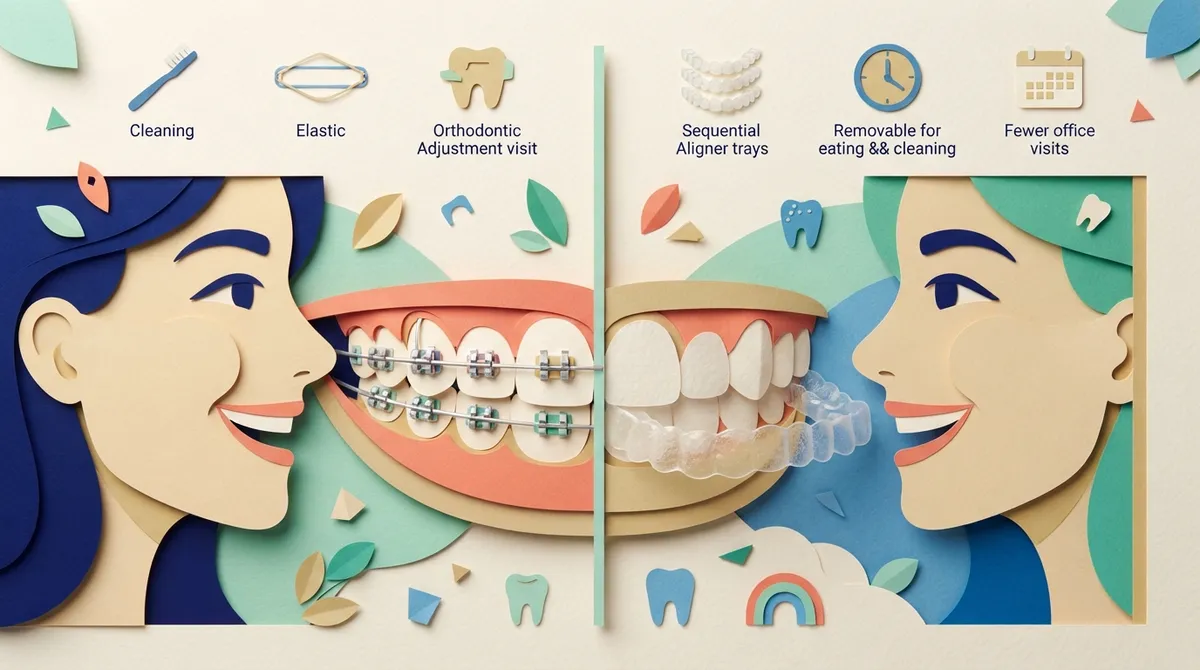
Quick Comparison: Braces vs. Aligners for Teens
Before we get into the mistakes, here is a simple side-by-side look at how the two options compare. Keep in mind that an orthodontist needs to examine your teen to know which one fits best.
| Feature | Braces | Clear Aligners |
|---|---|---|
| How they work | Brackets and wires work nonstop | Removable trays worn most of the day |
| Wear time | Always on | About 20 to 22 hours a day |
| Appearance | Visible (metal or ceramic options) | Nearly invisible |
| Eating | Some foods must be avoided | Trays come out for meals |
| Cleaning | Brush and floss around brackets | Brush teeth, then clean the trays |
| Biggest risk | Food trapped around brackets | Lost trays or too little wear |
| Best for | A wide range of tooth and bite problems | Many cases with a responsible, organized teen |

Mistake #1: Assuming One Option Is Always Better or Faster
It’s tempting to ask, “Which one is best?” But research doesn’t crown a single winner. A 2024 systematic review looked at 20 studies and 1,470 patients. When it compared aligners with fixed braces, it drew on only two randomized trials. Those trials found no significant differences in bite results or treatment time on the measures reported. The review also noted that the evidence varies a lot from study to study.
Another 2024 review mentioned one teen study where aligner treatment averaged three months less and eight fewer visits than braces. That sounds exciting, but it was one study. It is not a promise for every teenager.
What really shapes your teen’s timeline includes:
- How complex the bite or crowding problem is
- How well the treatment is planned
- How closely your teen follows instructions
- How teeth and jaws are growing
So skip the “faster” and “better” debates. Ask instead, “Which option fits my teen’s teeth and habits?” That question leads to a much happier smile.
Mistake #2: Skipping the Honest Talk About Daily Habits
Here is where families often get surprised. Clear aligners only work when they stay in the mouth. Most plans call for about 20 to 22 hours of wear each day. They come out for meals and for any drink other than water, following your orthodontist’s directions.
That is a lot of responsibility for a busy 14-year-old with homework, sports, and a social life. Be honest with yourself and your teen about a few things:
- Does your teen remember things on their own? Forgotten trays on the lunch table are a classic story.
- Do they tend to lose retainers, earbuds, or water bottles? Aligner cases go missing too.
- Will they clean the trays and brush before putting them back in? Skipping this can cause trouble for teeth and gums.
If the answers make you nervous, braces may be the calmer path. They work around the clock and don’t depend on anyone remembering to put them in. If your teen is organized and motivated, aligners can be a great fit. You can learn more about both paths in our guide on braces vs. clear aligners for kids.
Not sure how your teen would do? That’s a great question to bring to a consultation. A friendly orthodontist can talk it through with both of you.
Mistake #3: Choosing Based on Looks Alone
Let’s be real. Teens care about how they look, and that is perfectly normal. Aligners are less noticeable, and many teens love that. But appearance shouldn’t be the only deciding factor.
Braces have come a long way. Today there are options for teens who want a lower-profile look, including tooth-colored ceramic brackets. Many teens also enjoy picking fun colors for their bands, and braces can become part of their personal style. You can explore our braces options to see what’s available.
Here’s why looks alone can lead you astray. Fixed braces remain useful across a broad range of tooth and bite problems. Some movements are harder to predict with aligners alone. If your teen’s case needs those movements, braces may give a more reliable result, even if they look less discreet at first.
On the other hand, Spark™ Clear Aligners can be a wonderful choice for many teens who need straightening and are ready for the responsibility. The best approach is to let the diagnosis guide the choice, then fine-tune for style and comfort.
What About Comfort?
Both options can cause some temporary soreness, especially after new trays or adjustments. Braces may irritate cheeks and lips for a little while. Aligners can feel tight at first and may change speech slightly in the first days. Most teens adjust quickly, and your orthodontist can share easy tips to help.
Mistake #4: Overlooking Oral Hygiene Differences
Good hygiene matters with either treatment, and each one has its own challenge.
With braces, food can get trapped around brackets and wires. Brushing takes more time, and flossing needs extra care. With aligners, teeth should be cleaned before the trays go back in. Otherwise, food and bacteria stay pressed against the teeth.
This matters because poor cleaning can lead to gum inflammation or tooth decay. A 2025 observational study of 120 clear-aligner patients reported a higher rate of gingivitis in teens than in adults. That doesn’t mean aligners are worse than braces. It simply reminds us that teens need extra support with brushing and flossing, whichever option they choose.
Here are a few simple ways to help your teen stay on track:
- Keep a travel toothbrush in the backpack or gym bag
- Set a phone reminder to brush after lunch
- Use interdental brushes or floss threaders for braces
- Rinse aligners with cool water and clean them as your orthodontist advises
- Schedule regular dental cleanings alongside orthodontic visits
Want more practical tips? Our guide on how to brush teeth with braces walks through it step by step.
Mistake #5: Forgetting About Retainers and the Long Game
Here’s a mistake that sneaks up later. Many families focus on the day braces come off or the last aligner tray, and they forget that the journey isn’t over. After active treatment, teens generally need retainers to help keep teeth in their new positions. This is true whether they had braces or aligners.
Your orthodontist decides the retainer type and wear schedule. Some teens wear removable retainers, and others may have a fixed wire behind the teeth. Either way, consistent wear protects all the hard work. Learn more about the options on our retainers page.
When you’re comparing braces or aligners for teenagers, ask yourself this: “Is my teen ready to wear a retainer as directed after treatment?” If the answer is a confident yes, you’re setting your teen up for a smile that lasts.
How Teen Growth Changes the Plan
Teenagers are still growing, and that is actually a helpful thing for orthodontics. Jaws and teeth are changing, which can make some bite problems easier to guide at the right time. Tooth eruption matters too. If a teen still has baby teeth or newly erupting teeth, your orthodontist may time treatment carefully.
That’s why the best age to start varies from teen to teen. Our adolescent treatment page explains how we approach care during these growing years. For some kids, an earlier checkup helps too, as described on our early treatment page.
What Can Aligners and Braces Actually Treat?
Both options can treat many common teen concerns. These include:
- Crowded teeth
- Gaps between teeth
- Overbites and underbites
- Crossbites
- Teeth that are twisted or tilted
Whether aligners can handle a specific problem depends on the details of your teen’s bite. Some cases are a great match for aligners. Others call for the steady, continuous control of braces. Only a hands-on exam can tell you for sure.
A Simple Step-by-Step Way to Decide
Feeling overwhelmed? Try this easy plan:
- Book an orthodontic evaluation. Let a specialist look at your teen’s teeth, bite, and growth.
- Ask what each option can realistically do. Request an honest look at expected results and treatment demands.
- Talk about daily habits as a family. Be real about wear time, cleaning, and organization.
- Compare costs and payment options. Check out financing and insurance details so there are no surprises.
- Let your teen have a voice. Teens who feel heard usually follow instructions better.
Want to know what that first appointment looks like? Take a peek at your first visit so you can walk in feeling prepared.
Why Families Choose Brockway Orthodontics
At Brockway Orthodontics, we love helping Clearwater families find the right fit. Dr. Brockway takes time to listen to your teen’s goals and your concerns, then explains each option in a friendly, easy-to-understand way. We offer metal braces, ceramic (clear) braces, and Spark™ Clear Aligners, so your teen’s treatment can match their needs instead of the other way around. You can learn more about Dr. Brockway and our approach on our site.
Our office also uses modern tools such as digital impressions and 3D imaging, which means no messy molds and more precise planning. For families who want to see what others think, you can visit us on Google — Brockway Orthodontics and read patient reviews.
For general guidance on orthodontic health, the American Dental Association and the Florida Association of Orthodontists are trusted places to learn more.
Final Thoughts: The Right Choice Is the One That Fits Your Teen
There’s no single winner in the braces or aligners debate. Braces work nonstop and handle a wide range of problems. Aligners are removable, discreet, and make cleaning easier, but they depend on steady daily wear. The smartest choice comes from a proper exam, an honest chat about habits, and a plan built around your teen.
If you avoid the five mistakes we covered, you’re already ahead of the game. Don’t assume one option is always faster, be honest about daily habits, look beyond appearance, plan for great hygiene, and remember the retainer stage.
Ready to find the best fit for your teen’s smile? Book a free consultation online and let’s talk through your options together. Prefer to ask a question first? Just contact us, and our friendly team will be happy to help.
FAQs
Q: Are braces or clear aligners better for teenagers?
A: Neither one is better for every teen. The best choice depends on your teen’s bite, tooth growth, oral health, and how well they can follow treatment instructions. An orthodontic exam is the best way to find the right fit.
Q: How many hours a day do teens need to wear clear aligners?
A: Aligners are commonly prescribed for about 20 to 22 hours a day. They usually come out for meals and for drinks other than water, but your orthodontist will give the exact instructions for your teen.
Q: Do teenagers need retainers after braces or aligners?
A: Yes, in most cases! Retainers help keep teeth in their new positions after active treatment, no matter which option your teen chose. Your orthodontist will pick the retainer type and wear schedule that works best.
Q: Can teens eat normally with braces or aligners?
A: With aligners, teens take the trays out to eat, so food choices are more flexible, as long as they clean their teeth before putting trays back in. With braces, teens need to avoid very hard or sticky foods that can damage brackets and wires.
Q: Are clear aligners as effective as braces for teens?
A: Research is mixed. Some studies show similar results in selected cases, while reviews point out limits and differences in the evidence. Results depend on case complexity, planning, and how consistently your teen wears the trays.
Our Service Area