Key Takeaways
-
Jaw asymmetry in children is common and often normal; a visible difference alone does not diagnose a problem, so a professional exam is the only way to know what's causing it.
-
The American Association of Orthodontists recommends a first orthodontic check-up by age 7, and earlier if you notice a concern such as a shifted chin, a sliding lower jaw, or jaw pain or clicking.
-
A posterior crossbite can make the chin look off-center because the lower jaw slides to one side to find a comfortable bite, so ask the orthodontist whether a crossbite is involved.
-
Not every asymmetry needs treatment; many mild differences are managed with regular monitoring, and any recommended plan should come with clear reasoning on benefits, risks, and alternatives.
-
Share when you first noticed the asymmetry, whether it seems to be changing, and any chewing trouble, jaw clicking, past facial injury, or family history, since these details guide the diagnosis.
-
Ask which records (photos, scans, or X-rays) are recommended and why, and ask how the asymmetry will be tracked over time and when to return for follow-up.
You glance at a photo of your child and something catches your eye. One side of the chin looks a little different from the other. Maybe the smile tilts, or the jaw seems to sit off to one side. If that sounds familiar, take a deep breath. You are far from alone, and noticing it was a smart first step.
Here is the good news. A visible difference does not automatically mean something is wrong. Jaw asymmetry in a child can be a normal part of growing up, or it can point to a bite issue that is worth looking at early. The tricky part is that you cannot tell which one it is just by looking in the mirror. That is where an orthodontist comes in.
Walking into that visit with the right jaw asymmetry questions for a child’s orthodontist can turn a worrying appointment into a clear, confident conversation. In this guide, we will walk through what jaw asymmetry means, what the orthodontist checks, which questions to bring, and what treatment might look like. Let’s get started together.
What Does Jaw Asymmetry Mean in a Child?
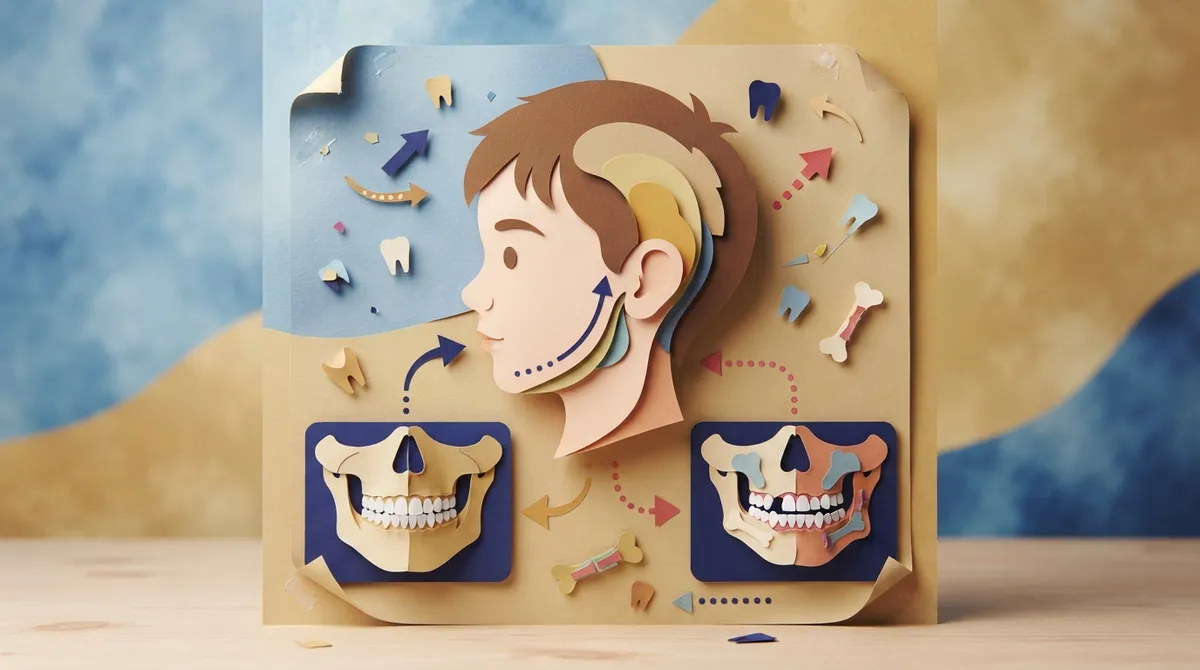
Jaw asymmetry means the two sides of the jaw or face do not match perfectly. Here is something many parents are relieved to hear: no face is perfectly symmetrical. Small side-to-side differences are very common.
The important thing is understanding why a difference is there. Jaw asymmetry in a child can come from several different sources:
- Normal developmental variation. Growing faces do not always grow in perfect balance.
- A dental or bite-related issue. The way the teeth fit together can change how the face looks.
- A functional shift. The lower jaw may slide to one side when your child bites down.
- A difference in jaw growth. One side of the jaw may grow differently from the other.
A visible difference alone does not give us a diagnosis. That is why an exam matters more than a guess.
How Common Is Jaw Asymmetry in Children?
It is more common than most parents expect, though the numbers depend heavily on how it is measured. A 2024 radiographic study looked at 390 children aged 6 to 8 with a mix of baby and permanent teeth. The researchers found measurable side-to-side differences in the lower jaw, but concluded they were seldom clinically significant. In other words, a measurable difference does not always mean a child needs treatment.
That study also cited earlier research from a separate group. It reported moderate or severe lower jaw asymmetry in 18.2% of Finnish children aged 8 to 12. That number comes from one specific population and should not be applied to every child. Published estimates vary a lot based on the age of the children, the group studied, and the way the jaw was measured.
The takeaway is simple. Some asymmetry is common, and only a professional exam can tell you whether your child’s situation needs attention.
When Should a Child See an Orthodontist About an Uneven Jaw?
The American Association of Orthodontists recommends a first orthodontic check-up by age 7. If you or your dentist notice a concern sooner, you can go earlier. Waiting is not required when something looks off.
Why age 7? By then, a mix of baby and permanent teeth is usually present. That gives the orthodontist a helpful window into how the bite and jaws are developing. An early visit often leads to simple monitoring rather than immediate treatment, which is a relief for many families. If you are weighing timing, our guide on age 7 vs. waiting for a child’s first orthodontist visit breaks it down further.
You may want to book sooner if you notice any of these signs:
- The chin or jaw looks shifted to one side
- The lower jaw seems to slide when your child closes their mouth
- The asymmetry looks more noticeable over time
- Your child has jaw clicking, pain, or trouble chewing
- There was a past injury to the face or jaw
What Will the Orthodontist Check During the Exam?
Knowing what to expect helps your child feel calm, too. During the evaluation, the orthodontist looks at the whole picture, not just the jaw. Here is what the exam typically covers:
- Facial symmetry. They study how the face looks from the front, and how the chin and midline line up.
- Dental symmetry. They check whether the center of the upper teeth lines up with the center of the lower teeth.
- How the teeth meet. They look at your child’s bite, including any crossbite.
- Jaw movement. They watch whether the lower jaw shifts to one side as your child closes their mouth.
- Growth and development. They consider your child’s age, growth stage, and how the teeth are coming in.
These findings help decide whether extra records would be useful. Those can include photographs, dental models or digital scans, and radiographs (X-rays). Not every child needs every record, and a good orthodontist will explain why each one is helpful. You can read more about what records help assess a child’s developing bite before your visit.
The Best Jaw Asymmetry Questions for a Child’s Orthodontist
This is the heart of your visit. Bring this list along. You do not have to ask every question, but having them handy keeps you from forgetting something once you are in the chair.
Questions About the Cause
- What is causing the asymmetry: the teeth, a bite shift, or jaw growth?
- Is this a normal variation, or something that needs attention?
- Is my child’s jaw shifting when they bite down?
- Is there a crossbite involved?
Questions About Change Over Time
- Is the asymmetry changing as my child grows?
- Could it get better, stay the same, or get worse?
- How will we track it over time?
Questions About Records and Imaging
- Which records do you recommend, and why?
- Are X-rays needed now, or can we wait?
- What will the records tell us that the exam cannot?
Questions About Next Steps
- Should we monitor or start treatment now?
- What are the benefits, risks, and alternatives?
- How long might treatment take?
- When should we come back for a follow-up?
Notice how these questions invite the orthodontist to explain their thinking. That is exactly what you want. A good provider welcomes questions and answers in plain, friendly language.
What Should You Tell the Orthodontist?
You know your child best. The details you share help the orthodontist put the puzzle together. Before the visit, jot down a few notes. This table shows what to mention and why it helps.
| What to Share | Why It Helps |
|---|---|
| When you first noticed the asymmetry | Shows how long it has been present |
| Whether it seems to be getting worse | Helps tell stable differences from changing ones |
| Any jaw shifting, clicking, or pain | Points to possible functional or joint concerns |
| Trouble chewing | Can signal a bite problem |
| Past dental or facial injury | Injuries can affect jaw growth and position |
| Medical or family history | Some growth patterns run in families |
These details help the clinician understand your concern, but they do not replace a hands-on exam. Think of them as helpful clues, not a final answer.
Can a Crossbite Make a Child’s Jaw Look Uneven?
Yes, it can. This is one of the most helpful things for parents to understand. A posterior crossbite happens when some of the upper back teeth fit inside the lower back teeth instead of outside. When a child bites down, the lower jaw may slide to one side to find a comfortable fit. That slide can make the chin look off-center.
According to guidance from the American Academy of Pediatric Dentistry, correcting a crossbite that causes a functional shift early may improve how the jaw works. It may also reduce related differences in the position or shape of the lower jaw. The orthodontist decides whether and when treatment makes sense for each child. To learn more, see our overview of what crossbite treatment is and whether you really need it.
What Treatment Options Might Be Recommended?
Here is an important reminder: not every asymmetry needs treatment. The right plan depends on the cause, how significant it is, your child’s age, their growth stage, and their bite. Common paths include:
- Observation. Many children simply need regular check-ups to watch how things develop.
- Crossbite correction. An orthodontic appliance can widen the upper jaw so the teeth fit together better. Our palatal expander guide explains how this works.
- Broader orthodontic care. Braces or other appliances may be used to guide teeth and bite as your child grows.
- Coordinated specialist assessment. If there is significant skeletal asymmetry, the orthodontist may recommend working with other specialists.
Some families find it helpful to understand how treatment is staged. Our article on phase one vs. phase two orthodontics can give you a sense of how early and later care fit together.
Does Jaw Asymmetry Always Need Treatment?
No, and this is worth saying clearly. Many children with a mild difference never need anything beyond monitoring. The 2024 study mentioned earlier found that most measured differences in young children were not clinically significant. Treatment planning should be careful and based on the individual child.
That is why a thorough exam matters. It protects your child from both under-treatment and unnecessary treatment. If a plan is recommended, ask the orthodontist to walk you through the reasoning. You deserve to understand every step.
How to Prepare Your Child for the Visit
A little preparation makes the appointment smoother for everyone. Here is a simple checklist:
- Write down your questions. Use the lists above so nothing slips your mind.
- Gather your notes. Include when you noticed the asymmetry and any symptoms.
- Bring past records. Dental X-rays or records from your family dentist can be helpful.
- Talk to your child. Explain in a calm, friendly way that the visit is just a look at how their smile is growing.
- Plan for a follow-up. Ask when to return so you leave with a clear next step.
If you want more ideas, our guide on how to prepare for your first orthodontic appointment has more tips you can use.
Why Choose Brockway Orthodontics for Your Child’s Evaluation?
At Brockway Orthodontics, we believe families deserve answers they can understand. Dr. Brockway takes the time to listen to your concerns and explain what she sees in a warm, easy-to-follow way. We use modern tools, including digital impressions and 3D imaging, so your child’s visit is comfortable and your treatment plan is precise.
Our goal is to help you feel informed and confident, whether the answer is simple monitoring or a plan to guide your child’s bite. If you would like to hear what other families say about their experience, visit us on Google and see what our Brockway Orthodontics patients share. You can also learn more about the Brockway orthodontist in Clearwater, FL before you come in.
Take the Next Step With Confidence
Noticing a difference in your child’s jaw can feel unsettling, but you have already done the hard part by paying attention. Remember that jaw asymmetry can be a normal variation, a bite issue, a functional shift, or a growth difference. Only an orthodontic exam can sort out which one it is.
Bring your questions, share your observations, and ask for clear explanations. The right orthodontist will partner with you, not rush you. If you would like a closer look at your child’s smile, we would love to help. For the American Dental Association’s guidance on children’s oral health, you can also visit the American Dental Association.
Ready to get answers? Book appointment online with Brockway Orthodontics and let’s take a friendly, no-pressure look at your child’s growing smile together.
FAQs
Q: What causes jaw asymmetry in children?
A: It can come from normal growth variation, a bite or tooth issue, a functional shift of the lower jaw, or a difference in how each side of the jaw grows. Because these causes look similar from the outside, an orthodontic exam is the best way to find out what is going on.
Q: Can jaw asymmetry get worse as a child grows?
A: Sometimes it can change as your child grows, which is exactly why orthodontists often recommend monitoring. Tracking the asymmetry over time helps your orthodontist tell whether it is stable, improving, or needs a closer look.
Q: How does an orthodontist diagnose jaw asymmetry?
A: They start with a hands-on exam of facial and dental symmetry, how the teeth meet, and whether the lower jaw shifts when your child closes. If needed, they may add photos, dental scans, or X-rays to get a clearer picture.
Q: Does jaw asymmetry in a child always need treatment?
A: Not at all! Many mild differences are normal and only need regular check-ups. Your orthodontist will recommend treatment only when the cause, severity, and your child’s growth stage show that it would truly help.
Q: What should I ask at my child’s orthodontic consultation?
A: Good questions include what is causing the asymmetry, whether it is changing, if a crossbite or jaw shift is involved, and whether to monitor or treat now. It also helps to ask about benefits, risks, likely treatment length, and when to return for a follow-up.
Our Service Area