Key Takeaways
-
Around age 3 is the key checkpoint for thumb, finger, or pacifier sucking; the AAPD encourages helping children stop these habits by about 36 months when possible.
-
Seek an earlier evaluation if you notice front teeth that don't meet, protruding upper front teeth, a narrow upper arch, or teeth crossing, since these can signal developing bite problems.
-
The American Association of Orthodontists recommends an initial orthodontic check-up by age 7, even when no problem is obvious, to monitor jaw and bite development.
-
Assess any habit by its frequency, duration, and intensity; a brief nighttime thumb suck is very different from hours of daily sucking.
-
Persistent mouth breathing, tongue thrust, or frequent grinding and object chewing are worth raising with a professional, especially if paired with snoring, jaw soreness, or worn teeth.
-
Address habits without shame: praise good days, identify triggers like stress or boredom, and offer comforting swaps, since punishment often makes habits harder to break.
If your child still sucks a thumb, clings to a pacifier, or chews on their nails, you are in good company. Almost every parent wonders at some point, “Is this a big deal, or will they grow out of it?” The honest answer is that it depends, and that is exactly why timing matters. Knowing when to discuss oral habits with an orthodontist can save you worry and help you catch small issues before they grow.
The good news? Most habits are completely normal in the early years. Many children stop on their own between ages 2 and 4. Still, a few clear signals tell you it is time to ask an expert. In this guide, we will walk through the ages, signs, and habit types worth raising, plus what to expect at the visit. We will keep it simple, kind, and shame-free, because that is how habits actually get easier to handle.

Why Oral Habits Are Worth Talking About
Oral habits are repeated actions involving the mouth, like thumb sucking, pacifier use, tongue thrusting, mouth breathing, tooth grinding, and nail biting. For infants and toddlers, many of these are natural and even comforting. They help little ones self-soothe.
The concern is not the habit itself. It is how long, how often, and how hard it continues. The American Academy of Pediatric Dentistry (AAPD) notes that the duration of force on the teeth and jaws is especially important. A child who sucks a thumb lightly at bedtime is in a very different spot than one who does it for hours each day.
Not every child with a habit develops a bite problem. A quick check-in simply lets a professional look at your child’s unique situation instead of guessing.
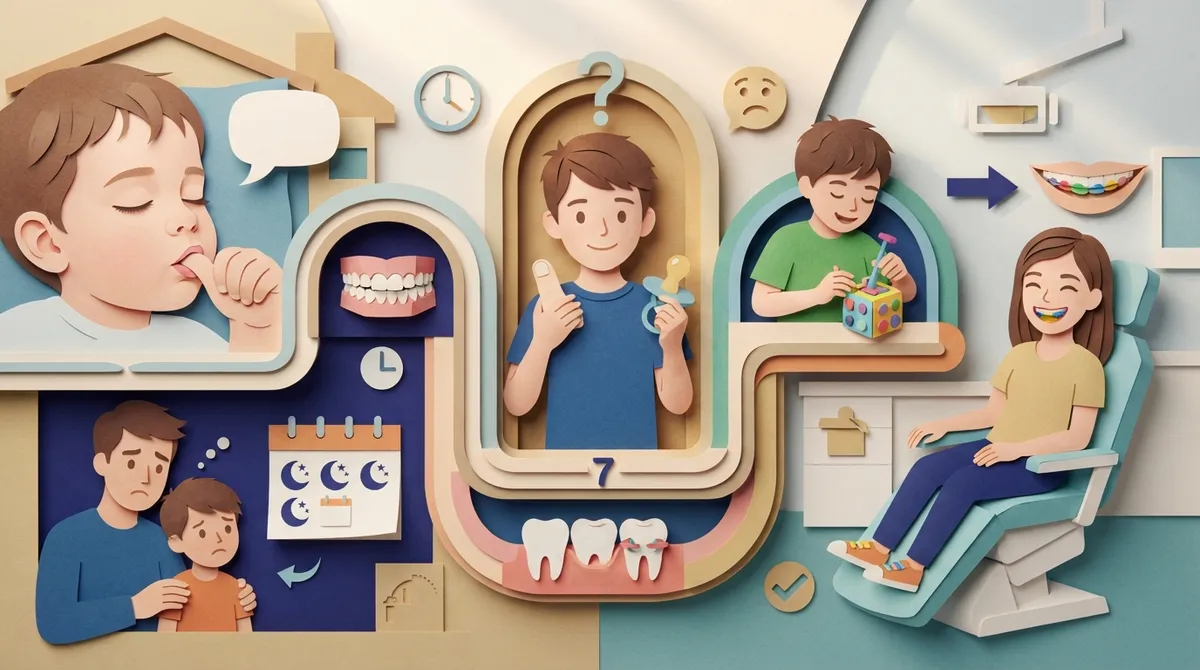
The Short Answer: Key Moments to Speak Up
Here is a quick snapshot of the moments when a conversation makes sense.
| Situation | Why It Matters | When to Raise It |
|---|---|---|
| Thumb, finger, or pacifier sucking continues | Longer habits are linked to bite changes | Around age 3, or sooner if the bite looks different |
| Front teeth do not meet or stick out | May signal an open bite or increased overjet | As soon as you notice it |
| Upper arch looks narrow or teeth cross | May point to a crossbite | As soon as you notice it |
| Mouth breathing or tongue thrust | Can relate to jaw growth and tooth position | When it is persistent |
| Grinding, nail biting, or object chewing | May cause wear or discomfort | If it is frequent or paired with other concerns |
| No problem is visible | Early check-ups are still helpful | By age 7 |
Around Age 3: The Big Checkpoint for Sucking Habits
If your child still sucks a thumb, fingers, or a pacifier around age 3, that is a good time to bring it up with a dentist or orthodontist. The AAPD encourages parents to help children stop these habits by about 36 months when possible. Think of this as a point for assessment, not a sign that damage has already happened.
A clinical review in StatPearls also notes that many children let go of these habits on their own between ages 2 and 4. Concern grows when the habit keeps going around ages 3 to 4. That is a general pattern, not a prediction for your child.
If you are not sure how early is too early, our guide on when your child should see an orthodontist breaks down the timeline in plain language.
Sooner Than 3: Signs You Should Not Wait
You do not have to wait for your child’s third birthday if something seems off. Reach out earlier if you notice any of these changes:
- Front teeth that do not touch when your child bites down
- Upper front teeth that look like they are pushing forward
- A bite where the upper teeth sit inside the lower teeth on one or both sides
- A narrowing upper arch or a high, narrow palate
- Trouble chewing, biting, or pronouncing certain sounds
These can be linked to prolonged non-nutritive sucking, which research connects with anterior open bite, increased overjet, and posterior crossbite. Remember, these are associations. Only a clinical exam can tell you what is actually happening with your child. If you are curious about the bite types themselves, you can read about what crossbite treatment involves and signs of an open bite.
Age 7: The Check-Up That Helps Even When Things Look Fine
The American Association of Orthodontists (AAO) recommends an initial orthodontic check-up by age 7, even if no problem is obvious. By then, a mix of baby and adult teeth gives an orthodontist a great view of how the bite and jaws are developing.
This visit is about information, not automatic treatment. Many children simply get a thumbs-up and a plan to monitor growth. Others benefit from a little early guidance. If you want to weigh your options, our article on age 7 versus waiting can help you decide with confidence.
It is also worth remembering that a first dental visit is recommended by age 1. That visit sets up a dental home, where a general or pediatric dentist can watch development and refer to an orthodontist when it makes sense.
Other Oral Habits Worth Mentioning
Thumb sucking gets most of the attention, but several other habits can be worth a conversation. Bring them up if they are frequent, long-lasting, or paired with other concerns.
Tongue Thrust or Unusual Tongue Posture
If the tongue pushes against or between the front teeth when swallowing or resting, it may be linked to bite changes. You might also notice a lisp or gaps that do not close.
Mouth Breathing
Persistent mouth breathing, especially if your child snores or seems tired, deserves attention. An orthodontist can look at how the jaws and airway relate, and may suggest a medical check-in as well. You can learn more about airway orthodontics if this sounds familiar.
Tooth Grinding (Bruxism)
Grinding is common in children, and many outgrow it. Mention it if you hear grinding often, or if your child complains of jaw soreness or you see worn teeth.
Nail Biting and Chewing on Objects
Chewing pens, nails, or other objects can stress the teeth. It is especially worth raising if it coincides with chipped teeth, bite changes, or discomfort.
A clinician can figure out whether the right next step is orthodontic, dental, medical, or behavioral. You do not need to sort that out alone.
What Affects the Impact of a Habit?
Two children with the same habit can have very different outcomes. Three things matter most:
- Frequency: How many times a day does it happen?
- Duration: How long does each episode last, and how many years has it continued?
- Intensity: How hard is the pressure on the teeth and jaws?
AAPD guidance recommends evaluating habits using these three factors. A quick note on how often your child does it, when it happens, and for how long will make your visit much more helpful.
What to Expect When You Bring It Up
Talking about habits at the orthodontist is relaxed and judgment-free. Here is how it usually goes:
- A friendly conversation. The team asks about the habit, when it started, and how often it happens.
- A look at the bite. The orthodontist checks how the teeth, jaws, and tongue are developing.
- Records if needed. This may include digital scans or images to see the bigger picture. At Brockway Orthodontics, we use modern tools like digital impressions instead of messy molds.
- A clear plan. Options may include monitoring, supportive behavior strategies, referral to another professional, or an appliance when it is truly indicated.
Appliances are not automatically needed for every child with a habit. Treatment is individualized. Many families leave with simple tips and a follow-up date. To feel prepared, take a peek at how to prepare for your first visit to an orthodontist.
How to Talk to Your Child Without Shame
Here is the part that matters just as much as the timing. Children rarely stop a habit because they were scolded. Shame and punishment can actually make habits stick, since many are tied to comfort and stress.
Try these gentle approaches instead:
- Stay positive. Praise the moments when your child does not do the habit.
- Look for triggers. Is it bedtime, boredom, or a big change like a new school or sibling?
- Offer comfort swaps. A soft toy, a calming routine, or a favorite book can fill the gap.
- Ask for help. Your orthodontist can suggest age-appropriate ideas that fit your child’s personality.
- Team up. Make it “our” project, not a problem your child has to fix alone.
Be sure to tell the orthodontist about stressors or changes at home or school. That little detail often unlocks the right strategy.
Is This Only a Kid Thing?
Not at all. Teens and adults can have habits too, like tongue pressing, clenching, or mouth breathing. These can affect results after treatment, and in some cases lead to shifting teeth. If you are a teen or adult thinking about braces or clear aligners, mention any habits at your consultation. Dr. Brockway can plan around them so your results last. If you have had treatment before and notice your smile moving, it may be worth reading about orthodontic relapse warning signs.
A Simple Checklist for Parents
Not sure whether it is time? Use this quick list. If you answer yes to any of these, it is a good moment to call.
- Does my child still suck a thumb, fingers, or pacifier at age 3 or older?
- Do the front teeth look open, protruding, or crossed?
- Is mouth breathing or snoring a regular thing?
- Do I hear grinding often, or see worn teeth?
- Has my child reached age 7 without an orthodontic check-up?
- Do I simply feel unsure and want peace of mind?
That last one counts. Your instincts as a parent are valuable. A short visit is a small step that can bring a lot of calm.
Let’s Talk About Your Child’s Smile
The best time to discuss oral habits with an orthodontist is when you first have a question. Around age 3 is a great checkpoint for sucking habits. Earlier is fine if you see bite changes. And by age 7, a general check-up is wise even if everything looks great. Most importantly, you do not have to figure this out alone.
At Brockway Orthodontics, Dr. Brockway takes the time to listen, explain, and build a plan that feels right for your family. We welcome kids, teens, and adults with the same warm, shame-free approach. You can also see what families say about us when you visit us on Google — Brockway Orthodontics. For trusted general guidance, the American Dental Association and the Florida Association of Orthodontists are also helpful resources.
Ready for answers? Book appointment online and let’s take a friendly look at your child’s smile together.
FAQs
Q: At what age should I talk to an orthodontist about thumb sucking?
A: Around age 3 is a great time to bring it up, since the AAPD encourages helping children stop these habits by about 36 months when possible. If you notice bite or jaw changes sooner, don’t wait. A quick visit gives you peace of mind and a clear plan.
Q: Can thumb sucking or pacifier use change my child’s bite?
A: It can, but not always. Prolonged sucking is associated with open bite, increased overjet, and crossbite, and the impact depends on how often, how long, and how hard the habit happens. An orthodontist can check your child’s teeth and tell you what is really going on.
Q: Do all children with oral habits need an orthodontic appliance?
A: Not at all! Treatment is individualized, and many children do well with monitoring, encouragement, and supportive strategies. An appliance is only suggested when it is truly indicated, and we will always talk through your options first.
Q: When should a child have their first orthodontic check-up?
A: The American Association of Orthodontists recommends an initial check-up by age 7, even if no problem is obvious. It is a simple way to track growth and catch anything early, and many kids just get a thumbs-up and a monitoring plan.
Q: How can I help my child stop an oral habit without making them feel ashamed?
A: Keep things positive by praising the good days, looking for triggers like stress or boredom, and offering comforting swaps. Skip the punishment, since it often backfires. Your orthodontist can share age-appropriate ideas that fit your child.
Our Service Area