Key Takeaways
-
Clear aligners, front-facing braces, and lingual braces can all cause a short-term speech change, so no option is guaranteed to leave your speech unchanged.
-
Sibilants like /s/ and /z/ are the sounds most often affected, sometimes sounding slushy or lisp-like at first.
-
A 2024 systematic review found speech commonly normalized within 7 to 14 days, though some patients took 30 to 60 days; the evidence was rated low quality.
-
Lingual braces are more often linked to speech difficulty than aligners or front-facing braces, though they remain a good fit for some bites and goals.
-
Aligners are discreet but generally require near-full-time wear, so check with your orthodontist before planning to remove them for presentations.
-
Practicing out loud, speaking slightly slower at first, and starting treatment before a lighter work period can help you adapt faster.
If you talk for a living, your smile is only half the story. Your voice matters just as much. Maybe you lead meetings, teach classes, pitch clients, or spend half your day on video calls. Then the thought of starting orthodontic treatment can feel a little scary. Will you sound different? Will you stumble over your words in front of the boss?
Here is the friendly truth. There are real orthodontic options for people who speak at work, and most people adapt faster than they fear. But no appliance is guaranteed to leave your speech unchanged. Clear aligners, front-facing braces, and lingual braces can each cause a short-term change in how some sounds come out.
In this guide, we compare the main choices side by side. We will look at what the research says, which sounds tend to wobble, and how to plan around a busy speaking schedule. By the end, you will have a clear list of questions to bring to your orthodontist.

Why Orthodontic Appliances Can Change Your Speech
Speaking is a team sport between your tongue, lips, and teeth. Many sounds depend on your tongue touching or nearing specific spots on your teeth and the roof of your mouth. When something new sits in that space, your tongue has to learn a new map.
That is why almost any orthodontic appliance can cause a brief adjustment period. The change is usually small, and it often feels bigger to you than it sounds to anyone else. Still, if your job is talking, it is smart to plan for it.
The Sounds Most Often Affected
Studies most often point to sibilants, the hissy sounds like /s/ and /z/. Some studies also report changes with /sh/, /th/, /ch/, /d/, and /r/. Effects vary by appliance, by person, and by the kind of speech task being measured.
- /s/ and /z/: the most common ones, which can sound slightly slushy or lisp-like at first.
- /sh/ and /ch/: sometimes a bit softer or less crisp.
- /th/, /d/, and /r/: mostly noted with appliances that sit behind the teeth.
Your Three Main Options at a Glance
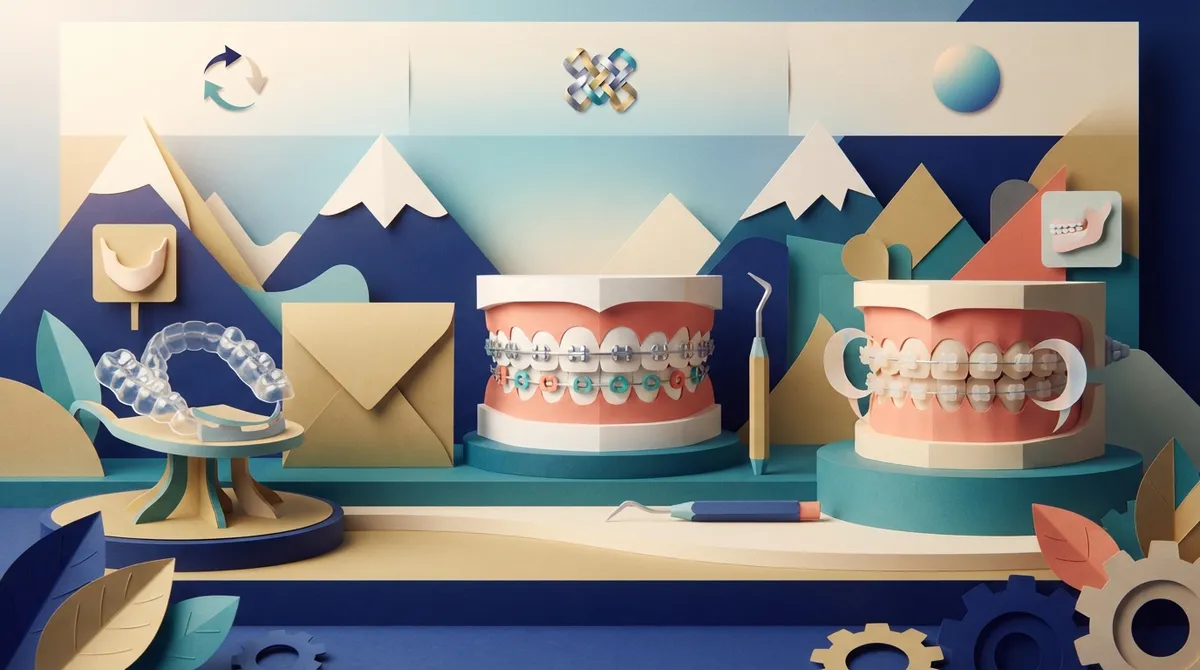
Adults who speak often at work usually weigh three types of treatment: clear aligners, braces on the front of the teeth (metal or ceramic), and lingual braces on the back of the teeth. The best fit depends on your bite and your treatment goals, so an orthodontist should assess your options rather than choosing on looks alone.
| Option | Where It Sits | Speech Effect (General Trend) | Visibility |
|---|---|---|---|
| Clear aligners | Covers tooth surfaces | Often a short-term lisp; changes commonly ease over days to weeks | Very low |
| Front-facing braces (metal or ceramic) | Front of the teeth | Short-term changes possible; often milder | Metal is noticeable; ceramic blends in more |
| Lingual braces | Behind the teeth, close to the tongue | More often linked to speech difficulty | Hidden from view |
Notice that no row says “zero change.” That is on purpose. Every option asks your mouth to adapt.
Clear Aligners: Discreet, but Not Silent
Clear aligners are popular with busy professionals because they are nearly invisible. At Brockway Orthodontics, we offer Spark™ Clear Aligners as a more affordable choice for adults and teens who want a discreet look. If you want to see how they work, our guide on how removable aligners straighten teeth is a great place to start.
What the Research Says About Aligners and Speech
Aligners cover the tooth surfaces, so they can temporarily change how your tongue meets your teeth. A 2021 randomized clinical trial compared 20 patients using aligners with 20 using conventional fixed appliances. Speech differences showed up in the aligner group right away and again three days after insertion. By 30 days, the groups were not significantly different (p=0.487), and that held at 180 days.
Not every study tells the same story, though. A 2021 prospective study of 24 adults using Invisalign and 20 using labial fixed appliances found measurable speech changes over time in the aligner group. Its authors reported that speech had not returned to baseline for that group at two months. That is a good reminder that people adapt at different speeds.
Can You Take Aligners Out for Meetings?
This is the question we hear most from working adults. Aligners are removable for eating and cleaning, but they are generally prescribed for near-full-time wear. That means you should not assume you can pop them out for long stretches of your workday.
Inconsistent wear can slow your progress or interfere with your results. Before you plan around removing them for a big presentation, talk it through with your orthodontist. If you want to understand why consistency matters, read why aligner wear time affects treatment progress.
Front-Facing Braces: Metal and Ceramic
Traditional braces sit on the front of your teeth, so your tongue has plenty of room behind them. Many people find the speech change is mild and brief. Some feel a bit of lip awareness at first, especially with sounds that use the lips.
Metal braces are strong, reliable, and often a great value. Ceramic braces use tooth-colored brackets, which makes them less noticeable in a close-up conversation or on camera. If you want a closer comparison, see Metal vs Ceramic Braces: Which Is Right for You?
Why Some Professionals Prefer Fixed Braces
One big plus is that you cannot forget them or leave them in a drawer. They work around the clock, which can help treatment stay on track when your schedule is packed. For someone who travels or has unpredictable days, that built-in consistency can be a real relief.
The trade-off is looks and food limits. Fixed braces are more visible than aligners, and you will need to adjust how you eat. If you are curious about adult options, check out 14 things adults should know before choosing ceramic braces.
Lingual Braces: Hidden, but Closest to the Tongue
Lingual braces attach behind your teeth, so nobody sees them. That sounds perfect for a client-facing job. The catch is that they sit right where your tongue works hardest.
Research generally finds that lingual braces pose greater speech challenges than front-facing braces or aligners. A 2024 systematic review reported greater speech difficulty with lingual braces than with labial braces or aligners. A small prospective study of 13 lingual brace patients found significant changes in /d/, /s/, and /r/ articulation. The /d/ and /s/ sounds improved during the first month, but /r/ did not show a significant improvement in that study.
That does not mean lingual braces are a bad choice. For some bites and some goals, they may be a great fit. It simply means you should go in with realistic expectations and a plan for practice.
What a 2024 Review Tells Us About All Three
A 2024 systematic review looked at seven studies with 332 patients in total. That included 191 treated with clear aligners, 122 with labial fixed appliances, and 19 with lingual appliances. It found speech changes with both aligners and fixed braces.
Speech commonly normalized within 7 to 14 days, though some patients took 30 to 60 days. Those are ranges from the included studies, not a promise for any one person. The review also rated the evidence as low quality because of study limitations and risk of bias. So treat these numbers as helpful guideposts, not guarantees.
Side-by-Side: Which Option Fits a Talking Job?
Let’s put the big trade-offs in one place. Think of this as a conversation starter for your consultation, not a final answer.
| Factor | Clear Aligners | Front-Facing Braces | Lingual Braces |
|---|---|---|---|
| Likely short-term speech change | Often noticeable at first, then eases | Usually milder | More often noticeable |
| Looks on camera or in person | Barely visible | Ceramic is subtle; metal is visible | Hidden |
| Removable? | Yes, but near-full-time wear is expected | No | No |
| Relies on your daily habits | High | Low | Low |
If you also want to compare the big picture, our post on braces vs. clear aligners goes deeper into daily life with each one.
How to Plan Around Your Work Schedule
Good planning can take most of the stress out of this. A few smart steps can help you stay confident while your mouth adjusts.
- Ask about expected speech effects. At your consultation, ask which sounds are most likely to change with your specific appliance and bite.
- Time your start wisely. If you can, begin treatment before a lighter work period instead of the week of a major keynote or sales pitch.
- Practice out loud. Read an article, rehearse a presentation, or talk through your next meeting while wearing your appliance at home.
- Slow down a little. Speaking a touch slower at first helps your tongue find its new path and keeps your words crisp.
- Plan a follow-up check. Ask when to come back if your speech has not settled the way your orthodontist expects.
Many people find that a week or two of casual practice makes a real difference. If your calendar is packed, you may also like these ideas on adult braces and workplace routines.
Quick Tips for Calls and Video Meetings
- Keep a water bottle nearby. A moist mouth helps your tongue move smoothly.
- Warm up your voice with a few minutes of reading aloud before big calls.
- Choose a quiet space so you can hear yourself clearly and adjust.
- Be kind to yourself. Most listeners barely notice small changes.
What to Do If Speech Problems Linger
A short adjustment is normal. But if your speech problems stay persistent or feel severe, speak up. Your orthodontist wants to know, and there may be simple ways to help.
Please do not trim, bend, or alter an appliance yourself. That can hurt your mouth and set your treatment back. If something feels sharp or broken, our guide on orthodontic emergency fixes to try before panicking can help you stay calm until you are seen.
How to Choose What Is Right for You
The “best” option is the one that fits your bite, your goals, and your life. A clear plan from a trained specialist beats guessing from photos online. Treatment choice should start with what your teeth and jaws need, not just what looks smallest.
It also helps to know your own habits. If you are great at routines and want a discreet look, aligners may suit you. If you want a set-it-and-forget-it approach, fixed braces could be a better match. For more help weighing the choice, see how to choose between clear aligners and braces in 2026 and how tooth movement goals shape appliance choice.
You can also learn more about trusted guidance from groups like the Florida Association of Orthodontists and the American Dental Association, which share helpful oral health information for patients. And if you would like to see what real patients say, you can visit us on Google — Brockway Orthodontics and read reviews from our Clearwater community.
The Bottom Line: Plan Ahead and Stay Patient
So, which wins for people who speak at work? There is no single champion. Aligners are discreet but ask for near-full-time wear. Front-facing braces tend to be milder on speech and work around the clock. Lingual braces hide from view but are more often tied to speech difficulty.
What matters most is a personal plan. With a little practice and good timing, most professionals settle in within days to weeks, though the pace is different for everyone.
At Brockway Orthodontics in Clearwater, Dr. Brockway takes time to listen to your goals, including how you use your voice every day. If you are ready to talk through your options, book your free consultation online or contact us with your questions. We would love to help you find a treatment that protects both your smile and your speaking confidence.
FAQs
Q: Which orthodontic treatment is least likely to affect speech at work?
A: No option is guaranteed to leave your speech unchanged, but research suggests lingual braces are more often linked to speech difficulty than aligners or front-facing braces. Your bite and goals matter most, so ask your orthodontist which choice fits you best. Together you can pick a plan that fits your speaking schedule.
Q: Do clear aligners cause a lisp, and how long does it usually last?
A: Some people notice a temporary lisp, especially on /s/ and /z/ sounds, when they first start aligners. A 2024 review found speech commonly normalized within 7 to 14 days, though some people took 30 to 60 days. Reading aloud at home can help your tongue adjust faster.
Q: Can I remove clear aligners for meetings or presentations?
A: Aligners are removable, but they are usually meant to be worn almost all the time. Taking them out for long stretches can slow your progress. Talk with your orthodontist before planning to remove them for work events so you can keep treatment on track.
Q: When should I contact my orthodontist about speech problems?
A: A short adjustment period is normal, but reach out if your speech problems feel severe or do not improve as expected. Please do not trim or change your appliance yourself. Your orthodontist can check the fit and suggest safe next steps.
Our Service Area