Key Takeaways
-
Appliance choice should follow your specific tooth movements: tipping, rotation, root control, extrusion, and bite changes each favor different tools, so a full diagnosis comes first.
-
Clear aligners work well for mild to moderate crowding, small gaps, and simple tipping, but a 2024 umbrella review found them less accurate for rotations greater than 15 degrees.
-
Braces generally offer more direct control for large rotations, precise root torque, extrusion, and deep or open bite correction, where aligners alone have shown limitations.
-
Extraction cases tend to favor fixed braces, since a 2025 systematic review found better treatment quality with fixed appliances when teeth must move together after removal.
-
Aligners only work when worn as prescribed, so if reliable daily wear is unlikely, braces may be the more practical choice regardless of the movements needed.
-
Hybrid plans that combine braces for difficult movements with aligners for finishing are often the best answer, and mid-treatment switches are a normal part of planning, not a failure.
Picture two patients walking into an orthodontist’s office on the same day. One wants to close a small gap before a wedding. The other has crowded teeth, a deep bite, and a few stubborn rotations. Do they need the same appliance? Almost never. That is the heart of how tooth movement goals affect appliance choice.
Here is the friendly truth: the best appliance is not the fanciest or the most popular one. It is the one that matches the specific movements your teeth need to make. Tipping a tooth, turning it, lifting it, or moving its root all call for different tools. This guide walks through 15 simple ways your movement goals steer the decision, so you can walk into your consult feeling informed and relaxed.
Whether you are a parent weighing options for your child, a teen planning for graduation, or an adult returning for retreatment, you will find something useful here. And remember, your orthodontist makes the final call based on your own diagnosis.
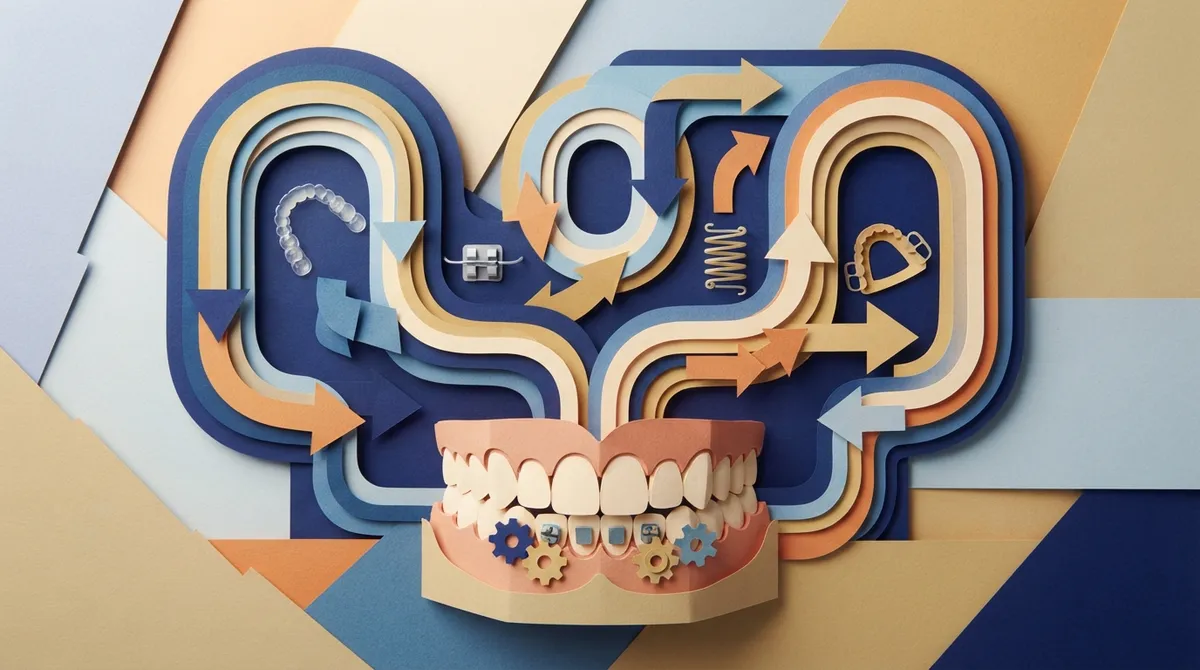
Start Here: Why Movement Goals Come First
Before anyone talks about metal, ceramic, or clear, a good orthodontist asks one question: what does each tooth need to do? The answer shapes everything that follows.
1. A diagnosis comes before a device
Appliance choice starts with a full exam, records, and digital scans. Your orthodontist maps out the direction, amount, and type of movement each tooth needs. The look of the appliance matters to many patients, but the planned movements matter more to the result.
2. Every tooth gets its own movement plan
A treatment plan is really a list of small jobs. This tooth tips forward. That one rotates. A third needs to move up or down. Some jobs are easy for any appliance. Others need extra control. Learn more about how orthodontists plan tooth movement to see how this works step by step.
3. Root control and crown control are different things
Moving the visible part of a tooth is one task. Moving the root underneath is another. Some goals need the root to shift in a precise way, and that raises the bar for the appliance you pick.

Goals That Often Fit Clear Aligners
Clear aligners are popular for good reasons. They are discreet and removable, and they work well for many everyday goals when worn as prescribed.
4. Mild to moderate crowding
When teeth are mostly overlapping and need to line up, aligners can do a nice job. The movements are mainly tipping and small shifts, which aligners handle well. If this sounds like you, see our guide to choosing braces or aligners for crowded teeth.
5. Closing small to moderate gaps
Spacing is often a friendly goal for aligners because teeth are moving toward each other. Many patients ask about this one, and we compare both options in Braces vs. Aligners: Which Wins for Teeth Gap Closure?
6. Simple tipping movements
In a 2024 survey of AAO members, clinicians rated tipping as the easiest movement to do with aligners. That matches what many orthodontists see in practice. Keep in mind this reflects provider opinion, not a head-to-head patient study.
7. Selected bite and width changes
Clear aligners can help with some intrusion and some transverse (width) changes. Attachments, small bumps bonded to teeth, give the trays extra grip. Elastics and careful staging can extend what is possible, though they never guarantee every planned movement will happen on schedule.
Goals That Often Call for Fixed Braces
Braces stay on your teeth around the clock. Your orthodontist controls the brackets and archwires directly, which gives dependable control for more demanding movements.
8. Large rotations
A 2024 umbrella review found aligners were less accurate for rotations greater than 15 degrees. Round or oval-shaped teeth, like canines and premolars, can be tricky for a smooth plastic tray to grab. Braces hold the tooth by a bracket, so turning it is more direct.
9. Precise root torque
When a root needs to tilt or move in a controlled way, braces often have the edge. A 2024 review of 12 studies on adult front-tooth movement found mixed results overall, but fixed appliances appeared to offer better rotation and torque control. The authors also said the evidence is limited, so treat this as a tendency, not a rule.
10. Extrusion and vertical control
Lifting a tooth down into place, or fine-tuning the vertical height of several teeth, can be harder with aligners. The same 2024 umbrella review reported limited effectiveness for molar extrusion greater than 1.5 mm. That is a review finding, not a hard limit for every patient.
11. Deep bite and open bite correction
Bite height problems involve several vertical movements working together. The umbrella review noted difficulty with open-bite and deep-bite correction using aligners alone. To explore this further, read how braces fix a deep overbite and the real difference between a deep bite and an overbite.
12. Extraction cases
When teeth are removed to create room, the remaining teeth must move together in a coordinated way. A 2025 systematic review of 15 trials and 1,084 patients found no significant difference in treatment quality or duration for non-extraction cases overall. For extraction cases, fixed appliances gave better treatment quality. The authors noted that the studies varied a lot and follow-up was limited, so conclusions stay cautious.
Quick Comparison: Movement Goals and Appliance Tendencies
This table sums up the general patterns. It is a guide, not a promise. Your own tooth shape, bite, and growth all change the picture.
| Movement Goal | Often a Good Fit For | Why |
|---|---|---|
| Simple tipping and alignment | Clear aligners or braces | Aligners handle tipping well when worn consistently |
| Closing spaces | Clear aligners or braces | Teeth move toward each other with predictable pressure |
| Large rotations (over 15 degrees) | Braces, or aligners with extra support | Brackets grip the tooth directly |
| Precise root torque | Braces | Archwires and brackets control root position |
| Extrusion (lifting a tooth) | Braces or hybrid plans | Vertical movement is harder with trays alone |
| Deep or open bite | Braces, sometimes with auxiliaries | Several vertical movements need coordination |
| Extraction cases | Braces | Coordinated space closure is easier to control |
Life Factors That Shape the Choice Too
Tooth movements are the main driver, but real life matters. A great plan only works if it fits the person wearing it.
13. How reliably you can wear a removable appliance
Aligners need consistent wear, as prescribed. Fixed braces work all day and night without you doing anything. If a plan depends on a removable appliance and reliable wear seems unlikely, braces may be the smarter pick. This is a common topic for parents of teens, and we explain it in why aligner wear time affects treatment progress.
On the flip side, braces ask for careful cleaning and some food choices. If that sounds like a lot, our friendly food guide for braces makes it easier.
14. Your age, growth, and dental health
A growing child may need a different plan than a fully grown adult. Healthy gums and teeth matter too. Cavities and gum concerns should be handled before or alongside treatment. See how dental health affects your braces or aligner options for more.
15. Hybrid plans that use the best of both
Good news: you do not always have to choose one or the other. Some plans use fixed braces or helpers for the hard movements, then switch to aligners for finishing. Others pair aligners with elastics or small devices. Your orthodontist should explain what each piece does and what might change along the way. If your aligners need extra trays, that is often normal, and we explain it in why refinement aligners follow the original set.
What the Research Does and Does Not Tell Us
It is tempting to want a simple winner. The research does not give one. A 2024 umbrella review reported that clear-aligner movement accuracy ranged from roughly 55 to 82 percent across the included evidence. That number varies by movement and by study, so it is not a universal success rate.
Studies also differ in case difficulty, appliance systems, how results were measured, and how long patients were followed. That is why you should be a little cautious of any blanket claim that one appliance is always faster or better. The honest answer is that the best choice is individual.
How Brockway Orthodontics Approaches Your Plan
At Brockway Orthodontics in Clearwater, Florida, Dr. Brockway starts by listening to your goals, then pairs that with a careful exam and digital planning. Digital impressions and 3D imaging help map the exact movements your teeth need, so the plan fits you, not a template. Our practice offers Spark™ Clear Aligners, metal braces, and ceramic braces, so your options match your goals instead of limiting them.
Want to see how it feels to work with a team that explains everything clearly? See what our Brockway Orthodontics patients say on Google. You can also read about which is right for you, clear aligners or braces, or get started with our Spark Clear Aligners page. For general oral health guidance, the American Dental Association is a trusted resource, and you can find orthodontic specialists through the Florida Association of Orthodontists.
Your Next Step
Now you know the big idea: tooth movement goals lead the way, and the appliance follows. Simple tipping and spacing often suit aligners. Big rotations, root control, vertical changes, and extraction cases often lean toward braces. Plenty of smiles land in the middle, and a hybrid plan can be the perfect answer.
The easiest way to find out where you fall is to have your teeth looked at by an expert who takes the time to explain. Book your free consultation online and let Dr. Brockway map out the movements your smile needs. Prefer to ask a question first? Contact our friendly team anytime.
FAQs
Q: Which orthodontic appliance is best for my specific tooth movements?
A: It depends on what your teeth need to do. Simple tipping and spacing often work well with clear aligners, while big rotations, root control, and complex bite changes often lean toward braces. Your orthodontist will match the appliance to your own diagnosis, so a quick exam is the best way to know for sure.
Q: Can clear aligners rotate teeth or move tooth roots?
A: They can help in many cases, but these are among the harder movements for aligners. A 2024 review found aligners were less accurate for rotations over 15 degrees, and clinicians rate root movement as one of the most difficult. Attachments and careful planning can help, but results are never guaranteed.
Q: Can I switch from clear aligners to braces during treatment?
A: Yes, this can happen, and it is not a failure. If teeth are not moving as planned, your orthodontist may add helpers, order refinements, or move to fixed braces for the tricky parts. A good plan explains this possibility upfront so there are no surprises.
Q: How much does patient compliance affect aligner results?
A: A lot. Aligners only work when worn as prescribed, so skipped wear time can slow progress or throw off the plan. If reliable wear feels unlikely, braces may be a better fit since they work around the clock without extra effort from you.
Q: Are braces better than aligners for correcting a deep bite or open bite?
A: Braces are often favored for these goals because bite height changes involve several vertical movements working together. The 2024 umbrella review noted difficulty with open-bite and deep-bite correction using aligners alone. Some patients still do well with aligners plus extra support, so it is worth asking about your case.
Our Service Area