Key Takeaways
-
Most people with crowns, veneers, bridges, fillings, or implants can still get braces or aligners; existing dental work requires extra planning, not automatic exclusion.
-
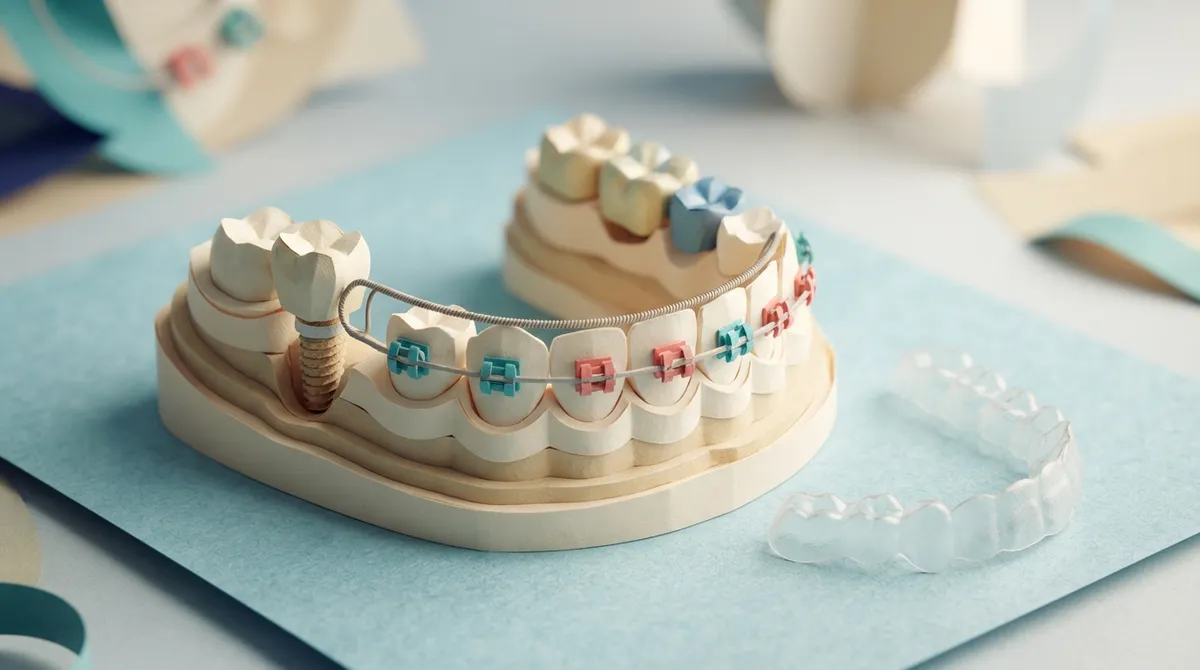
Dental implants cannot be moved by braces because they are fused to bone; orthodontists plan tooth movement around them and sometimes use them as anchors.
-
Treat decay, gum problems, and failing restorations before tooth movement begins, since healthy teeth and gums move more safely.
-
Orthodontics often comes before implants or final restorations, because braces create proper space and root positioning; final crowns, veneers, or bridges usually wait until the bite settles.
-
Clear aligners need no brackets bonded to crowns or veneers, while braces offer stronger control for complex cases like implant planning or closing spaces.
-
Bring a list of your dental work with dates and request recent records or X-rays from your general dentist to make your planning visit more productive.
Maybe you have a crown from years ago, a few big fillings, a veneer, or an implant where a tooth used to be. Then you start wondering about braces or aligners, and the big question hits: can I still straighten my teeth? Good news. In most cases, the answer is yes. Existing dental work does not automatically rule out treatment. It just means your plan needs a little more teamwork and thought.
Orthodontic treatment planning with existing dental work is all about timing, materials, and communication. Your orthodontist looks at your teeth, gums, bite, and restorations together. Then they build a plan that protects what you already have while moving your teeth where they need to go.
In this friendly guide, we will walk through how crowns, bridges, veneers, fillings, implants, and missing teeth change your plan. You will also learn what to expect at your first visit and how the sequence of care works. If you are an adult, a parent, or a teen with some dental work already in place, this one is for you.
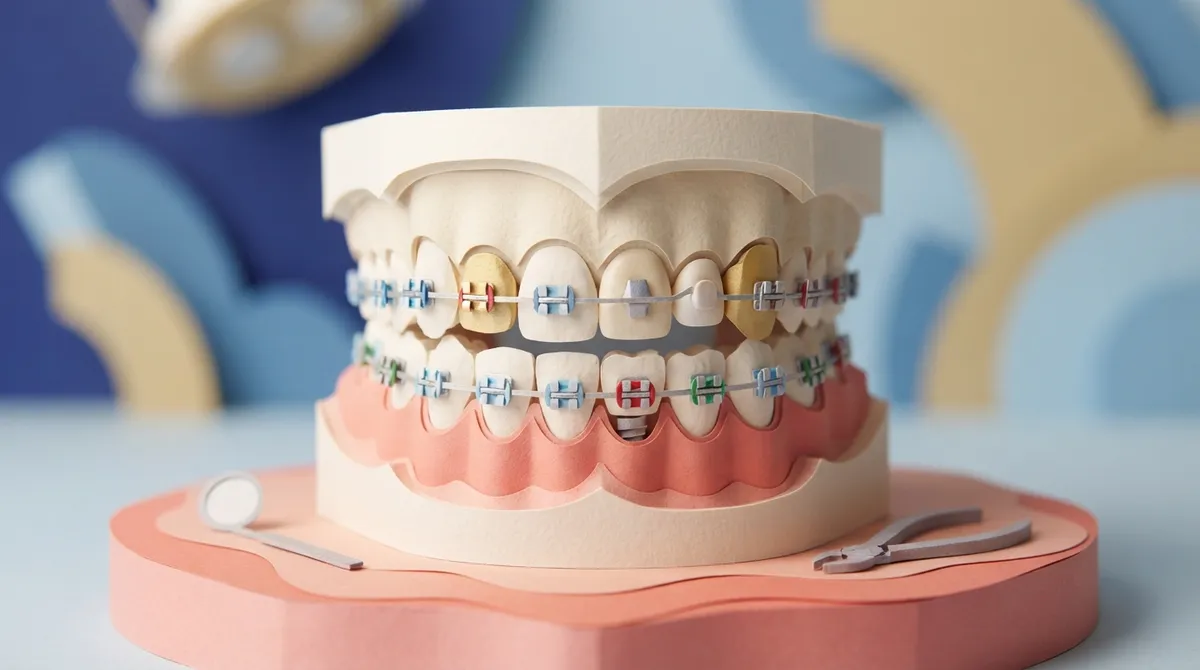
Can You Get Braces or Aligners With Existing Dental Work?
Yes, most people can. The plan depends on a few things: the health of your teeth and gums, the type and location of your restorations, your bite, and your goals. Your orthodontist may also coordinate with your general dentist, a periodontist, a prosthodontist, or an implant dentist.
Dental work is more common than many people think. In England’s Adult Oral Health Survey 2023, 27% of adults had at least one tooth restored with a crown. Another 5% had a dental bridge, 3% had a veneer or shim, and 2% had one or more teeth replaced by implants. So if you have restorations, you are far from alone. Adults are also a big part of orthodontics today. AAO member practices treated an estimated 1.91 million adult patients in the United States in 2024.
If you are curious about how adults approach treatment in general, our guide on why so many adults are getting orthodontic treatment in 2026 is a great companion read.
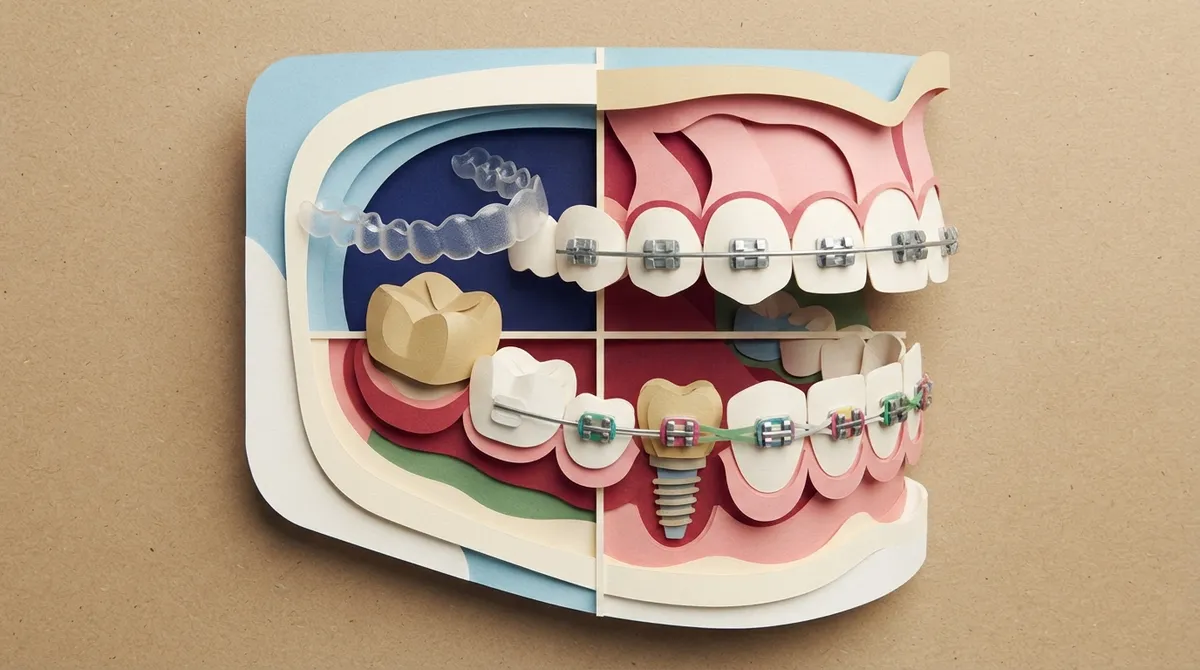
How Different Types of Dental Work Affect Your Plan
Not all restorations behave the same way during tooth movement. Here is a quick snapshot of how each one can affect your treatment.
| Type of Dental Work | How It Can Affect Treatment | What Your Team May Do |
|---|---|---|
| Crowns | Smooth or slippery surfaces can make bonding harder | Adjust bonding method, review crown condition |
| Bridges | Linked teeth move together as one unit | Plan movement around the bridge, coordinate with your dentist |
| Veneers | Thin surfaces can be damaged during bracket removal | Use careful bonding and removal techniques |
| Large fillings | May weaken a tooth or affect bonding | Repair or replace if damaged or poorly fitting |
| Dental implants | Fused to bone, so they do not move like natural teeth | Plan movement around the implant, sometimes use it for anchorage |
| Missing teeth | Space may need to be closed or kept open | Weigh space closure against a bridge or implant |
Crowns, Bridges, and Veneers
Crowns, bridges, and veneers are made from materials like porcelain or ceramic. These surfaces can be harder for brackets to stick to. The good news is that orthodontists have bonding methods made for these situations.
Your orthodontist should spot every restoration during your exam. They may also ask to see your dental records or imaging. That helps them choose the right bonding and removal techniques and lower the risk of damage.
A few things to know:
- Crowns: Brackets can often be placed on crowns, but the method may need to change. Aligners can work well here too, since they do not need to be glued to the surface.
- Bridges: A bridge joins several teeth together. Those teeth move as one block, so your plan must account for that.
- Veneers: Veneers are thin, so careful handling matters when brackets are bonded and later removed.
If your restoration is damaged, worn, or fits poorly, it may need repair or replacement. That decision is made together with your dentist.
Large Fillings and Tooth Health
Fillings are very common, and most do not get in the way of braces or aligners. Still, big fillings can weaken a tooth. Before treatment starts, your team checks for decay, cracks, and leaky fillings.
Healthy teeth move more safely. If you have a history of cavities or extensive dental work, expect your orthodontist to ask that any dental disease be treated first. This is not meant to delay you. It is meant to protect your smile for the long run.
Dental Implants and Orthodontic Treatment
Here is a fun fact that surprises many people: an implant does not move like a natural tooth. It is fused directly to your jawbone, so braces cannot shift it into a new spot.
If You Already Have an Implant
Your orthodontist plans around it. The implant stays put, and the other teeth move into better positions around it. In some cases, the implant can even act as an anchor to help move other teeth.
If You Are Planning an Implant
Orthodontics often comes first. Braces or aligners can create the right amount of space and place the surrounding tooth roots in good positions. Then your implant dentist confirms the site and the timing. This is a team effort, and it works best when everyone talks early.
Implant Before or After Orthodontics?
There is no single rule. In many cases, the orthodontic plan sets the stage, and the final implant restoration comes later. Your team will decide what is best for your mouth.
Missing Teeth: Close the Space or Keep It?
If you are missing a tooth, you have options. Your team weighs two main paths:
- Close the space with orthodontics. In suitable cases, neighboring teeth are moved together. This can reduce or remove the need for a bridge or implant.
- Open or hold the space. Braces or aligners position the teeth so there is room for a bridge, implant, or other restoration.
Which path fits you? That depends on your facial appearance, bite, tooth condition, and personal preference. Neither choice is wrong. The best one is the one that fits your goals. You can learn more in our article on getting braces with missing teeth.
Which Comes First: Orthodontics or Dental Work?
The order of care is different for every person. Think of it like renovating a house. You would not hang new pictures before the walls are in the right place.
Here is a common way the sequence unfolds:
- Exam and records. Your team checks teeth, gums, bite, and restorations.
- Treat any problems. Decay, gum concerns, or failing restorations are handled first.
- Move the teeth. Braces or aligners shift teeth into stable, healthy positions.
- Finish restorative work. Final crowns, veneers, bridges, or implant restorations are placed once tooth positions are steady.
- Retain the results. Retainers keep everything in place.
Sometimes definitive crowns, veneers, or bridges wait until your bite has settled. Temporary restorations can cover the gap in the meantime. That way, your final work fits your finished smile perfectly.
Gum Health Matters Before and During Treatment
Healthy gums and strong bone support are key for safe tooth movement. If you have extensive dental work, a history of tooth loss, past decay, or gum concerns, your gums need extra attention.
Expect your team to check your periodontal health and monitor it during treatment. In some cases, a periodontist joins your care team. Good home care helps too. Our tips on cleaning your braces properly make daily routines easier.
What Happens During Treatment Planning
A good plan starts with a thorough look at your whole mouth. Here is what usually happens:
- A clinical exam of your teeth, gums, and existing restorations
- A review of your bite and jaw alignment
- Photographs and dental records
- Imaging such as X-rays or 3D scans
- A talk about options, risks, timing, and retention
At Brockway Orthodontics, we use modern tools like digital impressions and 3D imaging. That means no messy molds, and it helps us plan your care with real precision. You can read more about what to expect during your orthodontic exam or see how your first visit works.
We also believe in clear, friendly communication. Dr. Brockway takes time to listen to your concerns and explains every step in plain language, so you always know what to expect.
Braces or Clear Aligners With Restorations?
Both options can work, and the better choice depends on your situation. Clear aligners are removable and do not need brackets glued to crowns or veneers. That can be a real plus. Braces give strong control, which helps in more complex cases, such as planning around implants or closing spaces.
Brockway Orthodontics offers Spark™ Clear Aligners, a more affordable alternative to Invisalign, along with metal and ceramic (clear) braces. Not sure which fits you? Our comparison of traditional braces vs. clear aligners can help you think it through.
As a general guide, fixed-appliance treatment averaged about 19.9 months in one review of 22 studies with 1,089 participants. That is a study average, not a promise for you. Complex cases involving restorations may take more or less time.
Will Treatment Damage My Dental Work?
This is a very common worry, and it is a fair one. Orthodontic treatment can put stress on restorations, but careful planning lowers the risk. Your orthodontist chooses bonding and removal techniques that fit your materials. They also tell you about possible risks ahead of time.
It is also honest to say that restorative work may be needed after orthodontics. A crown might need polishing, a veneer might need a touch-up, or a bridge might need to be redone to fit your new bite. Talking about this early keeps surprises to a minimum.
Special Notes for Parents, Teens, and Adults
- Parents of kids and teens: Young patients may have fillings or space-related concerns. Early checkups help. See our guides on early treatment and adolescent treatment.
- Teens and young adults: If you have a few fillings or a missing tooth, you can still plan for graduation, events, or just feeling great about your smile.
- Busy professionals: Discreet options and well-timed visits keep treatment from taking over your schedule. Learn more about adult treatment.
- Relapse patients: If your teeth have shifted since past treatment, existing retainers or bonded wires are part of the plan. A fresh evaluation shows what is possible. Check out our info on retainers.
Tips to Get the Most From Your Planning Visit
A little preparation goes a long way. Try these simple steps:
- Bring a list of your dental work, with dates if you know them.
- Ask your general dentist to share recent records or X-rays.
- Write down your goals, like closing a gap or planning for an implant.
- List any questions about timing, costs, and care.
- Tell your orthodontist about any sensitivity or past problems.
Questions about cost? Our page on financing and insurance explains your options.
Ready to Plan Your Smile in Clearwater?
Existing dental work is not a roadblock. It is just part of your story, and a smart plan works with it. At Brockway Orthodontics, we listen first, explain clearly, and build a plan around your whole smile. You can also read what neighbors say about us: Visit us on Google — Brockway Orthodontics.
Want to learn more about the standards behind safe dental care? The American Dental Association offers helpful patient resources, and the Florida Association of Orthodontists shares information on orthodontic care across the state. You can also follow us on Facebook for updates and smile stories.
Ready to take the next step? Book your appointment online and let Dr. Brockway map out a plan that fits you. Prefer to talk first? Just contact us and our friendly team will help.
FAQs
Q: Can I get braces or clear aligners if I have crowns, veneers, or fillings?
A: In most cases, yes! Existing dental work does not automatically rule out treatment. Your orthodontist will check each restoration and may adjust how brackets are bonded or how aligners are planned to protect your work.
Q: Can a dental implant be moved with braces?
A: Nope, an implant is fused to your jawbone, so it does not move like a natural tooth. Instead, your orthodontist plans around it, and sometimes the implant can even help anchor the movement of other teeth.
Q: Should I get an implant before or after orthodontic treatment?
A: It depends on your case, but orthodontics often comes first to create the right space and root positions. Your orthodontist and implant dentist will work together to confirm the best timing for you.
Q: Can braces close a gap where a tooth is missing instead of getting an implant?
A: Sometimes they can! In suitable cases, neighboring teeth can be moved together to close the space. Your team will weigh your bite, facial appearance, tooth condition, and personal preference before recommending the best path.
Q: Do crowns or veneers need to be replaced after orthodontic treatment?
A: Not always, but sometimes. If a restoration is damaged, fits poorly, or no longer matches your new bite, it may need repair or replacement. Talking about this up front with your orthodontist and dentist helps avoid surprises.
Our Service Area