Key Takeaways
-
Start with a professional evaluation so the bite, not personal preference, guides the choice; the AAO recommends an initial orthodontic check-up by age 7 for monitoring and planning.
-
Let your teen share their priorities first (appearance, comfort, sports, school routine), then explain your concerns about health, cost, and follow-through calmly.
-
Compare daily responsibilities, not just looks: clear aligners need consistent wear (often 20-22 hours a day) and can be lost, while braces stay on automatically but require careful brushing and food restrictions.
-
Discuss total cost, insurance coverage, payment plans, appointment frequency, and replacement or retainer fees in writing before deciding to avoid surprises.
-
Write down a shared agreement covering daily brushing and flossing, appliance care, keeping appointments, reporting broken or lost parts, and wearing retainers after treatment.
-
Consider a second opinion if anything feels unclear; a caring orthodontist will welcome questions and never rush the decision.
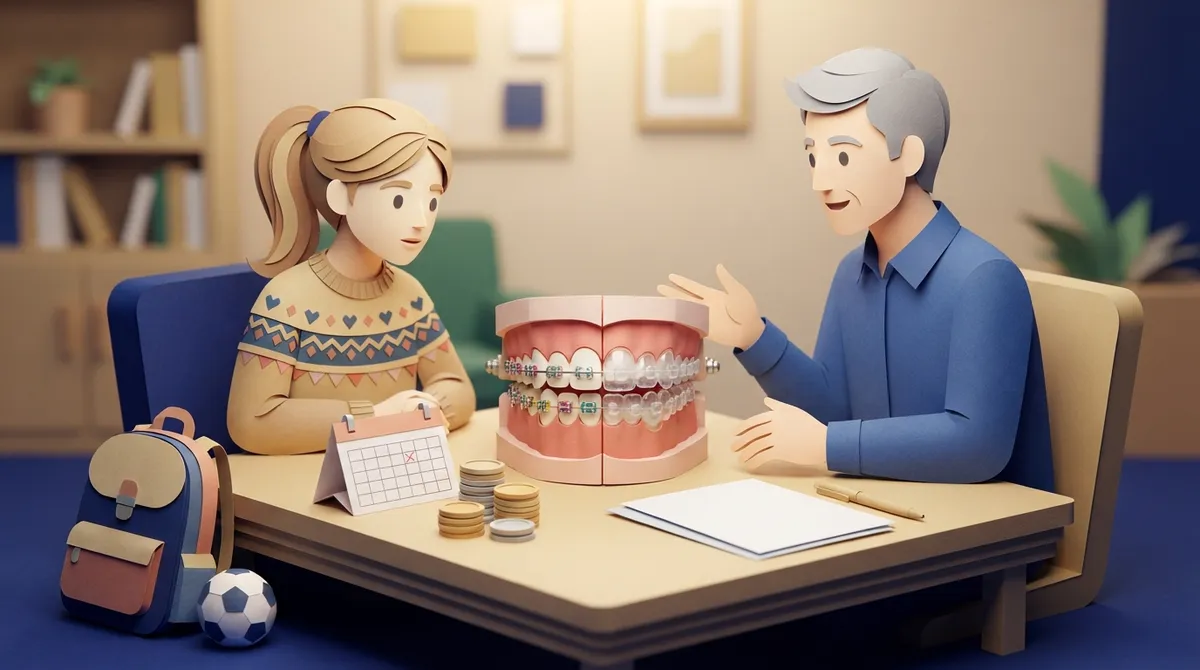
Picture this: your teen slides into the kitchen chair, arms crossed, and says, “I just don’t want everyone staring at my mouth.” Meanwhile, you’re thinking about cost, cleaning, and whether your teen will actually keep up with the daily routine. Sound familiar? You’re not alone, and the good news is that this tug-of-war can turn into a team effort.
Figuring out how parents and teens can discuss treatment choices is really about turning two different wish lists into one smart plan. Teens care about looks, comfort, and fitting treatment into a busy life. Parents care about health, budgets, and follow-through. An orthodontist helps bring those views together using what your teen’s bite actually needs.
In this friendly guide, we’ll compare the two most common options for teens, traditional braces and clear aligners. We’ll also share conversation starters, questions to ask, and a simple way to agree on responsibilities. By the end, you’ll feel ready to talk it through without the eye-rolls.

Start With a Professional Evaluation, Not a Preferred Appliance
Before anyone picks a favorite, get the facts. A teen who walks in saying “I want aligners” or a parent who says “braces are cheaper” may both be right, or both be missing something. The bite decides what works best.
The American Association of Orthodontists recommends an initial orthodontic check-up by age 7. That doesn’t mean treatment starts then. It’s a chance to watch growth and plan ahead. Many kids are simply monitored for years before anything begins.
If your teen is older and hasn’t been seen yet, no worries at all. A visit now gives you a clear diagnosis and a real list of options. You can read what happens at your first visit so nobody feels nervous walking in.
Questions to Ask at the Consultation
Go in with a short list. Teens often feel more in control when they get to ask a few of the questions themselves.
- What is the diagnosis, in plain language?
- What are the treatment goals for my teen’s smile and bite?
- Which options could work, and which would not?
- What happens if we wait, or don’t treat at all?
- How long will treatment likely take?
- What will it cost in total, and what is included?
Ask for time to think it over, too. A good orthodontist welcomes that. You can also learn more about what to expect from an orthodontic consultation before you go.
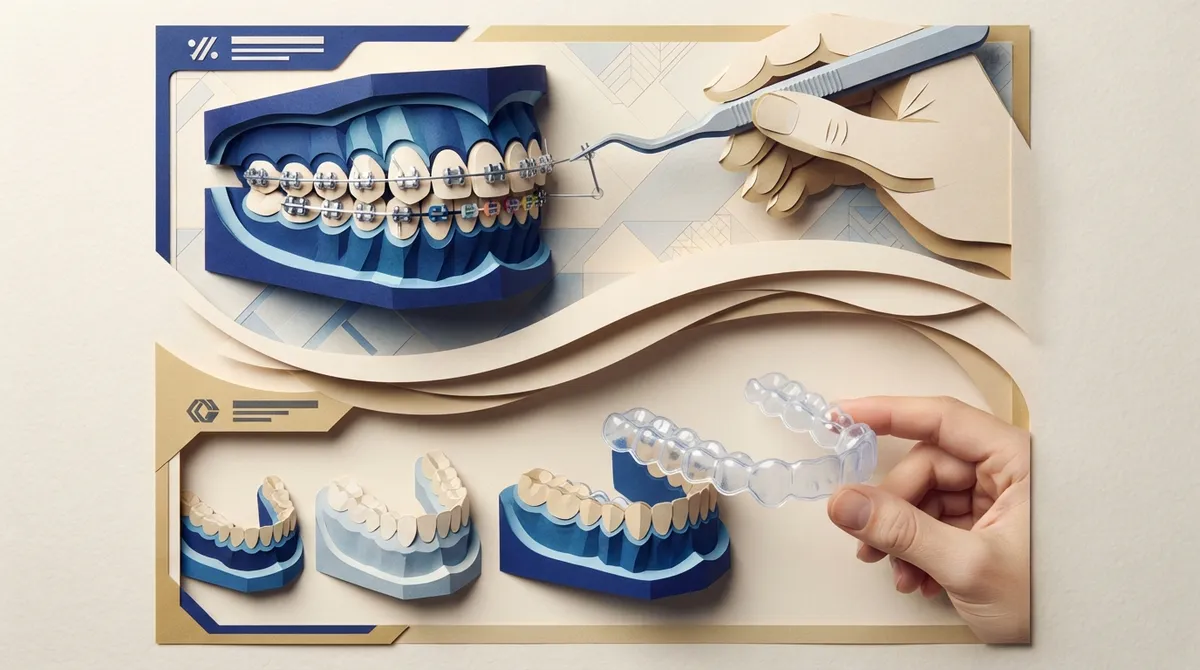
Braces vs. Clear Aligners: The Big Picture
Here’s where the comparison comes in. Both options can give a teen a beautiful, healthy smile. They just ask for different things day to day.
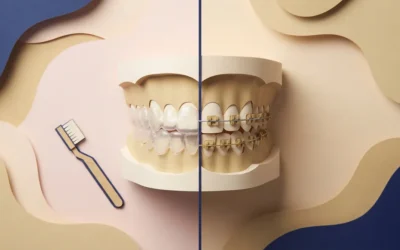
Traditional braces use brackets and wires that stay on the teeth the whole time. Clear aligners are removable plastic trays that gently shift teeth in stages. Neither one is “best” for everyone. Suitability depends on the tooth movements needed, dental health, growth, and your teen’s ability to follow care instructions.
| Factor | Traditional Braces | Clear Aligners |
|---|---|---|
| How they work | Fixed brackets and wires, adjusted at visits | Removable trays, changed on a set schedule |
| Appearance | Metal or tooth-colored ceramic options | Nearly invisible |
| Eating | Some foods must be avoided | Take them out to eat |
| Cleaning | Careful brushing and flossing around hardware | Brush teeth and clean trays |
| Teen responsibility | Appliance stays on, so wear is automatic | Needs consistent wear, often 20 to 22 hours a day |
| Risk of loss | Cannot be misplaced | Trays can be lost or forgotten |
| Range of problems treated | Broad, including complex cases | Depends on the case |
Want to dig into each one? Our guide to all about braces and our page on Spark™ Clear Aligners are good places to start together.
The Case for Braces
Braces get a bad rap, but they’re a true workhorse. Because they stay in place, they work around the clock without anyone needing to remember a thing. That can be a real relief for busy families.
Why Some Teens and Parents Choose Braces
- Built-in accountability. Teens can’t leave them in a lunch tray or a gym bag.
- Wide range. They can address many bite and alignment problems, including more complex ones.
- More style choices. Metal braces can come with colorful bands, and ceramic braces blend in more.
The trade-off is care. Teens need to brush and floss carefully around brackets and skip foods that can bend wires or pop brackets loose. Need a refresher on snacks? Take a peek at our friendly list of what you can eat with braces.
The Case for Clear Aligners
For many teens, the big draw is simple: nobody can really see them. Aligners also come out for meals, photos, and brushing, which feels a lot more like normal life.
Why Some Teens and Parents Choose Aligners
- Discreet look. Great for teens who feel self-conscious about metal.
- Easy eating and cleaning. Pop them out, then brush and floss as usual.
- Comfort. Smooth plastic means no wires poking cheeks.
The catch is that aligners only work if they’re worn. They can also get lost, which means replacement trays and delays. If your teen is great with routines and responsibility, aligners can be a wonderful fit. If mornings are chaos and the backpack is a black hole, braces may be the calmer choice. We cover this more in braces vs. clear aligners for kids.
How to Have the Conversation Without the Standoff
Now for the heart of it. A calm, respectful chat can make a huge difference. In one study of 180 orthodontic patients aged 11 to 18, 62.2% said the decision to seek treatment was made jointly with family, while 37.8% said they made it themselves. That was a small group in a dental school setting, so it isn’t a nationwide number. Still, it shows that teamwork is common.
Here’s a simple way to run the talk.
- Pick a relaxed moment. Skip the rushed school-morning chat. A drive or a snack works better.
- Let your teen go first. Ask what matters most to them, such as looks, comfort, sports, music, or school.
- Share your side calmly. Talk about health needs, cost, appointments, and follow-through.
- Learn the facts together. Use the orthodontist’s diagnosis as the guide, not a hunch.
- Weigh trade-offs out loud. Compare daily responsibilities, not just appearance.
- Decide as a team. Aim for a plan both of you can live with and commit to.
Phrases That Help (and Ones That Don’t)
Try “What worries you most about this?” instead of “You’re not going to like the aligners.” Try “Let’s see what Dr. Brockway recommends” instead of “Because I said so.” Teens open up when they feel heard, and parents relax when the plan is grounded in clinical advice.
Honor Your Teen’s Priorities
Your teen’s preferences truly matter, since they’re the one wearing the appliance for months or years. Think about their real daily life.
- Appearance. Is a discreet look a top concern?
- Sports and music. Do they play a wind instrument or contact sport?
- School routine. Can they brush after lunch and keep track of a case?
- Readiness. Are they excited, nervous, or just going along with it?
The orthodontist can help reconcile what your teen wants with what their teeth need. Sometimes the answer matches the wish list perfectly. Sometimes there’s a middle path, like ceramic braces for a less noticeable look. Our page on adolescent treatment shows how we think through these choices with teens.
Talk About Time and Money Early
Nobody loves this part, but it’s far better to talk costs upfront than to be surprised later. Before deciding, ask about the full commitment.
| Question to Ask | Why It Matters |
|---|---|
| What is the total fee, and what does it include? | Avoids surprise add-ons |
| What does insurance cover? | Coverage varies by plan and practice |
| Are payment plans available? | Spreads cost into manageable pieces |
| How often are appointments? | Plans for school and work schedules |
| How long will treatment likely last? | Sets realistic expectations |
| What do replacement aligners or retainers cost? | Prevents later surprises |
Fees and coverage differ from plan to plan and practice to practice, so get specifics in writing. You can explore financing and insurance options to see how families make treatment fit their budgets. Spark™ Clear Aligners, for example, can be a more affordable route for some patients.
Agree on Responsibilities Before Treatment Begins
Here’s a step that saves so many headaches: write down who does what. A shared agreement turns “you never listen!” into “we both said we’d do this.”
Consider agreeing on these together:
- Brushing and flossing every day, even on busy nights
- Caring for the appliance, whether that’s brackets or aligner trays
- Keeping every appointment
- Telling a parent right away about broken wires, loose brackets, or lost trays
- Wearing retainers after active treatment ends
That last one is huge. Retainers protect all the hard work, and skipping them is how teeth drift back. Learn why in our guide to retainers. For daily habits, our tips on brushing teeth with braces make a great family reference.
Is It Okay to Get a Second Opinion?
Absolutely. Choosing an orthodontist is a big decision, and a second opinion is a normal, healthy step. If something feels unclear, ask for more explanation or visit another office. A caring orthodontist will never rush you. If you’re still shopping around, our guide on choosing an orthodontist for teenagers can help you compare.
Making the Final Call Together
Once you’ve gathered the diagnosis, weighed the options, and checked the costs, it’s decision time. Here’s a quick gut-check list:
- Does the plan fit what the orthodontist says my teen’s bite needs?
- Does my teen feel heard and genuinely willing to do their part?
- Does the cost and timeline work for our family?
- Do we both understand the daily responsibilities?
If you can say yes to all four, you’re in great shape. And if something still feels fuzzy, that’s your cue to ask one more question. Dr. Brockway takes the time to listen to patients and families, and you can learn more by meeting Dr. Brockway and her team.
Why Local Families Choose Brockway Orthodontics
At Brockway Orthodontics in Clearwater, Florida, we love helping parents and teens reach decisions they both feel good about. We explain options in friendly, easy-to-understand terms, use modern tools like digital impressions and 3D imaging, and offer braces, ceramic braces, and Spark™ Clear Aligners for the whole family. In some cases, same-day treatment is possible, which is a lifesaver for busy schedules. Curious how other families feel? Visit us on Google — Brockway Orthodontics to read reviews from our Clearwater community.
For extra reading from trusted professional sources, the American Dental Association offers helpful oral health guidance, and the Florida Association of Orthodontists shares information about orthodontic care in our state. You can also follow our everyday smile stories on Instagram.
Ready to Start the Conversation?
Talking through treatment choices doesn’t have to be stressful. Start with a real diagnosis, compare braces and aligners honestly, put your teen’s priorities on the table, and agree on the responsibilities together. That’s how a family decision turns into a smile everyone is proud of.
Ready to take the first step as a team? Book your free consultation online, or contact us with any questions. We’d love to meet you and your teen.
FAQs
Q: How should parents talk to a teenager about getting braces?
A: Choose a relaxed moment, let your teen share their worries first, and then explain your own concerns calmly. Use the orthodontist’s diagnosis as your guide so the talk stays about their health, not a battle of opinions. Teens open up when they feel truly heard!
Q: How do we choose between braces and clear aligners for a teen?
A: Start with your teen’s bite, since the diagnosis decides which options will work. Then talk about daily habits, because aligners need steady wear while braces stay on automatically. Your orthodontist can help match your teen’s preferences with what their teeth need.
Q: Does every child need orthodontic treatment after an evaluation at age 7?
A: Not at all. The check-up at age 7 is for screening and planning, and many children are simply monitored as they grow. Treatment only begins when the timing is right for that child’s bite.
Q: What responsibilities does a teen have during orthodontic treatment?
A: Teens help most by brushing and flossing daily, caring for their braces or aligners, keeping appointments, and speaking up quickly about any problems. After active treatment, wearing retainers as directed is key to keeping that new smile in place.
Q: Can we get a second opinion before choosing an orthodontic treatment plan?
A: Yes, and it’s completely normal. Asking for time to think, or visiting another office, helps you feel confident in your choice. A caring orthodontist will welcome your questions and never rush you.
Our Service Area