Key Takeaways
-
Brushing, flossing, and rinsing each do a different job, so all three are needed; brushing removes plaque, flossing cleans between teeth and under the wire, and rinsing clears loose food when brushing isn't possible.
-
Brush for about two minutes with a soft-bristled toothbrush and fluoride toothpaste, and always brush before bed, when saliva slows and plaque has more time to cause damage.
-
Regular floss won't slide under the archwire, so use floss threaders, orthodontic flossers, or interproximal brushes, and aim to floss at least once daily.
-
Pack a small braces travel kit with a toothbrush, fluoride toothpaste, floss threaders, an interproximal brush, orthodontic wax, and a mirror so the routine works during school days.
-
Avoid hard, sticky, and chewy foods that can bend wires or pop brackets, cut firm foods like apples into small pieces, and limit frequent sugary or acidic drinks in favor of water.
-
Keep every orthodontic adjustment visit and get dental cleanings at least every six months, and if a bracket loosens or a wire pokes, use orthodontic wax and call the orthodontist rather than repairing it at home.
Getting braces is a big moment for any teenager. There is the excitement of a future smile, and there is also the question every teen and parent asks in week one: how do we keep everything clean now? Brackets and wires make brushing feel like a whole new skill. Food gets stuck in places you never knew existed. It can feel like a lot.
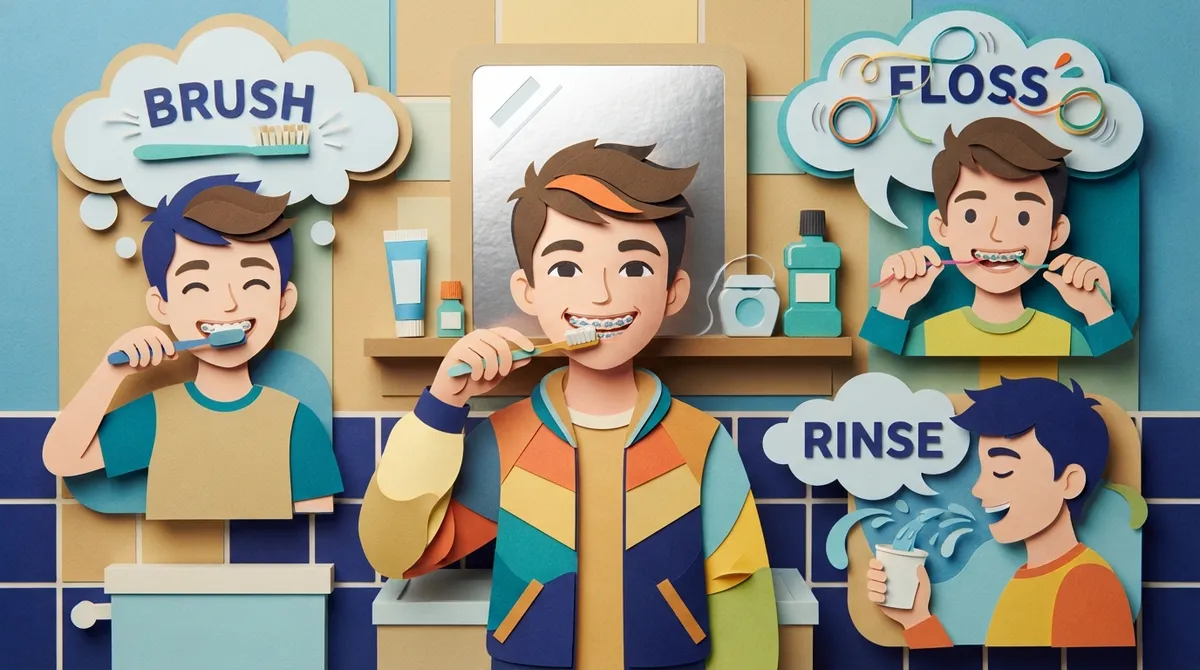
Here is the good news. Building a teen braces care routine does not have to be hard. It comes down to three simple habits: brushing, flossing, and rinsing. Each one does a different job, and together they protect your teen’s teeth and gums for the entire treatment.
In this friendly guide, we compare brushing, flossing, and rinsing side by side. You will see what each one does best, where each one falls short, and how to fit all three into a busy school day. We will also cover foods, drinks, and appointments, so your teen can feel confident from the first day of braces to the last.
Why a Braces Care Routine Matters So Much
Braces create extra places for plaque and food to collect. Around every bracket and under every wire, little bits of food can hide. If they stay there, trouble can follow.
Poor cleaning during treatment can contribute to cavities, swollen gums, bad breath, and even permanent white marks on the enamel. Those white spots can show up after the braces come off, which is the last thing any teen wants after months of hard work.
Teen oral health matters even without braces. According to CDC oral-health information, about 1 in 10 U.S. adolescents aged 12 to 19 has at least one untreated cavity. Braces make careful cleaning even more important.
A steady routine is the best defense. It also helps treatment stay on track, because healthy teeth and gums move more smoothly. If you want a deeper look at common slip-ups, our guide on 7 brushing mistakes that wreck braces is a great companion read.
The Three Core Habits at a Glance
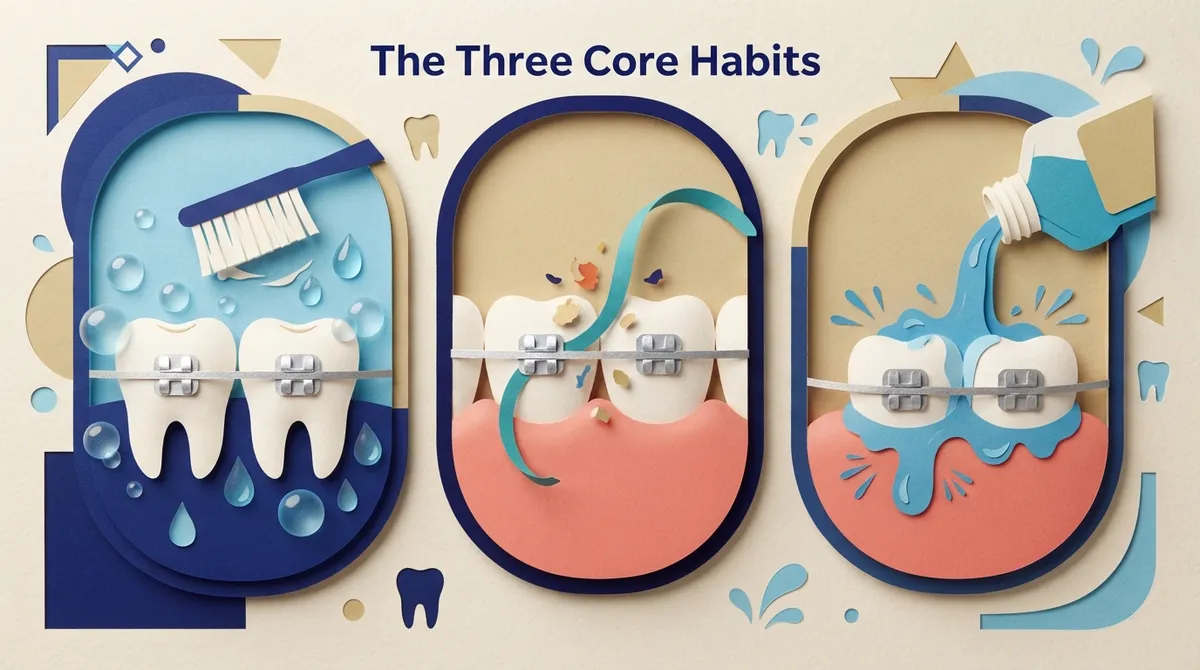
Before we dig into each habit, here is a quick comparison. Think of brushing, flossing, and rinsing as three teammates. None of them can do the whole job alone.
| Habit | Best At | Limits | How Often |
|---|---|---|---|
| Brushing | Removing plaque from tooth surfaces, brackets, and the gumline | Cannot reach well under wires or between teeth | After meals when possible, and always before bed |
| Flossing | Cleaning between teeth and under the archwire | Takes more time and practice with braces | At least once daily |
| Rinsing | Washing away loose food when brushing is not possible | Cannot remove sticky plaque on its own | After snacks or lunch, as a backup |
Now let’s look at each one more closely.
Brushing: Your Daily Foundation
Brushing is the star of the routine. It does the heavy lifting by clearing plaque from every tooth surface, around the brackets, and along the gumline.
How Often and How Long
The American Association of Orthodontists (AAO) advises brushing for about two minutes each time. A good goal is to brush after meals when possible, and always before bed. Your teen’s orthodontist may give more specific instructions, so follow those first.
The Right Tools
Choose a soft-bristled toothbrush and fluoride toothpaste. Soft bristles are gentle on gums while still cleaning well. If the bristles start to fray or flatten, swap the brush or brush head right away. A worn brush cleans poorly, and braces wear brushes out faster than you might expect.
How to Brush Around Brackets and Wires
Technique matters more than force. Hard scrubbing will not clean better, and it can irritate gums. Try these steps:
- Start at the gumline. Angle the brush gently toward the gums and make small circles.
- Brush above each bracket, tilting the bristles downward.
- Brush below each bracket, tilting the bristles upward.
- Clean the front, back, and chewing surfaces of every tooth.
- Finish with the tongue and a quick check in the mirror for leftover food.
Many teens find a small interproximal brush helpful. This tiny brush slides around brackets and under wires, reaching spots a regular toothbrush misses. If you want a step-by-step walkthrough, see our guide on how to brush teeth with braces.
Flossing: The Habit Teens Skip Most
Ask most teens which habit they dread, and flossing wins every time. With braces, the wire blocks the usual path, so it feels awkward at first. But flossing reaches the places brushing simply cannot.
Why Flossing Still Matters
Plaque loves to hide between teeth and under the archwire. Skipping floss leaves those spots untouched. The AAO recommends flossing at least once daily during treatment.
The Easiest Ways to Floss With Braces
Regular floss will not slide under the wire on its own. These tools make it manageable:
- Floss threaders: A stiff loop that pulls regular floss under the archwire.
- Orthodontic flossers: Pre-threaded tools with a firm tip that passes under the wire easily.
- Interproximal brushes: Tiny brushes that clean around brackets and between teeth.
- Water flossers: A helpful extra for flushing out debris, though ask your orthodontist whether it suits your teen’s appliance.
Here is a simple method. Thread the floss under the wire, wrap it gently around the side of one tooth, and slide it up and down. Then do the neighboring tooth. Go slowly. A calm five minutes at night is better than a rushed attempt that misses spots.
Worried it will feel clumsy? That is normal. Most teens get faster within a couple of weeks. For more daily pointers, check out these tips to brush and floss with braces daily.
Rinsing: The Backup Plan for School Days
Rinsing is the quick fix. It cannot replace brushing or flossing, but it helps a lot when your teen cannot brush right after eating.
If brushing after a meal or snack is not possible, rinse thoroughly with plain water and brush when practical. Swish well, push the water around the brackets, and spit. This clears loose food so it does not sit on the teeth all afternoon.
Rinsing works best as a bridge between proper brushing sessions. Think of it as a small pause button on plaque, not a full cleaning. Plain water is the simplest choice. If your teen wants a mouthwash, ask the orthodontist or dentist which kind is a good fit.
Brush vs. Floss vs. Rinse: Which One Wins?
So which habit is the winner? Honestly, none of them wins alone. Each one covers a gap the others leave open.
- Brushing wins for everyday plaque removal on tooth and bracket surfaces.
- Flossing wins for cleaning between teeth and under the wire.
- Rinsing wins for convenience when a toothbrush is not handy.
If your teen only has time for two things on a rushed morning, brushing and a quick rinse are fine. But at night, all three should get a turn. Make bedtime the most thorough session of the day, because saliva slows down while we sleep and plaque has more time to cause trouble.
Building the Routine Around a School Day
A routine only works if it fits real life. Here is a simple schedule you can adapt, whether your teen is racing to the bus or heading to sports practice.
- Morning: Brush for two minutes with fluoride toothpaste. Check for any loose bracket or poking wire.
- After lunch: Rinse with water, or brush if a restroom and travel kit are available.
- After school: Brush again if your teen had a snack.
- Night: Floss first, then brush for two full minutes. Finish with a careful look in the mirror.
Pack a Braces Travel Kit
A small kit makes the routine easy to repeat anywhere. Tuck these items into a pencil pouch or backpack pocket:
- A travel toothbrush and fluoride toothpaste
- Floss threaders or orthodontic flossers
- An interproximal brush
- Orthodontic wax for sore spots
- A small mirror
When everything lives in one place, your teen is far more likely to use it. For ideas on keeping up the routine between classes, see these easy ways to manage braces care between classes.
What to Eat and Drink With Braces
Food choices are part of the care routine too. The wrong snack can bend a wire or pop off a bracket, which means extra visits and possibly longer treatment.
Foods to Avoid
- Hard foods: Nuts, hard candy, and ice
- Sticky foods: Caramel, taffy, and gummy candy
- Crunchy foods: Popcorn, chips, and raw hard veggies
- Chewy foods: Tough bagels and jerky
Foods like apples and sandwiches do not need to be off the menu. Just cut them into small pieces first. Wondering about snacks? Our list of braces-friendly snacks for sports practice has plenty of tasty ideas, and this guide to what you can eat with braces covers the rest.
Drinks Matter Too
Limit frequent sugary and acidic drinks, including soda and sports drinks. Sugar feeds plaque, and acid can weaken enamel. Water is the best choice most of the time. It rinses the mouth as your teen sips, and it is kind to teeth.
Appointments: The Final Piece of the Routine
Home care is only half the story. Regular visits keep treatment moving and catch small problems early.
Keep every orthodontic adjustment visit. These are when wires are changed and progress is checked. Missing them can slow things down, as explained in why orthodontic checkups matter so much.
Also keep up with regular dental checkups and cleanings. The AAO advises dental cleanings at least every six months during orthodontic treatment, or more often if the dentist recommends it. A dental cleaner can reach spots that home brushing may miss around the brackets.
When Something Breaks
If a bracket comes loose or a wire starts poking, do not try major repairs at home. A bit of orthodontic wax can ease irritation in the meantime. Then contact the orthodontist so the team can fix it properly. Our guide on broken bracket vs. poking wire explains which issues need quick attention.
How Parents Can Help Without Nagging
Teens want independence, and that is a good thing. The goal is to support the routine without turning every evening into a battle.
- Set up the bathroom with floss tools and a good mirror.
- Use a simple chart or phone reminder instead of repeated reminders.
- Praise effort and progress, not perfection.
- Check in gently by asking how the routine is going.
You can find more ideas in our article on 7 ways parents can support teen oral hygiene with braces. A little teamwork goes a long way.
Make It Stick and Keep Smiling
The best braces routine is the one your teen actually follows. Start small, build the habits one at a time, and celebrate the wins. Within a few weeks, brushing, flossing, and rinsing become automatic, just like tying shoes.
At Brockway Orthodontics in Clearwater, Florida, Dr. Brockway and our team love helping teens and their families feel confident about every step of treatment. We explain things in a friendly, simple way, so nobody is left guessing. You can see what families say by checking out our Brockway Orthodontics reviews on Google. For general oral health guidance, the American Dental Association is another trusted resource.
Have questions about your teen’s braces routine, or thinking about starting treatment? Book an appointment online and let’s build a plan together for a healthy, happy smile.
FAQs
Q: How often should a teenager with braces brush their teeth?
A: Aim to brush for about two minutes after meals when possible, and always before bed. Use a soft-bristled toothbrush and fluoride toothpaste, and follow any special instructions from your teen’s orthodontist.
Q: What should a teen do if they cannot brush after lunch at school?
A: No worries, this happens to everyone! Rinse thoroughly with plain water to wash away loose food, then brush as soon as it is practical. A small travel kit with a toothbrush, floss, and an interproximal brush makes it much easier.
Q: Can a water flosser replace regular floss with braces?
A: A water flosser can be a helpful extra for flushing out debris, but it should not automatically replace floss. Ask your orthodontist which tools fit your teen’s appliance and needs.
Q: How often should teens with braces see a dentist for cleanings?
A: The AAO advises dental cleanings at least every six months during orthodontic treatment, or more often if the dentist recommends it. Regular cleanings work hand in hand with daily home care.
Q: What should you do if a bracket comes loose or a wire is poking?
A: Try not to make big repairs at home. Orthodontic wax can ease irritation for now, and then reach out to your orthodontist so the team can fix it the right way.
Our Service Area