Key Takeaways
-
Adults can absolutely choose metal braces; there is no age cutoff, and about 1.91 million adults were treated by AAO member orthodontists in 2024.
-
Healthy teeth, gums, and bone come first, so active cavities or gum disease should be treated before tooth movement begins.
-
Metal braces suit complex bite and alignment problems and work around the clock, with no aligners to remember to wear.
-
Expect to skip hard, sticky, and chewy foods, and to clean around brackets with floss threaders, water flossers, or interdental brushes.
-
Adult treatment can take longer than for teens, and cost commonly ranges from about $2,000 to $10,000 in the U.S., so get a personal estimate after an exam.
-
Metal braces are often more affordable than other options and are a strong choice for retreatment after previous braces when teeth have drifted.
Picture this: you’re scrolling through photos from a family event, and you notice your smile isn’t quite how you want it. Maybe a tooth has drifted over the years. Maybe you never had braces as a kid. Then the big question pops up: can adults choose metal braces, or is that something only teenagers do?
Here’s the happy answer: yes, absolutely. There’s no age cutoff for orthodontic care, and traditional metal braces are still a popular, dependable option for grown-ups. The American Association of Orthodontists (AAO) reported an estimated 1.91 million adult patients treated by its U.S. member orthodontists in 2024, up from 1.64 million in 2022. You’re in very good company.
In this friendly guide, we’ll walk through how metal braces work for adults, who they suit best, what daily life looks like, and how they stack up against other options. Let’s get you ready for a confident conversation with your orthodontist.

Yes, Adults Can Choose Metal Braces
Let’s clear this up right away. Age alone doesn’t rule out braces. What matters is the health of your teeth, gums, and the bone that supports them. An orthodontist checks these things during an exam and tells you whether metal braces are a good fit.
At Brockway Orthodontics in Clearwater, Florida, we treat patients of all ages. Dr. Brockway takes time to listen to your goals, explain your options in plain language, and build a plan that fits your life. If you’ve ever wondered whether you’re “too old,” you may enjoy our post on 8 truths about whether you’re too old for braces.
How Metal Braces Work
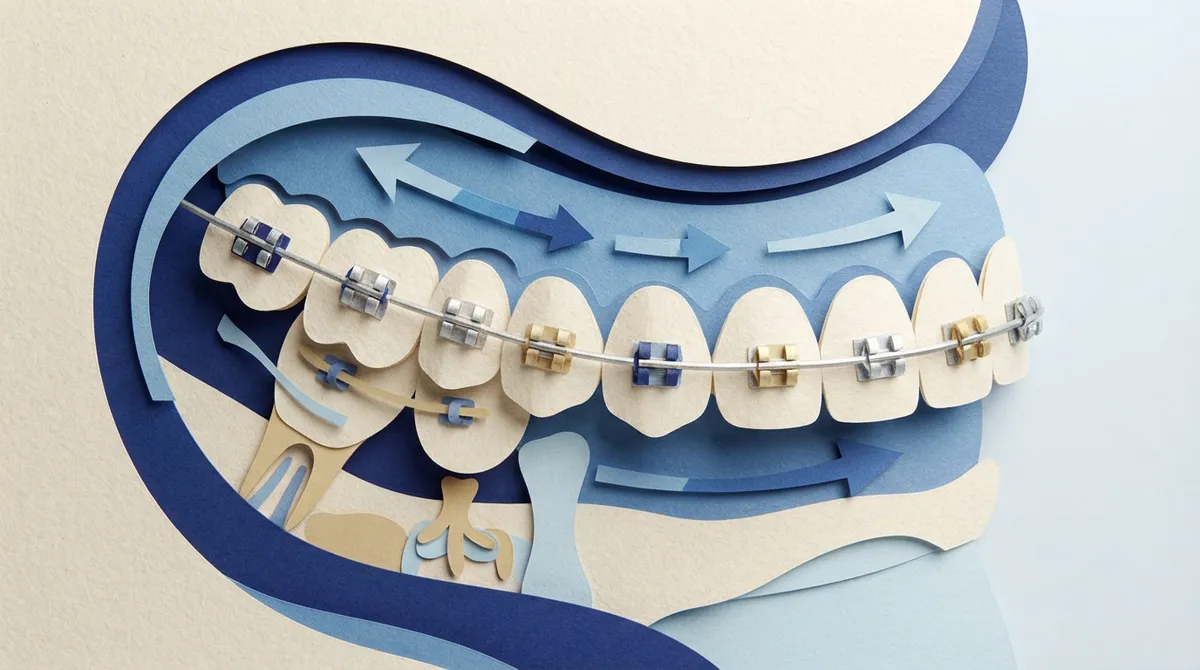
Metal braces are the classic style most people picture. Small brackets are bonded to the front of your teeth. A thin wire runs through them. Over time, your orthodontist adjusts the wire to gently guide your teeth into better positions.
Because they are fixed in place, they work around the clock. You don’t have to remember to put anything in or take anything out. For many adults with busy schedules, that “set it and forget it” feel is a big plus.
You can learn more about the basics on our All About Braces page.
What Metal Braces Can Treat
Metal braces are very versatile. Depending on your exam, they can help with:
- Crowded teeth that overlap or twist
- Gaps and spacing between teeth
- Overbites, underbites, and crossbites
- Open bites and uneven bite patterns
- Relapse after earlier orthodontic treatment
Not every case needs braces, though. Your orthodontist will tell you honestly what works best for your teeth and your goals.
Who Makes a Good Candidate?
Most healthy adults can wear metal braces. A few things are worth checking first.
Healthy Teeth and Gums Come First
Active cavities and gum disease should be treated and stabilized before teeth start moving. Healthy gums and strong bone support are the foundation for safe tooth movement. If you have gum concerns, don’t worry. Many patients simply need a little dental care first, and then they’re ready to start.
Crowns, Bridges, and Implants
Existing dental work can change the plan, but it doesn’t always stop treatment. Crowns and bridges are often workable. Dental implants are different because they don’t move like natural teeth, so your orthodontist plans around them. If you’re curious about missing teeth, check out can I get braces with missing teeth.
Previous Treatment and Relapse
Did you wear braces as a teen but your smile has shifted? You’re not alone. Teeth can drift over the years, especially without consistent retainer wear. Metal braces can be a strong choice for retreatment because they offer steady, controlled movement. And once you’re done, a good retainer helps keep your results.
The Pros and Cons of Metal Braces for Adults
Every treatment has trade-offs. Here’s an honest look so you can decide with confidence.
| Pros | Cons |
|---|---|
| Fixed in place, so no reliance on remembering to wear aligners | More visible than clear or ceramic options |
| Can address a wide range of alignment and bite concerns | Brushing and flossing take more time and care |
| Precise, controlled tooth movement | Hard or sticky foods can damage brackets and wires |
| Often a budget-friendly braces option | Regular adjustment visits are needed |
| Durable and well proven over many decades | Mild soreness after adjustments |
Daily Life With Metal Braces as an Adult
Many adults worry about how braces will fit into work and social life. The good news? Most people adjust within a couple of weeks. Here’s what to expect.
Eating and Drinking
You’ll want to skip foods that can bend wires or pop off brackets. Think hard candy, popcorn, ice, and chewy caramel. Cut crunchy foods like apples into small pieces. Our guide on foods to avoid with braces gives a handy list, and what can you eat with braces has tasty ideas for safe meals.
Cleaning Your Teeth
Food can hide around brackets, so cleaning takes a little extra effort. Here’s a simple routine to follow:
- Rinse with water after eating to loosen trapped food.
- Brush for two minutes, angling your brush toward the gumline and brackets.
- Use floss threaders or a water flosser to clean between teeth and under the wire.
- Use interdental brushes for tight spots around brackets.
- Finish with a fluoride rinse if your orthodontist recommends one.
Want more tips? See 7 smart steps to brush teeth with braces.
Appointments and Comfort
Most adults visit every several weeks for adjustments. You may feel a dull ache for a day or two afterward. Soft foods, warm water rinses, and orthodontic wax for rubbing spots usually do the trick. If a wire pokes or a bracket loosens, give us a call. Our post on emergency vs. routine orthodontics explains what needs quick attention.
How Long Do Adults Wear Metal Braces?
Here’s where honesty matters most: there’s no single number. Treatment time depends on how complex your case is, the health of your teeth and gums, and how closely you follow instructions. Adult treatment can take longer in some cases, since adult bone is fully grown and teeth may move a bit more slowly.
Your orthodontist can give you a realistic estimate after your exam. That’s far more reliable than any general average you’ll find online. Our guide on how long braces take to work covers the factors in more detail.
What Do Adult Metal Braces Cost?
Cost varies by location, provider, case complexity, and insurance. Cleveland Clinic’s 2025 overview gives a broad U.S. range of about $2,000 to $10,000 for braces, depending on the type and how much correction is needed. That’s a wide range, so a personal estimate is key.
The good news is that most practices offer ways to make care manageable. At Brockway Orthodontics, we offer flexible options, and our financing and insurance page explains how it works. You can also read how to use dental insurance to help pay for braces.
Metal Braces vs. Other Options for Adults
Metal braces are just one path. Some adults prefer something less noticeable, and that’s perfectly fine. Here’s a quick side-by-side look.
| Option | Visibility | Removable? | Best For |
|---|---|---|---|
| Metal braces | Most visible | No | Complex cases, steady and reliable results |
| Ceramic braces | Tooth-colored, less noticeable | No | Adults wanting a more discreet fixed option |
| Lingual braces | Hidden behind teeth | No | Those wanting hidden braces |
| Clear aligners | Nearly invisible | Yes | Mild to moderate cases and flexible lifestyles |
Brockway Orthodontics offers metal braces, ceramic braces, and Spark™ Clear Aligners, a more affordable clear aligner option. Not sure which way to lean? Our posts on metal vs. clear braces for adults and traditional braces vs. clear aligners can help you compare.
Why Some Adults Still Prefer Metal Braces
With so many discreet choices out there, you might wonder why anyone picks metal. There are a few good reasons.
- Complex bite correction: Fixed braces give your orthodontist strong control over tooth movement.
- No compliance worries: Nothing to lose, forget, or leave in a lunch bag.
- Budget-friendly: Metal braces are often among the more affordable braces choices.
- Proven track record: They’ve been trusted for generations.
Plenty of busy professionals love that they can simply go about their day while their teeth quietly move. Many adults also find that the look grows on them, and a few even enjoy the fun of picking colored bands. You can read more in 9 reasons metal braces for adults are making a strong comeback.
Your First Step: A Friendly Consultation
The best way to know if metal braces suit you is to sit down with an orthodontist. At your first visit, we’ll look at your teeth, bite, and gums, talk through your goals, and explain your options. There’s no pressure, just helpful answers. Curious about what happens? Take a peek at your first visit and our adult treatment page.
Brockway Orthodontics proudly serves Clearwater and the surrounding Pinellas County area. We use modern tools like digital impressions and 3D imaging, so your visit is comfortable and your plan is precise. You can also see what our patients say by visiting Brockway Orthodontics on Google.
For general oral health guidance, the American Dental Association is a trusted resource. And if you’re looking for a specialist in our state, the Florida Association of Orthodontists is a helpful place to learn more about orthodontic care. You can also read the Cleveland Clinic’s overview of adult braces for an additional look at costs and options.
Ready to Start Your Smile Journey?
So, can adults choose metal braces? Yes, and many do with great results. They’re sturdy, flexible, and effective for a wide range of alignment and bite concerns. Your orthodontist will confirm whether they’re right for you after an exam. Whether you pick metal, ceramic, or clear aligners, the best choice is the one that fits your teeth, your budget, and your lifestyle.
If you’re ready to take the first step, we’d love to meet you. Book your appointment online and let’s talk about the smile you’ve always wanted. Have questions first? Feel free to contact us, and our friendly team will be happy to help.
FAQs
Q: Can adults get metal braces at any age?
A: Yes! There’s no age limit for braces. What matters most is that your teeth, gums, and bone are healthy enough for tooth movement. An orthodontist will check all of that at your exam and let you know if metal braces are a great fit.
Q: Are metal braces effective for adults?
A: They sure are. Metal braces can treat crowding, gaps, and many bite problems, including more complex ones. Because they’re fixed in place, they work around the clock, which many busy adults really appreciate.
Q: How long do adults usually wear metal braces?
A: It really depends on your unique case, your oral health, and how well you follow your orthodontist’s instructions. Adult treatment can take a bit longer in some cases. Your orthodontist can give you a personal timeline after an exam, which is much more reliable than a general average.
Q: What foods should adults avoid with metal braces?
A: Skip hard, sticky, and chewy foods like popcorn, hard candy, ice, and caramel since they can damage brackets and wires. Cut crunchy fruits and veggies into small bites. Plenty of tasty foods are still on the menu!
Q: Can I get braces if I have crowns, implants, or gum disease?
A: Often, yes, with a little planning. Gum disease and cavities should be treated first so your mouth is healthy. Crowns and bridges can usually be worked around, and implants don’t move like natural teeth, so your orthodontist plans around them.
Our Service Area