
Key Takeaways
-
There is no age limit for orthodontic treatment; teeth can move safely at any age as long as gums, bone, and teeth are healthy, making the key question whether your mouth is healthy enough, not your age.
-
Pre-treatment evaluation is essential and must check gum health, bone support, cavities, existing dental work, and oral hygiene habits; gum disease must be treated and stabilized before teeth movement begins.
-
Both braces and clear aligners work for seniors; choose based on complexity of tooth movement, existing dental work, and personal preference—braces suit complex cases while aligners work well for mild to moderate concerns.
-
Retainers are critical after treatment since teeth can shift at any age; many patients wear them nightly long-term to protect their results and maintain their new smile.
-
Senior patients pursue orthodontics for functional reasons beyond appearance: easier cleaning of crowded teeth, improved bite comfort, preparing for other dental work, and fixing teeth that shifted decades after earlier treatment.
-
Treatment timelines vary based on complexity and bone response; mild cases may finish in under a year while complex cases with existing dental work take longer and require more frequent monitoring with your dentist.
Have you ever looked in the mirror and thought, “I wish my smile looked better, but I’m probably too old for braces”? If so, you are in good company. Plenty of people in their 50s, 60s, 70s, and beyond quietly wonder the same thing. The good news? There is no fixed upper age limit for straightening teeth.
Orthodontics for seniors is a real and growing option. Teeth can move safely at almost any age, as long as the gums, bone, and teeth are healthy. The American Association of Orthodontists (AAO) estimated that about 2.37 million adult patients were in treatment across the United States in 2024. That number covers all adults, not only seniors, but it shows how common adult treatment has become.
In this friendly guide, we will walk through who makes a good candidate, what needs to be checked first, which treatment options exist, and how to keep your results for years. Whether you want a more comfortable bite, easier cleaning, or simply a smile you love, let’s find out if orthodontics for seniors is right for you.

Is There an Age Limit for Orthodontic Treatment?
Short answer: no. Age alone does not decide whether you can have braces or aligners. What matters most is the health of your teeth, gums, and the jawbone that holds them in place.
Teeth move because the bone around them can reshape slowly under gentle pressure. That process keeps working as we age. It may be a little slower than in a teenager, but it still works well when the foundation is healthy.
So instead of asking, “Am I too old?” it is more helpful to ask, “Is my mouth healthy enough?” That is exactly what an orthodontist will help you figure out. If you are curious about this topic, you may enjoy our related read, 8 Truths About Whether You’re Too Old for Braces.
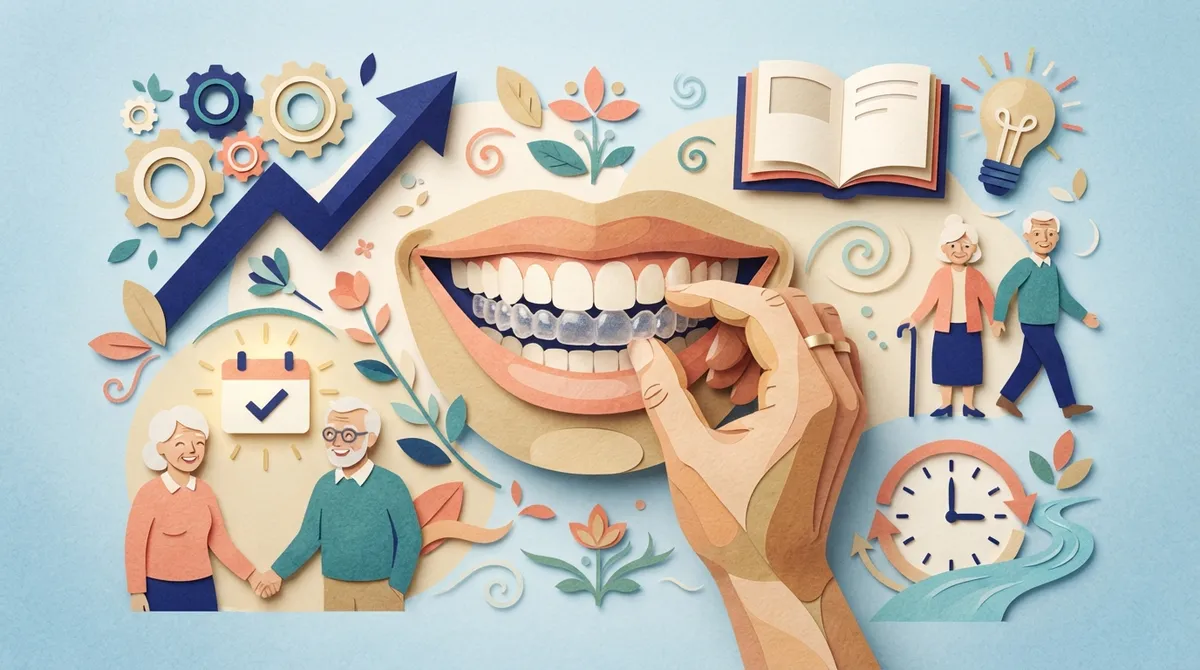
Why Are More Older Adults Choosing Orthodontic Care?
Seniors seek treatment for many reasons, and not all of them are about looks. Here are some of the most common ones:
- A confident smile: Many people simply want to feel proud of their teeth in photos and conversations.
- Easier cleaning: Crowded or overlapping teeth trap food and plaque. Straighter teeth are easier to brush and floss.
- Better bite comfort: A bite that does not fit well can make chewing tiring or uncomfortable.
- Preparing for dental work: Moving teeth can create space for crowns, bridges, or implants.
- Fixing relapse: Teeth that were straightened decades ago may have shifted over time.
The AAO also reports that adult patients keep rising. Its 2025 member survey estimated about 1.91 million adults in treatment at AAO-member practices in 2024, up from about 1.64 million in 2022. If you want to explore why this trend is growing, take a look at Why Are So Many Adults Getting Orthodontic Treatment in 2026?
What Should Be Checked Before Starting?
Before any tooth moves, a careful exam is essential. Think of it like checking the foundation before remodeling a house. A good orthodontist will look at several things.
Gum and Bone Health
Healthy gums and strong bone support are the top priorities. Moving teeth while gum disease is active and uncontrolled can make damage worse. If gum disease is found, it needs to be treated and stabilized first.
Cavities and Existing Dental Work
Active decay should be treated before braces or aligners begin. Your orthodontist will also review crowns, bridges, fillings, and implants, because these can change how the plan is built.
Bite, Missing Teeth, and Daily Habits
The exam also checks how your teeth meet, whether any teeth are missing, and how well you keep up with brushing and flossing. Good daily cleaning is a must during treatment.
| What We Check | Why It Matters |
|---|---|
| Gum health | Uncontrolled gum disease must be treated before teeth are moved |
| Bone support | Strong bone keeps teeth stable during and after treatment |
| Cavities | Decay should be fixed before treatment starts |
| Crowns, bridges, implants | These affect how and where teeth can move |
| Missing teeth and bite | Shape the goals and the overall treatment plan |
| Oral hygiene habits | Clean teeth and gums are key to a safe, successful result |
Not sure what to expect at that first visit? Our guide to your first visit walks you through the whole thing.
Braces or Clear Aligners: Which Is Better for Seniors?
Both can work well for older adults. The right choice depends on how complex your tooth movement is, what dental work you already have, your bite, your hygiene habits, and your own preferences.
Here is a simple comparison to help you think it through:
| Feature | Braces | Clear Aligners |
|---|---|---|
| Visibility | Metal is noticeable; ceramic blends in more | Nearly invisible |
| Removable | No, fixed in place | Yes, for eating and cleaning |
| Best for | Complex bites and tooth movements | Mild to moderate alignment concerns |
| Cleaning | Needs extra care around brackets | Easier to brush and floss normally |
| Discipline needed | Lower, since they stay on | Higher, since aligners must be worn most of the day |
At Brockway Orthodontics, we offer Spark™ Clear Aligners, a more affordable alternative to Invisalign. We also offer metal braces and ceramic (clear) braces, so there is an option for different needs and budgets. Curious about the differences? Check out Clear Aligners vs. Braces: Which One Is Right for You?
How Do Gum Disease and Dental Work Affect Treatment?
This is one of the biggest questions older adults ask, and it is a smart one.
Gum Disease and Bone Loss
If you have a history of gum disease, treatment can still be possible. It often means working as a team with your general dentist or a periodontist. You may need more frequent monitoring and cleanings during treatment. The goal is to keep inflammation under control while teeth move gently.
Crowns, Bridges, and Implants
Natural teeth can move. Implants cannot. That means an implant’s position has to be considered together with the planned tooth movement. Crowns and bridges can also change what is possible. Your orthodontist will map this out before starting.
Missing Teeth
Missing teeth do not rule out treatment. In fact, orthodontics can sometimes shift teeth to make room for a replacement tooth or close a gap. Learn more in Can I Get Braces With Missing Teeth?
Here is one important reminder: orthodontic treatment does not replace care for gum disease or decay. It can be part of a bigger dental plan, but those health issues always come first.
How Long Does Treatment Take for Older Adults?
Every smile is different, so timelines vary. Some mild cases finish in under a year, while more complex ones take longer. Bone in older adults may respond a bit more slowly, and cases with extra dental work often need extra planning.
Your orthodontist can give you a realistic estimate after your exam. For a closer look at what shapes timing, read How Long Do Braces Take to Work?
Why Are Retainers So Important After Treatment?
Here is something that surprises many people: teeth can shift at any age. That is true for teenagers, and it is true for seniors too. Without a retainer, your hard work can slowly slip away.
Retainers hold your new smile in place. Your orthodontist will tell you how often to wear them and for how long. Many patients wear them nightly for the long term. You can learn more about options on our retainers page, or read How to Wear a Retainer After Braces and Keep Your Smile.
How Do You Keep Teeth Clean During Treatment?
Clean teeth and healthy gums are the secret to safe treatment at any age. Here is a simple routine to follow:
- Brush after meals: Gently brush around brackets or after removing aligners.
- Floss daily: Use floss threaders or small interdental brushes to reach tight spots.
- Rinse well: A fluoride or antibacterial rinse can help if your dentist suggests it.
- Keep your cleanings: Stay on schedule with your general dentist, and more often if you have a gum history.
- Attend every orthodontic check-up: Regular visits let us catch small problems early.
Need some how-to help? Our friendly guide on how to brush teeth with braces makes it simple.
What About Cost and Payment Options?
Cost is a fair concern, and it often depends on the treatment type, length, and complexity. Many offices offer flexible payment plans, and some dental insurance plans offer partial orthodontic coverage. Ask about your options early so there are no surprises.
You can explore financing and insurance details to see how payments can fit your budget. Our adult treatment page also shares more about options for grown-up smiles.
Why Choose Brockway Orthodontics in Clearwater?
If you are searching for a caring orthodontist in Clearwater, Florida, you deserve a team that listens. Dr. Brockway takes time to hear your concerns and goals so you feel comfortable and informed from the first visit to the last. We welcome the whole family, from teens to older adults.
We also use modern technology like digital impressions instead of messy molds and 3D imaging for precise planning. In certain cases, same-day treatments are available, which is a nice help when life is busy. You can see what our patients say by visiting us on Google: Visit us on Google — Brockway Orthodontics.
For general guidance on oral health and dental care, the American Dental Association is a trusted resource. You can also find professional information through the Florida Association of Orthodontists, and the AAO shares helpful adult patient information at its member survey summary.
Ready to Explore Orthodontics for Seniors?
Your smile story does not have an expiration date. With a healthy foundation and a thoughtful plan, orthodontics for seniors can bring comfort, confidence, and a smile you are proud to share. The first step is simply a conversation.
Ready to see what is possible? Book your free consultation online and let our friendly team help you take that first step. Prefer to talk first? You can always contact us with your questions.
FAQs
Q: Can seniors get braces or clear aligners?
A: Yes, they can! There is no fixed upper age limit for orthodontic treatment. What matters most is having healthy teeth, gums, and supporting bone, so a quick exam with your orthodontist is the best first step.
Q: Are braces safe for older adults with gum disease or bone loss?
A: They can be, but only after the gum disease is treated and under control. Moving teeth while gum inflammation is active can make damage worse, so your orthodontist may team up with your dentist or a periodontist and monitor you more often.
Q: How do crowns, bridges, or implants affect treatment?
A: They simply need to be planned for ahead of time. Implants do not move like natural teeth, so your orthodontist will design tooth movement around them. Crowns and bridges can also shape which options work best.
Q: Do seniors need to wear a retainer after treatment?
A: Yes, and it is just as important as it is for younger patients. Teeth can shift over time at any age, so a retainer helps protect your new smile for the long run.
Q: Are clear aligners or braces better for older adults?
A: It depends on your goals and your mouth. Clear aligners are a great fit for mild to moderate concerns and are easy to clean, while braces may work better for more complex bites. Your orthodontist will help you pick the right match.
Our Service Area