Key Takeaways
-
Clear aligners must be worn about 20 to 22 hours a day to stay on track, so they suit people who can commit to daily discipline; fixed ceramic braces work without daily habits.
-
Ceramic braces are fixed and always working, but they can chip or break more easily than metal, and their elastic ties may discolor between visits.
-
Aligners are removable, allowing normal eating, brushing, and flossing, but they are easy to misplace and require putting them back in right after meals.
-
Treatment time depends on the individual case; the research is inconsistent, so be wary of anyone promising one option is always faster.
-
Both options require a retainer after treatment, since teeth tend to drift back toward their original positions without one.
-
Aligners are prescription medical devices, so get an in-person orthodontic exam rather than ordering unsupervised direct-to-consumer aligners.
You want a straighter smile, but you don’t want everyone to notice your treatment. Good news: you have two popular “invisible-ish” options. The tricky part is knowing which one is right for you. Clear braces versus clear aligners is one of the most common questions we hear from patients of all ages, and it’s a great one to ask.
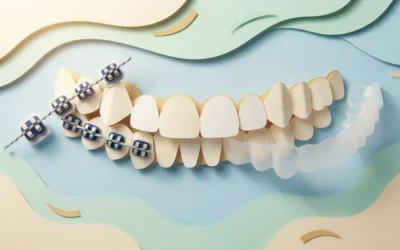
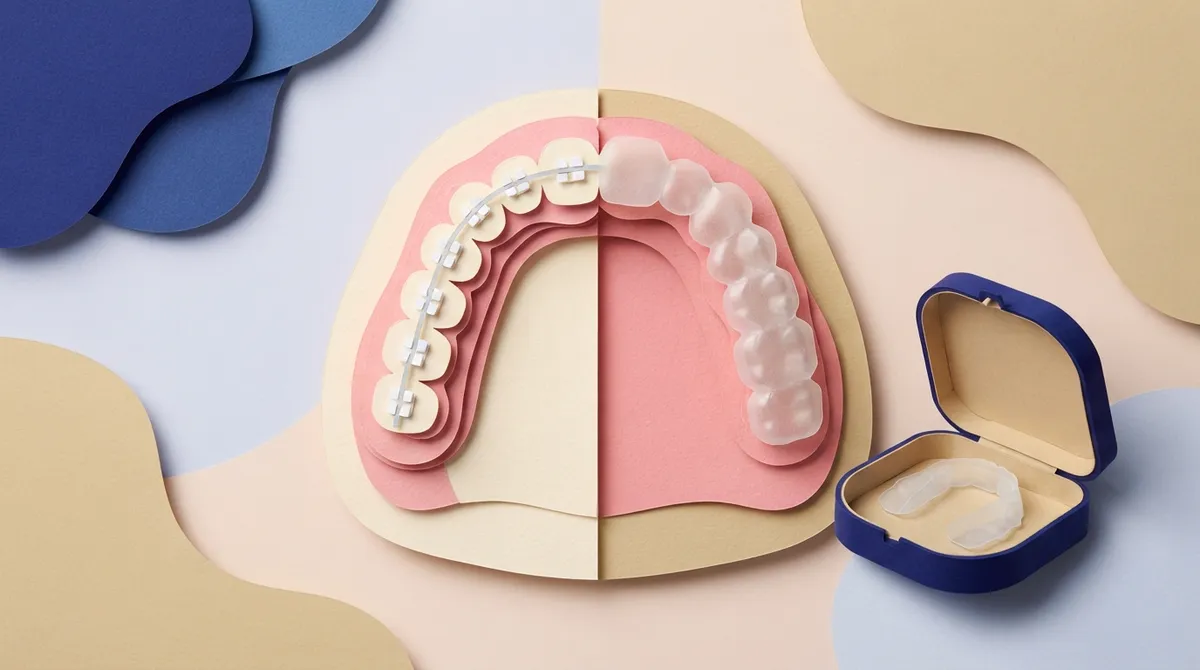
Here’s the short version. Clear braces are fixed ceramic braces that stay on your teeth the whole time. Clear aligners are removable plastic trays you swap out every so often. Both can work beautifully. Which one is best depends on your bite, your teeth, your habits, and your goals.
In this friendly guide, we’ll break down how each option works, compare them side by side, and help you think through your choice. Whether you’re a parent helping a teen decide, a busy professional who wants discretion, or someone returning for a second round of treatment, you’ll find useful answers below. Let’s dive in!
What Are Clear Braces?
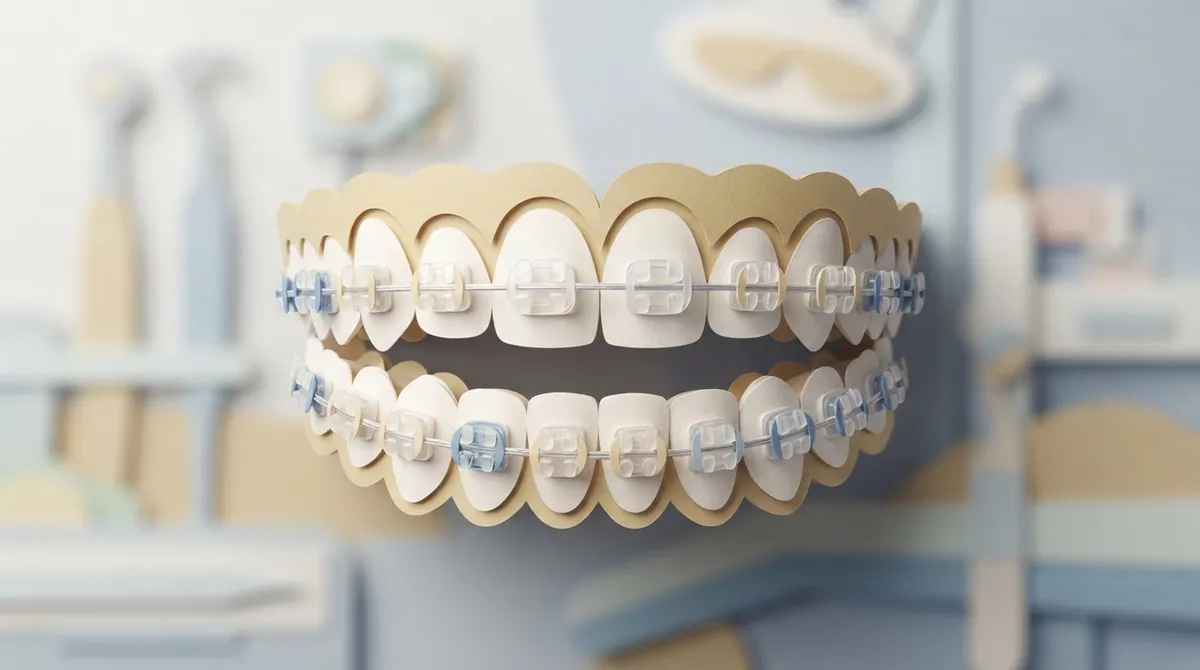
When people say “clear braces,” they usually mean ceramic braces. These work just like traditional metal braces. Small brackets are bonded to the front of your teeth. A thin archwire connects them and gently guides your teeth into place over time.
The big difference is the color. Ceramic brackets are tooth-colored or translucent, so they blend in with your smile. From a normal conversation distance, they are far less noticeable than metal.
Because they are fixed to your teeth, they are always working. You can’t forget to put them in, and you can’t lose them in a lunch tray. Many patients love that “set it and forget it” feel. If you’d like to see how this option looks and feels, take a peek at our guide on ceramic braces in Clearwater.
What Are Clear Aligners?
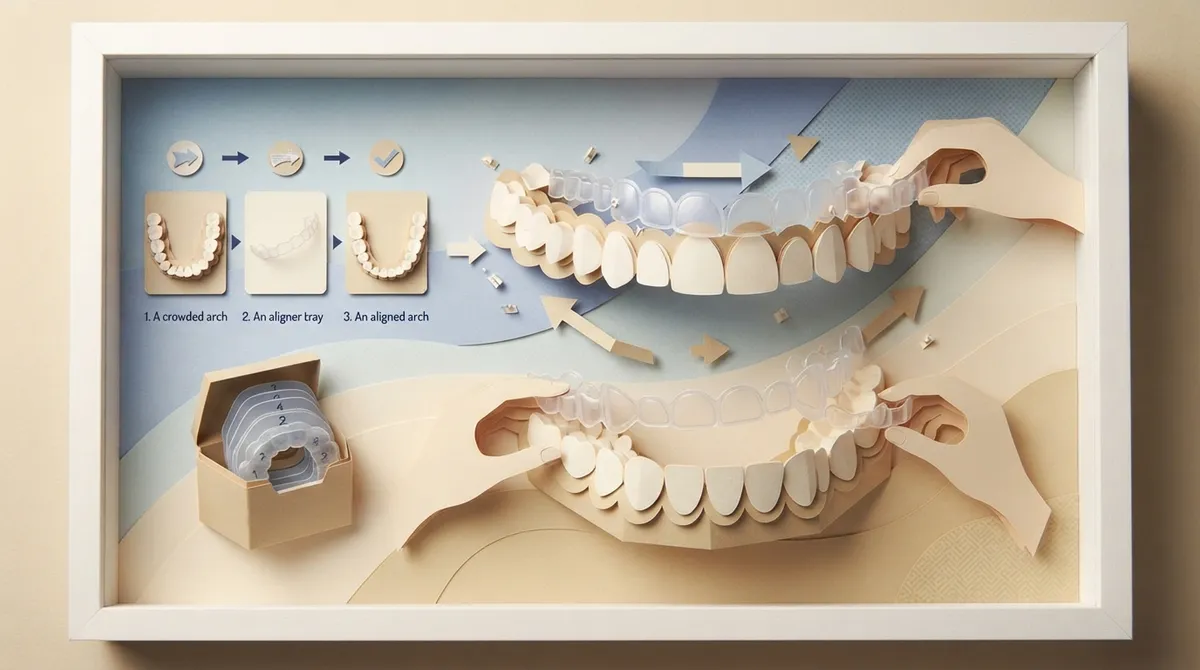
Clear aligners are a series of custom-made plastic trays. Each tray fits snugly over your teeth and moves them a small amount. Every week or so, you switch to the next tray in your set. Step by step, your teeth shift toward the planned final position.
The biggest perk is that aligners are removable. You take them out to eat, drink anything other than water, brush, and floss. They are also very discreet, since most people won’t notice them unless you point them out.
At our practice, we offer Spark™ Clear Aligners, a more affordable alternative to Invisalign. Aligners do ask something of you, though. They only work if you wear them as directed. We’ll cover that in a moment.
Clear Braces vs. Clear Aligners: Side-by-Side Comparison
Sometimes a simple chart says it best. Here is how the two options stack up in the areas patients ask about most.
| Feature | Clear (Ceramic) Braces | Clear Aligners |
|---|---|---|
| How they work | Brackets bonded to teeth with an archwire | Removable, custom plastic trays |
| Visibility | Tooth-colored, but still noticeable up close | Nearly invisible |
| Removable? | No, fixed in place | Yes, for meals and cleaning |
| Daily wear | Always on | Often about 20 to 22 hours a day |
| Eating | Some food limits (hard, sticky foods) | Fewer limits, since you remove them |
| Cleaning | More effort around brackets and wires | Easier brushing and flossing |
| Durability | Brackets can chip or break | Trays can crack or warp if mishandled |
| Best for | A wide range of cases, including complex movements | Mild to moderate cases and motivated wearers |
Keep in mind that this table gives general patterns. Your own treatment plan depends on a careful exam. Appearance alone shouldn’t make the decision for you.
The Biggest Pros and Cons
Clear Braces: The Upsides
- Always working: Fixed braces stay engaged, so your results don’t depend on remembering to wear them.
- Strong control: Fixed appliances can be a great fit for some more complex tooth movements.
- Tooth-colored look: They are far less noticeable than metal braces.
- Stain-resistant brackets: The ceramic brackets themselves generally resist staining.
Clear Braces: The Trade-Offs
- More visible than aligners: Up close, people can still see brackets and wire.
- Can chip or break: Ceramic brackets are not as tough as metal ones.
- Tie discoloration: The small elastic ties used with some braces can pick up color between visits.
- Harder to clean: Plaque can hide around brackets, and poor brushing may lead to white spots on enamel.
Clear Aligners: The Upsides
- Very discreet: Most people won’t notice them.
- Removable: You can eat what you like and clean your teeth normally.
- Comfortable feel: Smooth plastic means no wires poking your cheeks.
- Digital planning: You can often preview your planned results before starting.
Clear Aligners: The Trade-Offs
- Depends on you: If you skip wear time, treatment can slow down or go off track.
- Easy to misplace: Aligners left in a napkin have a sad history.
- Some movements are harder: Certain tooth movements are less predictable with aligners alone.
- May need extras: Small attachments, elastics, refinements, or even a switch to fixed braces can come into play.
Daily Life: What Each Option Feels Like
Let’s talk about real life, because that’s where this decision really plays out.
With clear braces, your day looks a lot like life with any braces. You’ll avoid very hard or sticky foods, like caramel and whole raw apples. You’ll brush and floss around the brackets with a little extra care. Beyond that, you just go about your day. Your braces are on and working, with nothing extra to remember.
With aligners, you have more freedom at the table, but more responsibility the rest of the time. You’ll typically wear your trays about 20 to 22 hours a day, and you take them out for meals and cleaning. The trick is to put them back in right after you eat and brush. Many patients set phone reminders to build the habit. If you want to avoid common slip-ups, our post on clear aligner food mistakes is worth a read.
For teens, the choice often comes down to personality. A teen who is organized and motivated may do wonderfully with aligners. A teen who is busy and a bit forgetful may do better with fixed braces. Parents know their kids best, and we’ll help you weigh it honestly. You can learn more in our guide to braces versus clear aligners for kids.
Which Is Faster?
This is the question everyone asks, and the honest answer is: it depends on you. Treatment time is personal. It is shaped by your bite, how crowded or spaced your teeth are, and how well you follow your plan.
The research backs up that caution. A 2024 systematic review looked at treatment time for aligners versus fixed appliances in crowding cases. It found low-certainty evidence and no significant difference in duration for mild-to-moderate crowding. The studies were quite inconsistent, and severe cases were underrepresented.
One small study of adolescents reported average treatment times of about 24 months for aligners and 27 months for fixed braces. That is just one study, though, so it shouldn’t be used as a promise for everyone. So be a little wary of any claim that one option is always faster. The best way to get a real estimate is a personal exam. Our guide to how long braces take goes deeper on timelines.
Cleaning and Oral Health
Healthy teeth matter just as much as straight teeth. Both options ask for good habits.
Fixed braces make cleaning more demanding. Food and plaque can collect around brackets and under wires. If brushing slips, you may see chalky white spots on your enamel once the braces come off. A soft brush, floss threaders, and a little patience go a long way.
Aligners make brushing and flossing easier because you remove them. But they aren’t risk-free. Wearing dirty trays or sipping sugary drinks while they’re in can trap sugar against your teeth. Rinse them, clean them as directed, and drink only water while wearing them.
Either way, regular checkups matter. If you’re brand new to this, our tips on brushing teeth with braces can get you started on the right foot.
Who Is Each Option Best For?
Every smile is different, but some patterns show up often. Use these as a starting point, not a final answer.
Clear Braces May Suit You If…
- You want fixed control for a more complex bite or tooth movement.
- You prefer a treatment that doesn’t depend on daily habits.
- You’d like a more discreet look than metal, and you don’t mind some visibility.
- You’re a teen or young adult who might forget to wear removable trays.
Clear Aligners May Suit You If…
- You want the most discreet option possible for work or social events.
- You can commit to wearing your trays nearly all day.
- You want easy cleaning and fewer food rules.
- Your case is mild to moderate, or an orthodontist confirms aligners can handle it.
Adult professionals often lean toward aligners for the low-profile look. Patients returning for retreatment after relapse have good options with both. If that sounds like you, our article on clear braces for adults may help.
Don’t Skip the Retainer
Here’s something that surprises many people. Finishing treatment is not the finish line. After braces or aligners, your teeth want to drift back toward where they started. That’s why retainers are generally needed to help hold your new smile in place.
This is true for both clear braces and clear aligners. Wearing your retainer as directed protects the time, effort, and money you invested. Learn more about your options on our retainers page.
Why Professional Supervision Matters
It can be tempting to skip the office and order aligners online. But aligners are prescription medical devices. The American Association of Orthodontists cautions against unsupervised direct-to-consumer treatment. Teeth move because of real biology, and moving them without in-person checks can cause problems.
With a trained orthodontist, you get a full exam, a custom plan, and regular monitoring. That’s true whether you choose braces or aligners. The right plan is built around your bite and your health, not just how it looks. For a closer look at the differences, see our post on at-home aligners versus professional orthodontics.
How to Choose: A Simple 5-Step Approach
Feeling a little overwhelmed? Here’s an easy way to work through it.
- Get an exam first. Your bite and tooth movements matter more than looks alone.
- Be honest about your habits. Can you wear trays 20 to 22 hours a day? If not, fixed braces may be safer.
- Think about your lifestyle. Consider your job, activities, and how much you care about discretion.
- Ask about your timeline. Request a realistic estimate for your own case, not a general promise.
- Talk costs and payment options. Ask about plans, insurance, and financing so there are no surprises.
If you’re weighing the full range of options, our post on clear aligners versus braces offers more perspective.
Why Families Choose Brockway Orthodontics
At Brockway Orthodontics, we’re proud to be a trusted orthodontic home for families in Clearwater, Florida. Dr. Brockway is more than a qualified orthodontist. She takes time to listen to your worries and your dreams for your smile, so you feel comfortable and informed from the first visit.
We offer metal braces, ceramic (clear) braces, and Spark™ Clear Aligners, so we can match you with the option that truly fits. We use modern technology like digital impressions and 3D imaging for comfortable, precise planning. In some cases, we can even offer same-day treatment to fit your busy schedule. You can meet Dr. Brockway and learn about our approach, or read what neighbors say when you visit us on Google — Brockway Orthodontics. For general guidance on choosing care, the American Dental Association is another helpful resource.
The Bottom Line
There’s no single winner in the clear braces versus clear aligners debate. Clear braces offer constant, reliable control and don’t depend on your daily habits. Clear aligners offer discretion, easy cleaning, and food freedom, but they need your steady commitment. Both can give you a smile you’re proud of, and both need a retainer afterward.
The best next step is a personal visit. We’ll look at your teeth, talk through your goals, and give you honest guidance with no pressure. Ready to find your fit? Book your free consultation online or contact us with any questions. We can’t wait to meet you!
FAQs
Q: Are clear braces or clear aligners better for my teeth?
A: Neither is better for everyone, and that’s the honest truth! The right choice depends on your bite, the tooth movements you need, and your daily habits. A quick exam with an orthodontist is the best way to find your best match.
Q: How many hours a day do I need to wear clear aligners?
A: Most treatment plans call for about 20 to 22 hours a day. You take them out only to eat, drink anything besides water, brush, and floss. Your orthodontist sets your exact schedule, so follow it closely for the best results.
Q: Can clear aligners treat severe crowding or bite problems?
A: Aligners work well for many cases, but some movements are less predictable with aligners alone. Severe crowding or complex bite issues may need attachments, elastics, or fixed braces. An exam will tell you which path is realistic for your smile.
Q: Do ceramic braces stain, chip, or break?
A: The ceramic brackets themselves generally resist staining, but the small elastic ties can pick up color between visits. Ceramic brackets can chip or break more easily than metal ones, so gentle care helps. We’ll swap the ties at your adjustments to keep things looking fresh.
Q: Do I need a retainer after clear braces or clear aligners?
A: Yes, in most cases! Retainers help hold your teeth in their new spots after treatment ends. Wearing yours as directed protects your hard work for years to come.
Our Service Area