Key Takeaways
-
Apples are safe with braces if you avoid biting into a whole apple with your front teeth, since that sudden force can loosen brackets or bend wires.
-
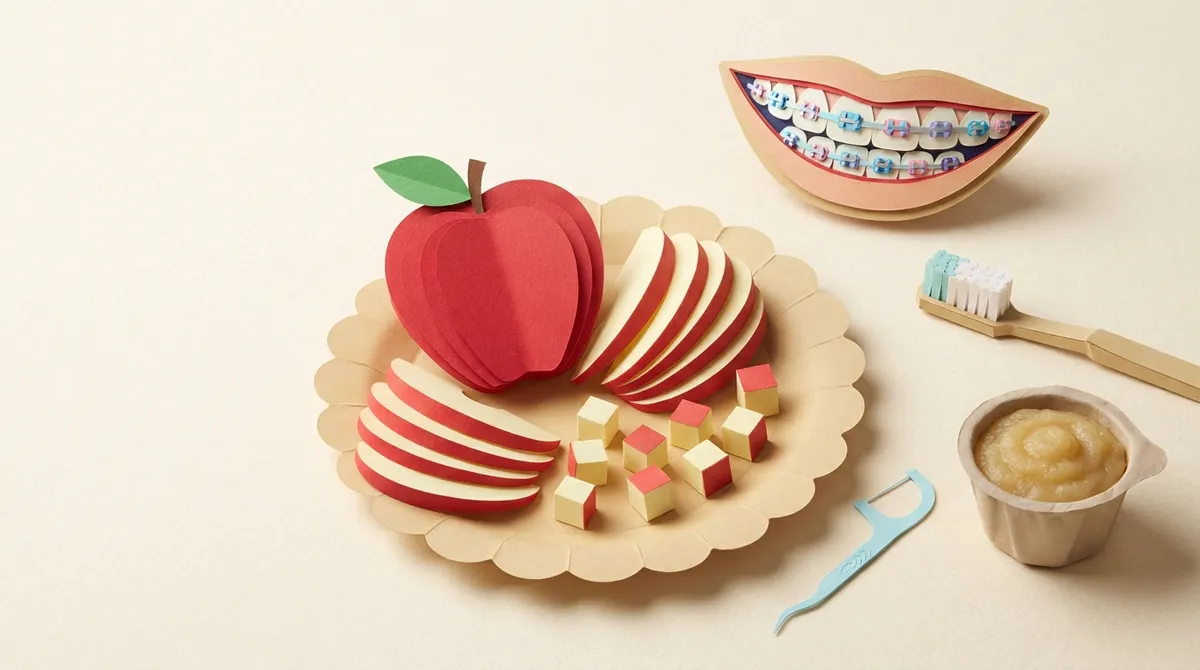
Core the apple and cut it into thin slices or small bite-size cubes, then chew gently with your back teeth where there are no brackets in the way.
-
Thin slices or small cubes are safest, while large wedges still require a risky front-tooth bite and should be avoided.
-
When teeth are sore, switch to applesauce, cooked apples, or grated apple, which need little or no chewing.
-
After eating, swish with water, brush around each bracket, and use floss threaders or an interdental brush to remove apple bits that can cause plaque and decay.
-
If an apple breaks a bracket or wire, leave the piece alone, cover any poking wire with orthodontic wax, and call your orthodontist for a repair.
Apples are crisp, sweet, and good for you. So when you get braces, it feels unfair to hear that you might need to give them up. Here’s the good news: you probably don’t. Learning how to eat apples with braces is mostly about changing the way you prepare and bite the fruit.
The problem isn’t the apple itself. It’s the old habit of chomping into a whole one with your front teeth. That sudden, hard bite can push a bracket off a tooth or bend a wire. A loose bracket or bent wire can slow your progress and mean an extra trip to the office.
This friendly guide walks you through exactly what to do. You’ll learn how to cut apples, how to chew them, what to eat when your teeth are sore, and how to clean up afterward. Whether you’re a teen, a parent helping a child, or an adult with a busy schedule, these tips work for you. At Brockway Orthodontics, we want you to enjoy real food while your smile gets straighter.
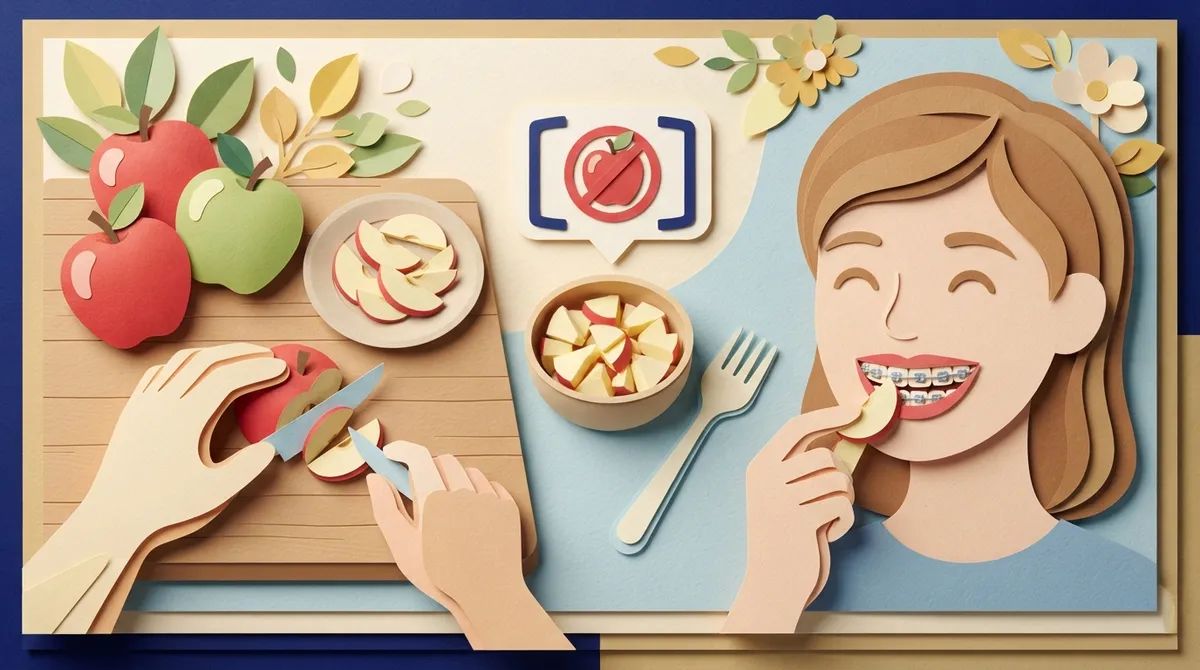
Can You Eat Apples With Braces?
Yes, in most cases you can. Most orthodontists, including national health guidance like the NHS, say people with fixed braces can eat apples if they prepare them the right way. The key is to avoid forceful biting.
Think of your braces as small, precise tools. Brackets are glued to your teeth, and thin wires run through them. They are strong enough for everyday chewing of soft foods. They are not built to handle the hard, sudden force of biting through a crunchy whole apple.
So the short answer is: apples are allowed, but whole-apple bites are not. Cut them first, and you’re in good shape. If your orthodontist gives you different advice for your own treatment, always follow that.
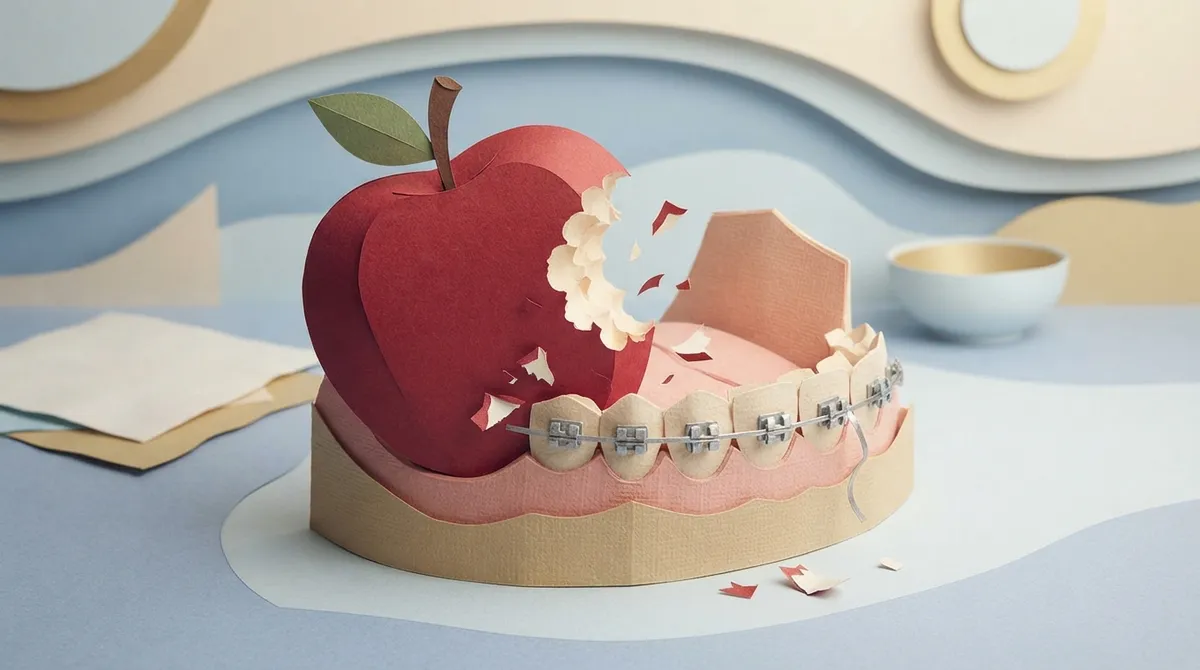
Why Biting Into a Whole Apple Is Risky
Picture the motion. You open wide, press your front teeth into a hard, round apple, and push until a chunk breaks off. All that force lands on just a few brackets at the front of your mouth.
That kind of pressure can cause real trouble:
- Loose brackets: The glue holding a bracket can give way under a hard bite.
- Bent wires: A wire can warp, which changes how it moves your teeth.
- Broken parts: A snapped wire or damaged bracket may poke your cheek or gums.
- Delays: Repairs can pause or slow your treatment.
None of this is a big deal if it happens once, and we can fix it. But it’s far better to avoid the problem. If you want to see what else can cause trouble, our guide on what foods to avoid with braces and why it matters covers the full list.
How to Eat Apples With Braces: Step by Step
Ready for the simple routine? Follow these steps and you can enjoy apples without worry.
- Wash the apple. Rinse it well under cool water. Dry it with a clean towel.
- Core the apple. Remove the core and seeds. Hard seeds can get stuck in your braces.
- Slice it thin. Cut the apple into thin slices or small bite-size cubes. Smaller is safer.
- Place pieces in your mouth. Put each piece toward the side of your mouth instead of biting with your front teeth.
- Chew gently with your back teeth. Your molars are stronger and have no brackets in the way of the biting surface.
- Take your time. Slow, calm chewing protects your wires.
- Rinse and brush afterward. Clean around every bracket so no bits are left behind.
That’s it. You’ll be surprised how quickly this becomes a habit. After a week or two, it feels totally normal.
The Best Way to Cut an Apple for Braces
How you cut the apple matters a lot. A large wedge still requires a big front-tooth bite. Smaller pieces are the safer choice.
Thin Slices
Thin slices are easy to bite through and easy to chew. Slice them about as thin as a coin. They bend a little, so they put less pressure on your brackets.
Small Cubes
Dicing an apple into bite-size cubes is the safest method. You can pop a cube in your mouth and chew it with your back teeth. No front-tooth biting needed.
Grated Apple
Grated apple is soft and easy. It’s great on yogurt, oatmeal, or a salad. It also works well when your teeth are tender.
Here’s a quick comparison so you can pick what works for you:
| Apple Style | Braces-Friendly? | Best For |
|---|---|---|
| Whole apple, bitten into | No | Not recommended |
| Large wedge | Risky | Avoid unless cut smaller |
| Thin slices | Yes | Everyday snacking |
| Small cubes | Yes | The safest option |
| Grated apple | Yes | Sore teeth, toppings |
| Cooked apple | Yes | After adjustments |
| Applesauce | Yes | First days with braces |
What to Do When Your Teeth Are Sore
Soreness is normal. Your teeth often feel tender for a few days after braces go on and after adjustments. Even thin slices can feel like too much during that time.
When your mouth is achy, switch to softer apple options:
- Applesauce: Smooth, cool, and needs almost no chewing.
- Cooked apples: Baked or stewed apples with a little cinnamon are soft and cozy.
- Grated apple: Easy to eat and gentle on tender teeth.
- Blended apple smoothies: Just skip the seeds and the straw-heavy habits if your orthodontist advises against them.
Cold foods can feel soothing too. If you’re curious why teeth ache after a visit, take a look at why teeth feel sore after braces are tightened. And for more ideas, our list of 15 soft foods for the first week of braces is a great place to start.
Tips for Different Ages and Lifestyles
Everyone’s routine looks a little different. Here’s how to make apples work for you.
For Parents of Kids and Teens
Kids love to grab an apple and bite right in. Do the slicing for them, at least at first. Pack pre-cut slices in a small container for lunch. A squeeze of lemon juice helps the slices stay fresh and not turn brown. If you need more lunchbox ideas, check out these braces-friendly school lunch ideas kids will love. You can also pick up more tips on braces-friendly snacks for teens.
For Teens and Young Adults
You’re busy, and quick snacks matter. Keep a small knife and a container in your bag, or ask for pre-sliced apples at the store. Cutting a few slices takes less than a minute and saves you from a broken bracket right before a big event.
For Adult Professionals
Between meetings and deadlines, it’s easy to grab a whole apple at your desk. Try prepping slices at the start of the week and keeping them in the fridge. A reusable container and a quick rinse in the office kitchen make it simple. If you wear braces at work, our tips on braces hygiene mistakes at work and easy fixes can help.
For Retreatment and Health-Conscious Patients
If you’re back in braces after a past treatment, you already know the drill. A few small changes protect your investment. And if you care a lot about oral health, apples are a smart choice when prepared well, because they’re full of fiber and nutrients.
Cleaning Up After Eating Apples
Apple bits love to hide. Tiny pieces can slip under wires and around brackets. Left behind, they can feed bacteria and lead to plaque. Over time, that can cause cavities or white spots on your enamel.
Apples also contain natural sugars and some acid. They’re healthy, but frequent snacking on any sugary or acidic food and drinks can raise the risk of tooth decay or enamel damage if cleaning is skipped. The fix is simple: clean up after.
Try this quick routine:
- Swish water around your mouth to loosen bits.
- Brush gently around each bracket, angling the bristles toward the gumline.
- Use floss threaders or an interdental brush to clean between teeth and under wires.
- Check a mirror for any leftover pieces.
Need a refresher on technique? Our guide on how to brush teeth with braces breaks it down. For the flossing part, see how to floss with braces. And if you want to avoid common slip-ups, read about brushing mistakes that wreck braces.
Other Fruits to Watch With Braces
Apples aren’t the only fruit that needs a little thought. Here’s a quick guide to common fruits:
| Fruit | Braces Tip |
|---|---|
| Bananas | Soft and safe. Great for sore days. |
| Berries | Safe, but seeds can get stuck. Brush well. |
| Pears | Cut into small, thin slices like apples. |
| Peaches | Soft ones are fine. Skip the pit. |
| Grapes | Fine for most people. Cut in half for little kids. |
| Dried fruit | Sticky and chewy. Best to avoid. |
| Corn on the cob | Cut the kernels off the cob first. |
The pattern is easy to remember. Hard and crunchy foods should be cut up. Sticky and chewy foods are usually better skipped. Everything else is mostly fine.
Braces Types and Apples: Does It Matter?
Mostly, the same rules apply to metal braces and ceramic (clear) braces. Both rely on brackets bonded to your teeth. Ceramic brackets can be a bit more delicate in some cases, so careful eating is just as important.
Clear aligners are different. You take them out to eat, so you can eat an apple normally. Just brush before putting your aligners back in so food doesn’t get trapped. At Brockway Orthodontics, we offer Spark™ Clear Aligners, metal braces, and ceramic braces, so we can help you choose what fits your life. If you’re still deciding, see our comparison of braces vs. clear aligners or learn more about metal vs. ceramic braces.
What If an Apple Breaks Your Bracket or Wire?
It happens, and it’s okay. Don’t panic. Here’s what to do:
- Stay calm. A loose bracket is rarely a true emergency.
- Don’t pull or force it. Leave it alone to avoid more damage.
- Use orthodontic wax. Cover any poking wire or sharp edge to protect your cheek.
- Save any loose parts. Keep them in a small bag to show your orthodontist.
- Call your orthodontist. Let the office know what happened so they can plan a repair.
Not sure how serious it is? Our post on broken bracket vs. poking wire helps you decide how fast to act. For more detail, see what to do about a broken braces bracket.
Simple Apple Ideas You’ll Actually Love
Sliced apples can get boring fast. Here are some tasty, braces-friendly ways to mix it up:
- Apple and peanut butter: Thin slices with a little smooth peanut butter for dipping.
- Apple oatmeal: Stir grated apple and cinnamon into warm oats.
- Baked apples: Core, fill with cinnamon, and bake until soft.
- Apple yogurt bowl: Mix small cubes into yogurt with a drizzle of honey.
- Warm applesauce: Easy comfort food any time.
These ideas keep fruit in your day without risking your hardware. For more fun ideas, see how to build braces-friendly breakfast ideas you’ll love or browse our friendly food guide on what you can eat with braces.
Keep Your Smile Plan on Track
Eating well with braces is one piece of the puzzle. Regular visits, good brushing, and following your orthodontist’s advice all work together. The American Dental Association has helpful general guidance on oral health and healthy eating habits, and the Florida Association of Orthodontists offers information on orthodontic care in our state.
If you’re not sure whether a certain food is safe, just ask. Our team in Clearwater is always happy to talk through your questions. You can also read what our patients say and see where to find us by visiting Brockway Orthodontics on Google. Dr. Brockway takes the time to listen, explain your options in plain language, and help every family feel comfortable from the very first visit.
Final Thoughts
You don’t have to say goodbye to apples. The secret to how to eat apples with braces is simple: core them, cut them small, chew gently with your back teeth, and clean up afterward. Choose softer options like applesauce or cooked apples when your teeth are tender. And if something breaks, call your orthodontist instead of waiting.
A few small habits protect your brackets and wires, keep your treatment moving, and help you finish with a healthy, confident smile. Got questions about braces, aligners, or what’s safe to eat? Book an appointment online with Brockway Orthodontics, or contact us and our friendly team will be glad to help.
FAQs
Q: Can you eat apples with braces?
A: Yes, you can, as long as you prepare them the right way! Core the apple and cut it into thin slices or small cubes, then chew gently with your back teeth. Just skip biting into a whole apple with your front teeth.
Q: How should you cut an apple if you have braces?
A: Core it first, then slice it thin or dice it into small bite-size cubes. Smaller pieces are safer than big wedges because they take far less force to chew. Grated apple is another easy option.
Q: Are cooked apples or applesauce safe with braces?
A: Absolutely! Cooked apples and applesauce are soft and gentle, which makes them perfect for the first few days after your braces are put on or adjusted. They give you the apple flavor without any hard chewing.
Q: What should I do if an apple breaks a bracket or wire?
A: Don’t worry, it happens. Leave the piece alone, cover any sharp or poking wire with orthodontic wax, and call your orthodontist so they can schedule a repair. Quick action helps keep your treatment on track.
Q: How do I clean apple pieces out of braces?
A: Swish with water first, then brush gently around each bracket and under the wires. Use floss threaders or an interdental brush to reach between teeth. A quick check in the mirror helps you spot anything left behind.
Our Service Area