Key Takeaways
-
Book your orthodontic consultation 6 to 12 months before college, so your orthodontist can estimate treatment time and tell you whether it can finish before you leave.
-
Never assume another orthodontist will take over your care: arrange any campus transfer in advance and get the terms, records process, and any fees in writing.
-
Clear aligners are generally worn at least 22 hours a day, so choose them only if you can keep trays in their case, wear them consistently, and clean your teeth after meals.
-
Plan appointments around winter break, spring break, and summer, since braces adjustments commonly happen every 4 to 12 weeks during treatment.
-
Budget for the full course of care, including retainers, replacement appliances, and transfer fees, and verify your own dental insurance benefits and whether coverage changes when you move.
-
Pack a small orthodontic kit with wax, a travel toothbrush, floss threaders, and your orthodontist's contact info, and never wrap aligners or retainers in a napkin.
Packing for college is exciting. You’re picking out bedding, buying a mini fridge, and figuring out who gets which side of the dorm room. But if you’re in the middle of orthodontic treatment, or thinking about starting it, there’s one more item that belongs on your checklist: your smile plan.
Braces and clear aligners don’t pause when you move to campus. They can take many months, and they need regular check-ins along the way. The good news is that a little planning now can keep your treatment smooth, your budget clear, and your stress low. This guide walks you through every step of planning orthodontic care before college, from the first consultation to retainer follow-up. Whether you’re a student, a parent, or a young adult heading off for a fresh start, you’ll find friendly, practical advice here. Let’s make sure your smile is ready for the big move!
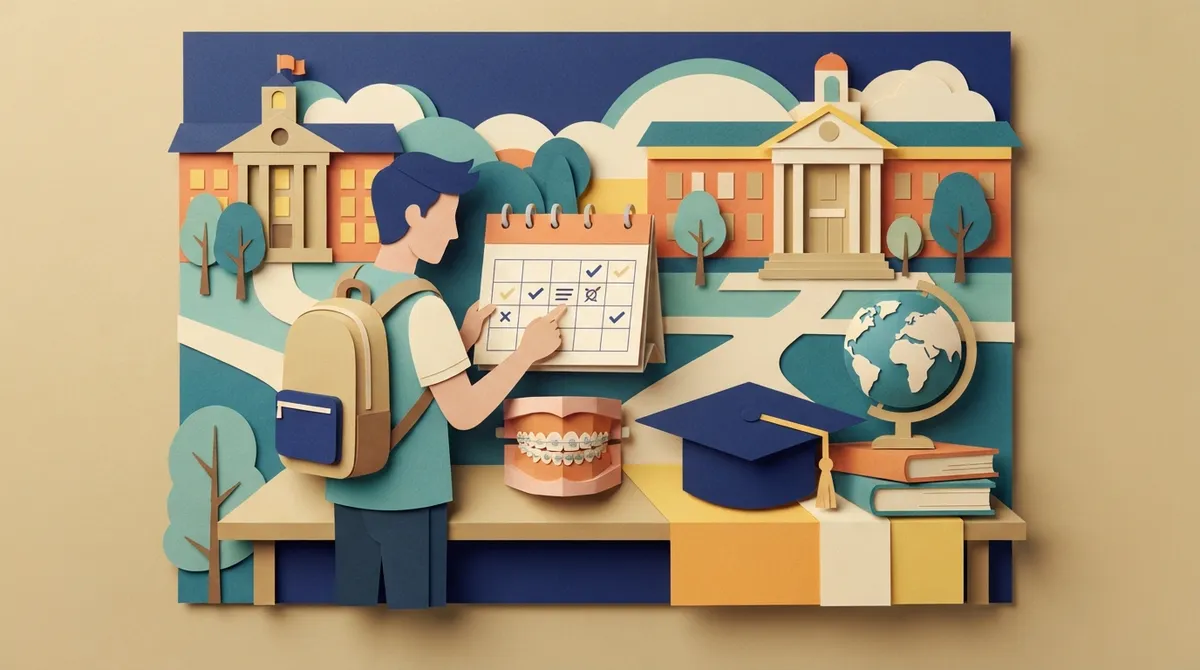
Why Planning Orthodontic Care Before College Matters
Orthodontic treatment is a team effort over time. Your orthodontist adjusts your braces or checks your aligner progress, and you handle daily care in between. When you move away, that rhythm can get bumpy if you haven’t planned ahead.
Here is what can go wrong without a plan:
- Missed adjustment appointments that slow down treatment
- No one to call when a bracket breaks during finals week
- Surprise costs from transfer fees or replacement appliances
- Confusion about insurance benefits and payment dates
- Skipped retainer follow-up after treatment ends
Planning ahead turns all of these into simple, solved problems. Think of it like packing a first aid kit: you hope you won’t need it, but you’ll be glad it’s there.

Step 1: Schedule an Orthodontic Consultation Early
The first step is a consultation, and earlier is better. Aim to book it well before your move-in date. That gives your orthodontist time to assess your bite, explain your options, and help you decide whether treatment can finish before you leave or needs a coordinated plan.
At a consultation, the orthodontist will typically look at your teeth, bite, and jaw alignment. They’ll explain the expected treatment time and what kind of appointment schedule you can expect. If you’re new to this, our guide to your first visit shows exactly what happens. You can also read about what to expect and why it matters at a consultation.
Questions to Ask at Your Consultation
- How long will my treatment likely take?
- Can it be completed before I leave for college?
- If not, how will my care continue while I’m away?
- How often will I need appointments, and who will see me?
- What happens if something breaks or I lose an aligner?
- What is the full cost, including retainers and any extra fees?
Write these down and bring them along. A good orthodontic team will welcome every question.
Step 2: Understand How Long Treatment Will Take
Timing is the heart of planning orthodontic care before college. According to the American Association of Orthodontists (AAO), most people wear braces for about 12 to 24 months. Your own timeline depends on your specific case and treatment plan, so your orthodontist is the best source for an estimate.
Once you have that estimate, count backward from your move-in date. If your treatment is likely to take 18 months and you leave in 10, you’ll need a plan for the remaining months. If treatment could finish before you go, you can focus on staying on track. Curious about timelines? Our guide to how long braces take to work breaks it down in detail.
Can You Finish Before You Leave?
Sometimes yes, sometimes no. Simple cases may wrap up in time, while more complex bite corrections often take longer. Starting earlier gives you the best shot at finishing before you leave, but there are no guarantees. What matters most is an honest conversation with your orthodontist so you can plan with confidence.
Step 3: Choose the Right Treatment for College Life
The best treatment is the one that fits your case, not just your schedule. Braces are fixed and can address a broad range of bite and alignment problems. Clear aligners are removable and may suit some cases, but they ask more of you each day and aren’t right for every situation.
Here is a quick comparison to help you think it through:
| Factor | Braces | Clear Aligners |
|---|---|---|
| How they work | Fixed to teeth, adjusted by your orthodontist | Removable trays, changed on a set schedule |
| Daily responsibility | Careful brushing and food choices | Wear about 22 hours a day, clean trays, keep them safe |
| Check-in rhythm | Adjustments commonly every 4 to 12 weeks | Regular check-ups; trays often changed every 1 to 3 weeks |
| Good for | A wide range of cases, including complex ones | Suitable cases with consistent wear |
| Campus life challenge | Broken brackets or wires may need prompt attention | Lost or damaged trays, plus wear-time discipline |
The AAO notes that clear aligners are generally worn at least 22 hours per day. That means you’ll want to think about dorm life, late-night study sessions, and busy dining halls. Can you keep your trays in their case, wear them consistently, and clean your teeth after meals? If so, aligners may be a great fit. Brockway Orthodontics offers Spark™ Clear Aligners, a more affordable alternative to Invisalign, along with metal and ceramic braces. For a deeper look, check out clear aligners vs. braces.
Step 4: Map Out Your Appointment Schedule
Appointments don’t stop when classes start. The AAO describes braces adjustments as commonly happening every 4 to 12 weeks, and it recommends regular orthodontic check-ups during aligner treatment. Your treating orthodontist sets your actual schedule, so ask for specifics.
Here’s how to build a realistic plan:
- Ask your orthodontist how often you’ll need visits for your case.
- Compare that schedule to your college calendar.
- Plan visits for winter break, spring break, and summer when you’re home.
- Ask whether any check-ins can be handled remotely, if that’s appropriate for your case.
- Put appointment dates in your phone before the semester starts.
If your treatment needs visits more often than breaks allow, you’ll want a plan for care near campus. That brings us to the next step.
Step 5: Plan for Care Near Campus
Many students wonder whether they can simply switch orthodontists while at school. It’s possible in some situations, but you should never assume another office will take over your treatment automatically. Arrangements need to be made before you leave.
What to Ask Your Orthodontist About Transferring Care
- Can your practice coordinate with an orthodontist near campus?
- How are your records and treatment instructions transferred?
- Are there any transfer or completion fees?
- How are urgent problems handled while you’re away?
- How does care work during school breaks?
Get these answers in writing when you can. A written agreement protects both you and your wallet. And if you are still choosing a provider, our tips on how to choose an orthodontist can help you compare options with confidence.
Step 6: Build a Campus Emergency Plan
Let’s be honest: broken brackets don’t schedule themselves for convenient times. A little prep means you won’t panic at midnight before an exam.
Pack a small orthodontic kit and keep it in your desk drawer:
- Orthodontic wax for poking wires or brackets
- A travel toothbrush and interdental brushes
- Floss or floss threaders
- Your aligner case (never wrap trays in a napkin!)
- Your orthodontist’s phone number and office hours
- Your spare aligners or retainer, if your orthodontist advises it
Not every problem is a true emergency. Our guide to emergency vs. routine orthodontics can help you tell the difference, and our tips on DIY wire fixes vs. an orthodontist visit explain what’s safe to do at home. When in doubt, call your orthodontist’s office and ask.
Step 7: Budget for the Full Course of Care
Money questions come up fast when you’re planning for college. The smart move is to budget for the full course of treatment, not just the first appliance.
Ask for a written estimate that covers:
- All adjustment or check-up visits
- Retainers after treatment
- Replacement appliances or lost aligners
- Emergency care
- Any transfer or completion fees
Then check your dental insurance. Benefits vary a lot by plan. For example, the 2025 MetLife Federal Dental Insurance Program lists orthodontia lifetime maximums of $1,500 under its Standard option and $3,500 for dependent children under its High option. Those are plan-specific examples, not a universal rule, so verify your own coverage.
Insurance Details to Confirm
- Does your plan include orthodontic benefits?
- What is the lifetime maximum?
- Is there an age limit for coverage?
- Are benefits prorated if treatment begins before coverage starts?
- Will coverage change if you move or switch plans for college?
That last question matters for students who may move onto a new plan. Learn more in our guides on financing and insurance and how to use dental insurance to help pay for braces. If you prefer monthly budgeting, ask about payment terms that fit your situation.
Step 8: Keep Up Routine Dental Care
Orthodontic treatment doesn’t replace regular dental visits. The AAO recommends seeing a general dentist at least every six months, or more often if advised, for cleanings and oral-health checks. That’s even more important with braces or aligners, since food and plaque can hide in tricky spots.
Before you leave, try to book a dental cleaning at home so you start the semester fresh. Then schedule your next one for winter break. It’s an easy way to catch small problems early.
Daily habits matter too. Brushing after meals, flossing, and rinsing can protect your teeth during treatment. If you need a refresher, see our smart steps to brush teeth with braces and our friendly food guide for braces. Dining hall pizza crusts and sticky snacks might need some strategy!
Step 9: Plan Ahead for Retainers
Finishing braces or aligners feels like crossing a finish line, but it’s really the start of the retention phase. After treatment, your orthodontist will prescribe a retainer plan, and wearing your retainers as directed helps keep your teeth in their new positions.
For college students, retainers deserve a plan of their own:
- Keep retainers in a sturdy case at all times
- Never wrap them in napkins or leave them on a lunch tray
- Keep them away from heat and hot water
- Know who to call if one breaks or goes missing
- Schedule retainer check-ups during breaks
You can read more about options on our retainers page and learn how to wear a retainer after braces. If something goes wrong, here’s what to do if your retainer breaks.
A Simple Pre-College Orthodontic Timeline
Not sure where to start? Use this timeline as a guide and adjust it to your move-in date.
| When | What to Do |
|---|---|
| 6 to 12 months before college | Book a consultation, learn your treatment options and estimated timeline |
| 4 to 6 months before | Confirm insurance details, get a written cost estimate, choose braces or aligners |
| 2 to 3 months before | Plan appointments around breaks, discuss care near campus and record transfers |
| 1 month before | Pack your orthodontic kit, get a dental cleaning, save office contact info |
| After you arrive | Keep up daily care, follow your appointment plan, and call early if problems pop up |
If you’re past the ideal window, don’t worry. Even a few weeks of planning can make a big difference. The key is starting the conversation now.
Tips for Different Kinds of Students
Teens Heading to Their First Year
If you’re a recent high school graduate, you may already be mid-treatment. Our adolescent treatment options are designed with busy teens in mind. Talk with your orthodontist about how to keep your plan flowing during the transition.
Parents Supporting the Move
Parents often handle the paperwork, and that’s a big help. Keep a folder with your estimate, insurance details, and office contact info. Remind your student about appointment dates, and consider saving the practice’s number in their phone. For more guidance, see orthodontics for kids: what every parent should know.
Young Adults and Returning Students
Starting college later in life, or heading back for a new degree? Many adults enjoy discreet options and flexible plans. Explore our adult treatment page to see what’s available.
Common Mistakes to Avoid
- Waiting until the last minute. Booking a consultation the week before move-in leaves little room to plan.
- Assuming another office will take over. Always arrange transfers in advance.
- Skipping the budget talk. Hidden costs can sneak up on you.
- Ignoring aligner wear time. Busy campus life can tempt you to leave trays out too long.
- Forgetting regular dental visits. Cleanings matter during treatment.
Want to dodge even more pitfalls? Check out our list of braces treatment mistakes you should never make.
Why Families Trust Brockway Orthodontics
At Brockway Orthodontics in Clearwater, Florida, we love helping families plan ahead. Dr. Brockway takes time to listen to your goals, explain your options in plain language, and build a plan that fits your life, including the big move to college. You can meet Dr. Brockway and see how we work. Our modern tools, like digital impressions and 3D imaging, keep visits comfortable and precise. And in certain cases, we can offer same-day treatments to help busy students and parents move forward faster.
Curious what other families think? Read what patients say about their experience, and see what our Brockway Orthodontics patients say on Google. You can also stay in touch through the American Dental Association for general oral health resources between visits.
Ready to Plan Your Smile Before Move-In Day?
College is a fresh start, and your smile can be part of it. With the right timing, a clear budget, a backup plan for appointments, and a smart emergency kit, your orthodontic care can travel with you. The steps are simple: consult early, understand your timeline, choose the right treatment, plan your visits, budget for the full course, and protect your results with retainers.
If you’re ready to get started, we’d love to help. Book your free consultation online and let’s build a plan that fits your semester. Have questions first? Just contact our friendly team, and we’ll be happy to chat.
FAQs
Q: When should I start orthodontic treatment before college?
A: The sooner the better! Book a consultation well before your move-in date so your orthodontist can assess your bite and explain how long treatment may take. Starting early gives you the best chance of finishing before you leave, or at least building a solid plan for care while you’re away.
Q: Can I continue orthodontic treatment with a different orthodontist near campus?
A: Sometimes, but it needs to be arranged ahead of time. Ask your orthodontist whether they can coordinate with a provider near your school, how records will be transferred, and whether any fees apply. Please don’t assume another office will simply take over your care without a prior agreement.
Q: How often will I need orthodontic appointments while at college?
A: It depends on your treatment. The AAO notes braces adjustments commonly happen every 4 to 12 weeks, and regular check-ups are recommended during aligner treatment. Your orthodontist will set your actual schedule, so ask for it early and plan visits around school breaks.
Q: Are clear aligners or braces easier to manage as a college student?
A: It really depends on you and your case! Aligners are removable but need to be worn about 22 hours a day and kept safe, while braces are fixed and need careful brushing and food choices. Your orthodontist can help you pick the option that fits both your teeth and your lifestyle.
Q: What should I do if a bracket breaks or I lose an aligner at college?
A: Don’t panic! Use orthodontic wax for poking wires, keep any pieces, and call your orthodontist’s office for guidance right away. For a lost aligner, ask whether you should move to your next tray or use a previous one, and never guess on your own.
Our Service Area