Key Takeaways
-
Retention checks are recommended within three months of getting your retainer, followed by two to four checks over the first one to two years, though your orthodontist's personalized plan should guide your schedule.
-
Many orthodontists recommend long-term, often lifelong, retainer wear because teeth can shift years after treatment; wear schedules often ease to a few nights a week, but never change them without consulting your orthodontist.
-
If your retainer feels tight or no longer fits, do not force it; call your orthodontist promptly and bring the retainer along so quick action can limit unwanted tooth movement.
-
Fixed retainers need special attention: they can trap plaque and calculus, so daily cleaning with floss threaders and regular gum monitoring are essential to long-term oral health.
-
Long-term care is shared among you, your orthodontist, and your general dentist; ask your orthodontist to share your retention plan with your dentist so everyone stays on the same page.
You did it! The braces are off, or your last aligner tray is in the recycling bin, and your smile looks amazing. So what happens next? Many patients are surprised to learn that the journey does not end on debonding day. In many ways, the long-term part is just beginning.
That is why long-term orthodontic follow-up questions are so worth asking. How often should you come back? How long do you really need a retainer? What if it feels tight one day? Whether you are a parent guiding a teen, a busy professional, or someone who has had treatment before and wants to protect your results this time, this guide has you covered.
Here is the friendly, plain-English version of how long-term care works, what to expect at checkups, and which questions to bring to your next visit.

Why Long-Term Orthodontic Follow-Up Matters
Think of braces or aligners as the “moving” phase and retention as the “keeping” phase. Teeth have a natural habit of drifting, even years after treatment. Follow-up care is how we catch small changes early, before they turn into big ones.
Long-term follow-up mainly focuses on three things:
- Retention: keeping teeth in their corrected positions.
- Early detection: spotting retainer problems or unwanted tooth movement quickly.
- Oral health: making sure gums and teeth stay healthy around your retainer.
If you had treatment in the past and your teeth have since shifted, you are far from alone. Many adults come to us for a second round. Our team at Brockway Orthodontics loves helping those patients get a fresh start and a retention plan that actually fits their life.
How Often Should You Have Follow-Up Appointments?
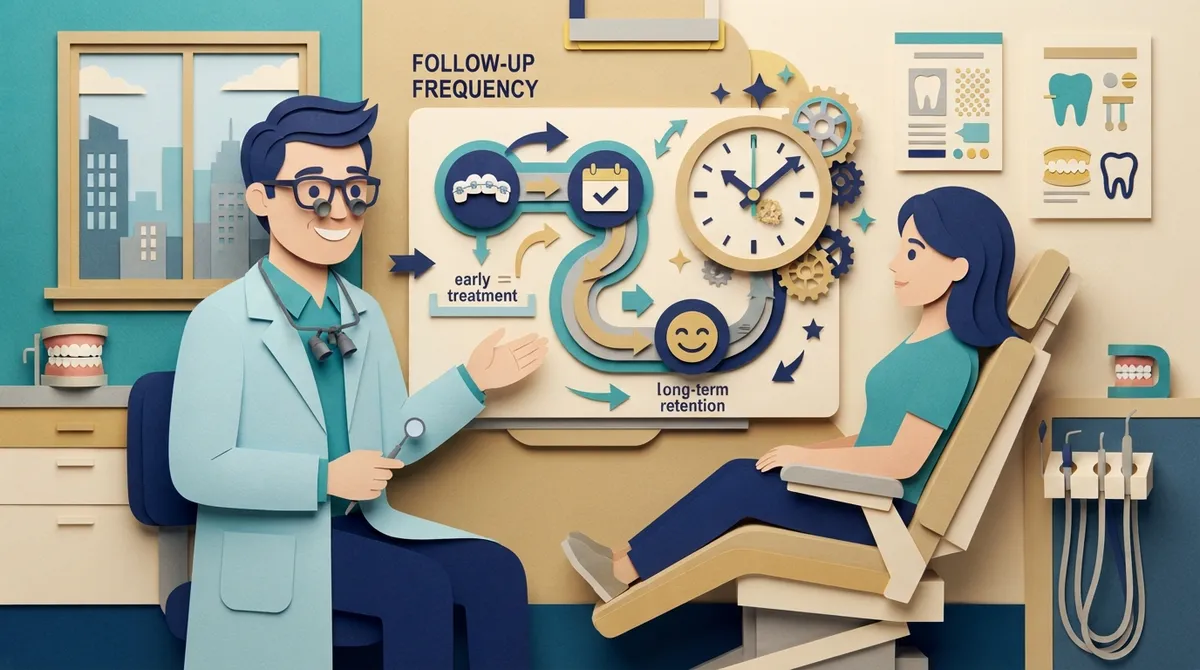
This is one of the most common long-term orthodontic follow-up questions, and the honest answer is: it depends on you. A 2019 clinical practice guideline offers a helpful roadmap. It recommends the first retention check preferably within three months of getting your retainer. After that, it suggests two to four checks during the first one to two years, depending on when ongoing care moves to your general dentist.
Here is a simple look at what that timeline can look like:
| Timeframe | What Usually Happens | Why It Matters |
|---|---|---|
| Within 3 months | First retention check | Confirms retainer fit and early tooth stability |
| Months 3 to 24 | Two to four follow-up checks | Monitors tooth position, bite, and retainer condition |
| After year 1 to 2 | Care may be shared with your general dentist | Ongoing checks during routine dental visits |
| Long term | Periodic checks as needed | Catches shifting or retainer wear early |
Actual schedules vary by provider and patient. Some orthodontists monitor patients for about 12 to 24 months, while others stay involved longer. Always follow the plan your own orthodontist gives you.
What Happens at a Retainer Check?
Good news: these visits are usually quick and comfortable. No tightening, no surprises. Here is what we typically look at:
- Tooth position and bite: Are your teeth staying where we left them, and does your bite still feel right?
- Retainer fit: Does your removable retainer snap on easily without gaps or pressure?
- Retainer condition: Any cracks, warping, or heavy wear?
- Fixed retainer check: Is the bonded wire still secure, or has it loosened or bent?
- Oral hygiene: Is there plaque or tartar building up, especially around a fixed retainer?
That last one matters more than most people think. Fixed retainers can collect plaque and calculus, so careful cleaning and gum monitoring are part of keeping your smile healthy for the long haul.
How Long Do You Need to Wear a Retainer?
Here is the straight answer: there is no single schedule that works for every person. Research has not found one perfect retainer type or wear plan. A 2023 Cochrane review looked at 47 studies and 4,377 children and adults. It found the evidence was low or very low certainty, and most studies followed patients for less than a year. Only three studies reported results beyond two years.
What does that mean for you? Retention should be personalized. Your orthodontist considers:
- Where your teeth started and how they were moved
- Your personal risk of relapse
- The type of retainer you have
- Your daily routine and habits
Many orthodontists advise long-term, often lifelong, retainer use because teeth can shift over time. The wear schedule often changes, for example from full time to nights only, but please do not stop wearing your retainer based on a general timeline you read online. Ask your own orthodontist what is right for you. You can also read more about retainer options at Brockway Orthodontics and our guide on how to wear a retainer after braces.
Do You Really Need a Retainer for Life?
It sounds like a lot, but here is a fun way to look at it: wearing a retainer a few nights a week is a small habit that protects a big investment. Teeth can move at any age, so many patients choose to keep a simple nighttime routine going. Your orthodontist will tell you when and how to ease the schedule.
Fixed vs. Removable Retainers: Follow-Up Differences
Your retainer type shapes what follow-up looks like. Here is a quick comparison:
| Feature | Removable Retainer | Fixed (Bonded) Retainer |
|---|---|---|
| How it works | You take it in and out | Thin wire bonded behind teeth |
| Main risk | Lost, cracked, or not worn enough | Wire loosens, bends, or traps plaque |
| Cleaning | Clean the retainer daily | Floss threaders or special floss needed |
| Follow-up focus | Fit, wear, and cracks | Bond integrity and gum health |
Neither option is automatically “best.” Many patients use a combination. If you are curious about the differences, our post on fixed vs. removable retainers breaks it down nicely.
What If Your Retainer Feels Tight or Does Not Fit?
First, take a breath. This happens, and it is usually fixable. A retainer that feels unusually tight can be a sign that your teeth have started to shift a bit. Here is what to do:
- Do not force it. Pushing a retainer that does not fit can damage it or stress your teeth.
- Stop and call us. Prompt advice can help limit unwanted movement.
- Bring the retainer along. Even if it is cracked, it helps us understand what happened.
- Follow our guidance. We may adjust it, replace it, or recommend a short treatment to guide teeth back.
The same goes for a lost or cracked removable retainer, or a fixed retainer that feels loose or broken. Quick action is your friend. Our guide on what to do if your retainer breaks walks you through it, and you can learn more about emergency versus routine orthodontic care if you are unsure how urgent your situation is.
Can Teeth Shift Years After Treatment?
Yes, they can. Teeth are held in place by bone, gums, and ligaments that stay flexible throughout life. Everyday forces, like chewing, tongue pressure, and natural aging, can nudge teeth over time. Not wearing a retainer as directed makes shifting more likely.
Common signs that your teeth may be moving include:
- Your retainer feels tight or no longer fits
- Spaces are reopening between teeth
- Lower front teeth look more crowded
- Your bite feels different
If you notice any of these, a quick checkup can tell you whether a tune-up is needed. For adults considering retreatment, we can talk through options like Spark™ Clear Aligners or braces, depending on your goals.
Who Handles Long-Term Care: Orthodontist or Dentist?
Long-term care is a team effort. It is commonly shared among you, your orthodontist, and your general dentist. Your orthodontist often handles the early retention period. After that, routine dental visits can support ongoing checks, and your dentist can refer you back if something looks off.
A clinical review notes that orthodontists commonly monitor patients for about one year after active treatment, while longer-term monitoring may continue in general dental practice. Arrangements vary by provider, so ask how it works in your case.
A great tip: ask your orthodontist to share your retention plan with your dentist. Good communication means everyone is on the same page. For help understanding the roles, see orthodontist vs. dentist: which one do you actually need.
Long-Term Follow-Up for Different Patients
Parents of Children and Teens
Kids and teens are still growing, and they are also famous for losing retainers in lunch trays and gym bags! Set up a simple routine: a dedicated case, a nightly habit, and a reminder on the calendar. If a retainer goes missing, call right away. For more family tips, check out our resource on adolescent treatment.
Teens and Young Adults
Big events like graduation and prom are easy to look forward to, but the real win is keeping that smile for the long run. Tie your retainer to something you already do every night, like charging your phone.
Adult Professionals
Busy schedule? We get it. Ask about wear schedules that fit your routine and keep a spare case in your bag or desk. Virtual and quick checkups can make follow-up easier to fit around work.
Patients Returning After Relapse
If your teeth shifted after earlier treatment, please do not feel discouraged. It is more common than you would think, and it is not a failure. A fresh evaluation can map out a personalized plan and a stronger retention strategy this time around.
Health-Conscious Patients
If you have gum concerns or complex dental needs, tell us up front. Follow-up can include extra attention to hygiene and periodontal monitoring, especially with a fixed retainer.
Smart Questions to Ask at Your Next Visit
Not sure what to ask? Bring this list along:
- What retainer type is best for my teeth and lifestyle?
- How many hours a day should I wear it now, and will that change?
- How often should I come in for checks?
- When can my general dentist take over routine monitoring?
- How should I clean my retainer, fixed or removable?
- What should I do if it breaks, gets lost, or feels tight?
- What does a replacement cost, and how fast can I get one?
There are no silly questions here. Good follow-up starts with good conversation.
Protect Your Smile for the Long Haul
Long-term orthodontic follow-up is really about one thing: keeping the smile you worked so hard to earn. Wear your retainer as directed, keep your checkups, clean everything well, and call us the moment something feels off. A few small habits go a long way.
Dr. Brockway and our team love seeing our patients smile years after treatment ends. If you are in the Clearwater area and have questions about your retainer, your results, or whether your teeth have shifted, we would be thrilled to help. Book your appointment online or contact us to chat with our friendly team. You can also see what neighbors are saying and visit our Brockway Orthodontics location on Google. For general oral health guidance, the American Dental Association is another trusted resource, and you can find more about orthodontic professionals through the Florida Association of Orthodontists.
Here is to a smile that lasts!
FAQs
Q: How often should I have orthodontic follow-up appointments after braces or aligners?
A: A 2019 guideline suggests a first retention check within three months, then two to four checks over the first one to two years. After that, care may be shared with your general dentist. Your orthodontist will tailor the schedule to you, so follow their plan.
Q: Do I need to wear my retainer for life?
A: Many orthodontists recommend long-term, often lifelong, retainer wear because teeth can shift over time. The good news is that wear often eases to a few nights a week. Please check with your own orthodontist before changing your schedule.
Q: What should I do if my retainer feels tight or no longer fits?
A: Do not force it onto your teeth. Give your orthodontist or dentist a call right away, since quick advice can help limit unwanted movement. Bring the retainer along so we can check the fit.
Q: Can my general dentist monitor my retainer after orthodontic treatment?
A: Yes, long-term care is often shared between you, your orthodontist, and your general dentist. Routine dental visits can support ongoing checks and referrals if a concern comes up. It helps to ask your orthodontist to share your retention plan with your dentist.
Q: Can teeth shift years after orthodontic treatment?
A: They sure can. Teeth stay a little flexible throughout life, so they can drift even years later, especially if a retainer is not worn as directed. Regular checkups help catch small changes early.
Our Service Area