Key Takeaways
-
Most fixed-braces cases take 12-24 months, but timelines vary significantly based on bite severity, number of teeth moving, and whether extractions or jaw correction are needed.
-
Patient compliance is critical: missing appointments, not wearing elastics as directed, and poor oral hygiene are the most common avoidable reasons treatment runs longer than planned.
-
Active treatment timeline doesn't include the retention phase; retainers are essential long-term to prevent teeth from shifting back after braces are removed.
-
Your body's biological response to tooth movement varies naturally between individuals, and younger patients may benefit from guided growth that can shorten overall treatment time.
-
Regular appointments every 4-10 weeks, proper bracket care, and following dietary restrictions help keep treatment on schedule and prevent costly delays from broken appliances.
-
Treatment completion depends on achieving proper bite alignment and meeting all orthodontic goals, not just achieving straight-looking teeth, which may extend timelines beyond initial estimates.
If you’ve ever asked, “How long am I going to be in braces?” you are in very good company. It’s the first question most patients and parents ask us, and honestly, it’s a fair one! Nobody wants to guess when the finish line is coming. The good news is that your braces duration and timeline isn’t a mystery. It follows a pattern, and once you understand what drives it, the whole journey feels much less overwhelming.
Most fixed-braces cases take roughly 12 to 24 months. Some simpler cases wrap up sooner, and more complex cases can stretch to three years. Where you land depends on your bite, your teeth, your body’s response, and how closely you follow the plan. Think of it like a road trip: the route matters, but so do the traffic, the pit stops, and how well you follow the map.
In this friendly guide, we’ll walk through 12 things that shape your timeline, what a typical visit schedule looks like, and what happens after your braces come off. Let’s get your smile questions answered!
The Big Picture: Braces Duration and Timeline at a Glance
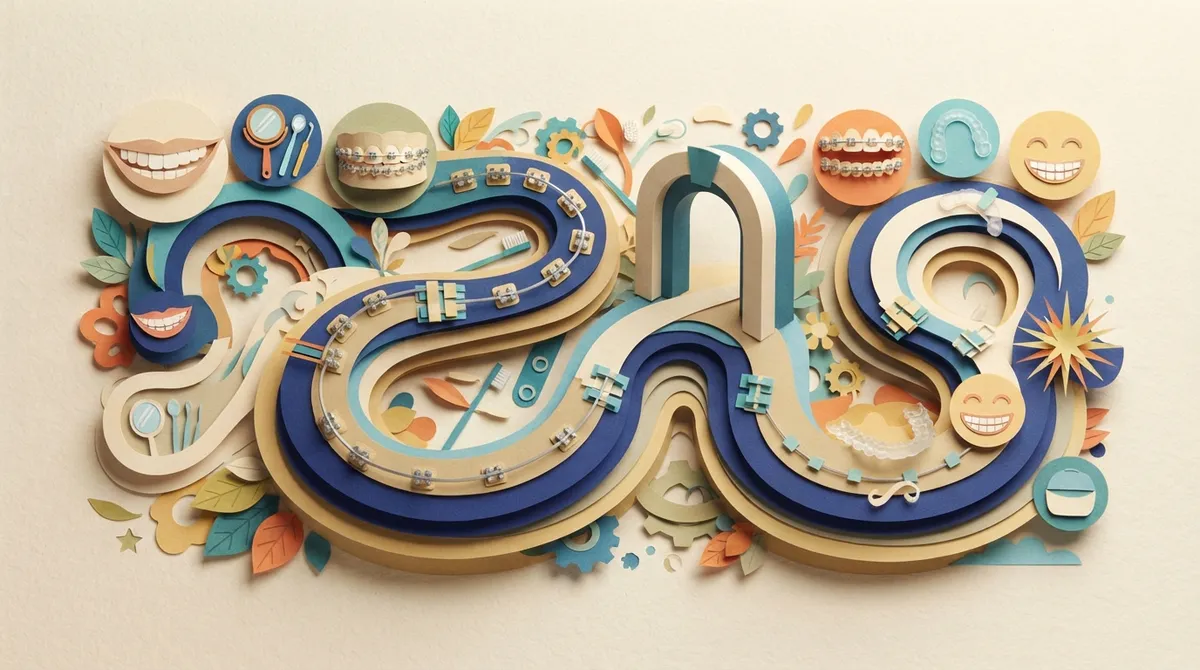
Before we dive into the details, here’s a quick snapshot. Braces treatment has two distinct phases. The first is active treatment, when your braces are on and moving your teeth. The second is retention, when a retainer helps keep your new smile in place. The timelines you usually hear about, like “two years,” refer only to the active phase.
| Source | Typical Active Treatment Time |
|---|---|
| American Association of Orthodontists (AAO) | About 12 to 24 months for many fixed-braces cases |
| NHS guidance | 12 months to 2.5 years |
| Cleveland Clinic | Average of about 2 years (some under 1 year, some up to 3 years) |
These numbers are helpful guideposts, but they’re not promises. Only an in-person exam can give you a timeline built around your own teeth. If you’re curious what that first conversation looks like, take a peek at Your First Visit.
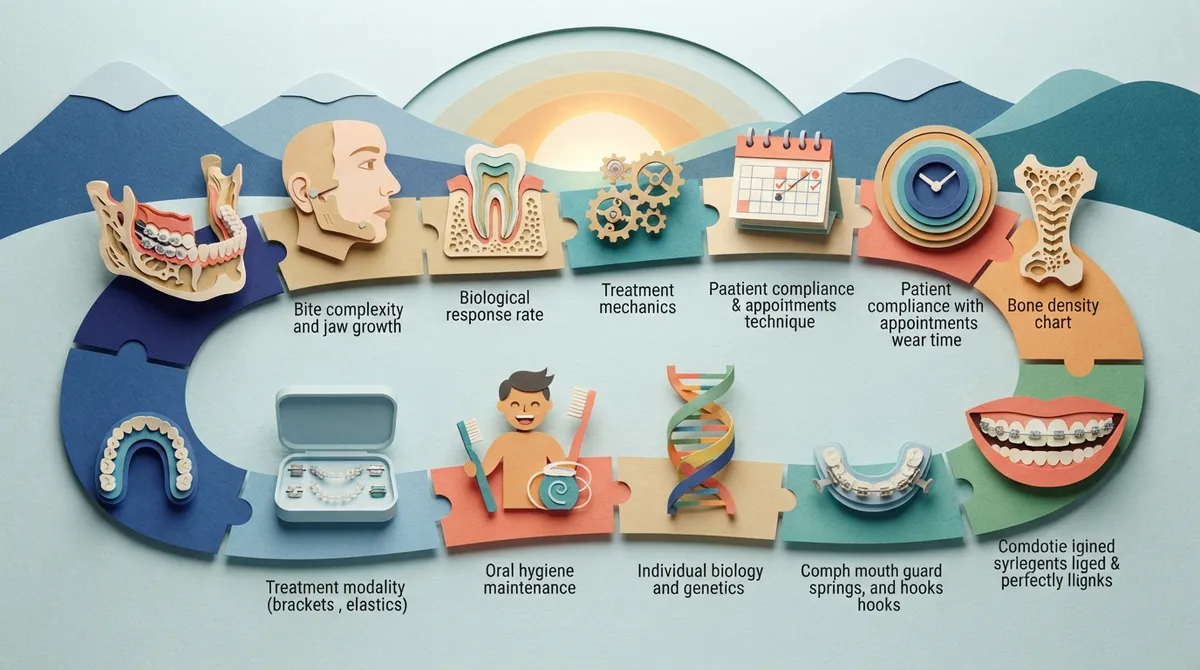
12 Factors That Shape Your Braces Timeline
1. The Type of Bite or Alignment Problem
Not all smiles need the same amount of work. Mild crowding or small gaps can often be corrected faster. Bite issues, such as a deep overbite, underbite, or crossbite, usually take longer because we’re correcting how your upper and lower teeth fit together, not just how they look. If you’re curious about one common example, read How Do Braces Fix a Deep Overbite?
2. How Severe the Problem Is
Two people can both have crowded teeth, but one may need a tiny shift while the other needs a major rearrangement. The farther your teeth need to travel, the more time it takes. It’s a lot like moving across town versus moving across the country.
3. How Many Teeth Need to Move
If only a few front teeth need attention, treatment can be shorter. If your whole arch needs reshaping, expect more time. More teeth moving means more steps in your plan.
4. Whether Jaw Correction or Extractions Are Involved
Some cases need extra help, like jaw guidance or creating space by removing teeth. These added steps can lengthen your timeline, but they’re sometimes the best way to get a healthy, stable result. Your orthodontist will explain why if it applies to you.
5. Your Age and Growth
Kids and teens are still growing, which can be a real advantage. Growth can be guided to help correct jaw relationships. That’s one reason some families explore Early Treatment or Adolescent Treatment. Adults can absolutely get beautiful results too, though bone is a bit more settled, so the pace can differ. Our Adult Treatment page explains what to expect.
6. Your Body’s Biology
Here’s something fun: everyone’s body responds a little differently. Teeth move as the bone around them gradually remodels. Some people respond quickly, others more slowly. It’s not something you can control, and it’s nothing to stress about. It’s just part of being human.
7. The Type of Appliance You Choose
Traditional metal braces, ceramic braces, and clear aligners each have strengths. The right option depends on your goals and your case. If you’re weighing your choices, our guide on All About Braces is a great place to start, and you can explore Spark™ Clear Aligners if you prefer a more discreet approach.
8. Showing Up to Your Appointments
Regular visits keep your treatment moving. Most patients are seen every 4 to 10 weeks, though the interval varies by treatment stage and appliance. NHS guidance often mentions visits every 6 to 8 weeks, while the AAO notes a broader range of 4 to 12 weeks. Missing visits can slow your progress, so try to keep them on the calendar.
9. Taking Care of Your Braces
Broken brackets and bent wires can delay things, since your teeth can’t move properly while your appliance needs repair. Following food guidelines helps a lot. Check out Foods To Avoid With Braces for easy tips. And if something does break, you can learn the difference between emergency and routine orthodontics.
10. Oral Hygiene and Gum Health
Healthy gums and clean teeth are the foundation of good tooth movement. Poor hygiene can cause inflammation or other problems that interrupt treatment. A little extra brushing and flossing now saves you time later!
11. Wearing Your Elastics and Following Instructions
If your orthodontist gives you rubber bands or other special instructions, they’re part of the plan for a reason. Wearing them as directed keeps things on schedule. Skipping them is one of the most common reasons treatment runs long.
12. Your Treatment Goals Being Fully Met
Here’s a surprise: braces don’t come off just because your teeth look straight. Your orthodontist also checks your bite and confirms your goals have been achieved before ending active treatment. Timelines are estimates, and they may be adjusted as your teeth respond.
What Does a Typical Braces Journey Look Like?
While every smile is unique, most patients move through the same general stages. Here’s a simple walkthrough.
- Consultation and planning: We examine your teeth, talk about your goals, and build your personalized plan.
- Getting your braces: Your appliances are placed, and you learn how to care for them.
- Adjustment visits: You return every several weeks so we can monitor progress and make small changes.
- Fine-tuning: Near the end, we perfect the details of your bite and alignment.
- Braces removal: Your braces come off, and you celebrate!
- Retention: You begin wearing a retainer to protect your results.
Most tooth movement happens quietly between visits, so don’t be discouraged if you can’t see dramatic changes every single month. Progress adds up!
How Long Do Braces Take for Different Ages?
Everyone loves to ask whether kids, teens, or adults finish faster. The honest answer is that it depends on the case more than the age. Still, here are some general patterns.
| Age Group | What to Know |
|---|---|
| Children | Early evaluation can guide growth and may make later treatment simpler |
| Teens | Growth and active bone remodeling often support steady progress |
| Adults | Excellent results are possible, though timelines can vary based on bone and gum health |
If you’re a parent wondering about the right time to start, our guide on Orthodontics for Kids is full of helpful insight. And if you’re an adult who’s been putting this off, you might enjoy 8 Truths About Whether You’re Too Old for Braces.
Common Things That Can Delay Your Braces
We want you to get to the finish line smoothly, so here are the most common speed bumps. The good news is that most are totally avoidable!
- Missed or rescheduled appointments
- Broken or loose brackets and wires
- Poor brushing, flossing, or gum health
- Not wearing elastics as directed
- Eating foods your orthodontist asked you to avoid
- Skipping instructions about appliance care
If you want a closer look at what not to do, Braces Treatment Mistakes You Should Never Make is a handy read. You can also see how some people try to rush things in 9 Speed Traps That Sabotage Fast Teeth Straightening, because faster isn’t always better.
The Retention Phase: Your Timeline Doesn’t End at Braces Off
This is the part many people forget, so let’s say it clearly: retainers are part of your treatment. After your braces come off, your teeth are in new positions, but the surrounding bone and tissues need time to settle. Without a retainer, teeth can slowly shift back.
Retainers can be removable or fixed (bonded behind your teeth). Your orthodontist will give you a specific wearing schedule, and long-term or ongoing wear is commonly recommended to keep your alignment steady. It might feel like a hassle at first, but think of it as the insurance policy on your investment.
You can learn more about your options on our Retainers page, or read How to Wear a Retainer After Braces and Keep Your Smile for practical tips. If you ever need to start again because of shifting, don’t panic. Many adults do, and it’s completely fixable.
Braces vs. Clear Aligners: How Do Timelines Compare?
Many families ask whether clear aligners are faster. The answer depends on the complexity of your case and how consistently aligners are worn. Both traditional braces and aligners can deliver wonderful results. Choosing the right one comes down to your bite, your lifestyle, and your comfort.
At Brockway Orthodontics, we offer metal braces, ceramic (clear) braces, and Spark™ Clear Aligners, which is a more affordable alternative to Invisalign. To compare approaches side by side, you may like Clear Aligners vs. Braces: Which One Is Right for You?
Tips to Help You Finish on Time (or Even Sooner)
You can’t control your biology, but you can absolutely help your treatment stay on track. Try these friendly habits:
- Keep every scheduled appointment
- Brush after meals and floss daily
- Wear elastics exactly as instructed
- Avoid sticky, hard, and crunchy foods
- Call us promptly if a wire pokes or a bracket comes loose
- Wear your retainer faithfully once your braces are off
Small daily choices make a big difference over a year or two. You’ve got this!
Why Families Trust Brockway Orthodontics
At Brockway Orthodontics, we believe a great smile starts with great communication. Dr. Brockway takes time to listen to your goals and explain your timeline in plain, friendly language, so you always know what’s coming next. With modern tools like digital impressions and 3D imaging, planning is precise and comfortable, and in certain cases same-day treatment is possible.
We welcome patients of all ages, from kids and teens to adults, and we love helping Clearwater families feel confident about their smiles. Curious how other families feel about us? You can visit us on Google and read what Brockway Orthodontics patients are saying. If budget is on your mind, our page on Financing and Insurance can help you plan, and the Florida Association of Orthodontists is also a good resource for learning more about specialized orthodontic care.
Ready to Find Out Your Own Timeline?
Now you know that your braces timeline is shaped by your bite, your biology, your habits, and your treatment plan, with most fixed-braces cases landing between 12 and 24 months. The only way to get a number tailored to you is to have your smile evaluated. A quick exam can turn “I wonder how long this will take” into a clear, confident plan.
Whether you’re a parent planning for your child, a teen eager for a new look, or an adult ready to finally fix that one tooth, we’d love to meet you. Book your appointment online today, or contact us with any questions. Your best smile is closer than you think!
FAQs
Q: How long do braces usually take to straighten teeth?
A: Many fixed-braces cases take about 12 to 24 months, though some finish sooner and complex cases can take up to three years. Your orthodontist can give you a personalized estimate after an exam, and it may be adjusted as your teeth respond.
Q: How often will I need orthodontist appointments with braces?
A: Most patients visit every 4 to 10 weeks, though the schedule depends on your appliance and treatment stage. These visits let us check your progress and make small adjustments, so try not to skip them!
Q: What can delay my braces treatment?
A: Missed appointments, broken brackets, poor oral hygiene, and not following instructions like wearing elastics are the most common culprits. The good news is that most of these are easy to avoid with a little planning.
Q: Does the braces timeline include wearing a retainer?
A: No, the active-treatment timeline doesn’t include retention. After your braces come off, you’ll wear a retainer to keep your teeth in place, and long-term wear is commonly recommended to protect your results.
Q: Do adults take longer to get results from braces than kids?
A: Not always! Timelines depend more on the complexity of your case than your age. Teens often benefit from growth, while adults can achieve fantastic results too, though pace can vary a bit.
Our Service Area