Key Takeaways
-
Ask why treatment is recommended for your specific teeth or bite, and what could happen if you delay or skip it; hearing this from your orthodontist helps you make an informed choice.
-
Ask about your options (metal braces, ceramic braces, or clear aligners) and why one is recommended, since the best fit depends on your bite, goals, and ability to follow care instructions.
-
Ask for an estimated treatment timeline and what could extend it, such as missed appointments, broken brackets, or skipped aligner wear.
-
Ask which foods to avoid, how to brush and floss around braces or aligners, and what you can drink while wearing aligners; many orthodontists advise removing them for anything except plain water.
-
Ask what to do if something breaks or an aligner is lost, and whether a mouthguard that fits over braces is needed for sports.
-
Ask how long and how often to wear your retainer after treatment, since teeth naturally drift back and retention is a key part of keeping results.
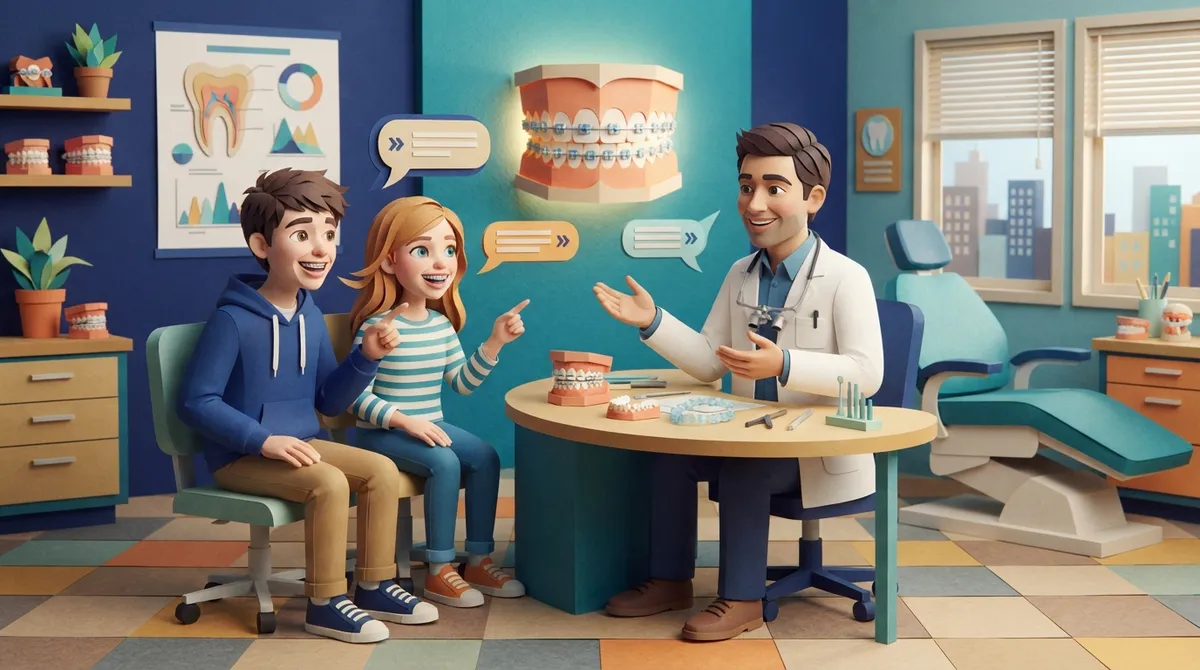
Walking into an orthodontist’s office can feel a little nerve-racking. There are new faces, new gadgets, and a lot of big words flying around. Here’s a secret: the best orthodontist visits happen when the teen is the one asking the questions. Braces or aligners will be part of your life for many months, so you deserve to understand every step.
Yet many teens sit quietly while parents do all the talking. That’s a missed chance! When you speak up, you learn what to expect, how to take care of your smile, and what your job is in the process. Knowing the questions teens should ask their orthodontist can turn a nervous visit into a confident one.
This friendly guide walks you through twelve smart questions, why each one matters, and what a helpful answer sounds like. Bring this list to your next appointment, or even snap a photo of it on your phone. Your future smile will thank you!
Why Teens Should Do the Talking
Orthodontic treatment works best when you are a real partner in it. Your orthodontist plans the treatment, but you do the daily work. You brush, you floss, you wear your aligners, and you wear your retainer. That makes you the star player on your own smile team.
Asking questions also helps you feel less worried. When you know what’s coming, soreness and surprises feel a lot more manageable. Plus, your orthodontist can tailor advice to your life, whether you play soccer, march in the band, or just love snacking after school.
Here’s what asking good questions can do for you:
- Help you understand why treatment is recommended
- Set clear expectations for timing, comfort, and care
- Show your orthodontist what matters most to you
- Build your confidence from day one
Not sure how the first appointment works? Take a peek at what happens during your first visit so you know what to expect before you even sit in the chair.

Questions About Your Diagnosis and Treatment Plan
Start with the basics. These questions help you understand the “why” behind your treatment.
1. Why do I need orthodontic treatment?
This is the big one. Your orthodontist should explain which tooth or bite concerns they see, such as crowding, gaps, an overbite, an underbite, or a crossbite. A good answer is specific to you, not a general speech.
You can also ask what might happen if treatment is delayed or skipped. Some concerns stay the same, while others can get more complex over time. Hearing this straight from the expert helps you make a smart choice.
2. What problem will my treatment fix?
Ask your orthodontist to show you on your own teeth, a photo, or a digital scan. Seeing the plan makes it real. Many modern offices use 3D imaging so you can look at your teeth from every angle.
3. What are my treatment options, and why do you recommend this one?
There is no single best choice for every teen. Options often include metal braces, ceramic (clear) braces, and clear aligners. The right pick depends on your bite, how much your teeth need to move, your goals, and how well you can follow care instructions.
Here’s a quick snapshot to help you picture the choices:
| Option | How It Looks | Removable? | Good to Know |
|---|---|---|---|
| Metal braces | Visible brackets and wires, with fun color choices | No | Works for a wide range of bite and tooth concerns |
| Ceramic (clear) braces | Tooth-colored brackets that blend in | No | A more discreet look with fixed wear |
| Clear aligners | Nearly invisible trays | Yes | Needs steady daily wear to work well |
Want to explore each choice in more detail? Check out our guide on braces versus clear aligners for younger patients, or learn more about how braces work and our Spark™ Clear Aligners.
Questions About Timing and Appointments
Nobody likes a mystery timeline. These questions help you plan your school, sports, and social calendar.
4. How long will my treatment take?
Ask for an estimated timeline, and then ask what could change it. Things like missed appointments, broken brackets, or not wearing aligners as directed can add time. Every smile is different, so your orthodontist should give you an estimate based on your own plan.
5. How often will I need appointments?
According to the American Association of Orthodontists (AAO), check-ins are commonly scheduled every six to ten weeks, though the schedule varies by treatment and by patient. Ask how long each visit usually takes, so you can plan around tests, practices, and school events.
Curious about the typical timeline? Our friendly breakdown of how long braces take to work can help you picture the journey.
Questions About Comfort and Daily Life
This is where teens usually have the most questions, and that’s totally normal. Let’s cover the stuff that affects your everyday routine.
6. Will it hurt, and how can I feel better?
Mild pressure or tenderness for a few days after braces are placed or adjusted is normal. Ask which comfort steps are safe for you, such as soft foods or orthodontic wax for rubbing spots. Your orthodontist can also tell you when soreness is expected and when it’s worth a phone call.
For a deeper look, read what patients can expect when asking, do braces hurt.
7. What foods and habits should I avoid?
Great news: you won’t be stuck eating mashed potatoes forever! But some foods, like hard candy, sticky treats, and chewy snacks, can break brackets or bend wires. Ask for a simple list of foods to skip and foods to enjoy. We also share a handy list of foods to avoid with braces to make snack time easier.
If you wear aligners, ask what you can drink with them in. Many orthodontists suggest removing aligners for anything other than plain water.
8. How do I brush and floss with braces or aligners?
Good brushing and flossing matter even more with orthodontic appliances, because food and plaque love to hide around brackets. Ask your orthodontist to show you the right technique, and ask how the office will keep an eye on your gum and tooth health during treatment.
You can also review our tips on brushing your teeth with braces to build a strong daily routine.
9. Can I still play sports or my instrument?
Yes, in most cases! But ask about a proper mouthguard if you play sports, since regular guards may not fit over braces well. If you play a wind or brass instrument, ask how braces might change your playing and how long the adjustment usually takes. You can also ask how treatment may affect speech, eating, and school activities in the early weeks.
Questions About Aligner Wear and Appliance Problems
Stuff happens, and a good orthodontist expects it. Ask these questions up front so you aren’t caught off guard.
10. What happens if something breaks or I lose my aligner?
Ask who to call, how to reach the office, and what counts as an urgent problem. A poking wire, a loose bracket, a damaged appliance, or a lost aligner tray should all be reported. Never ignore a problem and hope it goes away, because small issues can slow your progress.
Not sure what is urgent? Our guide on emergency versus routine orthodontics explains the difference.
If you’re considering aligners, also ask these:
- Can aligners handle my specific bite and tooth movement?
- How many hours a day should I wear them? (Aligners are commonly prescribed for about 20 to 22 hours a day, but your orthodontist will give your exact schedule.)
- What happens if I don’t wear them as directed?
- What should I do if I lose a tray?
Aligners are removable, which is awesome, but that also means they can end up in a lunch tray or a pocket. Be honest with yourself and your orthodontist about whether you will wear them consistently.
Questions About Costs and Logistics
Money questions are not just for parents. It helps to know the plan so everyone is on the same page.
11. What does treatment cost, and how do payments work?
Ask what the total fee includes, such as appointments, retainers, and some repairs. Ask about payment plans, insurance help, and what happens if you miss an appointment. Clear answers up front prevent stress later. You can learn more on our financing and insurance page.
Questions About Life After Braces
12. What happens after treatment, and how long will I wear a retainer?
This might be the most overlooked question of all. Retention is part of treatment, not an optional extra. Teeth naturally want to drift back, so a retainer keeps your hard work in place.
Ask these retainer questions:
- What type of retainer will I get?
- How often and for how long should I wear it?
- How do I clean it safely?
- What should I do if it is lost, broken, or no longer fits?
Learn more about retainers, and see our quick tips on what to do if your retainer breaks. Your future self will be very glad you asked.
Bonus Questions Worth Asking
Still have room on your list? Here are a few extras that teens often find helpful:
- Is there anything I can do to help my treatment go faster?
- What will I need to bring to each appointment?
- Can I choose colors for my bands, and how often can I change them?
- Who can I text or call if I have a question between visits?
Parents can ask too! If you are a parent reading along, our guide to braces for teens covers the full picture. And for a closer look at care in our area, see our page on adolescent treatment.
How to Get the Most From Your Appointment
A little prep goes a long way. Try these simple steps before your visit:
- Write your questions on your phone or on paper.
- Star the three that matter most to you.
- Bring a parent or guardian for support and for any insurance details.
- Take notes or ask the team to repeat anything confusing.
- Ask for written care instructions you can keep at home.
Remember, no question is silly. Orthodontists love curious patients, because curious patients tend to be confident, informed, and successful with treatment. The American Association of Orthodontists (AAO) also recommends an orthodontic check-up by age 7, which is a screening, not a promise that braces start that early. If you are older and have never been checked, it’s never too late to start the conversation.
You can also read how to prepare for your first appointment for even more tips. For general oral health guidance, the American Dental Association is a trusted resource, and the Florida Association of Orthodontists offers helpful information for Florida families.
Meet a Team That Loves Your Questions
At Brockway Orthodontics, Dr. Brockway believes every patient should feel heard, comfortable, and informed from the very first visit. She takes time to listen to your goals and explain your options in plain, friendly language. We offer metal braces, ceramic braces, and Spark™ Clear Aligners, a more affordable alternative to Invisalign, so there’s an option to fit your life and your budget. Our modern tools, like digital impressions and 3D imaging, help make your visits more comfortable and your plan more precise. Want to know more about her? Meet Dr. Brockway, or see what neighbors say when you read Brockway Orthodontics reviews on Google.
Ready to Ask Away?
Your smile journey is yours, and the more you understand it, the better it goes. Bring this list, speak up, and let your orthodontist know what matters to you. Great care starts with a great conversation!
Ready to start the conversation? Book your free consultation online and bring your questions with you. If you’d rather chat first, contact our friendly team anytime. We can’t wait to meet you and help you build a smile you’ll love!
FAQs
Q: What are the most important questions teens should ask their orthodontist?
A: Start with why treatment is needed, what your options are, how long it will take, and how to care for your teeth and retainer. These questions give you a clear picture of the whole journey. Your orthodontist will love that you’re curious!
Q: How often will a teen need orthodontic appointments?
A: Check-ins are commonly scheduled every six to ten weeks, according to the American Association of Orthodontists. The exact timing depends on your treatment type and how your teeth are moving. Ask your orthodontist for the schedule that fits your plan.
Q: Do clear aligners work for teens?
A: They can, as long as your bite and tooth movement are a good fit and you wear them consistently, often about 20 to 22 hours a day. Your orthodontist will tell you whether aligners are right for your case. If not, braces may be the better choice, and that’s totally okay.
Q: Can teens play sports or instruments with braces?
A: Yes, most teens can! Ask your orthodontist about a mouthguard that fits over braces, and ask what to expect if you play a wind or brass instrument. There’s usually a short adjustment period, and then it feels like second nature.
Q: Why do teens need to wear a retainer after braces?
A: Teeth naturally try to drift back toward their old spots, so a retainer helps keep your new smile in place. It’s a key part of treatment, not an extra. Ask your orthodontist how long and how often to wear yours.
Our Service Area