Key Takeaways
-
A check-up by age 7 is a screening visit, not a signal that braces are coming; many children with this visit need no treatment or only monitoring.
-
Age 7 is a useful window because a mix of baby and permanent teeth lets an orthodontist spot bite, jaw, and spacing issues while the jaw is still growing.
-
Orthodontic treatment most often begins between ages 9 and 14, once most permanent teeth are in place, so mild crowding or gaps at 7 rarely call for immediate action.
-
Concerns like crossbites, underbites, a jaw that shifts when biting, significant crowding, or habits like thumb sucking may justify earlier treatment, and you don't need to wait until age 7 to get them checked.
-
Early treatment is often simple, such as watchful waiting, a palatal expander, limited braces, or habit support, and it doesn't always eliminate the need for braces later.
-
Every child's timeline differs, so a personal evaluation of teeth, bite, jaw growth, and habits matters more than general age rules.
Your child just turned seven, and suddenly everyone has an opinion. A friend says it’s time for braces. Your mom says, “We didn’t do that until middle school!” Meanwhile, you’re standing in the kitchen watching your child wiggle a loose tooth and wondering what’s actually right. So, does every seven-year-old need braces? Take a deep breath, because the answer is a friendly and reassuring no.
Here’s where the confusion comes from. The American Association of Orthodontists (AAO) recommends a first orthodontic check-up by age 7. That is a screening visit, not a signal that braces are coming. Think of it like a first trip to a new school. We just want to see how everything is developing, answer your questions, and make a plan that fits your child.
In this guide, we’ll walk through six simple truths that help you understand what that first visit means, what early treatment looks like, and how to feel confident about timing. Whether your child has a perfect smile or a few crooked teeth, you’ll know exactly what to do next.
Truth 1: A Check-Up at Age 7 Is Not the Same as Braces at Age 7
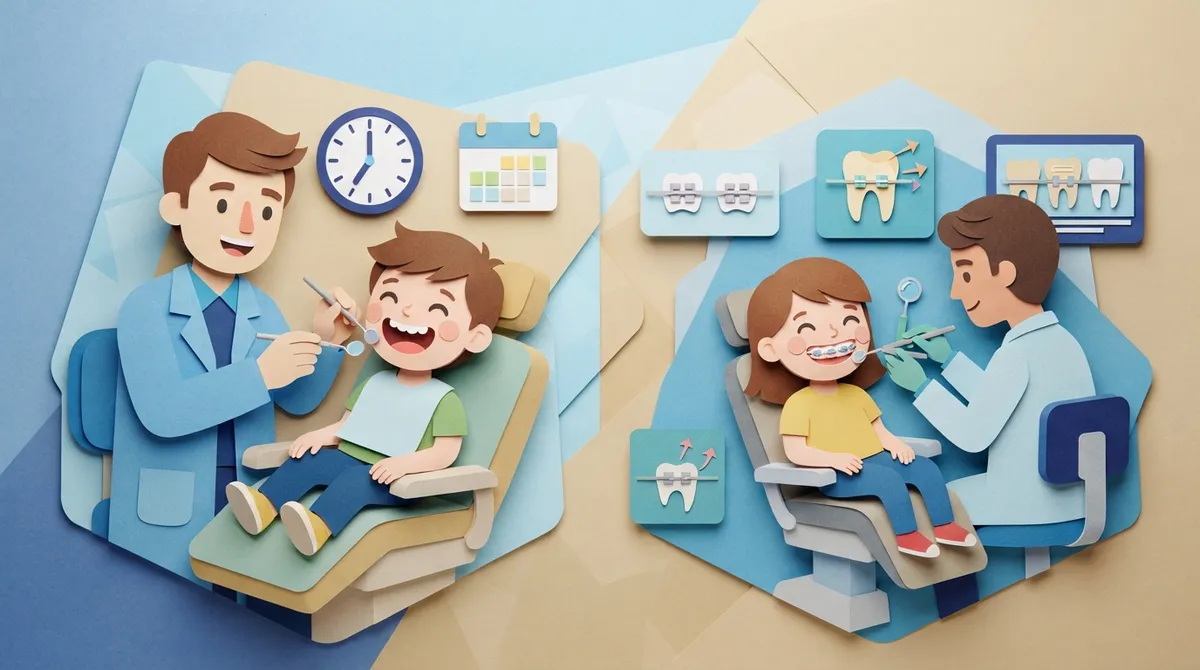
The most common mix-up is thinking an early visit means early braces. They are two very different things. The AAO suggests that children see an orthodontist no later than age 7 so a specialist can look at how teeth and jaws are growing.
Most children who go in for that first look do not start treatment right away. Many are simply watched over time. Some never need braces at all. And a smaller group benefits from a short, targeted treatment for one specific problem.
Here are the three most common results of a first visit:
- No treatment needed: Your child’s teeth and jaws look healthy, and you get peace of mind.
- Monitoring: We keep an eye on growth with periodic check-ins and decide on treatment later if needed.
- Early (interceptive) treatment: A specific problem is addressed while your child is still growing.
If you’d like to know what the appointment itself looks like, our Your First Visit page walks through it step by step.
Truth 2: Age 7 Is a Special Window for Spotting Concerns
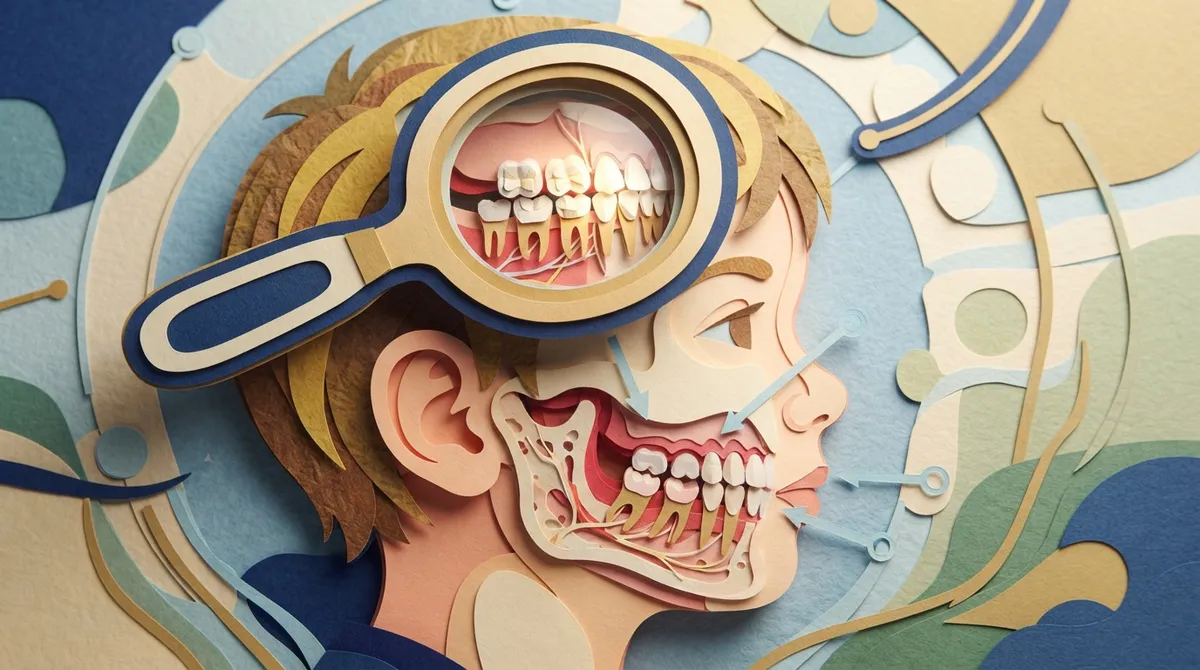
Why seven? Around this age, many kids have a mix of baby teeth and new permanent teeth. That mix gives an orthodontist a helpful peek at how things are coming together, even before every adult tooth has arrived.
At this stage, a specialist can often notice things that are harder to see later. These include how the upper and lower jaws line up, whether adult teeth have enough room, and whether any teeth are coming in off track.
It’s also a time when a child’s jaw is still growing. That growth can sometimes be guided gently, which is one reason early evaluation can be useful. It does not mean every child needs to be guided. It simply means we have the chance to look while there’s still flexibility.
Curious how this fits into the bigger picture? Take a look at our guide on how to know when your child should first see an orthodontist.
Truth 3: Most Kids Who Need Braces Start Later
Here’s something that surprises many parents. AAO guidance notes that orthodontic treatment most often begins between ages 9 and 14. That’s because most of the permanent teeth need to be in place before comprehensive braces or clear aligners can do their best work.
So if your seven-year-old has a bit of crowding or a couple of gaps, there’s usually no reason to panic. Many of these issues are best handled later, once more adult teeth have come in.
Here’s a quick comparison to help you picture the timing:
| Stage | Typical Age | What Usually Happens |
|---|---|---|
| First check-up | By age 7 | Evaluation of teeth, bite, and jaw growth |
| Monitoring period | Ages 7 to 10 | Periodic visits to watch development |
| Early treatment (select cases) | Ages 7 to 10 | Targeted care for a specific concern |
| Comprehensive treatment | Ages 9 to 14 (most common) | Braces or clear aligners once most adult teeth are in |
If your child is heading toward the teen years, our page on adolescent treatment explains what to expect when that time comes.
Truth 4: Some Problems Are Worth Treating Early
Now, let’s be fair. While not every seven-year-old needs braces, some children really do benefit from an earlier start. Early care is chosen when treating a problem during growth may make a real difference.
Here are some concerns that may call for a closer look:
- Certain underbites or crossbites
- A jaw that shifts to one side when your child bites down
- Significant crowding of teeth
- Unusual spacing or teeth that don’t meet the way they should
- Extra teeth or missing teeth
- Habits like thumb sucking that affect how teeth or jaws develop
If you spot something that worries you, you don’t have to wait for age 7. The AAO says a child does not need to wait until age 7, or for a dentist’s referral, to see an orthodontist. You know your child best.
You can learn more about how we approach this on our early treatment page, or read our post on why timing matters in early intervention orthodontics.
Truth 5: Early Treatment Isn’t Always Full Braces
When people hear “early orthodontics,” they picture a mouth full of metal on a second grader. In reality, early care is highly individualized and often much simpler than that.
Depending on your child’s needs, early treatment might look like:
- Watchful waiting: Regular visits to track growth, with no appliance at all.
- A palatal expander: A small device that gently widens the upper jaw to create more room or fix a crossbite.
- Limited braces: Braces on just a few teeth to fix one specific problem.
- Habit support: Guidance or a simple appliance to help break a habit affecting teeth or jaws.
Here’s an honest note that every parent deserves to hear. Early treatment does not always mean your child will skip braces later. Sometimes a second phase is still needed once all the adult teeth arrive. The goal of early care is to solve a specific problem while growth is on our side, not to guarantee that braces are never needed.
If you’re wondering about the different options as your child grows, our guide on which braces are best for kids in 2026 is a helpful read.
Truth 6: Every Child’s Timeline Is Different
If there’s one thing to remember, it’s this: there’s no single schedule that fits every smile. Two seven-year-olds can sit side by side in the same classroom and have completely different orthodontic needs.
One might need a quick expander. Another might need nothing for years. A third might just need us to keep an eye on things. All of those paths are completely normal.
That’s why a one-on-one evaluation matters so much. A personal assessment looks at your child’s teeth, bite, jaw growth, and habits, and then builds a plan around what you see, not what a general rule says. At Brockway Orthodontics, Dr. Brockway takes the time to listen to your concerns and explain things in plain, friendly language, so you never feel rushed or confused.
Wondering about the difference between a dentist and an orthodontist when it comes to your child’s smile? Our post on why see an orthodontist vs a dentist breaks it down.
What Happens at Your Child’s First Orthodontic Visit?
If you’ve never been to an orthodontist with your child, the unknown can feel a little scary. Good news: the first visit is relaxed and kid-friendly. Here’s a typical flow:
- A warm welcome: We chat with you and your child so everyone feels comfortable.
- A gentle look: We examine your child’s teeth, bite, and jaw.
- Modern imaging: We use digital tools, so there are no messy molds, and 3D imaging helps us see growth patterns clearly.
- A clear explanation: We talk through what we see, in simple language.
- A plan: You leave knowing if your child needs no treatment, monitoring, or an early start.
We love that our welcoming office helps nervous kids relax. Many parents tell us the visit was far easier than they expected.
Signs It May Be Time to Book a Visit
Even if your child isn’t quite seven yet, trust your instincts. Here are signs that a visit could be helpful:
- Teeth that look very crowded or overlapped
- A bite that seems off, such as an underbite or crossbite
- Baby teeth that were lost very early or very late
- A jaw that clicks, shifts, or seems uneven
- Thumb sucking or pacifier use that continues past the toddler years
- Difficulty chewing or biting comfortably
For more on what to watch for, you can read 9 signs your child needs braces. Remember, noticing one of these signs doesn’t mean braces are guaranteed. It just means a quick professional look can give you answers.
A Quick Note About Cost and Peace of Mind
Many parents worry that an early visit will lead to a big bill. We understand. Money matters, and we want you to feel informed from the very start. Our team can explain your options clearly, and we offer flexible choices to help families plan ahead. You can learn more on our financing and insurance page.
An early evaluation can actually save stress down the road. If everything looks great, you can relax. If something needs attention, you’ll know exactly what’s coming and when, so there are no surprises.
The Bottom Line for Busy Parents
So, does every seven-year-old need braces? No, and that’s good news for many families. What every seven-year-old does benefit from is a quick, friendly check-up so you know where your child stands. From there, the path is simple: some kids need nothing, some need monitoring, and some benefit from a targeted early step.
You don’t need to guess or worry alone. If you’re local, we’d love to be your partner in Clearwater, and you can see what our Brockway Orthodontics families say on Google. For reliable background reading, the American Dental Association and the Florida Association of Orthodontists offer helpful oral health resources for families.
Ready to find out what your child’s smile needs? Book your free consultation online with Brockway Orthodontics, or contact us if you have questions first. We’d be thrilled to meet your family and help your child smile with confidence, on the timeline that’s right for them.
FAQs
Q: Does every seven-year-old need braces?
A: No, and that’s great news for a lot of families! The American Association of Orthodontists recommends a check-up by age 7 so a specialist can see how teeth and jaws are developing. After that visit, many kids need no treatment, some are simply monitored, and only some benefit from early care.
Q: Why is an orthodontic check-up recommended by age 7?
A: At around age 7, many children have a mix of baby and permanent teeth, which gives an orthodontist a helpful look at bite, jaw growth, and tooth eruption. Spotting a concern early gives us more options while your child is still growing. It’s a screening visit, not a promise of braces.
Q: When do most children actually start braces?
A: Orthodontic treatment most often begins between ages 9 and 14, once more permanent teeth have come in. Some children do benefit from earlier care for a specific problem. The right timing always depends on your child’s own evaluation.
Q: Can early treatment prevent braces later?
A: Sometimes early treatment makes later care simpler, but it doesn’t always remove the need for braces. Early care is meant to solve a specific problem while your child is growing. Some children still need a second phase once all their adult teeth arrive.
Q: Should I take my child to an orthodontist before age 7?
A: Yes, if something concerns you! You don’t have to wait until age 7 or for a dentist’s referral. If you notice a bite issue, shifting jaw, or teeth that look off, a quick visit can give you answers and peace of mind.
Our Service Area