Key Takeaways
-
Ceramic brackets can change color, but many modern ones are fairly stain-resistant; the clear elastic ties that hold the wire usually discolor first.
-
Coffee caused the greatest color change in several lab studies, followed by other deep-colored drinks and foods like tea, red wine, cola, and curry.
-
Staining grows with longer exposure, so sipping a dark drink slowly over hours is riskier than finishing it in one sitting.
-
Using a straw for dark drinks and swishing with water after curry or tomato sauce are simple habits that reduce staining risk.
-
Whitening toothpastes do not reliably prevent coffee-related staining, so regular brushing and flossing remain the best routine.
-
Ties are replaced at adjustment visits, so yellowed ties can be fixed quickly; never scrape or bleach braces at home.
Picture this: you finally decide on clear-looking braces because you want a more discreet smile. Then your morning latte hits, and a little voice in your head whispers, “Wait, do ceramic brackets stain?” You are not alone. It is one of the most common questions we hear from teens, parents, and busy adults who want a smile that looks great during treatment, not just after.
Here is the short, honest answer: ceramic brackets can change color, but many modern ones are fairly stain-resistant. The bigger culprit is often the tiny clear ties that hold your wire in place. In this friendly guide, we walk through nine truths about staining, what the research says, and what you can do to keep your braces looking fresh. Let’s dig in!
1. Yes, Ceramic Brackets Can Change Color (But Not Always Much)
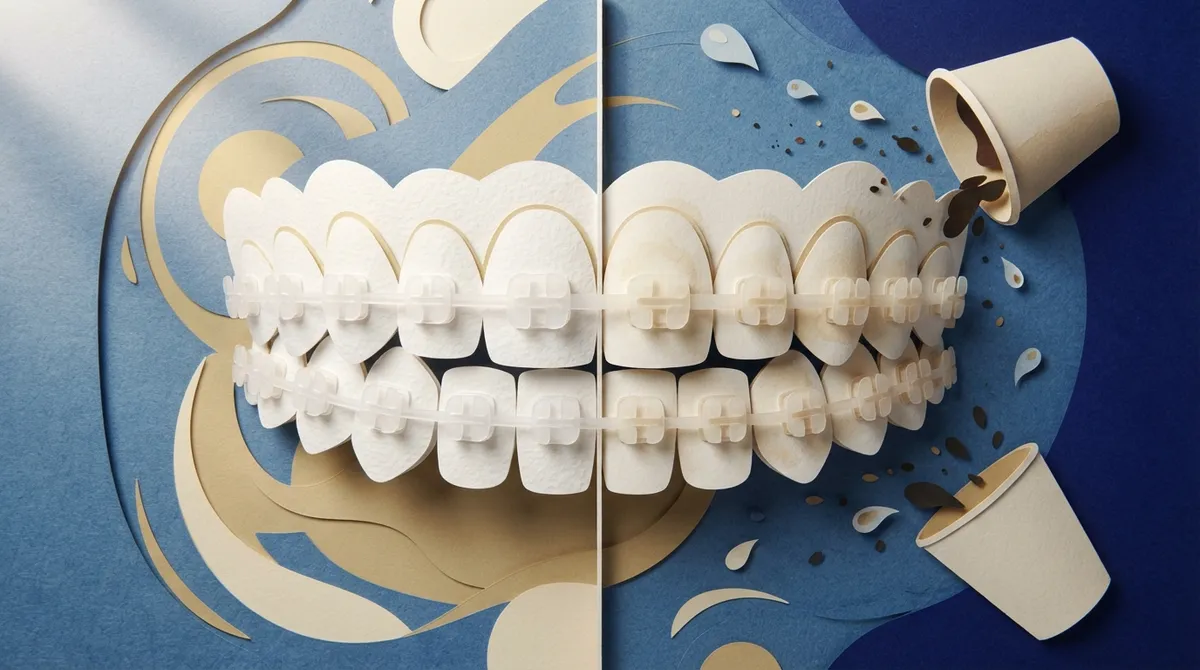
Let’s start with the big question. Do ceramic brackets stain? They can, but the amount varies. Many modern ceramic brackets are made to resist discoloration, and plenty of patients get through treatment with brackets that still look tooth-colored.
That said, “stain-resistant” does not mean “stain-proof.” Lab research shows that strongly colored foods and drinks can shift the color of ceramic brackets. How much they change depends on the brand, the product, and how long the bracket is exposed.
Think of it like a white coffee mug. It can handle a lot, but if you leave tea in it for days, it may show a mark. The good news is that everyday life is not the same as a lab test, so most patients do not see dramatic changes.

2. The Clear Ties Usually Stain Before the Brackets Do
Here is something many people do not know. When folks say their ceramic braces look yellow, they are often talking about the small elastic ties (called ligatures) that hold the archwire to each bracket. These ties are soft and porous, so they tend to pick up color faster than the hard ceramic bracket itself.
Clear or tooth-colored ties can yellow in the weeks between adjustment visits. The good news? They get swapped out at your regular appointments, so you get a fresh start each time.
If you want to learn more about how the different parts of your braces work together, our guide to all about braces is a great place to start.
3. Coffee Is the Biggest Troublemaker
If there is a villain in this story, it is coffee. In several laboratory studies, coffee caused the greatest color change in ceramic brackets compared with other drinks. A 2022 study tested 100 ceramic brackets from five manufacturers in coffee, cola, a vitamin drink, and artificial saliva. Every bracket group showed a measurable color change, and coffee generally caused the most.
Before you panic, keep in mind that these tests soak brackets in liquid for long stretches. Real life is different. You sip, you swallow, you brush, and your saliva rinses things along. So these studies show a risk, not a guarantee.
4. Other Common Staining Suspects to Watch
Coffee gets all the attention, but it has plenty of company. Research points to several other foods and drinks that can tint braces, especially the clear ties. Here are the usual suspects:
- Tea (black and herbal varieties with deep color)
- Red wine (for our adult patients)
- Cola and dark sodas
- Curry and turmeric-heavy dishes
- Tomato-based sauces
- Mustard and soy sauce
A 2023 lab study on elastic chains found that discoloration grew over 28 days and was greatest with curry, followed by coffee and wine. That study looked at elastic parts, not ceramic bracket bodies, but it shows why the ties are the first to show wear.
If you are also wondering what is safe for your braces in general, check out our friendly foods to avoid with braces guide.
5. Time Matters: The Longer the Exposure, the More the Color
In lab testing, staining generally grew with longer exposure. A 2015 study soaked ceramic brackets for up to 14 days in coffee, red wine, cola, or artificial saliva. Color change increased over time, and it showed up across bracket types, although not every change was visible to the naked eye.
What does that mean for you? Frequent, repeated contact with dark drinks is more likely to cause trouble than a single cup now and then. Sipping a latte slowly for two hours bathes your brackets longer than finishing it in fifteen minutes.
6. The Brand and Material Make a Difference
Not all ceramic brackets are created equal. Research has found differences in color stability among ceramic products. Interestingly, simply knowing whether a bracket is monocrystalline or polycrystalline does not reliably predict how well it will resist staining.
This is one reason a personal conversation with your orthodontist matters. At Brockway Orthodontics, Dr. Brockway takes time to explain your options so you can pick what fits your smile and lifestyle. If you are curious about the clear option we offer, take a look at our page on ceramic braces in Clearwater.
7. Good Hygiene Helps, But It Is Not a Magic Shield
Brushing and flossing well will not guarantee that your brackets stay perfectly clear, but it does help in a big way. Careful cleaning removes plaque and food debris that can dull the look of your braces and irritate your gums.
What about whitening toothpaste? The research is mixed. A 2022 lab study of 50 ceramic brackets found that none of the tested toothpastes fully prevented coffee-related color change over 21 days. The toothpaste groups did show a smaller change than no brushing at all, and regular toothpaste performed best. Some whitening formulas also changed the bracket’s surface, so it is not a surefire fix.
Here is a simple daily routine that keeps things looking their best:
- Brush after meals and after any dark drink, if you can.
- Rinse with water when you cannot brush right away.
- Floss once a day with a floss threader or water flosser.
- Use a soft brush and gentle pressure around each bracket.
- Keep up with your regular cleanings and adjustment visits.
Need a refresher on technique? Our smart steps to brush teeth with braces will walk you through it.
8. Simple Habits That Lower Your Staining Risk
You do not have to give up your favorite drinks. A few small tweaks can go a long way. Here are easy ideas to try:
- Use a straw for iced coffee, tea, and soda so liquid skips your front teeth.
- Finish dark drinks in one sitting instead of sipping for hours.
- Swish with water after eating curry, tomato sauce, or other deep-colored foods.
- Limit very dark drinks in the days before an adjustment visit if you want fresh ties to stay bright.
- Ask about ties that match your style, since some patients love color choices more than clear.
Also, please do not try to scrape, bleach, or pick at brackets or ties at home. That can damage your braces or hurt your gums. If something looks off, we would much rather help you fix it safely.
9. Stained or Worried? Your Orthodontist Has Easy Fixes
If your ties look yellow or you feel self-conscious, there is a simple solution. Your orthodontist can replace the elastic ties at your visit, and that often brings back a clean, clear look right away. If a bracket itself looks discolored, your care team can talk through your options.
Here is a quick comparison to show where staining is most likely to happen:
| Braces Part | Staining Risk | What Helps |
|---|---|---|
| Ceramic bracket | Lower, but possible with heavy exposure | Good hygiene, limiting dark drinks |
| Clear elastic ties | Higher, often yellow between visits | Replacement at each adjustment |
| Metal wire | Very low | Regular brushing |
Not sure whether ceramic is the right pick for you or your teen? Our comparison of metal braces and clear aligners can help you weigh your choices. Adults who want a discreet look may also enjoy our post on metal vs. clear braces for adults.
Which Options Fit Different Smiles?
Every patient is different, and so is every smile. Teens often want a low-key look for school photos and big events. Busy professionals want something that blends in at work. Parents want a plan that is simple for their kids to manage. Patients returning for a second round of treatment often want a high-quality, personalized plan.
At Brockway Orthodontics, we offer ceramic braces, metal braces, and Spark™ Clear Aligners, a budget-friendlier alternative to Invisalign. If your top worry is staining, aligners that you remove while eating and drinking may feel like a great match. If you love the look of tooth-colored brackets, ceramic could be your winner. Dr. Brockway will listen to your goals and help you choose with confidence.
We also love to make care easy. Modern tools like digital impressions and 3D imaging help us plan your treatment with precision and comfort, with no messy molds. You can learn more about our approach on our services page.
Final Thoughts: Smile Confidently, Stain Worries Aside
So, do ceramic brackets stain? They can, especially with frequent coffee, tea, red wine, or curry, but many modern brackets hold up well. The elastic ties are the part that usually shows color first, and they get replaced regularly. With smart habits, steady brushing, and regular visits, most patients enjoy a clean, discreet look all the way through treatment.
Researchers also remind us that lab tests cannot predict exactly how your own braces will behave, so your best move is an honest chat with your orthodontist. For trusted general oral health info, the American Dental Association is a handy resource, and you can find more about orthodontic care through the Florida Association of Orthodontists.
Curious what our patients think? You can visit us on Google and read Brockway Orthodontics reviews from Clearwater families. We would love to meet you, hear your goals, and help you pick the braces that fit your life.
Ready to take the next step? Book your free consultation online and let Dr. Brockway map out a smile plan that feels right for you. Prefer to chat first? Just contact our friendly team anytime.
FAQs
Q: Do ceramic braces stain from coffee or tea?
A: They can, though the amount varies by brand and how often your braces meet dark drinks. Coffee caused the most color change in several lab studies, so a straw and a quick water rinse afterward are great habits to build.
Q: Do ceramic brackets stain, or is it the clear elastic ties that turn yellow?
A: Both can change color, but the soft clear ties usually yellow first because they are more porous. The good news is that they get replaced at your adjustment visits, so you get a fresh look each time.
Q: Do whitening toothpastes prevent ceramic braces from staining?
A: Not reliably. One lab study found that no tested toothpaste fully stopped coffee-related color change, and some whitening formulas even changed the bracket surface. Regular brushing is helpful, but ask your orthodontist before trying special products.
Q: Can stained ceramic brackets or ligatures be cleaned or replaced?
A: Yes, the elastic ties can simply be swapped out at your visit for a clean, clear look. Please do not try to scrape or bleach your braces at home, since that can cause damage. Your orthodontist can safely guide you if a bracket looks discolored.
Q: Which foods and drinks are most likely to stain ceramic braces?
A: Coffee, tea, red wine, cola, curry, and tomato-based sauces are the most common troublemakers. You do not have to skip them completely. Using a straw, rinsing with water, and brushing soon after can help a lot.
Our Service Area