Key Takeaways
-
Treatment complexity drives orthodontic fees: cases with severe crowding, major bite problems, impacted teeth, or jaw differences need more time, monitoring, and specialized appliances.
-
Complexity is not just how crooked teeth look; it reflects how much correction is needed and how hard that correction is to achieve safely, which an exam reveals.
-
A lower headline price is not always a lower total cost, so ask whether records, visits, refinements, and retainers are included in the fee.
-
Surgery, extractions, or other specialist care are often billed separately from the orthodontic fee, so confirm which services are excluded before comparing quotes.
-
Insurance typically pays a percentage (commonly up to 50%) until a lifetime maximum, so a more complex, costlier case may leave you covering a larger share.
-
Limited treatment can be cheaper, but cosmetic-only plans that ignore a functional bite problem may leave the smile looking better without working as well.
If you have ever asked two friends what they paid for braces, you probably got two very different answers. That is not a mistake, and nobody is pulling a fast one. Orthodontic fees are personal, and one of the biggest reasons is how treatment complexity affects orthodontic fees.
Think of it like home repair. Touching up a scuffed wall costs less than rebuilding a room. Teeth work the same way. A small gap and a major bite problem simply need different amounts of time, tools, and care.
The American Association of Orthodontists (AAO) names treatment type, case complexity, and treatment duration as key cost factors. There is no single national price that fits everyone. This guide explains what makes a case more or less complex, how that shapes your quote, and which questions to ask so you can compare estimates with confidence. Whether you are a parent planning for your child, a teen, or an adult coming back for retreatment, you will find clear answers here.
What Does Treatment Complexity Mean in Orthodontics?
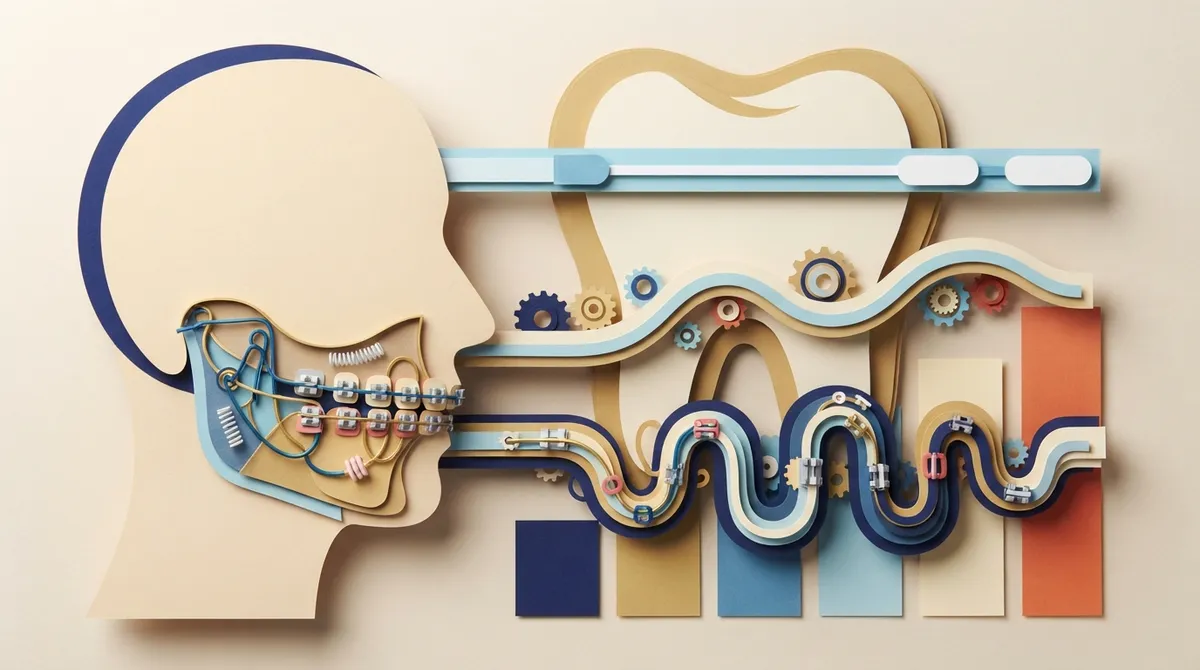
Complexity is not just about how crooked your teeth look. It reflects how much correction is needed and how hard that correction is to achieve safely. Two smiles that look similar in a selfie can need very different plans once your orthodontist studies the bite, the roots, and the jaws.
A simple case might involve mild spacing or slight crowding with a healthy bite. A complex case often involves several problems at once, or problems that sit deeper than the teeth themselves.
Common Features of a Complex Case
- Severe crowding or spacing: Teeth need a lot of movement, and sometimes extra room must be created.
- Significant bite problems: Deep overbites, underbites, open bites, and crossbites often need more involved mechanics.
- Impacted or missing teeth: A tooth stuck under the gum or absent from the arch changes the whole plan.
- Jaw discrepancies: When the upper and lower jaws do not line up, correction takes careful planning.
- Retreatment after relapse: Teeth that have shifted may need a fresh evaluation and a customized approach.
You can learn more about how bite problems are handled in our guide on how braces fix a deep overbite.
Why Complexity Raises or Lowers Your Fee
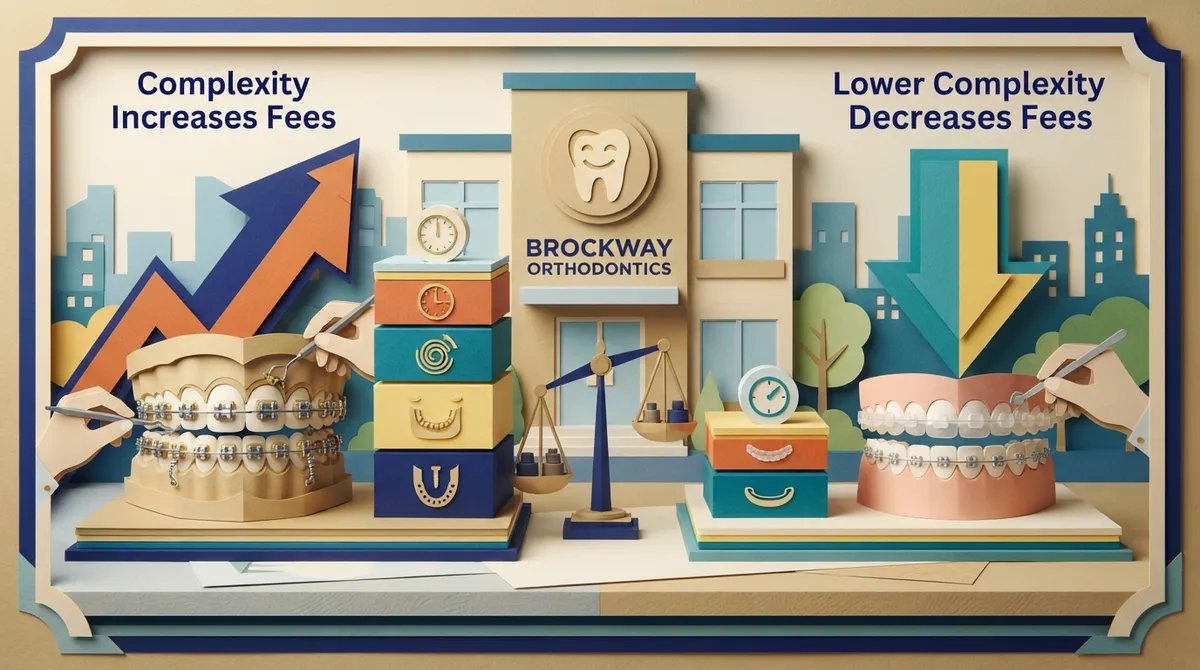
More complex cases tend to ask more of the care team. That extra effort shows up in the fee, although practices differ in how they structure and bundle their charges. Here are the main ways complexity can influence what you pay.
- Longer active treatment. Bigger corrections generally take more months, and more months mean more oversight.
- More monitoring visits. Tricky cases may need closer check-ins so your orthodontist can adjust the plan as teeth respond.
- Specialized appliances. Expanders, elastics, anchorage devices, or other tools may be added to guide movement.
- Detailed planning. Complex cases call for more records, imaging, and treatment design time up front.
- Coordination with other specialists. Some cases involve an oral surgeon or general dentist, which can add separate costs.
None of this means a complex case is a bad deal. It means the plan is doing more work to reach a healthy, stable result. If you want to see how time shapes your investment, read how treatment length affects orthodontic costs.
Simple, Moderate, and Complex Cases Compared
Many practices group cases into tiers such as limited, comprehensive, and complex. The table below shows how those tiers often differ in general terms. It is a teaching tool, not a price list.
| Case Type | Typical Situation | Usual Scope | Effect on Fee |
|---|---|---|---|
| Limited treatment | Minor alignment concern, such as a few slightly shifted front teeth | Short plan focused on a small area | Generally lower |
| Comprehensive treatment | Crowding or spacing plus bite correction | Full upper and lower plan with regular visits | Moderate |
| Complex treatment | Severe bite issues, impacted teeth, or jaw differences | Longer plan, extra appliances, added coordination | Generally higher |
To show how this can look in real life, one practice published 2026 fees of $3,600 to $4,800 for limited treatment, $5,850 to $6,950 for full treatment, and $6,950 to $9,550 or more for complex treatment. Please treat those numbers as one practice’s example only. They are not a national average, and your own quote will depend on your case, your provider, and what is included.
Limited Treatment Is Not Always the Right Fit
A lower fee can be tempting, and sometimes limited treatment is exactly right. If a few teeth have shifted and your bite is healthy, a shorter plan may do the job well.
But a quick or cosmetic plan is not always appropriate when a patient needs broader, functional correction. Straightening the front teeth while ignoring a bite problem can leave you with a smile that looks better but does not work as well. Your orthodontist should explain the scope of the plan and the trade-offs in plain language, so you can decide with all the facts.
Complexity Is Only One Piece of the Quote
Here is something many families do not realize. Complexity is just one factor. Other pieces matter too, and they can all stack together.
Appliance Choice
The type of appliance you choose affects the total. Lingual braces, which sit behind the teeth, are generally more expensive than conventional braces. Ceramic braces and clear aligners can vary depending on the provider, the case, and the plan. Appliance price and case complexity are separate factors, and both can influence your final number.
Brockway Orthodontics offers metal braces, ceramic (clear) braces, and Spark™ Clear Aligners, a more affordable alternative to Invisalign. Want to compare your options? Take a look at traditional braces versus clear aligners.
Provider and Location
Experience, practice overhead, and local costs all play a role. Fees can differ from one city or office to the next.
What Is Included
Some practices bundle records, visits, and retainers into one fee. Others itemize them. That is why a lower headline number is not always a lower total cost.
Services Outside the Orthodontic Fee
Some complex cases need care that is billed separately, such as oral surgery, tooth extractions, or other dental treatment. Always ask which services are covered in your orthodontic fee and which are not.
How Insurance Fits In
Insurance usually reduces your out-of-pocket cost. It does not set the provider’s fee. FAIR Health reports that plans covering orthodontics often pay a percentage, commonly up to 50 percent, subject to a lifetime maximum. Eligibility, age limits, waiting periods, and payment timing vary from plan to plan.
A complex case may cost more, but your plan’s lifetime maximum may stay the same. That means insurance can cover a smaller share of a larger fee. It helps to check your benefits early. Our guide on using dental insurance to help pay for braces walks through the steps, and our financing and insurance page explains payment options.
What Different Patients Should Keep in Mind
Complexity looks a little different depending on who is in the chair.
- Parents of children and teens: Growing jaws can sometimes be guided, which may simplify a case later. A checkup around age 7 can reveal whether early treatment might help.
- Teens and young adults: Events like graduation can add pressure, but a rushed plan is not always the best plan. Ask what is realistic for your bite.
- Adult professionals: Adults may have worn teeth, gum concerns, or older dental work that adds layers to the plan. Explore adult treatment options built around your schedule.
- Relapse patients: If your teeth shifted after earlier braces, retreatment may be simpler or more complex depending on how far they moved and why.
- Health-conscious patients: Gum health and bone support can shape the plan. Healthy gums are the foundation of any successful result.
Questions to Ask Before You Compare Quotes
Two quotes only compare fairly if they cover the same things. Before you decide, ask each office these questions.
- What exactly makes my case simple, moderate, or complex?
- Does the fee include records, appliances, and every routine visit?
- Are refinements, emergency visits, and adjustments covered?
- Are retainers included, and what happens if I need a replacement?
- What happens if I miss appointments or my treatment runs longer than planned?
- Will I need surgery, extractions, or other care billed separately?
- What does my insurance plan pay, and when are payments due?
Getting these answers in writing helps you avoid surprises. A good practice will gladly provide an itemized, case-specific estimate rather than a single advertised price.
How to Get a Clear Picture of Your Own Fee
The best way to understand how complexity affects your fee is to have your teeth and bite evaluated. At your first visit, your orthodontist can look at your smile, review imaging, and explain what your case involves.
At Brockway Orthodontics, Dr. Brockway takes the time to listen to your goals and walk you through your options in a friendly, easy-to-follow way. Our office uses modern technology, including digital impressions instead of messy molds and 3D imaging, to plan treatment precisely. Meet the team on our Dr. Brockway page, and you can also see what patients say when you visit us on Google — Brockway Orthodontics.
For more background on professional standards in the field, the American Dental Association and the Florida Association of Orthodontists are helpful, trusted resources. You can also read the AAO’s overview on how much braces cost for a broader look at the factors involved.
Ready to Learn What Your Smile Needs?
Your fee should reflect your needs, not a one-size-fits-all number. Complexity, appliance choice, treatment length, and what is included all work together to shape your quote. Once you understand those pieces, comparing estimates gets a lot less stressful.
We would love to help you sort it out. Book your appointment online to get a personalized look at your case and a clear estimate, or contact us with any questions. Your best smile is closer than you think, and we are happy to walk with you every step of the way.
FAQs
Q: How does orthodontic treatment complexity affect the total cost?
A: The more correction your teeth and bite need, the more time, monitoring, and sometimes specialized appliances your plan may require. Those added demands can raise the total fee. Every practice structures its pricing a little differently, so ask for an itemized estimate.
Q: What makes an orthodontic case complex?
A: Complex cases often involve severe crowding or spacing, major bite problems like underbites or crossbites, impacted or missing teeth, or jaw differences. It is about how much correction is needed, not just how crooked teeth look. Your orthodontist can tell you where your case falls after an exam.
Q: Are clear aligners more expensive than braces for complex cases?
A: Not always. Aligner and braces fees depend on the provider, the case, and the treatment plan. Appliance choice and case complexity are separate factors, so it is best to compare written estimates for your specific situation.
Q: Can jaw surgery or tooth extractions add to orthodontic costs?
A: Yes, they can. Services like oral surgery or extractions are often billed separately from the orthodontist’s fee. Ask your office which services are included and which are not, so there are no surprises.
Q: How much does dental insurance pay toward braces?
A: Plans that cover orthodontics often pay a percentage, commonly up to 50 percent, up to a lifetime maximum. Age limits, waiting periods, and payment timing vary by plan. Check your benefits early and ask your orthodontic office to help you understand them.
Our Service Area