Key Takeaways
-
Most braces treatment in Clearwater takes 12 to 24 months, with simple cases finishing in under a year and complex cases potentially extending beyond 24 months depending on your specific needs.
-
Six key factors control your timeline: tooth crowding or spacing, bite type, rotated teeth, jaw-position correction needs, your adherence to instructions, and attending regular appointments every 4-10 weeks.
-
Patient compliance is the one factor you can directly control; skipping elastics, breaking brackets, poor oral hygiene, and missed appointments can add months to your treatment without intention.
-
Bite corrections and jaw-position adjustments often extend treatment time because they require moving more than just tooth position and are especially common in growing children and teens.
-
Only an in-person orthodontic exam can provide an accurate personal timeline; online ranges and local estimates cannot assess your specific tooth position, bite, and gum health.
-
Retainers are a critical part of treatment success after braces are removed, as they prevent teeth from drifting back and require individualized wear schedules your orthodontist will specify.
So you are thinking about braces, and the big question is on your mind: how long will this actually take? If you have been searching for braces treatment time Clearwater, you are not alone. It is the very first thing most parents, teens, and adults ask us, and honestly, it is a great question to ask.
Here is the friendly truth. Most people wear braces for about 12 to 24 months. Some simple fixes wrap up sooner. Some tricky bite or jaw cases take longer. Your own timeline depends on your smile, your plan, and how you and your family stick to it.
In this guide, we walk through six things that shape how long braces take, what a typical visit schedule looks like, and how to keep your treatment on track. Think of it as a warm, no-pressure chat about what to expect. By the end, you will know what questions to bring to your first visit, and you will feel a lot more ready to start your smile journey.

The Quick Answer: How Long Do Braces Take?
Let’s start with the big picture, then dig into the details.
The American Association of Orthodontists notes that most patients wear braces for about 12 to 24 months. Treatment can run just a few months for slight corrections, and it can stretch to several years for complex cases. The NHS gives a similar range of roughly 12 months to 2.5 years.
Locally, one Clearwater orthodontic practice advertises a 6 to 24 month range depending on the patient and the treatment chosen. That is a helpful reference point, but it is a single office’s estimate, not a promise or a citywide average. Your own number can only come from an exam.
| Type of Case | Typical Time Range | What It Often Involves |
|---|---|---|
| Minor corrections | A few months to about 12 months | Mild spacing or slight crowding |
| Standard comprehensive treatment | About 12 to 24 months | Crowding, spacing, and bite adjustments |
| Complex cases | 24 months or longer | Jaw position, significant bite issues, or difficult tooth movement |
Use this table as a starting map, not a final answer. Now let’s look at what moves you from one row to another.
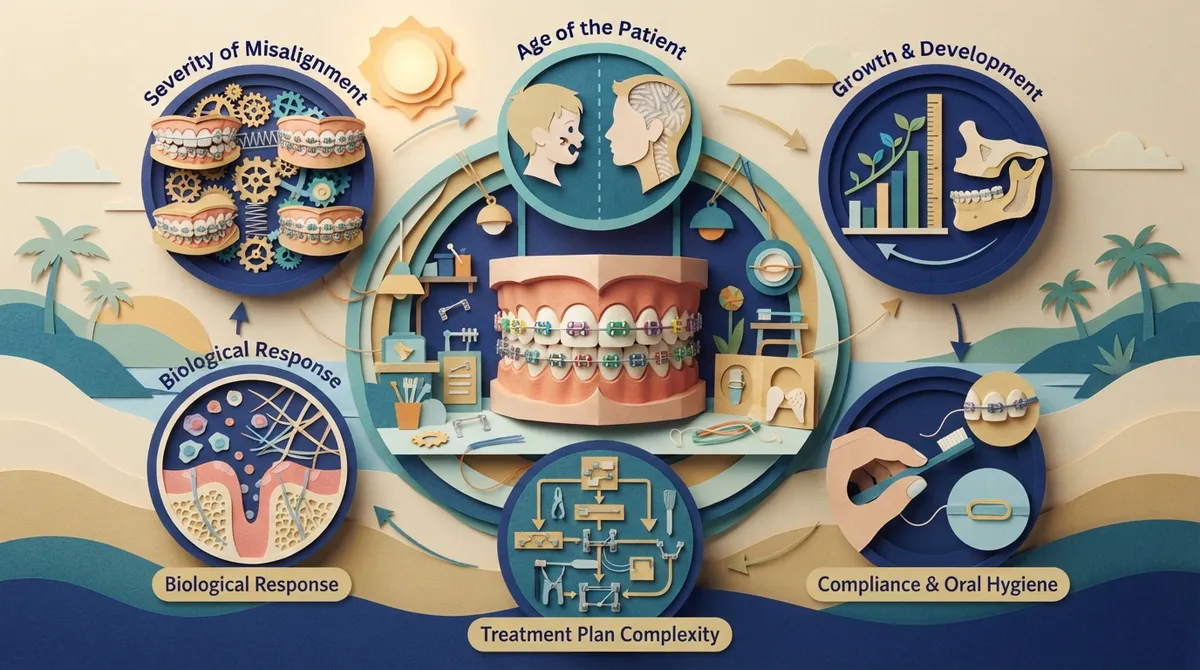
6 Things That Decide Your Braces Treatment Time
1. How Crowded or Spaced Your Teeth Are
The more your teeth need to move, the more time it takes. Mild crowding is often a shorter journey. Severe crowding, where teeth overlap or are pushed out of line, asks more from your braces.
Spacing works the same way. A small gap may close fairly quickly. Large gaps or several spaces across the smile can take longer to close smoothly and evenly.
Think of it like tidying a room. A few misplaced items take minutes. A room packed to the ceiling takes an afternoon. Neither is bad. It just helps to know which room you are cleaning!
2. The Type of Bite Problem You Have
Bite issues are a big timeline factor. An overbite, underbite, crossbite, or open bite each needs a different plan. Some are simple to fix with braces alone. Others need extra tools to guide the jaws into a healthy position.
If you are curious about one common example, our guide on how braces fix a deep overbite explains how bite correction works in plain language. Bite corrections often add time because we are moving more than just tooth position. We are also working with how the upper and lower teeth meet.
3. Rotated Teeth and Tricky Tooth Movements
Some teeth turn like a twisted key in a lock. Rotated teeth can be stubborn, and they often take longer to guide back into place than teeth that simply need to shift sideways.
The same goes for teeth that sit high in the gum or need to move a long distance. Your orthodontist plans these movements carefully, step by step, so your teeth move safely and stay healthy. Rushing tooth movement is not the goal. Steady, gentle progress is.
4. Whether Jaw-Position Correction Is Needed
Sometimes the teeth are only part of the story. If the upper and lower jaws do not line up well, treatment may include jaw-position correction or extra mechanics such as elastics (rubber bands). These cases are more involved, which is why they can land at the longer end of the range.
This is especially common for growing kids and teens, where guiding jaw growth at the right time can make a real difference. If you are a parent wondering about timing, our article on orthodontics for kids shares what every parent should know, and our early treatment page explains how starting young can sometimes simplify things later.
5. How Well You Follow Instructions
Here is the one factor you can actually control, and it is a big one. Patients who follow their plan tend to finish closer to schedule. Patients who skip steps can add months without meaning to.
Small habits that keep you on track:
- Wear your elastics exactly as prescribed. Taking a day off here and there slows tooth movement.
- Keep your appliances safe. Broken brackets and bent wires can stall progress.
- Brush and floss well. Healthy gums let teeth move smoothly.
- Follow food guidelines. Sticky and hard foods are common causes of breakage. Our foods to avoid with braces guide makes this easy.
If something does break, do not wait it out. A quick call can save you weeks. Our guide to emergency vs. routine orthodontics helps you decide when a repair cannot wait.
6. Showing Up to Your Appointments
Braces are not a set-it-and-forget-it treatment. Your wires need periodic adjusting, and your orthodontist needs to check how your teeth are responding.
Missed or long-delayed visits can extend your total treatment time. Think of appointments as little checkpoints on a road trip. Skip too many, and you might end up taking the long way home. Keeping your schedule is one of the easiest ways to protect your timeline.
How Often Will You Have Appointments?
Fixed braces need regular adjustment and monitoring visits. The NHS describes visits about every 4 to 10 weeks, and the exact gap depends on your orthodontist’s plan and the type of appliance you have. One Clearwater dental office lists adjustments about every 4 to 6 weeks, but that is a practice-specific schedule, not a universal rule.
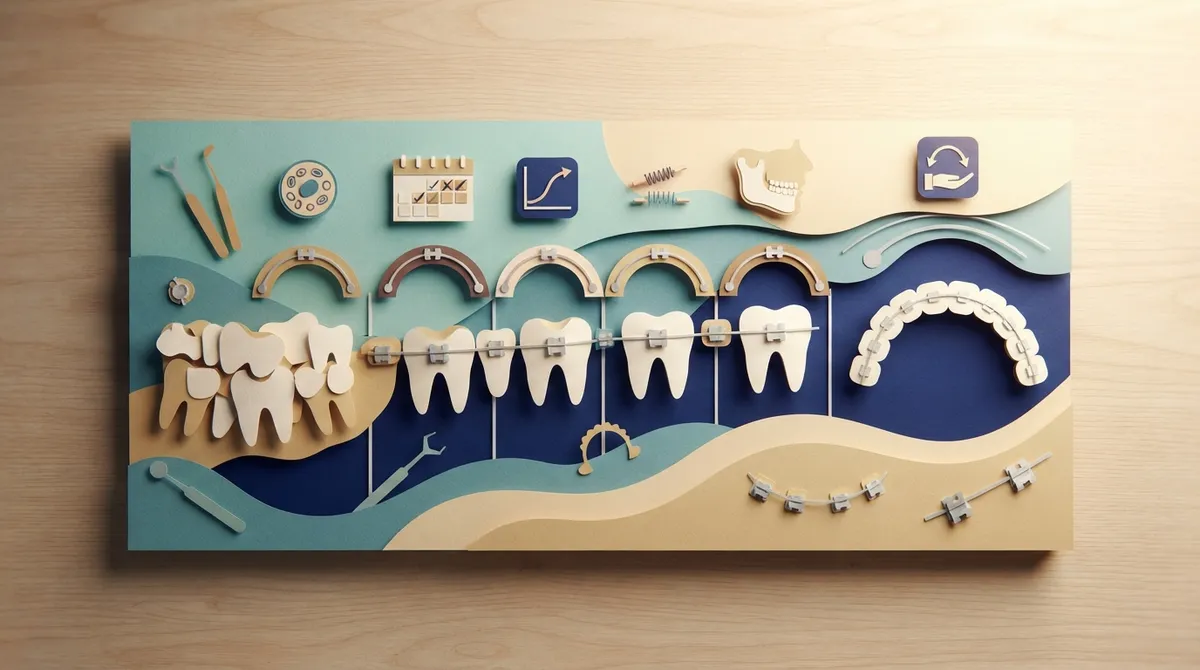
Here is what a typical journey looks like:
- Consultation and exam. We look at your teeth, bite, and goals, then talk through options. See what to expect on our Your First Visit page.
- Braces placement. Your appliances are fitted, and we walk you through care basics.
- Regular adjustment visits. Wires are changed or tightened, and progress is checked.
- Finishing stage. Small details are polished so your bite and smile look their best.
- Braces removal and retainers. Your braces come off, and your retainer plan begins.
Braces vs. Clear Aligners: Does Timing Differ?
Many people ask if aligners are faster. The honest answer is that it depends on the case. Simple cases may go smoothly with either option, while more complex bite or rotation problems often call for braces.
At Brockway Orthodontics, we offer metal braces, ceramic (clear) braces, and Spark™ Clear Aligners, a more affordable alternative to Invisalign. The right choice comes down to your smile, your lifestyle, and your goals, not a race against the clock.
Not sure which way to lean? Our comparison of traditional braces vs. clear aligners lays out the pros and cons in a friendly, easy way.
Teens, Adults, and Retreatment: Who Takes Longer?
People often wonder if age changes the timeline. Here is a simple way to think about it.
- Kids and teens: Growing jaws can be guided, which sometimes helps with certain bite issues. Cooperation with elastics and hygiene matters a lot. Our adolescent treatment page covers what teens can expect.
- Adults: Adult teeth and bone respond a bit differently, and some adults have added factors like gum health or older dental work. Adult treatment can absolutely be effective, and many adults finish in a very reasonable time. Explore our adult treatment options.
- Relapse and retreatment: If your teeth shifted after earlier braces, retreatment is often a smaller job than the first round, since much of the work was already done. Every case is different, so an exam is the best way to know.
Age alone does not set your timeline. Your individual needs do.
The Finish Line Is Not the End: Retainers Matter
When your braces come off, it feels like a victory, and it is! But your orthodontic care is not quite done. Retainers are a key part of the plan because they help stop your teeth from drifting back.
Retainer instructions and how long you wear them are individualized. Some patients wear them full time at first, then move to nights only. Your orthodontist will give you a clear plan. You can read more on our retainers page, or check out this handy guide on how to wear a retainer after braces.
Treat your retainer like a loyal friend. Show up for it, and it will protect the smile you worked so hard to earn.
Simple Ways to Keep Your Treatment on Schedule
Want to give your timeline its best shot? Try these friendly habits:
- Book your next visit before you leave the office.
- Keep a small braces kit in your bag with wax, a travel toothbrush, and floss.
- Call early if a wire pokes or a bracket comes loose.
- Set phone reminders for elastics if you tend to forget.
- Ask questions at every visit. Understanding your plan makes it easier to follow.
For more ideas, our post on how long braces take goes deeper into timelines, and braces treatment mistakes you should never make shows what to skip.
Why an Exam Is the Only Way to Get Your Real Timeline
Online ranges are great for setting expectations, but they cannot see your teeth. They cannot measure your bite, check your gum health, or learn what you want your smile to look like. Only an in-person exam can do that.
At Brockway Orthodontics, Dr. Brockway takes the time to listen to your concerns and dreams for your smile. She explains your options in a friendly, easy-to-follow way so you know what to expect from start to finish. Our practice uses modern tools like digital impressions instead of messy molds and 3D imaging to plan your care precisely. In certain cases, we can even offer same-day treatments, which is a real help for busy families.
Want to get to know the doctor first? Meet Dr. Brockway, or peek at our office. If cost is on your mind too, our financing and insurance page walks through options that make care feel manageable. You can also read what neighbors say when you visit us on Google — Brockway Orthodontics.
For extra background on choosing care, the Florida Association of Orthodontists and the American Dental Association offer helpful public resources, and you can follow our smiles and updates on Instagram.
Ready to Find Out Your Own Timeline?
Braces do take time, but that time leads to something wonderful: a healthy, confident smile that lasts. Most people land somewhere between 12 and 24 months, and the six things we covered, from crowding to bite type to daily habits, help explain where you might fall.
The best next step is simple. Come in, let us take a look, and get a personalized estimate you can trust. There is no pressure, just friendly answers.
Ready when you are? Book your appointment online today, or contact us with any questions. We cannot wait to meet you and start your smile journey together!
FAQs
Q: How long do braces take in Clearwater, Florida?
A: Most people wear braces for about 12 to 24 months, though simple cases can finish sooner and complex ones may take longer. One Clearwater practice reports a 6 to 24 month range, but that is a local estimate, not a guarantee. A quick exam is the best way to get your personal timeline.
Q: Can simple crowding be fixed in under a year?
A: Yes, mild crowding or minor spacing can sometimes be corrected in less than a year. It depends on how far your teeth need to move and how well you follow your plan. Your orthodontist can tell you if you are a good fit for a shorter timeline.
Q: How often will I need braces appointments?
A: Fixed braces usually need adjustment visits every 4 to 10 weeks, depending on your appliance and your orthodontist’s plan. Keeping every visit helps you stay on schedule. Missed appointments can add time to your treatment.
Q: Can broken braces or missed visits make treatment longer?
A: They sure can. Broken brackets, bent wires, skipped elastics, and missed appointments can all slow your progress. If something breaks, call the office right away so we can fix it quickly.
Q: How long do I wear a retainer after braces?
A: Retainers are part of your plan after braces come off, and the exact schedule is individualized. Many patients start with more frequent wear and then move to nights only. Your orthodontist will give you clear instructions to protect your results.
Our Service Area