

Key Takeaways
-
Initial consultations are often free or cost $100-$300, while full braces treatment typically ranges from $3,000-$8,000, so clarify which type of visit a quoted price covers to avoid confusion.
-
Routine adjustment visits are usually bundled into the overall treatment fee rather than charged separately, similar to a gym membership model, but confirm what's included like repairs and retainers.
-
Dental insurance typically covers around 50% of orthodontic treatment up to a lifetime maximum, which may be more restrictive than the percentage, so review your plan's specific limits before treatment.
-
Request a detailed written estimate breaking down the total treatment fee, included services, insurance estimate, and your out-of-pocket amount to avoid surprises and hidden costs.
-
Treatment cost varies significantly by location, case complexity, appliance type (metal vs. ceramic vs. clear aligners), and length, so your actual fee depends on your specific smile needs.
-
Many practices offer payment flexibility through installment plans, third-party financing, or pay-in-full discounts to help spread the cost and make orthodontic treatment more manageable.
You search for “how much does an orthodontist visit cost” and get a hundred different answers. That’s because the question is trickier than it sounds. Are you asking about one first appointment? A quick adjustment visit? Or the whole journey from braces on to braces off?
Here’s the good news. Once you split those two things apart, the numbers make a lot more sense. A single consultation is a small cost, and many offices charge nothing at all. The full course of treatment is the bigger investment, and it usually covers most of your visits in one fee.
In this friendly guide, we’ll compare the cost of one visit with the cost of full treatment, side by side. You’ll learn what’s typically included, what might cost extra, and how insurance and payment plans fit in. Whether you’re a parent planning for your child, a teen eager for a new smile, or an adult returning for a second round, you’ll leave knowing the right questions to ask. Let’s dive in!
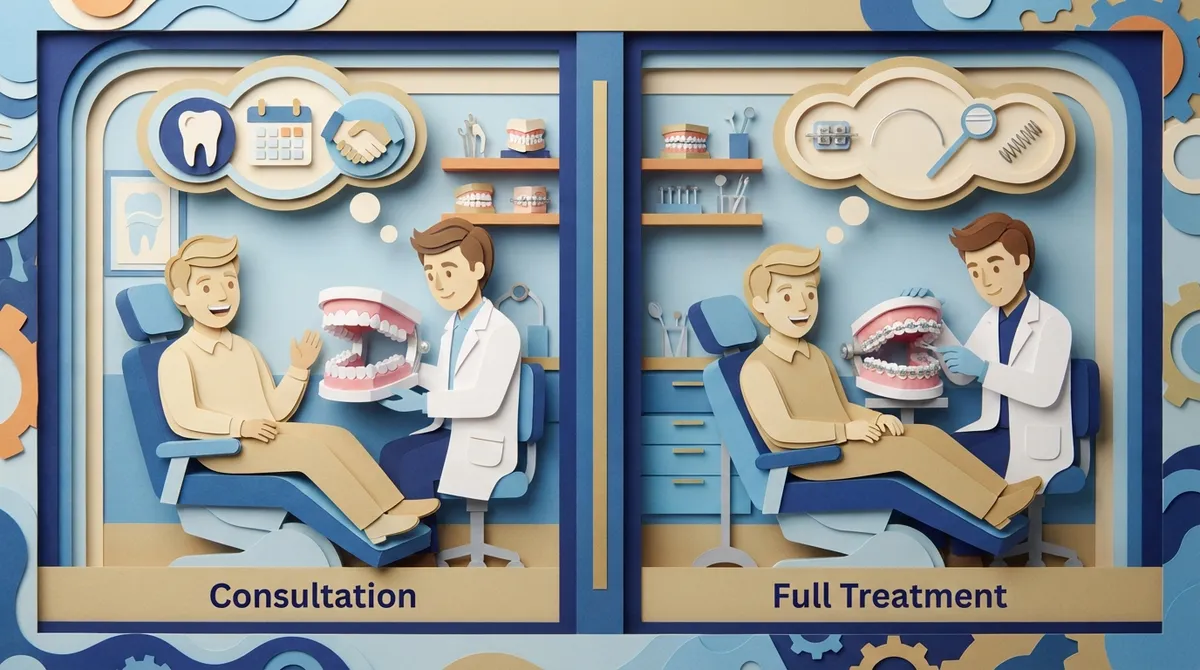
What Does “An Orthodontist Visit” Actually Mean?
When people ask how much an orthodontist visit costs, they usually mean one of three very different things. Each one has its own price tag.
- Initial consultation: Your first meeting, where the orthodontist looks at your teeth and bite and talks through options.
- Routine adjustment visit: A short check-in during treatment to tighten wires or change aligners.
- Full treatment: The complete course of braces or clear aligners, from start to finish.
Mixing these up is the number one reason quotes feel confusing. A fee of $200 might sound like a lot for a visit but a tiny amount for treatment. Always ask which type of visit a quoted price covers.

Initial Consultation: The Cost of Your First Visit
Let’s start with the easy part. Your first visit is often the least expensive step of the whole process.
Free vs. Paid Consultations
Many orthodontic practices offer an initial consultation at no charge. When an office does charge, published estimates commonly land between about $100 and $300. Whether that fee covers X-rays or scans differs from office to office.
At Brockway Orthodontics, we make it simple to get started. You can book your appointment online and learn more about what happens at your first visit.
What a Consultation Usually Includes
A typical first visit may include:
- A friendly exam of your teeth, jaws, and bite
- A talk about your goals and concerns
- A review of treatment options, such as braces or clear aligners
- A cost estimate and timeline
Sometimes, more detailed diagnostic records or imaging are billed separately. Before you book, ask whether X-rays, photos, and digital scans are part of the visit fee. For a deeper look, check out your orthodontic consultation: what to expect and why it matters.
Routine Adjustment Visits: Do You Pay Each Time?
Here’s a question we hear a lot from parents: “Will I be charged every time we come in for a tightening?” For most patients, the answer is no.
Routine adjustment visits are often bundled into the overall treatment fee. That means you pay one total price, and your regular check-ins are already covered. It’s a bit like a gym membership. You pay once, and the visits come with it.
Still, practices handle this differently. Ask whether your quoted price includes:
- All regular adjustment appointments
- Repairs for broken brackets or wires
- Retainers after your braces come off
- Follow-up visits once treatment ends
If you ever have a problem between visits, our guide on emergency vs. routine orthodontics can help you decide what to do.
Full Treatment Cost: The Bigger Picture
Now for the part that really shapes your budget. For context, braces are commonly reported at roughly $3,000 to $8,000 for a full course of treatment. That is not the price of one visit. It’s the total for your whole smile journey.
Your actual fee depends on several things:
- Location: Prices vary from one area to another.
- Case complexity: Mild crowding costs less to fix than a tricky bite problem.
- Appliance type: Metal braces, ceramic braces, and clear aligners can all be priced differently.
- Treatment length: Longer treatment often means a higher fee.
Want to dig deeper into pricing? Our friendly breakdown of how much braces cost in 2026 walks through it step by step. You can also read about the key factors that determine orthodontist cost.
Single Visit vs. Full Treatment: Side-by-Side Comparison
Seeing the numbers next to each other makes everything clearer. Here’s a simple look at how the pieces compare.
| Type of Visit | Typical Cost Range | What’s Usually Included | Things to Confirm |
|---|---|---|---|
| Initial consultation | $0 (free) to about $100–$300 if paid | Exam, discussion of options, estimate | Are X-rays and scans included? |
| Routine adjustment | Often bundled into treatment fee | Wire changes, aligner checks | Is each visit covered in the total? |
| Full braces treatment | Roughly $3,000–$8,000 | Braces, visits, often retainers | Repairs, retainers, follow-ups |
So which one wins? Honestly, they aren’t rivals. The consultation is your low-cost starting line, and full treatment is where most of your investment goes. The trick is knowing exactly what each fee covers.
Braces vs. Clear Aligners: Does Your Choice Change the Cost?
It can. The type of treatment you pick may shift your overall price. Braces and clear aligners each have their own strengths, and the right pick depends on your smile and lifestyle.
Brockway Orthodontics offers metal braces, ceramic (clear) braces, and Spark™ Clear Aligners, an affordable option for adults and teens. If you’re weighing your choices, these guides can help:
- Clear aligners vs. braces cost: which is worth it?
- Traditional braces vs. clear aligners: which plan wins?
Remember, your orthodontist will recommend the option that fits your needs and gives you the best result. A good price means little if the treatment doesn’t suit your smile.
How Insurance Can Lower Your Out-of-Pocket Cost
Dental insurance can help, but orthodontic coverage works a little differently from regular dental coverage. It’s plan-specific, so reading the fine print really pays off.
What Orthodontic Benefits Often Look Like
Plans that include orthodontics may pay a percentage of your treatment, often around 50%. That benefit usually comes with a separate lifetime maximum. Some plans also limit coverage by age, network rules, or waiting periods.
Here’s an example of how the math can work. One insurer illustrates a $6,000 approved fee with a $1,500 lifetime maximum. That leaves $4,500 as the patient’s responsibility before any other adjustments. In other words, the lifetime cap matters just as much as the percentage.
Smart Questions to Ask Your Plan
- Does my plan cover orthodontics at all?
- What percentage will it pay, and what is the lifetime maximum?
- Are there age limits or waiting periods?
- Do I need an in-network orthodontist?
Our team can help you sort through the details. Learn more about financing and insurance or read how to use dental insurance to help pay for braces.
Ways to Make the Cost Easier to Manage
Even a fair price can feel big, so it helps to know your payment options. Many practices offer ways to spread out the cost.
- Installment plans: Break the total into smaller monthly payments.
- Financing: Third-party options can make starting treatment easier.
- Pay-in-full discounts: Some offices reward you for paying upfront.
- Insurance estimates: Your plan may cover a share of the total.
If you want to explore monthly options, take a look at our guide to navigating orthodontic payment plans with ease. Families in our area can also see our braces payment plans in Clearwater.
How to Get a Clear, Honest Estimate
The best way to avoid surprises is to ask for a written estimate. A good estimate should show the whole picture, not just one number.
Ask your orthodontist’s office for a breakdown that includes:
- The total treatment fee
- Which services and visits are included
- Your insurance estimate, if you have coverage
- Your expected out-of-pocket amount
Don’t be shy about asking questions. A caring team wants you to feel comfortable and informed. At Brockway Orthodontics, Dr. Brockway takes the time to listen to your goals and explain your options in plain, friendly language. You can meet Dr. Brockway to see what makes our approach different.
Who Should Plan Ahead, and How?
Every patient’s situation is a little different. Here’s how the cost conversation may look for each person.
- Parents of children and teens: Look into early treatment and ask about family-friendly payment plans.
- Teens and young adults: Compare discreet options like ceramic braces and clear aligners for big life moments.
- Adult professionals: Ask about efficient, low-profile treatment that fits a busy schedule. See our adult treatment options.
- Retreatment patients: If your smile has shifted, a new plan and fresh estimate can get you back on track.
- Health-conscious patients: Ask how your gum health or special needs may shape your plan and fee.
The Bottom Line
So, how much does an orthodontist visit cost? A first consultation is often free, or about $100 to $300 when it’s paid. Routine adjustments are usually folded into your treatment fee. And the full course of braces generally runs from about $3,000 to $8,000, depending on your case.
The most useful step you can take is to ask for a clear, written estimate and a look at your payment options. You deserve to know exactly what you’re paying for. See what our patients say by visiting Brockway Orthodontics on Google, and you can also follow the work of the Florida Association of Orthodontists or learn about oral health from the American Dental Association and the FAIR Health Consumer guide to paying for orthodontics.
Ready to take the first step? Book your appointment online with Brockway Orthodontics in Clearwater, or contact us with any questions. We can’t wait to help you smile with confidence!
FAQs
Q: Is an orthodontist consultation free?
A: Often, yes! Many orthodontic offices offer a free first consultation. If an office does charge, paid consultations are commonly estimated at about $100 to $300, so it’s worth asking before you book.
Q: Are X-rays and scans included in the visit fee?
A: It depends on the office. Some include imaging in the consultation, while others bill detailed diagnostic records separately. A quick call to confirm what’s included can save you from surprises.
Q: Do orthodontists charge for adjustment visits after braces are fitted?
A: Usually not separately. Routine adjustment visits are often bundled into the overall treatment fee. Just ask whether repairs, retainers, and follow-up visits are covered too.
Q: Does dental insurance cover orthodontist visits or braces?
A: Some plans do, but it’s plan-specific. Plans with an orthodontic benefit may pay around 50% up to a lifetime maximum, with possible limits for age, network, or waiting periods. Check your plan details and ask your orthodontist’s office to help you estimate your share.
Q: Can I pay for orthodontic treatment in monthly installments?
A: Yes, many practices offer installment plans or financing, and some give a discount for paying in full. Ask for a written estimate that shows your total fee, what’s included, and your expected out-of-pocket amount.
Our Service Area