Key Takeaways
-
Brackets are bonded to your teeth and hold the archwire, while the archwire guides tooth movement; together they form the core system of fixed braces.
-
Never remove your ligatures yourself; they hold the archwire in place. Elastics, the larger rubber bands, are the ones you can remove and replace, and only as your orthodontist directs.
-
Skipping prescribed elastic wear or missing adjustment visits can stretch your treatment time, so follow the wear schedule and keep spare bands in your bag or car.
-
Do not bend or poke the archwire or fix loose parts with household tools; cover sharp spots with orthodontic wax and call your orthodontist about any loose or popped-off bracket.
-
Avoid hard nuts, ice, and sticky candy, which can snap brackets or bend wires and are a common cause of extra visits.
-
Clean thoroughly around brackets and under the archwire using floss threaders or a water flosser, since plaque hides in these spots and can affect gum health.
Have you ever sat in the orthodontist’s chair and thought, “What is that tiny piece even doing?” You’re not alone! Braces look simple from the outside, but there’s a lot going on in your mouth. Every little piece has a job, and knowing those jobs can make your treatment smoother, quicker, and a lot less confusing.
Here’s the thing: many people make small mistakes with braces because they don’t know what each part does. They poke at a wire, ignore a loose band, or toss a rubber band in the trash. Those little slip-ups can slow progress and add extra visits. This guide covers the parts of braces explained in plain, friendly language, plus 10 common mistakes to avoid along the way.
Whether you’re a parent helping a child, a teen getting ready for a big year, or an adult who wants a polished smile, you’ll walk away feeling more confident. Ready? Let’s take a tour of your braces, one piece at a time.
The Big Picture: How Braces Work Together
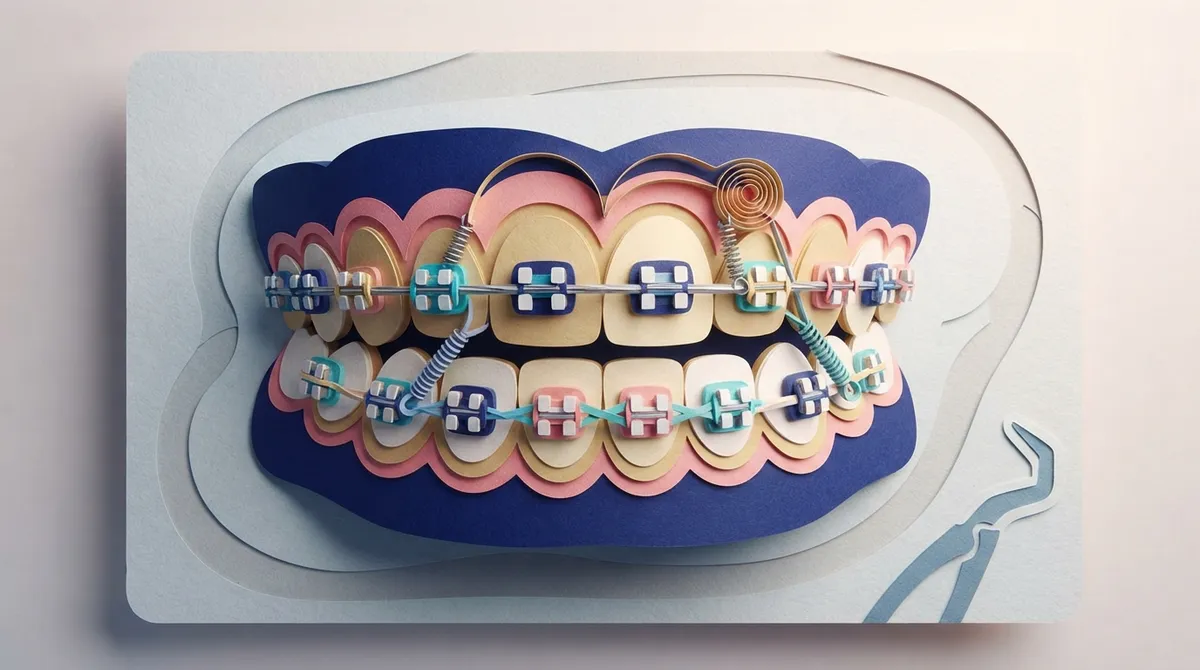
Think of braces like a team. No single piece does all the work. Instead, each part passes along gentle, steady pressure that guides your teeth into better positions over time.
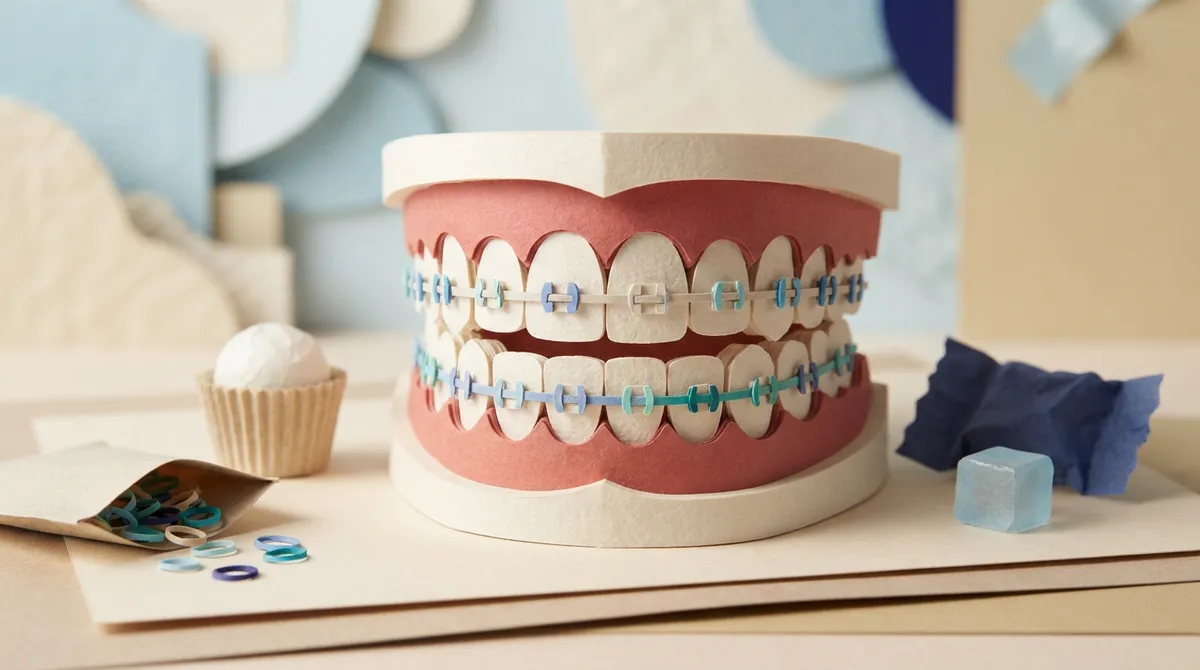
Fixed braces use a system of attachments. Brackets attach to your teeth. An archwire connects them. Small ties or built-in clips hold the wire in place. Depending on your plan, your orthodontist may add extras like elastics, power chains, springs, or molar bands. Not every patient needs every part, and that’s perfectly normal.
The American Association of Orthodontists describes these core pieces and their jobs in its patient resources. Below, we’ll break each one down so you know what you’re looking at in the mirror.
Parts of Braces Explained: The Core Components
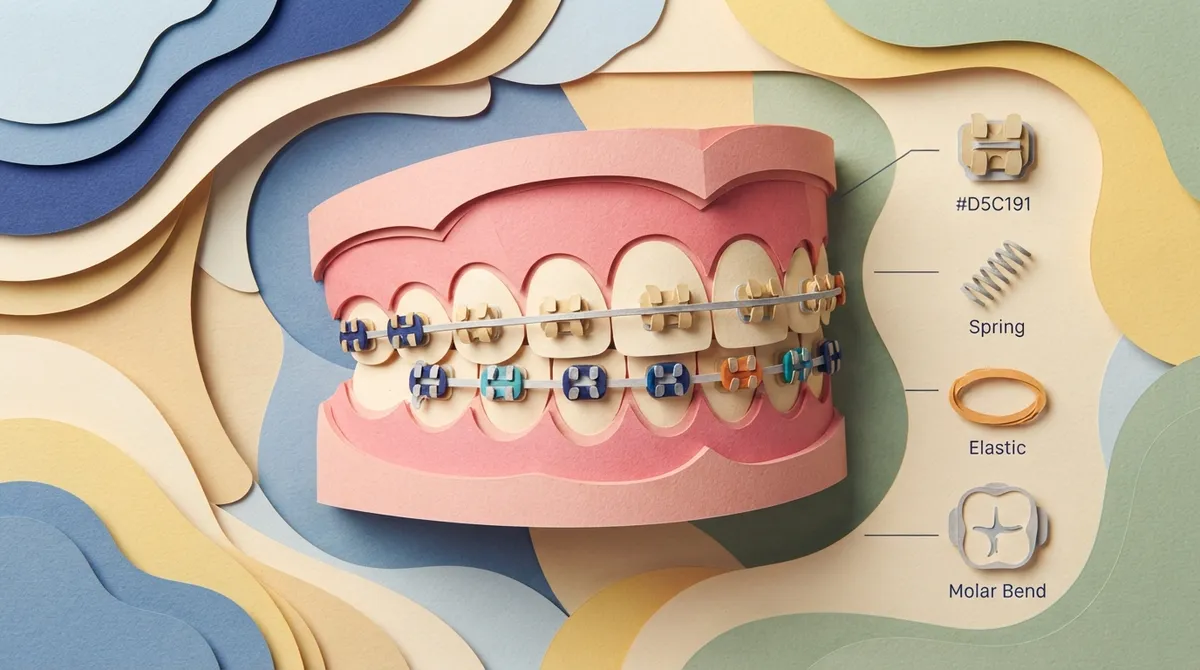
Let’s start with the parts almost everyone has. These are the heroes of your treatment.
Brackets
Brackets are the small squares bonded to the front of your teeth. Each bracket has a slot that holds the archwire. That slot helps send force from the wire to your tooth. Brackets can be metal or ceramic (tooth-colored), depending on the look you want. You can learn more about all about braces and your bracket options on our website.
Archwire
The archwire runs through every bracket like a track. It applies controlled pressure that guides your teeth. As your treatment moves along, your orthodontist may swap the wire or change its shape. Early wires are often thin and flexible. Later ones can be thicker and firmer.
Ligatures and Self-Ligating Clips
Ligatures hold the archwire inside the bracket slot. They come as tiny elastic rings or thin metal ties. Some brackets are self-ligating, which means they have a built-in clip or door instead of separate ties. Both styles do the same basic job: keep the wire snug and working.
Molar Bands and Buccal Tubes
Molar bands are metal rings cemented around selected back teeth. They give extra support or anchorage. Buccal tubes are small hollow attachments, often on a molar or molar band. They hold the end of the archwire and can serve as attachment points for other appliances. Not everyone needs bands, so don’t worry if yours look different from a friend’s.
Helpful Extras Your Orthodontist May Add
Some treatment plans need a little extra help. These parts are used when your orthodontist wants to guide a bite or close a space.
- Hooks: Small hooks on brackets or bands where elastics can attach.
- Interarch elastics: Rubber bands that connect the upper and lower teeth to help correct how your bite fits together.
- Power chains: Linked elastic rings that stretch across several teeth to help close spaces.
- Springs: Small coils that open or close space between teeth.
Remember, your plan is built just for you. Your friend may wear elastics while you never do, and that’s completely fine. Follow your orthodontist’s instructions for how and when to wear anything extra.
Quick Reference Table: Each Part and Its Job
| Part | What It Looks Like | What It Does | Needed by Everyone? |
|---|---|---|---|
| Bracket | Small metal or ceramic square on each tooth | Holds the archwire and passes force to the tooth | Yes (for fixed braces) |
| Archwire | Thin wire running across the teeth | Guides teeth with controlled pressure | Yes |
| Ligature | Tiny rubber ring or metal tie | Secures wire in the bracket slot | Depends (not needed with self-ligating) |
| Molar band | Metal ring on a back tooth | Adds support and anchorage | No |
| Buccal tube | Small attachment on a molar | Holds the end of the archwire | Often, but not always |
| Elastics | Rubber bands linking upper and lower hooks | Helps correct the bite | No |
| Power chain | Connected elastic rings | Closes spaces across several teeth | No |
| Spring | Small coil on the wire | Opens or closes space | No |
10 Mistakes to Avoid With the Parts of Your Braces
Now that you know the cast of characters, let’s talk about the slip-ups that can slow you down. These are easy to fix once you know about them!
1. Mixing Up Ligatures and Elastics
This one trips up a lot of people. Ligatures are the tiny rings or ties that hold the archwire in place. They stay on between visits. Elastics are the larger rubber bands you may hook between your upper and lower teeth. You usually remove and replace elastics yourself, but never take off your ligatures. If you’re unsure which is which, just ask us at your next visit.
2. Skipping Your Elastics
If your orthodontist gives you elastics, they are working hard to fix your bite. Wearing them only “when you remember” can stretch your treatment time. Follow the wear schedule you were given, and keep spare bands in your bag, backpack, or car.
3. Bending or Poking the Archwire
It’s tempting to push on a wire that feels annoying. Please don’t! Bending it can change the force on your teeth. If a wire pokes your cheek, a bit of orthodontic wax can help until you’re seen. Our guide on DIY wire fixes versus an orthodontist visit explains what is safe at home.
4. Ignoring a Loose Bracket
A bracket that has popped off can’t pass force to the tooth. That tooth stops moving, and your plan can slip behind. Call your orthodontist as soon as you notice it. Not sure how urgent it is? Read about a broken bracket versus a poking wire to see what counts as a real emergency.
5. Chewing Hard or Sticky Foods
Hard nuts, ice, and chewy candy can snap brackets or bend wires. It’s one of the most common reasons for extra visits. Check our foods to avoid with braces list so you can enjoy snacks without the stress.
6. Brushing Around Brackets Too Quickly
Food and plaque love to hide around brackets, bands, and under the wire. A quick swipe isn’t enough. Take your time, angle the brush toward the gumline, and clean above and below each bracket. Our tips on how to brush teeth with braces can help you build a solid routine.
7. Forgetting to Floss Under the Wire
Regular floss can’t slide under the archwire easily, so many people skip it altogether. Try floss threaders or a water flosser to reach those tight spots. Clean teeth around your hardware mean healthier gums and a brighter smile when the braces come off.
8. Not Calling About a Slipped Band or Tube
If a molar band feels loose or a buccal tube shifts, it can rub your cheek or lose its grip. These pieces anchor your wire, so a loose one can throw things off. Give us a call instead of waiting for your next scheduled visit.
9. Fixing Things Yourself With Household Tools
Tweezers, nail clippers, and pliers might seem like a quick fix. They can also damage your braces or hurt your mouth. Use orthodontic wax for comfort, and let your orthodontist handle repairs. Wondering what can wait and what can’t? See emergency versus routine orthodontics for a simple breakdown.
10. Missing Adjustment Visits
Your archwire and ties are checked and often changed at regular visits. Skipping appointments means your teeth may stop making progress. Those visits are small steps that add up to a big finish, so keep them on your calendar.
What About Clear Aligners?
Not everyone wants brackets and wires, and that’s okay! Clear aligners use a series of custom trays instead of fixed parts. At Brockway Orthodontics, we offer Spark™ Clear Aligners, which many adults and teens love for their discreet look. If you’re weighing your choices, our guide to traditional braces versus clear aligners can help you decide.
What to Do If a Part Breaks or Comes Loose
Don’t panic! It happens to plenty of patients, and it’s usually fixable. Here’s a simple plan to follow:
- Stay calm and check what is loose, broken, or poking.
- Cover sharp spots with a small piece of orthodontic wax.
- Rinse gently with warm salt water if your mouth feels sore.
- Keep any loose piece and bring it with you to your visit.
- Call your orthodontist so they can tell you how soon to come in.
If you’re in the area and need quick help, our team offers fast, friendly emergency care for kids, teens, and adults.
Tips for Every Member of the Family
Braces journeys look different at every age, so here are a few quick pointers.
- Parents: Help younger kids learn the names of their parts. It makes it easier for them to tell you what feels off. See our page on adolescent treatment to learn more.
- Teens: Keep a small kit with wax, a travel toothbrush, and spare elastics. It’s a lifesaver before big events like graduation.
- Adults: Busy schedule? Ask about options that fit your life, including discreet ceramic brackets. Learn more about adult treatment.
- Retreatment patients: If your smile has shifted since your first round, a fresh plan and a retainer routine can keep it steady. Visit our retainers page for details.
Why Choose Brockway Orthodontics in Clearwater
At Brockway Orthodontics, we believe understanding your treatment makes it easier to love the process. Dr. Brockway takes time to listen to your goals and explain what each part of your braces is doing. You can meet Dr. Brockway and see why so many Clearwater families trust her care. We use modern tools like digital impressions and 3D imaging, and in some cases we can offer same-day treatment to fit your busy schedule.
Curious what other patients think? Visit us on Google — Brockway Orthodontics to read real reviews from our Clearwater community. For general oral health guidance, the American Dental Association is a trusted resource, and you can find more about orthodontic standards through the Florida Association of Orthodontists. We also love sharing smile stories on Instagram, so come say hello!
Your Next Step Toward a Confident Smile
Now you know the parts of braces explained from brackets to buccal tubes, and you know the mistakes that can trip people up. A little knowledge goes a long way. When you understand what each piece does, you can care for your braces with confidence and spot small problems before they grow.
Have questions about your own treatment or thinking about starting? We would love to meet you. Book your appointment online and let’s talk about a plan that fits you or your family. Prefer to chat first? Just contact us, and our friendly team will be happy to help.
FAQs
Q: What are the main parts of braces and what does each one do?
A: The core parts are brackets, an archwire, and ligatures or built-in clips. Brackets are bonded to your teeth, the archwire runs through them to guide movement, and ties or clips hold the wire in place. Some plans also add molar bands, buccal tubes, elastics, power chains, or springs.
Q: What is the difference between braces ligatures and orthodontic elastics?
A: Ligatures are the tiny rings or thin metal ties that hold the archwire in each bracket, and your orthodontist places them. Elastics are larger rubber bands that connect upper and lower hooks to help correct your bite. You usually change elastics yourself, following your orthodontist’s schedule.
Q: Do all braces have hooks, power chains, or springs?
A: Nope! Those extras are only used when your treatment plan calls for them. Hooks hold elastics, power chains help close spaces, and springs open or close gaps. Many patients wear braces without any of these, and that is completely normal.
Q: What should I do if a bracket, wire, or band comes loose?
A: Stay calm and cover any sharp or poking spot with orthodontic wax. Save the loose piece if you can, then call your orthodontist so they can tell you how soon to come in. Please avoid fixing it yourself with tools, since that can cause damage.
Q: How do self-ligating braces differ from traditional braces?
A: Traditional braces use small elastic or metal ties to hold the archwire in each bracket. Self-ligating braces have a built-in clip or door that holds the wire instead. Both do the same job, so the best choice depends on your treatment plan and your orthodontist’s recommendation.
Our Service Area