Key Takeaways
-
Do not force a retainer that will not fully seat; pushing or biting it on can crack the appliance and hurt your teeth and gums. Stop and contact an orthodontist instead.
-
Mildly snug retainers that fully seat without significant pain may reflect minor tooth movement; follow your prescribed wear schedule and call if tightness persists or worsens.
-
Never try to fix a retainer at home with heat, pliers, or trimming, since heat can warp plastic and bent wires can alter pressure on your teeth in unpredictable ways.
-
Bring the retainer to your orthodontist along with details like when it last fit, how often you wore it, any heat exposure, and any damage or pain for a faster, more accurate evaluation.
-
Outcomes range from continuing your current plan or adjusting or replacing the retainer to monitoring small changes, with braces or aligners considered only if teeth have moved beyond what a retainer can handle.
-
Loose or broken fixed (bonded) retainers need prompt professional attention, since fixed-retainer failures most often occur in the first 3 to 6 months after placement.
You pull your old retainer out of its case, give it a hopeful nudge, and… nothing. It will not slide on the way it used to. Maybe it feels tight. Maybe it will not go on at all. First, take a breath. This happens to lots of people, and you are not in trouble.
When an old retainer no longer fits, it usually means one of two things. Your teeth may have moved a little, or the retainer itself may have changed shape. Sometimes it is both. The good news is that a quick visit to an orthodontist can tell you which one it is and what to do next.
In this friendly guide, we walk through five clear steps. You will learn what to do right now, what not to do, and how to get your smile back on track. This advice is helpful whether you are a parent checking on your teen’s retainer, a busy professional who tucked yours away years ago, or an adult thinking about starting fresh.
Why an Old Retainer Stops Fitting
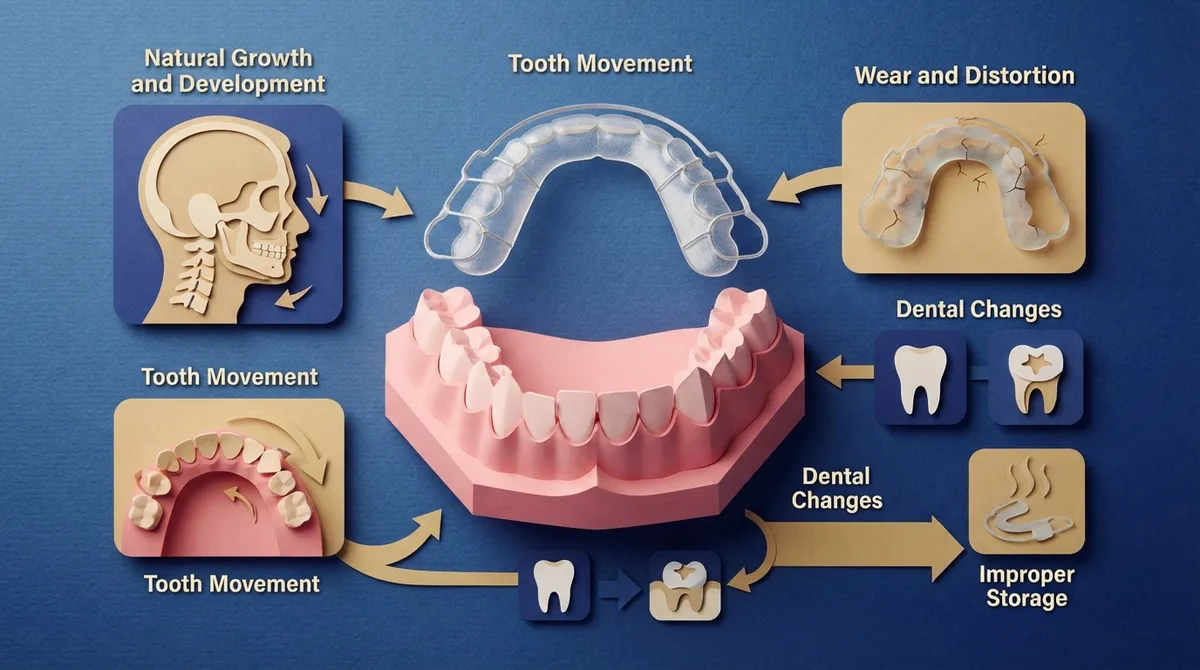
Before we get to the steps, it helps to know why this happens. Teeth are not stuck in place forever. They can drift over time, even after great orthodontic work.
Here are the most common reasons a retainer stops fitting:
- Skipped or inconsistent wear. Teeth can shift after treatment, especially when removable-retainer wear becomes irregular or stops.
- Normal changes with growth and aging. Our mouths keep changing throughout life.
- Changes in supporting tissues. The gums and bone around your teeth can change over time.
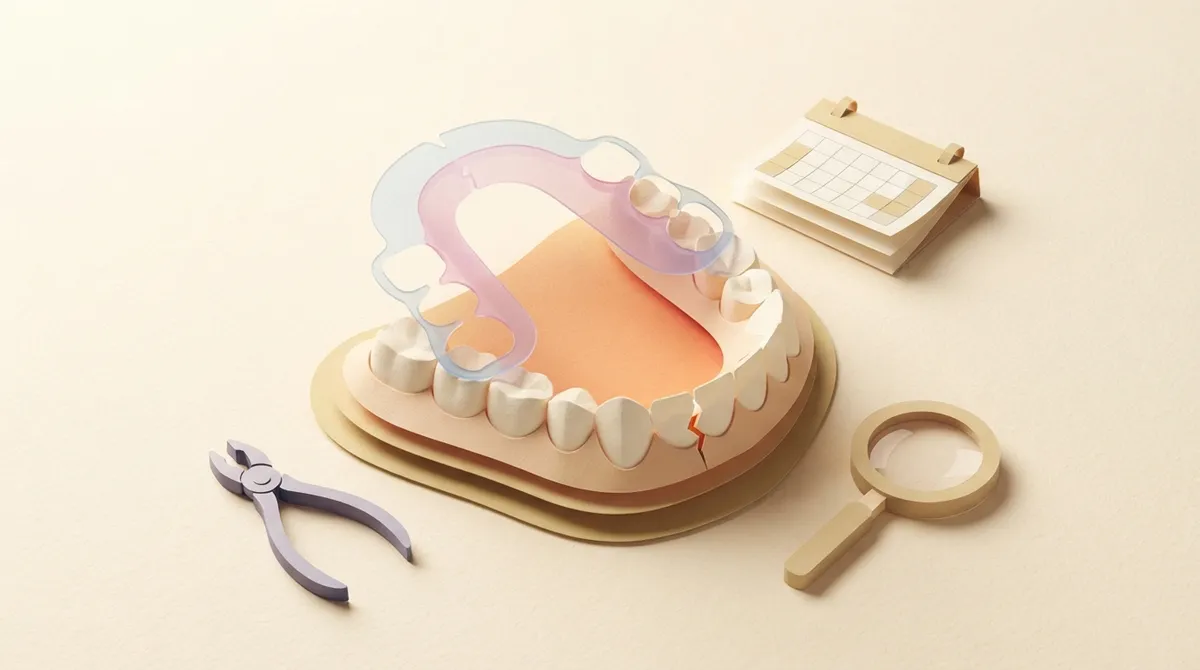
- A damaged or warped retainer. Cracks, bends, and heat exposure can change the shape of the appliance.
You may wonder how common this is. A 2023 qualitative study of 23 university students found that 8 of them (35%) were no longer wearing retainers. Of those eight, three said the retainer no longer fit. That was a small study, so it is not a number for the whole population. Still, it shows how easily this can happen in real life.
Step 1: Stop and Do Not Force It
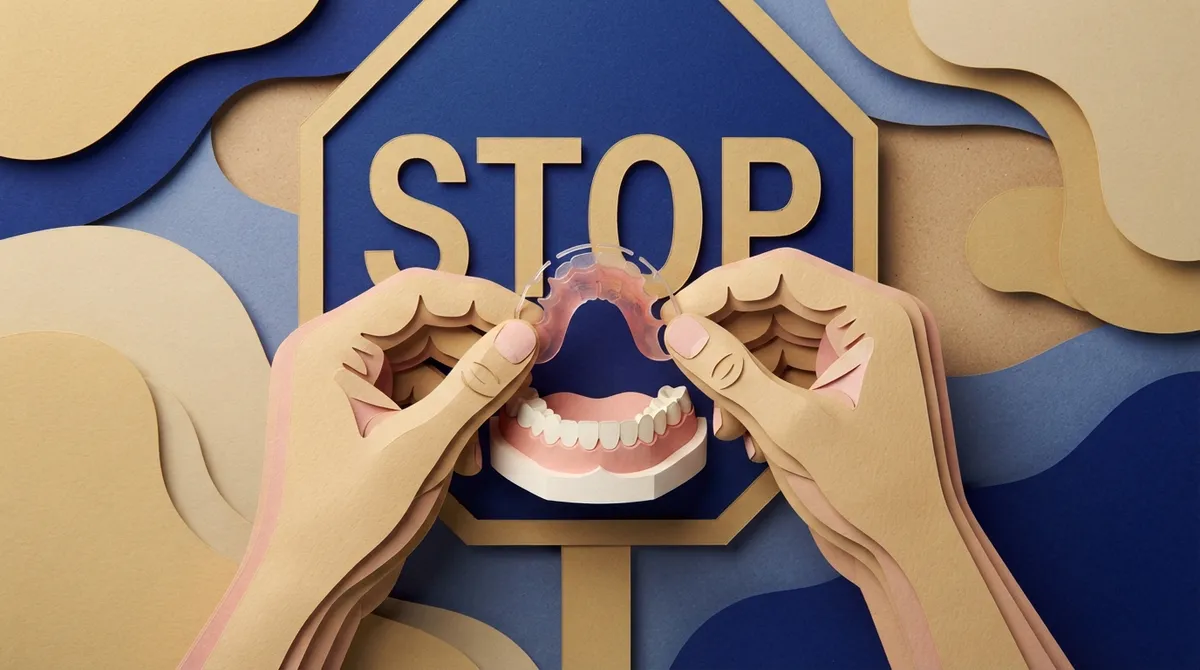
This is the most important step. If your retainer will not seat fully, do not push it into place.
Forcing a retainer can hurt your teeth and gums. It can also crack or bend the appliance. Please do not bite down on it to “snap” it in, either.
When to Stop Right Away
Do not force your retainer if any of these are true:
- It will not fully seat on your teeth
- You have to bite or use hard pressure to get it on
- It causes sharp or significant pain
- It keeps popping out on its own
- It looks cracked, bent, or warped
If you see any of these signs, set the retainer down gently and contact an orthodontist. A short assessment can save you from bigger problems later.
Step 2: Check Whether It Is Mildly Snug or Truly Stuck
Not every tight retainer is a red flag. There is a big difference between a retainer that feels a little snug and one that simply will not go on.
A retainer that feels mildly snug but fully seats, with no significant pain, may point to a small amount of tooth movement. In that case, follow the wear schedule your orthodontist gave you. Do not assume that wearing it extra hours is right for everyone, because every mouth is different. If the tightness lasts or gets worse, call your orthodontist.
A Quick Comparison
| What You Notice | What It May Mean | What To Do |
|---|---|---|
| Feels mildly snug, fully seats, no real pain | Possible minor tooth movement | Follow your prescribed schedule and call if tightness continues or worsens |
| Will not fully seat | Teeth may have moved more, or the retainer may be distorted | Do not force it; contact an orthodontist |
| Sharp or significant pain | Pressure is too great for the appliance to be safe | Stop wearing it and book an evaluation |
| Cracked, bent, or warped | The appliance has changed shape | Do not use it; ask about repair or replacement |
| Keeps popping out | Poor fit from movement or damage | Get it checked soon |
Step 3: Do Not Try to Fix It Yourself
It is tempting to grab a pair of pliers or run the retainer under hot water. Please resist! Home fixes often make things worse.
Do not bend, heat, trim, or otherwise modify your retainer. Heat can warp plastic. Bending wires can change the pressure on your teeth in ways you cannot see. A retainer that is changed at home may fit even worse, or it may push teeth in the wrong direction.
If you want a deeper look at what to do when something goes wrong with the appliance, our guide on what to do if your retainer breaks is a handy next read.
Small Habits That Protect Your Retainer
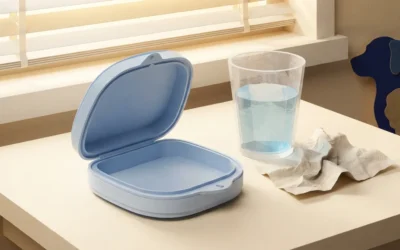
- Keep it in its case when it is not in your mouth
- Keep it away from hot water, hot cars, and sunny windowsills
- Clean it gently, as your orthodontist advises
- Never wrap it in a napkin at lunch (this is how so many get thrown away!)
Good care helps your retainer last. Retainers do need ongoing care, and they can wear out or lose their shape over time. The American Association of Orthodontists advises contacting an orthodontist when a retainer no longer fits the way it did before.
Step 4: Gather Details and Book an Orthodontic Visit
Now it is time to get a professional opinion. An orthodontist can check both your teeth and the appliance, then decide what makes sense for you.
Bring your retainer to the appointment if you can. It gives your orthodontist helpful clues. It also helps to think through a few questions before you go.
What to Tell Your Orthodontist
- When it last fit comfortably. Even a rough guess helps.
- How often you have worn it. Be honest. There is no judgment here, and the truth helps us help you.
- Whether it was exposed to heat. Think hot water, a dishwasher, or a warm car.
- Whether it was dropped or damaged. Mention any cracks, bends, or chewed spots.
- Any pain, soreness, or changes in your bite. These details matter.
At Brockway Orthodontics in Clearwater, Dr. Brockway takes the time to listen and explain your options in plain, friendly language. If you are not sure what to expect from a visit, take a peek at Your First Visit so you feel prepared.
Step 5: Choose the Right Next Move
After the exam, your orthodontist will recommend a path forward. The plan depends on what is going on with your teeth and your retainer. There are a few common outcomes.
Possible Outcomes After Your Evaluation
- Continue your current plan. If the fit is fine and any change is small, you may simply keep following your wear schedule.
- Adjust the retainer. A professional can make safe changes when appropriate.
- Replace the retainer. If it is warped, worn out, or too far off, a new one may be the best choice.
- Monitor a small change. Sometimes watching and waiting is the wisest option.
- Discuss limited orthodontic treatment. If teeth have moved beyond what a retainer can handle, braces or aligners may be worth considering.
Retention needs are different for everyone. That is why it is best to follow your orthodontist’s instructions instead of making up your own wear schedule. You can learn more about your options on our Retainers page, or read about how to wear a retainer after braces and keep your smile.
What If Your Teeth Have Moved Too Far?
Sometimes a new retainer is not enough. If your teeth have shifted a lot, your orthodontist may talk with you about retreatment. This is more common than you might think, and there is nothing embarrassing about it.
Many adults come back after years because their smile has changed. They want a fresh start, and they are willing to invest in quality care. If that sounds like you, you have options. Brockway Orthodontics offers Spark™ Clear Aligners, metal braces, and ceramic (clear) braces. Spark™ Clear Aligners are a more affordable alternative to Invisalign, and they work well for many adults and teens who want a discreet option.
Curious about how each choice compares? Our guide on traditional braces vs. clear aligners breaks it down. You can also explore Spark™ Clear Aligners or All About Braces to see what might suit your lifestyle.
What About Fixed (Permanent) Retainers?
Not all retainers come out of your mouth. A fixed retainer is a thin wire bonded behind your teeth. If yours feels different, seems loose, or has a broken bond, it needs prompt professional attention.
A detached or damaged fixed retainer may no longer hold your teeth as intended. Please do not try to repair it yourself. Call your orthodontist and let them take a look.
It also helps to know that fixed retainers can fail sometimes. A 2021 systematic review reported fixed-retainer failure rates ranging from 7.3% to 50% across included studies, and a 2022 review reported bonded-retainer failure rates from 11% to 53%. These wide ranges come from differences in study methods, follow-up time, and retainer designs. They are not a prediction for any one person. The 2021 review also found that failures most often happened in the first 3 to 6 months after placement, though they can happen later too.
One 2024 review compared retention approaches. It reported mean occlusal changes of 0.2 mm for fixed retainers and 0.5 mm for removable appliances, with relapse rates of 8% and 20%. Those are review-specific estimates, not universal rates. The main takeaway is simple: no retainer is perfect, and regular check-ins matter.
Tips for Different Readers
Every family and every lifestyle is a little different. Here are some friendly pointers based on who you are.
For Parents of Kids and Teens
Teens are famous for losing and forgetting retainers. Try a bright case and a set spot at home, like a bathroom drawer. If your child says the retainer feels tight or will not go on, do not let them force it. Book a visit so a pro can check it. You can read more about adolescent treatment to see how we care for growing smiles.
For Young Adults and Busy Professionals
Life gets busy, and retainer habits can slide. If it has been a while, do not wait for a big event to notice a change. A quick visit is easier than a rush before a wedding, graduation, or big presentation. Our adult treatment options are designed to fit real schedules.
For Anyone Returning After Relapse
If you had braces years ago and your teeth have drifted, you are not alone. A fresh evaluation can show whether a new retainer, a short round of treatment, or a full plan is the best fit.
Easy Ways to Avoid This Problem Next Time
Once you are back on track, a few simple habits can help your retainer fit for the long haul:
- Wear it as directed. Follow the schedule your orthodontist gives you.
- Store it safely. Always use the case.
- Keep it cool. Avoid heat of any kind.
- Bring it to checkups. A quick look can catch wear early.
- Call early. If anything feels off, reach out right away instead of waiting.
Want more guidance on long-term care? Our post on how to use orthodontic retainers to keep your smile has more ideas. You can also learn about trusted organizations like the American Dental Association and the Florida Association of Orthodontists for general oral health resources.
Ready to Get Your Retainer Sorted Out?
If your old retainer no longer fits, you do not have to figure it out alone. The sooner you have it checked, the easier it usually is to protect the smile you worked hard for. See what other patients say by reading Brockway Orthodontics reviews and visiting us on Google — Brockway Orthodontics.
Dr. Brockway and our friendly team are here to help kids, teens, and adults in Clearwater feel confident about their smiles. Whether you need a new retainer, a quick adjustment, or a conversation about retreatment, we are happy to walk you through it. Book your appointment online today, or contact us with any questions. We cannot wait to help you smile with confidence again!
FAQs
Q: What should I do if my old retainer no longer fits?
A: Stop and do not force it onto your teeth. Gently set it aside and contact an orthodontist for an assessment. Bring the retainer to your visit if you can, and share when it last fit comfortably and how often you wore it.
Q: Is it safe to wear a retainer that feels tight but still fits?
A: If it feels mildly snug, fully seats, and causes no significant pain, that may reflect minor tooth movement. Follow the wear schedule your orthodontist gave you, and call if the tightness lasts or gets worse. Please do not add extra wear time on your own.
Q: Can an orthodontist adjust or replace an old retainer?
A: Yes! An orthodontist can check your teeth and the appliance, then decide whether to keep your current plan, adjust the retainer, replace it, or monitor a small change. If your teeth have moved a lot, they can also talk with you about limited treatment.
Q: Will I need braces or clear aligners if my retainer no longer fits?
A: Not always. A small change may only need a new retainer or some monitoring. If your teeth have moved beyond what a retainer can handle, your orthodontist may discuss braces or clear aligners like Spark™ to guide them back.
Q: What should I do if my permanent retainer is loose or broken?
A: Call your orthodontist promptly. A detached or damaged fixed retainer may no longer hold your teeth the way it should. Please do not try to repair it yourself at home.
Our Service Area