Key Takeaways
-
Orthodontists review dental and medical history alongside clinical exams and X-rays, since history explains how teeth got their current position and what may affect treatment.
-
Past tooth injuries and root canal treatment don't rule out braces or aligners, but they often lead to closer monitoring with exams and X-rays during treatment.
-
Share every medication, supplement, allergy (such as latex or certain metals), and chronic condition, because these can affect healing, bleeding risk, and treatment timing.
-
Active gum disease can change the risk of moving teeth, so orthodontists may treat gum concerns first or coordinate with a dentist or periodontist before starting.
-
Oral habits like thumb sucking, tongue thrust, teeth grinding, and mouth breathing can shift tooth position, so disclosing them helps your team add the right support.
-
Health history is not a one-time form; update your orthodontist about new medications, medical changes, or tooth injuries throughout treatment to keep your plan safe.
Picture this: you walk into your first orthodontic visit, ready to talk about straighter teeth, and the first thing you get handed is a clipboard full of questions. Did you chip a tooth playing soccer in sixth grade? Do you take any medications? Have you ever had a root canal? It can feel like a lot before anyone even looks at your smile!
Here is the good news. Those questions are not busywork. They are the foundation of safe, personalized care. Understanding why orthodontists review dental history helps you feel more relaxed, more prepared, and more confident about the road ahead.
In this friendly guide, we will walk through what your orthodontist is looking for, how past dental work and health conditions can change a treatment plan, and what you can do to make that first appointment smooth. Whether you are a parent booking a visit for your child, a teen eager for a new smile, or an adult returning for retreatment, this one is for you.

The Short Answer: History Helps Orthodontists Treat You Safely
Orthodontists review dental and medical history to build an accurate diagnosis. They want to know whether treatment is appropriate, when it should begin, and what precautions might be needed. Your history is read alongside a clinical exam and diagnostic records. It does not replace them, but it adds important context that no photo or X-ray can show on its own.
Think of it like a map. X-rays and scans show where your teeth are today. Your history explains how they got there and what might affect the journey ahead. Together, they let your orthodontist plan a route that fits you.
Here are the main goals of a history review:
- Diagnose accurately: Past events often explain why teeth are crowded, shifted, or missing.
- Spot risk factors: Certain conditions can affect healing, gum health, or how teeth respond to gentle pressure.
- Choose the right treatment: Braces, clear aligners, or a phased approach may fit better depending on your background.
- Set realistic expectations: Knowing your habits and health helps predict timing and follow-up needs.
What Dental History Does Your Orthodontist Want to Know?
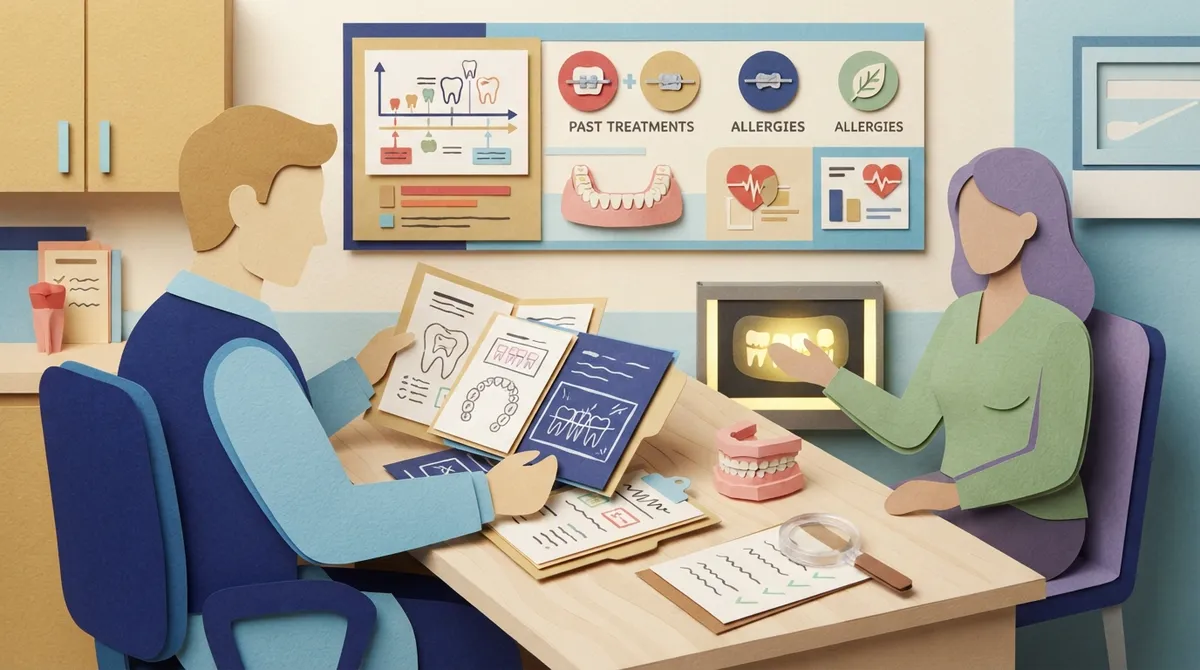
Dental history is the story of your teeth and jaws. Even small details can matter. During your visit, your orthodontist may ask about the following.
Previous Orthodontic Treatment
If you wore braces or aligners before, your orthodontist will want to know when, for how long, and whether you wore your retainers. This is especially helpful for adults whose teeth have shifted over time. If this sounds like you, our article on orthodontic relapse warning signs explains what to watch for.
Missing or Restored Teeth
Missing teeth, crowns, bridges, fillings, and implants can all change how teeth can move. Some restorations cannot shift like natural teeth, so your plan may need to work around them. If you are curious, we cover this in Can I Get Braces With Missing Teeth?
Root Canals and Ongoing Dental Problems
Teeth with past root canal treatment, cavities, or infections need extra attention. Your orthodontist wants to make sure everything is healthy before tooth movement begins. In fact, we explain why cavities need attention before orthodontic treatment in a separate guide.
Jaw Joint Symptoms
Clicking, popping, or soreness in the jaw joint is worth mentioning. These symptoms can influence how your bite is evaluated and how treatment is monitored.
Oral Habits
Thumb sucking, nail biting, teeth grinding (bruxism), tongue thrusting, and mouth breathing can all affect tooth position. Telling your orthodontist about them is not a confession. It is simply useful information! Habits like these can influence results, and knowing about them lets your care team build in the right support.
Past Tooth or Jaw Injuries
Did you ever take a ball to the face or fall off a bike as a kid? Many people forget. Your orthodontist will ask, because prior trauma can change how a tooth responds to treatment.
Why a Past Tooth Injury or Root Canal Really Matters
This is one of the most important reasons for a history review. A tooth that has been injured or treated with a root canal may have altered roots or a different response to orthodontic forces. That does not mean treatment is off the table. It means your orthodontist may plan more carefully and monitor those teeth more closely.
Research backs this up. A review on orthodontic management of traumatized and endodontically treated teeth reported that about 10.8% of orthodontic candidates in one cited study had a history of dental trauma before treatment. That number is specific to that study and not a universal rate, but it shows just how common past injuries are.
The same review notes that severe root resorption (when the root of a tooth shortens more than usual) occurs in roughly 1% to 5% of patients during orthodontic treatment, depending on how it is defined. A separate 2014 review reported a similar range and also noted that most root changes seen with orthodontics are small and clinically insignificant. These figures are not predictions for any one person, but they explain why clinicians document trauma and prior root canal care and then check those teeth with an exam and X-rays.
Because patients do not always remember every bump or bruise, orthodontists rely on both your history and their own clinical findings.
How Medical History and Medications Come Into Play
You might wonder, "What does my asthma medication or thyroid condition have to do with my teeth?" More than you would think!
Medical conditions and medications can influence oral health, healing, bleeding risk, infection risk, and the safety or timing of dental procedures. When a significant condition could affect or limit treatment, orthodontic guidance recommends understanding it before planning begins and consulting your physician when appropriate.
Here are examples of things worth sharing:
- Medications and supplements: Include prescriptions, over-the-counter products, and vitamins.
- Allergies: Latex and certain metals are common ones for orthodontic materials.
- Chronic conditions: Diabetes, bleeding disorders, heart conditions, and immune concerns can all matter.
- Surgeries and hospital stays: Recent or planned procedures may affect timing.
- Pregnancy or plans for it: This can influence imaging and timing decisions.
Please do not worry about being judged. Your orthodontist is simply gathering the information needed to protect your health while straightening your smile.
Gum Health: A Big Piece of the Puzzle
Healthy teeth need healthy support. Periodontal health matters before and during tooth movement. Active gum disease or reduced bone and soft-tissue support can change the risk profile of treatment.
A 2025 expert consensus on orthodontic care for patients with periodontal disease emphasizes systematic periodontal assessment before treatment, including patient history, a clinical exam, and radiographic evaluation. When needed, your orthodontist may coordinate with a general dentist or periodontist to decide whether treatment should be delayed, modified, or monitored more closely.
This is especially relevant for health-conscious patients and adults. If you have had gum concerns, bleeding when you brush, or loose teeth, speak up. You can learn more in our guide on why gum health matters before adult braces.
Habits and Everyday Factors That Shape Your Plan
History-taking is not only about teeth and medical charts. It also covers practical, everyday factors that influence results.
| History Detail | Why It Matters | How It May Affect Your Plan |
|---|---|---|
| Oral hygiene routine | Plaque around braces or aligners can irritate gums | Extra hygiene coaching or more frequent checkups |
| Smoking or vaping | Affects gum health and healing | Tailored prevention and follow-up |
| Thumb sucking or tongue thrust | Can push teeth out of position | Habit support or added appliances |
| Teeth grinding | Wears teeth and stresses the bite | Retainer or night guard recommendations |
| Ability to follow instructions | Aligners and elastics need consistent wear | Choosing a treatment style that fits your routine |
Knowing these things helps your orthodontist set realistic expectations and suggest the option most likely to succeed for you. If you are weighing options, you may enjoy our comparison of braces vs. clear aligners.
Why Your History Is Not a One-Time Form
Here is something many people do not realize. Your health history is not a "fill it out once and forget it" document. Orthodontic guidelines, including a clinical guideline from the Dubai Health Authority, recommend reviewing health history before treatment, updating it at regular intervals, and checking it at later visits.
Why? Because life changes. You might start a new medication, have a medical procedure, break a tooth at the gym, or become pregnant partway through treatment. Any of these could affect your care.
That is also why regular visits matter. If you are curious about the rhythm of appointments, take a peek at why orthodontic checkups matter so much.
How Your History Connects to Your Treatment Options
Your background can guide the choice between braces, aligners, or a phased plan. For example:
- Children and teens: History of early tooth loss, habits, or injuries can shape whether early treatment makes sense. Parents may find when your child should see an orthodontist helpful.
- Adults with past dental work: Crowns, bridges, and implants may influence how teeth can move and which appliances fit best.
- Retreatment patients: Knowing why teeth shifted (missed retainer wear, growth changes, habits) helps prevent it from happening again.
- Patients with gum or medical concerns: Treatment may be timed, modified, or monitored more closely, sometimes with help from your dentist or physician.
In every case, the goal is the same: a plan that is safe, effective, and tailored to you. This is the heart of what we do at Brockway Orthodontics, where Dr. Brockway takes the time to listen to your story, your concerns, and your goals before recommending a path forward.
How to Prepare for Your First Orthodontic Appointment
A little prep makes your visit faster and more useful. Here is a simple checklist to follow.
- Make a medication list. Include prescriptions, over-the-counter items, and supplements.
- Gather records. Bring recent dental X-rays, past orthodontic records, or notes about root canals and oral surgery if you have them.
- Jot down past injuries. Think about falls, sports accidents, or any time a tooth was knocked or chipped.
- Note allergies. Latex, metals, and medications are the big ones.
- Write down symptoms. Jaw clicking, tooth sensitivity, bleeding gums, or headaches are all worth mentioning.
- Bring your questions. There are no silly ones!
For more preparation tips, check out how to prepare for your first visit to an orthodontist and what dental records to bring. The American Association of Orthodontists also shares a helpful overview in What to Expect at Your First Orthodontic Appointment.
Tips for Sharing Your History Comfortably
Some people feel shy about discussing health details. Here are a few friendly reminders:
- Everything is confidential. Your information is used only for your care.
- Honesty helps most. Even habits you feel a little embarrassed about, like nail biting, are useful clues.
- Mention anything that seems unrelated. A condition that seems far from your mouth can still matter.
- Parents, speak up for your kids. Share what you know about their early dental history, habits, and any bumps along the way.
Our team loves explaining things in a simple, friendly way so you always know why a question is being asked. If you ever wonder, just ask!
Why This Matters for You
At the end of the day, reviewing dental history is about safety and success. It helps your orthodontist avoid surprises, protect your oral health, and build a treatment plan that actually fits your life. It also shows that your care team sees you as a whole person, not just a set of teeth.
Whether you are exploring braces for the first time, considering clear aligners, or coming back after a relapse, a thorough history gives your plan a strong start. You can also read more about the exam process in what to expect during your orthodontic exam, or learn how dental history informs a bite assessment.
For general guidance on oral health and dental care, the American Dental Association is a trusted resource. And if you would like to see what other families say about their experience, you can read Brockway Orthodontics reviews on Google.
Ready to Start Your Smile Journey?
Now you know that every question your orthodontist asks has a purpose: keeping you safe and getting you the best possible result. If you are ready to take the next step, Brockway Orthodontics in Clearwater, Florida, would love to meet you. We offer Spark™ Clear Aligners, metal braces, and ceramic braces for patients of all ages, with modern tools like digital impressions and 3D imaging to make your visit comfortable.
Ready to chat? Book your appointment online or contact us with any questions. Bring your questions, your medication list, and your biggest smile goals. We will take care of the rest!
FAQs
Q: Why does an orthodontist ask about my medical history?
A: Your medical history helps your orthodontist keep you safe and plan treatment that fits your health. Conditions and medications can affect healing, gum health, and bleeding or infection risk, so it is best to share them up front. If something could limit treatment, your orthodontist may check in with your physician.
Q: Can a past tooth injury affect braces or aligners?
A: Yes, it can! A tooth that was injured or had a root canal may respond differently to orthodontic forces, so your orthodontist may monitor it more closely with exams and X-rays. It does not mean you cannot have treatment, just that your plan is made with extra care.
Q: Should I tell my orthodontist about medications and supplements?
A: Absolutely. Bring a current list of prescriptions, over-the-counter medicines, and supplements to your first visit. Even products that seem unrelated to your teeth can matter, and sharing them helps your care team plan safely.
Q: How often should I update my health history during orthodontic treatment?
A: Your history should be reviewed before treatment starts, updated at regular intervals, and checked at later visits. Tell your orthodontist right away if you start a new medication, have a medical change, or injure a tooth, so your plan stays safe and on track.
Q: Can gum disease delay orthodontic treatment?
A: It can. Active gum disease changes the risk of moving teeth, so your orthodontist may recommend treating gum concerns first or monitoring them more closely. Sometimes your dentist or a periodontist will work alongside your orthodontist to get your smile ready.
Our Service Area