Key Takeaways
-
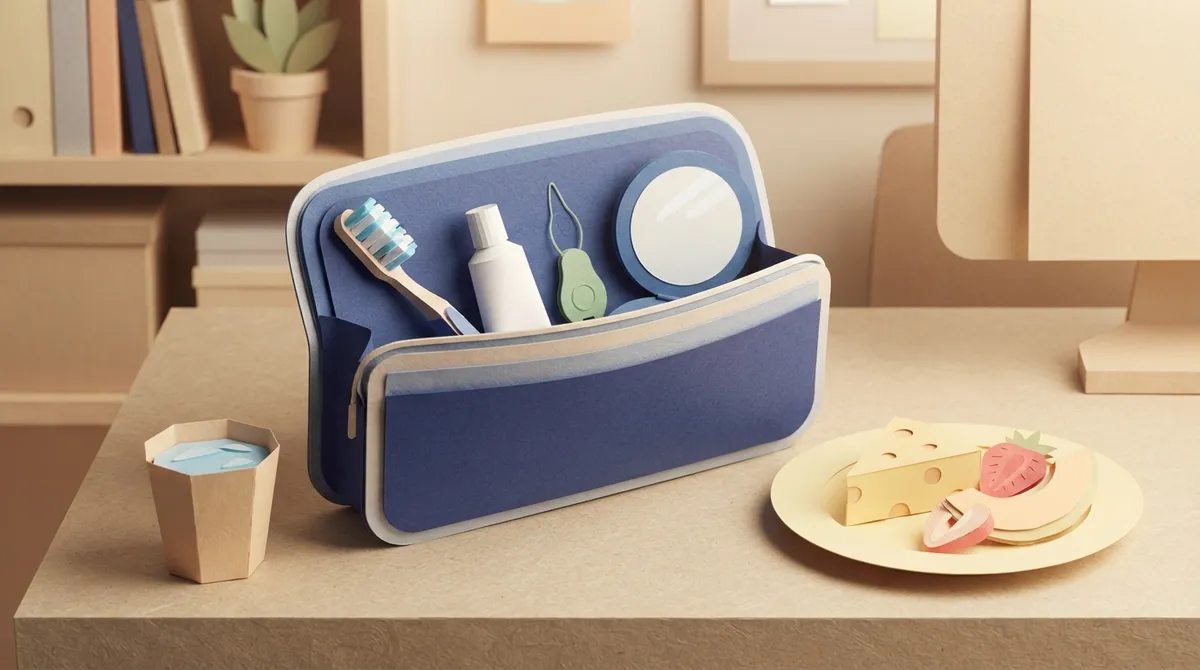
Keep a small braces kit at work with a soft toothbrush, travel fluoride toothpaste, interdental brush, floss threader, mini mirror, and orthodontic wax in a zip pouch.
-
Brush for about two minutes after lunch, starting with a water rinse, then clean the top of brackets, under the bottom edge, and the wire.
-
If you can't brush, a thorough water rinse is only a fallback; brush as soon as you reasonably can since rinsing doesn't remove plaque.
-
Floss at least once daily, using a floss threader to reach under the archwire; evenings at home are often easiest, but flossing at work works after messy meals.
-
Swap sticky or hard snacks like caramel, hard candy, and ice for braces-friendly options like soft fruit, cheese, yogurt, or cooked veggies, and sip water between coffees.
-
Don't ignore a loose or broken bracket or poking wire: call your orthodontist promptly, cover poking spots with orthodontic wax, and never cut or force a wire yourself.
Picture this: it’s 12:45 p.m., your lunch meeting just ended, and you catch your reflection in the break room microwave. There’s a bit of salad hiding in your brackets. Sound familiar? You’re not alone. Building an oral hygiene routine for braces at work can feel tricky when your calendar is packed and the break room sink is shared with the whole office.
The good news is that it doesn’t have to be hard. A few small habits, plus a tiny kit in your desk drawer, can keep your teeth and braces clean all day. This guide walks you through six common mistakes people make with braces at the office, and simple fixes for each one.
Brackets and wires give food and plaque extra places to hide. That means you need to clean around the braces, along the gumline, and between every tooth. Let’s make that easy, even on your busiest workday. Your orthodontist’s own instructions always come first, so use this as a friendly starting point.

Why Your Workday Needs Its Own Braces Routine
At home, your brushing routine is easy to follow. At work, snacks, coffee, meetings, and deadlines all get in the way. That’s why a plan made just for the office matters.
The American Association of Orthodontists (AAO) advises brushing for about two minutes after meals and snacks and before bed. It also suggests carrying a travel toothbrush and toothpaste when you’re away from home. Your desk counts as “away from home” for these purposes.
If you’re an adult professional, you may also be balancing client calls and a smile you feel proud of. A quick midday clean-up helps you feel fresh and confident. For a deeper look at the home side of things, see our guide on how to clean your braces properly for a healthy smile.

Mistake 1: Skipping the Work Kit Entirely
The most common mistake is simply having nothing on hand. If your toothbrush is at home, it’s easy to skip cleaning. A small kit fixes that in one step.
What to Pack in Your Braces Kit
- A soft or small-headed toothbrush that fits easily around brackets.
- Fluoride toothpaste in a travel size.
- An interdental brush to clean around brackets and under the wire.
- Floss or a floss threader to reach between teeth.
- A small mirror so you can check your work.
Keep everything in a zip pouch in your desk or bag. When it’s always ready, you’re far more likely to use it. Many patients tell us the kit becomes as normal as keeping a phone charger nearby.
Not sure which interdental brush size is right for you? Ask your orthodontic team to show you. Using the right size and technique helps you clean well without irritating your gums.
Mistake 2: Skipping Brushing After Lunch
Lunch is when most food gets trapped. If you skip brushing afterward, food and plaque can sit around your brackets for hours. Over time, that can lead to cavities and stained spots around your braces.
Here’s a simple routine you can follow in about five minutes:
- Rinse first. Swish water around your mouth to loosen any big pieces of food.
- Add a pea-sized amount of fluoride toothpaste to your soft toothbrush.
- Angle the brush toward your gums and clean the top of each bracket.
- Angle the brush upward to clean under the bottom edge of the brackets and the wire.
- Brush every tooth surface, including the outside, inside, and chewing surfaces.
- Spend about two minutes in total, and check your teeth in the mirror.
Need a refresher on technique? Our 8 steps to brush teeth with braces the right way goes into more detail.
Mistake 3: Trusting a Water Rinse to Do Everything
Let’s be honest. Sometimes you truly can’t brush. Maybe you’re in back-to-back meetings or traveling for work. In that case, rinsing thoroughly with plain water is a smart fallback. It helps dislodge food and cuts down on leftover residue.
But here’s the catch: water rinsing is a backup plan, not a replacement. It doesn’t remove plaque that sticks to your teeth. So rinse when you must, then brush as soon as you reasonably can.
Think of it like wiping a spill with a paper towel instead of washing the dish. It helps in the moment, but you still need a proper clean later.
A Quick Comparison
| Method | When to Use It | What It Does | Does It Replace Brushing? |
|---|---|---|---|
| Brushing with fluoride toothpaste | After meals and snacks, when possible | Removes plaque and food from teeth and brackets | This is the standard |
| Plain water rinse | When you can’t brush right away | Loosens food and reduces residue | No, it’s a fallback only |
| Interdental brush | Daily and after meals if you can | Cleans around brackets and under the wire | No, it adds to brushing |
| Flossing with a threader | At least once a day | Cleans between teeth and below the wire | No, it works alongside brushing |
Mistake 4: Forgetting to Floss (Because the Office Feels Awkward)
Flossing with braces takes a little extra effort, so it’s the first thing people skip at work. The AAO recommends flossing at least once daily. You don’t need to do it at your desk, though.
Many people find it easier to floss at home in the evening when they have more time. If you want to floss at work after a particularly messy lunch, a floss threader makes it easier to guide floss under the archwire. Orthodontic floss can help, too.
An interdental brush is great around brackets, but it doesn’t replace cleaning between teeth. Think of them as teammates, not substitutes.
If you’re new to this, our friendly guide on how to master flossing with braces every day breaks the steps down. Also, our post on floss threader mistakes can save you a lot of frustration.
Mistake 5: Snacking and Sipping All Day Long
That all-day coffee with sugar? The afternoon candy dish? The soda with lunch? These habits give bacteria a steady supply of fuel. Frequent sugary or acidic drinks and snacks can contribute to decay and enamel damage around brackets.
You don’t have to give up everything you love. Instead, try these friendly swaps:
- Drink water between coffees, and try sipping coffee in one sitting instead of all morning.
- Choose braces-friendly snacks like soft fruit, cheese, yogurt, or cooked veggies.
- Skip hard and sticky foods such as hard candy, caramel, and ice. These can bend wires or break brackets.
- Keep snack time short and brush afterward when you can.
If you love coffee, you might also enjoy our reading on why chewing ice can damage braces. For more food ideas, check out our friendly food guide for braces wearers.
Mistake 6: Ignoring Small Problems Until They Get Big
A poking wire or a loose bracket might seem minor in the middle of a busy week. But ignoring it can cause sore spots and may slow your progress. It can also make cleaning harder.
Here’s a quick guide for what to do at work:
- Poking wire: Cover the spot with orthodontic wax from your kit to ease irritation until you can be seen.
- Loose or broken bracket: Call your orthodontist’s office. Don’t wait for your next regular visit.
- Persistent irritation or soreness: Let your orthodontic team know so they can help.
Never try to cut or force a wire yourself. If you’re unsure whether something counts as urgent, our guide on broken bracket vs. poking wire explains the difference. We’re also happy to help if you contact us with any questions.
Your Simple Workday Braces Routine
Let’s put it all together. Here’s a sample schedule you can adjust to fit your day.
| Time | What to Do |
|---|---|
| Morning at home | Brush for about two minutes with fluoride toothpaste, then check around brackets |
| Mid-morning snack | Rinse with water, and brush if you can |
| After lunch | Brush for about two minutes, use your interdental brush, and check the mirror |
| Afternoon | Choose water over sugary drinks and skip hard or sticky snacks |
| Evening at home | Brush thoroughly, floss with a threader, and use your interdental brush again |
That’s it. No fancy tools and no big time commitment. Consistency matters more than perfection, so be kind to yourself on the days that don’t go as planned.
Tips for Different Kinds of Workdays
Not every workday looks the same, so your routine can flex too. Here are a few quick ideas.
If You Work From Home
This is the easy one. Your bathroom is steps away, so brush after lunch just like you would at home. Try setting a calendar reminder so it doesn’t slip your mind.
If You Travel for Work
Pack your braces kit in your carry-on. Hotel rooms make it simple to brush after meals, and airports have restrooms where you can do a quick water rinse. If a wire starts bothering you on the road, wax can bring relief until you’re home.
If You’re on Your Feet All Day
Teachers, nurses, and retail workers often can’t leave for long. Keep your kit in a bag or locker and aim for a quick five-minute break after your meal. Even a few minutes helps.
If You Have Meetings Back to Back
Choose a spot on your schedule that works as a mini braces break. If it truly can’t happen, rinse well with water and set a reminder to brush as soon as you can.
Don’t Forget the Dentist Visits
Great daily habits work best alongside regular professional care. The AAO advises dental cleanings at least every six months, or more often if your dental team recommends it. Even with careful brushing, a professional cleaning reaches spots that are hard to get to on your own.
If you’re not sure how dentist and orthodontist visits fit together, our post on dentist vs. orthodontist visits clears it up. It’s also worth reading daily care vs. dental visits if you’re an adult in treatment. You can learn more about general oral health from the American Dental Association.
A Note for Parents and Teens
Teens in braces have their own busy days, from school to sports to after-school jobs. If you’re a parent, you can help by packing a small kit in your teen’s backpack and gently reminding them after lunch. Our guide on 7 ways parents can support teen oral hygiene with braces has more ideas.
The same habits work for part-time jobs, internships, and first offices. The earlier your teen builds the routine, the easier it becomes.
When Braces Hygiene Feels Like Too Much
If you’re finding it tough to keep up, you’re not failing. Braces take practice. Some days will be easier than others. A few things can help:
- Keep your kit visible so you remember to use it.
- Tie brushing to a daily cue, like finishing lunch.
- Ask your orthodontic team to review your technique at your next visit.
- Celebrate small wins, like a full week of post-lunch brushing.
Your orthodontist wants to help you succeed. Clean teeth and healthy gums make treatment go more smoothly and help protect your smile once the braces come off.
Make Your Smile Journey Simple at Brockway Orthodontics
At Brockway Orthodontics in Clearwater, Florida, Dr. Brockway and our team believe that understanding your care is the key to feeling confident. We take the time to listen, explain your options in plain language, and give you tools that fit your real life, including busy workdays. We offer metal braces, ceramic (clear) braces, and Spark™ Clear Aligners for teens and adults. You can see what our patients say by visiting Brockway Orthodontics on Google.
Whether you’re just starting out or already in treatment, we’re here to help you build habits that last. For more on our caring approach, read about how to keep a healthy smile during braces. You can also find general guidance from the Florida Association of Orthodontists.
Ready for Your Best Smile?
A solid oral hygiene routine for braces at work comes down to a few simple things: a small kit, brushing after meals when you can, flossing daily, smart snack choices, and speaking up when something feels off. You’ve got this.
If you have questions about your braces or you’re thinking about starting treatment, we’d love to meet you. Book your appointment online and take the first step toward a smile you’re proud to show off, at work and everywhere else.
FAQs
Q: How do I clean my teeth and braces at work after lunch?
A: Rinse with water first to loosen food, then brush for about two minutes with a soft toothbrush and fluoride toothpaste. Use an interdental brush around the brackets and under the wire, then check the mirror. It’s a quick five-minute routine that goes a long way!
Q: Can I just rinse with water if I can’t brush at work?
A: A thorough water rinse is a helpful fallback when brushing isn’t possible, since it loosens food and reduces residue. But it doesn’t replace brushing or daily cleaning between teeth, so brush as soon as you reasonably can.
Q: What should I pack in a braces cleaning kit for work?
A: A small kit can include a soft or small-headed toothbrush, travel-size fluoride toothpaste, an interdental brush, floss or a floss threader, and a small mirror. Orthodontic wax is also a handy extra for poking wires. Keep it all in a zip pouch so it’s ready whenever you need it.
Q: How often should I floss with braces?
A: Floss at least once daily, and a floss threader or orthodontic floss can help guide floss under the archwire. Many people find evenings at home easiest, but you can floss at work after a messy meal too. Follow any specific advice from your own orthodontist.
Q: When should I contact my orthodontist about a broken bracket or wire?
A: Reach out if a bracket comes loose or breaks, or if a wire causes ongoing irritation. In the meantime, orthodontic wax can ease a poking wire, but never try to cut or force it yourself. Your orthodontic team is happy to help, so don’t wait until your next scheduled visit.
Our Service Area