Key Takeaways
-
Dental cleanings are not optional during orthodontic treatment: your family dentist handles plaque and tartar removal every six months, while your orthodontist handles tooth movement every 6-10 weeks.
-
Ask your dentist whether you need cleanings more often than every six months if you have heavy plaque, bleeding gums, a history of cavities, or trouble reaching spots with a toothbrush.
-
Brackets and wires create ledges that trap plaque and food, raising the risk of cavities, gum inflammation, white-spot marks, and bad breath during treatment.
-
Get a dental checkup and cleaning before braces go on, and treat any cavities or gum concerns first, since these are much easier to fix before brackets are in place.
-
Clear aligners still require professional cleanings every six months; brush and floss before reinserting trays so food and bacteria are not trapped against your teeth.
-
Keep your dentist and orthodontist informed of each other's recommendations, and book cleanings in advance so the schedule stays organized alongside orthodontic visits.
Here is a question we hear all the time at our Clearwater practice: “If I see my orthodontist every few weeks, do I still need to go to my regular dentist?” The short answer is yes. Dental cleanings during orthodontic treatment are just as important as your adjustment visits. They simply do a different job.
Think of it like a car. Your orthodontist is the mechanic who fine-tunes the engine and keeps the car heading in the right direction. Your dentist is the person who washes, waxes, and inspects the car so it stays healthy for years. You need both if you want to arrive at the finish line looking great.
In this friendly guide, we will compare dentist visits and orthodontist visits side by side. You will learn how often to get cleanings, why braces make plaque harder to remove, and how clear aligners change the routine. Whether you are a parent juggling your teen’s schedule, a busy professional, or an adult returning for retreatment, you will walk away with a simple plan.
Dentist Visits vs. Orthodontist Visits: The Big Picture
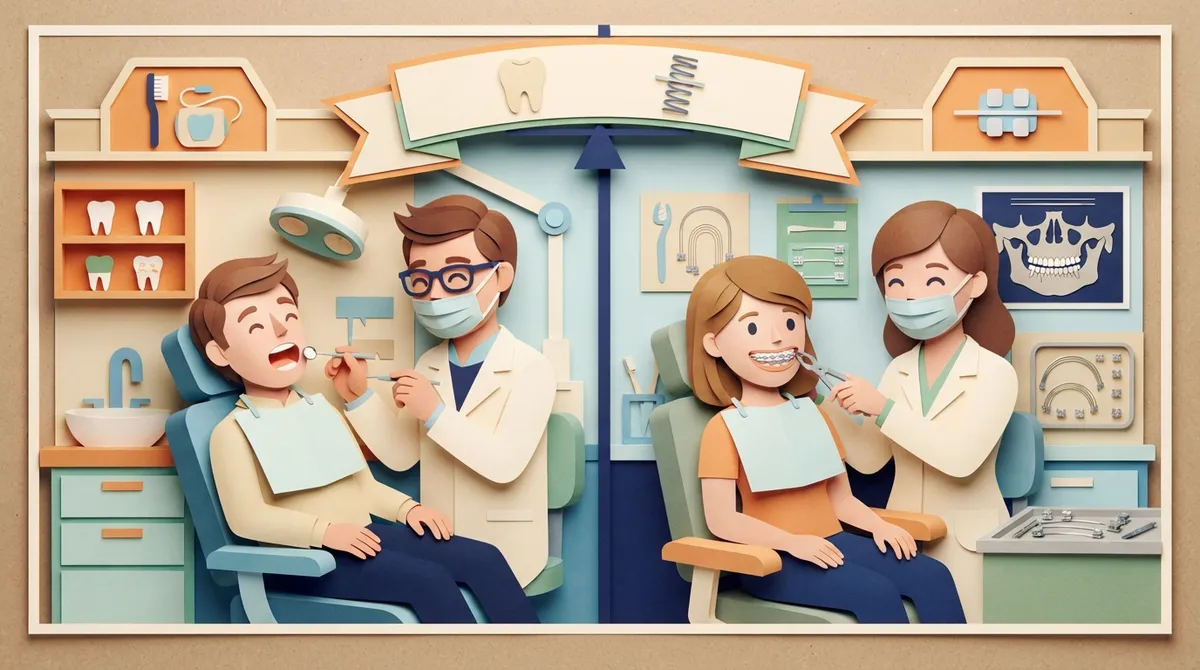
Both appointments matter, but they are not interchangeable. A professional cleaning is preventive care. An orthodontic adjustment is tooth-moving care. One does not replace the other.
The American Association of Orthodontists (AAO) says orthodontic visits average about every six to ten weeks during treatment. Those visits are separate from routine dental cleanings. Your family dentist handles the cleanings and checkups. Your orthodontist watches how your teeth are moving and adjusts your appliance.
What Your Orthodontist Does
- Checks how your teeth and bite are shifting
- Changes wires, elastics, or aligner trays
- Fixes broken brackets or poking wires
- Reviews your hygiene and gives coaching tips
- Plans your retainers and finish date
What Your Dentist Does
- Removes plaque and hardened tartar (calculus)
- Checks for cavities and gum inflammation
- Provides fluoride or other preventive care
- Takes routine dental X-rays when needed
- Treats cavities or other dental conditions
If you want a deeper look at how these two roles differ, our guide on orthodontist vs. dentist and which one you actually need breaks it all down.
Side-by-Side Comparison
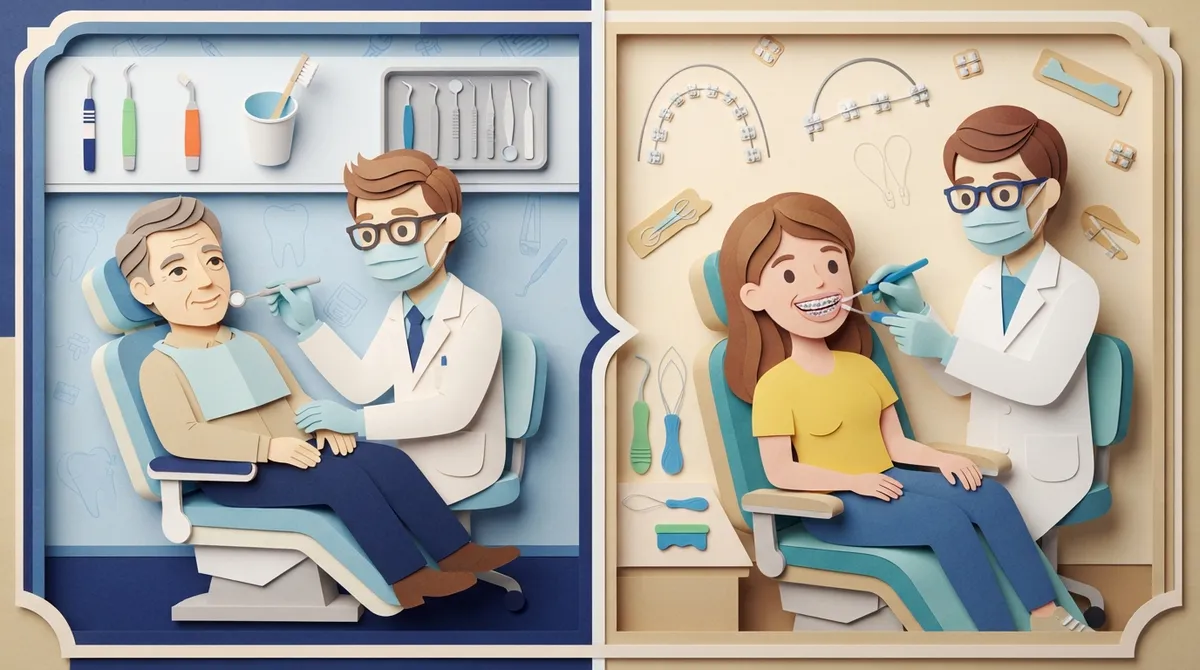
This quick table shows how the two visit types stack up during treatment.
| Feature | Dental Cleaning (Dentist) | Orthodontic Adjustment (Orthodontist) |
|---|---|---|
| Main goal | Prevent cavities and gum problems | Move teeth and correct the bite |
| Typical timing | At least every 6 months, or more often if advised | About every 6 to 10 weeks |
| Who does it | Family dentist or hygienist | Orthodontist and orthodontic team |
| Plaque and tartar removal | Yes, professional cleaning | No, only hygiene coaching |
| Appliance changes | No | Yes |
The takeaway is simple. These visits work as a team. Skipping one puts the other at risk.
How Often Should You Get Dental Cleanings With Braces?
The AAO advises seeing a family dentist for a professional cleaning and checkup at least every six months during orthodontic treatment. The FDA also notes that a dentist or orthodontist may recommend cleanings more often than the usual twice a year for people wearing braces.
Why might you need more? Everyone’s mouth is different. Your dentist may suggest a shorter interval if you have:
- Heavy plaque buildup
- Gum problems or bleeding gums
- A history of cavities
- Trouble reaching certain spots with a toothbrush
A great question to ask at your next visit is, “Based on my risk factors, should I come in more often than every six months?” Your dentist knows your history best and can give you a personal answer.
Why Braces Make Cleanings Even More Important
Brackets and wires are wonderful at moving teeth. They are also wonderful at trapping food. Every bracket creates tiny ledges where plaque and food debris can collect. That means more effort is needed to clean thoroughly.
When plaque sticks around, a few things can happen:
- Cavities: Plaque acids wear down enamel, especially around brackets.
- Gum inflammation: Red, puffy, bleeding gums can show up when plaque stays on the gumline.
- White-spot marks: Pale patches can appear around brackets once they come off.
- Bad breath: Trapped food and bacteria are a common cause.
A professional cleaning reaches spots your toothbrush cannot. It resets your mouth so your daily routine can work better. If your brushing technique needs a boost, check out our friendly walkthrough on how to brush teeth with braces and keep your smile healthy. You might also like these 7 brushing mistakes that wreck braces.
Braces vs. Clear Aligners: How Cleanings Differ
Many Clearwater patients ask whether clear aligners mean they can skip the dentist. They cannot. Aligners still need professional dental care. The difference is in your daily routine.
| Topic | Traditional Braces | Clear Aligners |
|---|---|---|
| Plaque traps | Brackets and wires create many spots | Fewer fixed spots, but trays can hold plaque against teeth |
| Brushing and flossing | Done around fixed hardware | Brush and floss before putting trays back in |
| Appliance cleaning | Brush the brackets and wires | Clean trays as your orthodontist instructs |
| Professional cleanings | Still needed at least every 6 months | Still needed at least every 6 months |
Aligners come out for meals and cleaning, which is a real perk. But the AAO notes you should brush and floss before you put them back in. Otherwise you trap food and bacteria against your teeth for hours. Our post on how to clean aligners the right way, every day is a handy daily reference.
If you are weighing your options, our braces vs. clear aligners comparison for Clearwater can help you decide. At Brockway Orthodontics, we offer metal braces, ceramic (clear) braces, and Spark™ Clear Aligners, a more affordable alternative to Invisalign.
Can Your Dentist Clean Teeth With Braces On?
Absolutely. Dentists and hygienists clean teeth with braces every day. They work carefully around brackets and wires, using special tools to remove plaque from the tricky spots.
Here is what a typical cleaning looks like for a braces patient:
- The hygienist checks your gums and teeth.
- They remove plaque and tartar around brackets and along the gumline.
- They polish your teeth and look for early signs of white spots.
- Your dentist examines your mouth and checks for cavities.
- You get personal tips on brushing and flossing around your appliance.
Some patients wonder if cleaning will damage the braces. A careful, experienced dental team knows how to work around them. If a bracket happens to come loose, simply let your orthodontist know. Our guide on broken brackets vs. poking wires explains which problems need quick attention.
Should You Get a Cleaning Before Braces?
Yes, and it is a smart move. The AAO recommends a dental checkup and cleaning before braces are placed. If a cavity or another dental condition is found, it may need treatment first. It is much easier to fix a problem before brackets are in the way.
Before you start treatment, a quick checklist helps:
- Book a cleaning and checkup with your family dentist
- Treat any cavities or gum concerns
- Share your dental history with your orthodontist
- Ask both offices to stay in touch during treatment
Healthy gums and teeth make for smoother treatment. Our article on why cavities need attention before orthodontic treatment and our post on why gum health matters before adult braces explain this even more.
Tips for Every Type of Patient
For Parents of Kids and Teens
Busy school schedules make it easy to forget dental visits. Try booking your child’s cleanings six months out, right when you leave the office. Pair them with orthodontic visits when you can so you stay organized. Our tips on ways parents can support teen oral hygiene with braces are a great starting point.
For Teens and Young Adults
Cleanings keep your smile looking fresh for the big day, whether that is prom, graduation, or a new job. Nobody wants white spots showing up when the braces come off. Brush after meals and carry a travel kit.
For Adult Professionals
Your schedule is packed, so plan ahead. Book dental cleanings around work travel and keep a small hygiene kit in your desk. If you are curious about how adults handle both care teams, see our post on how to coordinate care between your orthodontist and dentist.
For Retreatment and Health-Conscious Patients
If you have had braces before or you have gum concerns, regular cleanings are even more valuable. Ask your dentist whether a shorter cleaning interval makes sense for you. Healthy gums support stable results for years.
Daily Habits That Make Cleanings Easier
Professional cleanings work best when you do your part at home. A few small habits go a long way.
- Brush after every meal. Angle your brush toward the gumline and clean above and below each bracket.
- Floss daily. Floss threaders or orthodontic flossers make this easier.
- Rinse well. A quick swish helps dislodge loose food.
- Limit sugary snacks and drinks. Sugar feeds plaque.
- Keep your appointments. Missed visits can slow progress.
Need help with flossing? Our friendly guide on how to master flossing with braces makes it simple. For a bigger picture, try our 11 ways to properly clean your teeth with braces.
What About Whitening and Other Extras?
Many patients ask about brighter smiles during treatment. Whitening has its own timing rules, and your dental team can guide you. Our post on teeth whitening and braces covers what Clearwater patients should know before booking anything.
The best path to a bright smile is still a clean, healthy one. Regular cleanings, good brushing, and patience pay off in the end.
The Winner: Both Visits, Working Together
So who wins in the dentist vs. orthodontist showdown? Neither. The real winner is your smile. Your dentist protects your teeth and gums. Your orthodontist moves them into place. Together they give you results that look great and last.
At Brockway Orthodontics, Dr. Brockway takes the time to listen, explain, and guide you through every step. We love working alongside your family dentist to keep your oral health on track. You can visit us on Google and read what Brockway Orthodontics patients say. You can also learn more from trusted groups like the American Dental Association and the Florida Association of Orthodontists.
Ready to start your journey, or want a second look at your current plan? Book your appointment online with our friendly Clearwater team, or contact us with any questions. We would love to help you smile with confidence!
FAQs
Q: How often should I get my teeth cleaned while wearing braces?
A: The American Association of Orthodontists advises a professional cleaning and checkup at least every six months. Your dentist may suggest coming in more often if you have plaque buildup, gum problems, or a history of cavities. It never hurts to ask what schedule fits you best!
Q: Do I still need to see my regular dentist during orthodontic treatment?
A: Yes, you do. Your orthodontist focuses on moving your teeth and adjusting your braces or aligners, while your dentist handles cleanings, cavity checks, and general dental care. Think of them as teammates working toward the same healthy smile.
Q: Can my dentist clean my teeth with braces on?
A: Definitely! Dentists and hygienists clean teeth with braces all the time. They use special tools to reach around brackets and wires, and they can give you handy tips for cleaning at home.
Q: Do clear aligners change how often I need dental cleanings?
A: Not really. You still need professional cleanings at least every six months, just like braces wearers. The big difference is that you remove aligners to eat and clean, so remember to brush and floss before popping them back in.
Q: Should I get a dental cleaning before getting braces?
A: Yes, that is a great idea. The AAO recommends a checkup and cleaning before braces go on, because cavities or other dental issues may need treatment first. Starting with a healthy mouth sets you up for smoother treatment.
Our Service Area