Key Takeaways
-
Braces rarely stop anyone from presenting; most students adapt within a couple of weeks, though some take 30 to 60 days, and the speech changes are usually temporary.
-
The "s" and "z" sounds are the most likely to feel different, since they depend on precise airflow behind the teeth that brackets and wires can disrupt.
-
Practice is the most effective preparation: read aloud daily, rehearse your full talk with your braces or aligners in, and record yourself to hear how you sound.
-
Speaking a little slower gives your mouth time to form each word clearly and helps you sound more confident.
-
Pack a small presentation-day kit with orthodontic wax for rubbing spots, water for dry mouth, and lip balm, and contact your orthodontist if speech problems or loose wires persist.
-
Research on confidence is mixed, so students with braces should not assume they feel self-conscious; kind support and rehearsing in a safe space help those who do.
Picture this: your name is on the schedule, the slides are ready, and then you remember the shiny new wires sitting on your teeth. Will people notice? Will your words sound funny? Take a breath. School presentations with braces are very doable, and thousands of students give great talks every year while wearing them.
Braces usually do not stop anyone from presenting. Some students notice a small change in how a few sounds come out while the tongue and lips get used to brackets, wires, or aligners. That change is often temporary, and the right prep can make a big difference.
In this friendly guide, we will walk through what to expect, which sounds can feel tricky, and how to practice. You will also get a simple plan for the days before your talk. Whether you are a student, a parent cheering from the sidelines, or an adult heading back to class, you will find calm, practical help here.

Can You Really Give a School Presentation With Braces?
Yes, you can. Braces are made to be worn during everyday life, and that includes talking in front of a class. Most students give their presentations on schedule and do just fine.
Here is the honest part. Your mouth is busy getting used to something new. Brackets sit on the front of your teeth, and a wire runs across them. Your tongue and lips have to find their new paths. That can change how some words feel for a little while.
The good news is that this adjustment varies from person to person. Some students notice almost nothing. Others notice a small change for a short time. Neither is wrong, and neither says anything about how well you will present.
Your classmates are likely thinking about their own talks, not your teeth. Many of them have braces too, or soon will.
Why Do Braces Change How Words Sound?
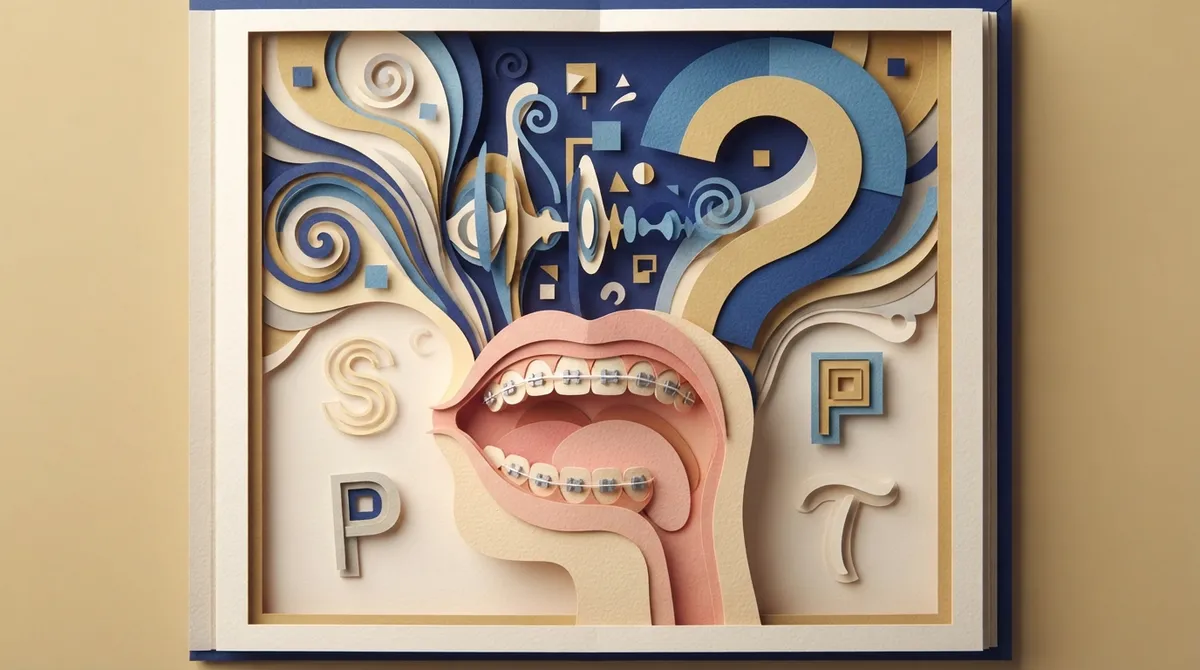
Speaking is a team effort between your tongue, lips, teeth, and jaw. Your tongue touches your teeth and the roof of your mouth to shape many sounds. When braces add something new to that space, your tongue needs a little practice to work around it.
Think of it like wearing a new pair of shoes. You can still walk, but for the first few days you notice every step. Soon you stop thinking about it.
Which Sounds Can Feel Trickiest?
Sounds that need precise tongue placement are the ones students notice most. The “s” and “z” sounds are the most common examples. They rely on a thin stream of air passing just behind the teeth, and new hardware can nudge that airflow.
A few other sounds can feel different too, like “th,” “t,” and “d.” This does not happen to everyone, and it is not a guaranteed side effect. It simply depends on your mouth, your appliance, and how quickly you adapt.
How Long Does the Adjustment Last?
Many people adapt quickly. A 2024 systematic review, as summarized in search results, reported that speech commonly returned to normal within 7 to 14 days. Some participants took 30 to 60 days. The review rated the evidence as low quality, so please treat these numbers as general ranges, not a promise for you.
Your own timeline may be shorter or longer. If your speech does not seem to be improving, that is a good reason to check in with your orthodontic office.
A Quick Look: What to Expect and What Helps
| What You Might Notice | Why It Happens | What Can Help |
|---|---|---|
| “S” and “Z” sound slightly different | Tongue is adjusting to brackets and wires | Read aloud daily and slow your pace |
| Mouth feels crowded | New hardware takes up space | Practice your talk out loud in the mirror |
| Sore spot on cheek or lip | Brackets or wires can rub soft tissue | Orthodontic wax, as your orthodontist advises |
| Extra saliva or dry mouth | Mouth reacts to something new | Sip water before and during your talk |
| Feeling self-conscious | Normal nerves about being seen | Rehearse with family or friends first |
How Should You Practice Before Your Presentation?
Practice is your best friend here. The more you talk with your braces in, the faster your tongue learns the new setup. Here is a simple plan you can follow.
- Read aloud every day. Pick a book, a magazine, or even your school notes. Reading out loud helps your tongue and lips get comfortable.
- Rehearse your actual talk. Say it start to finish while wearing your braces or aligners, just like you will on presentation day.
- Slow down a little. A calm, slightly slower pace gives your mouth time to form each word clearly. It also makes you sound confident.
- Record yourself. Use your phone to listen back. You may be surprised at how normal you sound.
- Practice in front of someone. A parent, sibling, or friend can give friendly feedback and help calm your nerves.
- Do one last run-through the night before. Then rest. A tired mouth and a tired brain are no fun on talk day.
If a few words feel tricky, try swapping in simpler words that mean the same thing. You do not need to change your whole talk, just make small tweaks where it helps you feel at ease.
What If Your Presentation Is Right After Getting Braces?
Life does not always line up neatly. Sometimes a big presentation lands the very week you get braces or have an adjustment. That is okay.
If your talk is coming up soon, start practicing as early as you can. Even a few days of reading aloud can help. It also helps to tell your orthodontic team about the date. They can give you advice that fits your situation.
Please avoid promising yourself that one type of appliance will leave your speech untouched. Every mouth is different, and results vary. Plan for a smooth talk, and give yourself grace if a word or two comes out a bit differently.
Many families wonder if they should postpone braces until after a big presentation. There is rarely a need to delay. Braces and presentations can live happily together. If you are unsure about timing, you can book an appointment online and talk it through with our team. We love helping families plan treatment around real life.
How Can You Handle Discomfort on Presentation Day?
Nothing steals your focus like a poking wire or a sore spot. A little prep goes a long way.
Use Orthodontic Wax for Rubbing Spots
With fixed braces, a bracket or wire can sometimes rub against your cheek or lip. Orthodontic wax can cover that spot and make it more comfortable. Follow your orthodontist’s instructions on how to use it. Keep a small container in your backpack so you are never caught without it.
If you want more tips on easing sore teeth and gums, our guide on truths about braces pain is a helpful read. Tender teeth after an adjustment are common, and a few simple habits can make them easier to manage.
Know When to Call the Office
A little soreness can be normal. But some things deserve a call to your orthodontic office:
- Pain that does not ease up
- A loose or broken bracket or wire
- A wire that keeps poking and wax is not helping
- Speech trouble that is not getting better over time
If something breaks right before a big day, you do not have to panic. Our article on orthodontic emergency fixes to try before panicking walks through calm first steps, and our team is always ready to help you get back on track.
Pack a Little Presentation-Day Kit
A small kit can calm your nerves. Tuck these into your bag:
- Orthodontic wax
- A travel toothbrush and floss
- A water bottle
- Lip balm for dry lips
- Your aligner case, if you wear aligners
Brushing before your talk helps you feel fresh and confident. If you want a refresher, check out how to brush teeth with braces so you can do it quickly and well, even between classes.
Do Braces and Aligners Feel Different When Speaking?
They can. Fixed braces sit on the front of your teeth, while clear aligners are removable trays that fit over them. Each option may feel different when you talk, and your experience is your own.
Aligners can feel a little snug at first, and some people notice a slight change in their “s” sounds in the early days. Braces have a similar adjustment period. The right choice depends on your bite, your goals, and your lifestyle, not just speech.
If you are curious about the differences, our guide on aligners vs. braces for speaking at work compares them in a friendly way. Many of the same ideas apply to speaking in class.
At Brockway Orthodontics, we offer metal braces, ceramic (clear) braces, and Spark™ Clear Aligners, an affordable option for many patients. Dr. Brockway takes time to listen to your goals and explain your choices so you feel informed and comfortable. If you want a broader look at your options, our article on which teeth straightening options fit your smile is a great place to start.
Will Braces Hurt Your Confidence When You Speak?
This is a big question for many students and parents, so let us be honest and balanced. Research on teen confidence is mixed. Some studies report that teens worry about how their teeth look and how that affects social moments. Other research has found something more reassuring.
A six-year study of British adolescents found no evidence that orthodontic treatment itself changed self-esteem. The adjusted estimate was not statistically significant (coefficient −0.19; 95% CI −0.68 to 0.30). Another cross-sectional study of adolescents reported low self-esteem in 17.1% of male and 31% of female participants. That was an association in one group of teens. It does not show that braces or presentations caused it.
The takeaway? Not every student with braces feels self-conscious, and no one should assume they do. Some kids hardly think about their braces. Others feel nervous at first and then settle in. Both are normal.
If a student does feel shy, a few kind steps can help:
- Ask how they feel instead of assuming
- Let them practice in a safe space at home
- Remind them that clear speaking matters more than perfect teeth
- Celebrate effort, not just results
Many families also find that a straighter, healthier smile boosts confidence over time. You can read more in our post on how orthodontic care builds self-esteem.
Tips for Parents Helping a Nervous Presenter
Parents, you have a powerful role here. A calm, encouraging voice at home can change how your child feels about the big day.
Offer to be the practice audience. Sit down, listen to the whole talk, and give gentle, specific praise. “I loved how clearly you explained that part” goes a long way.
Help your child build good daily habits with their appliance too. Our post on how parents can help kids build appliance care habits shares simple ideas that make life easier.
If your teen is just starting out, you may also enjoy our list of questions teens should ask their orthodontist. Asking about speech, sore spots, and daily routines can ease worries before they grow.
Presentation Day Checklist
On the morning of your talk, run through this quick list.
- Brush and floss so your teeth feel clean and fresh.
- Check that your braces or aligners feel comfortable.
- Pack wax, water, and lip balm.
- Do one gentle read-through of your notes aloud.
- Take a few slow breaths before you walk up.
- Speak a little slower than normal and look at friendly faces.
- Smile. You earned your spot up there.
If you wear aligners, remember that they usually come out for eating but go back in afterward. Keep your case handy and avoid wrapping them in a napkin, where they can easily get thrown away.
Adults Present Too: Tips for Professionals and Returning Students
School presentations are not only for kids. Adults in college, grad school, or workplace training often present while wearing braces or aligners. The same ideas apply: practice aloud, slow down slightly, and keep water nearby.
Adults who had braces years ago and need treatment again can feel a bit self-conscious too. That is completely normal. Many adults find discreet options that fit their schedule, and speech settles for most people. Our post on braces hygiene mistakes at work has helpful tips for busy schedules.
When Should You Check In With Your Orthodontist?
You do not have to figure everything out alone. Reach out to your orthodontic office if you notice any of these:
- Speech changes that are not easing over time
- A bracket, band, or wire that feels loose or broken
- Soreness that does not improve
- Questions about your appliance and an upcoming presentation
Your orthodontist can look at your specific appliance and give advice made for you. That personal touch matters, because every smile and every mouth is different.
Ready to Feel Confident at the Front of the Room?
Braces do not have to stand between you and a great presentation. With a little practice, a few simple supplies, and some patience with your mouth, you can speak clearly and proudly. Most students adapt, and many forget their braces are even there by the time the talk is over.
At Brockway Orthodontics, we love helping Clearwater families feel comfortable and informed at every step. Dr. Brockway and our team offer braces and clear aligners for kids, teens, and adults, along with modern tools like digital impressions and 3D imaging. We would be happy to answer your questions about speech, comfort, and timing. You can book an appointment online or contact us to chat with our friendly team. You can also see what our patients say by choosing to visit us on Google — Brockway Orthodontics. For general oral health guidance, the American Dental Association is another trusted resource.
You have got this. Take a deep breath, smile big, and own that presentation.
FAQs
Q: Can I give a school presentation right after getting braces?
A: Yes, most students can! You may notice a small change in a few sounds at first while your tongue adjusts, so practice your talk out loud in the days before. If your presentation is coming up soon, let your orthodontic team know so they can give advice that fits you.
Q: Will braces make me lisp during a presentation?
A: Not necessarily. Some people notice their “s” and “z” sounds feel a bit different at first, but it varies from person to person and by appliance. Reading aloud and speaking a little slower can help your mouth settle in.
Q: How long does it take to get used to speaking with braces?
A: Many people adapt within a couple of weeks, though some take a month or two. A 2024 review reported speech commonly normalizing in about 7 to 14 days, with some cases taking 30 to 60 days, but the evidence was rated low quality. If it is not improving, give your orthodontic office a call.
Q: What should I do if a wire is bothering me before my presentation?
A: Try orthodontic wax over the spot that rubs, following your orthodontist’s directions. If the wire is loose, broken, or the pain does not ease up, contact your orthodontic office so they can help you right away.
Q: Can braces affect a student’s confidence when speaking in class?
A: It depends on the student. Research is mixed, and many students with braces feel perfectly fine, while others feel a little shy at first. Practice, kind support, and a solid prep routine can help every student feel more at ease.
Our Service Area