Key Takeaways
-
Ask why your child needs an expander and what problem it fixes, such as a narrow upper jaw or crossbite, and what happens if you wait; a clear diagnosis should come first.
-
The AAO recommends an orthodontic evaluation by age 7, but timing depends on jaw growth, tooth development, and space, so ask whether now is the right time or if waiting is better.
-
Clarify the expander type (fixed or removable) and who makes adjustments, and ask for step-by-step instructions for turning it at home and what to do if a turn is missed.
-
Active widening commonly takes about 2 to 3 months, often followed by a holding phase of 4 to 6 more months, so ask for the timeline for both stages and what treatment comes next.
-
Expect normal effects like pressure, mild soreness, extra saliva, a temporary lisp, and a gap between the upper front teeth, and ask which symptoms mean you should call the orthodontist right away.
-
Ask for written home care, food restrictions, and after-hours emergency plans, plus the full cost, what insurance covers, and whether payment plans are available.
Your orthodontist says your child might need a palatal expander. Suddenly your head fills with questions. Is it painful? How long will it take? Is it even necessary? If you feel a little overwhelmed, you are in good company. Most parents have never heard of this appliance until the day it comes up.
The good news is that a few smart questions can turn a confusing moment into a confident decision. This guide walks you through the questions to ask before a child gets an expander, why each one matters, and what a helpful answer sounds like. Think of it as a friendly checklist you can bring to your next visit.
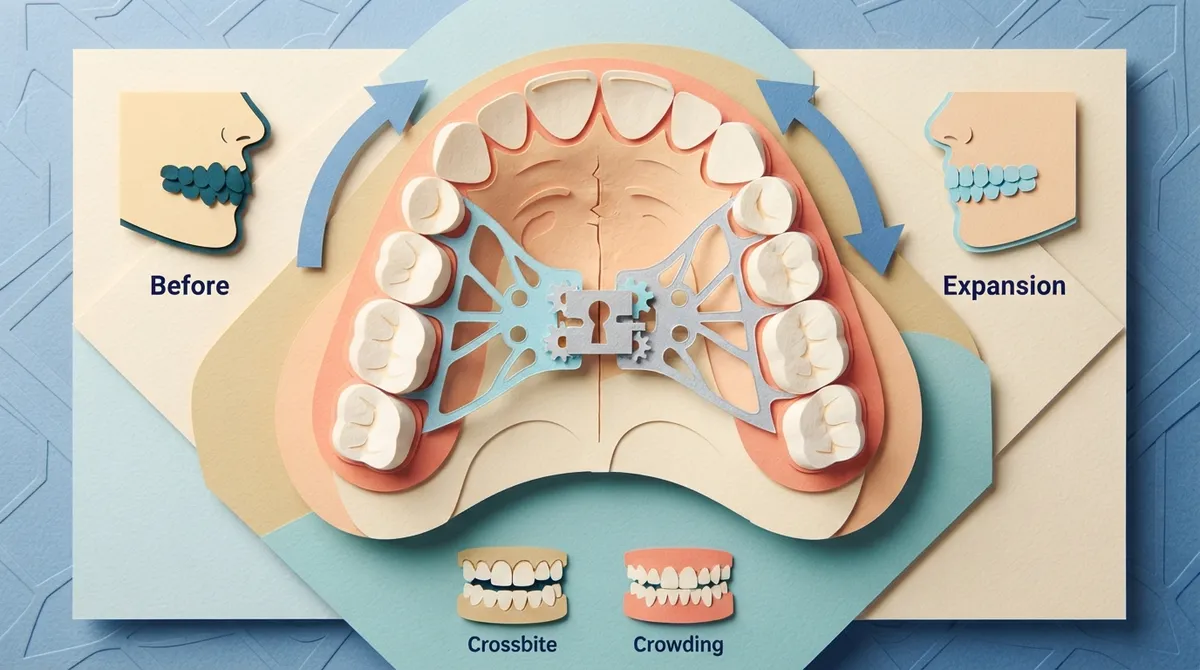
A palatal expander gently widens the upper jaw or dental arch while a child is still growing. Orthodontists often use one for a narrow upper jaw or a crossbite. Whether your child needs one depends on their own diagnosis, growth, and bite. So the best first step is a good conversation with a trained orthodontist.
What a Palatal Expander Does (and Why Parents Hear About It)
A palatal expander is an orthodontic appliance that applies slow, steady pressure to widen the upper jaw. It is most often used in growing children and young teens. The goal is usually to make room, improve how the upper and lower teeth fit together, or correct a crossbite.
It helps to know what an expander is not. It does not straighten every tooth. It is one tool in a bigger plan. Many kids still need braces or aligners later to fine-tune their smile. If you want a deeper background, our palatal expander guide covers the basics in plain language.
Now let’s get to the questions. Take a screenshot, print this page, or jot the ones that matter most to your family.

Step 1: Ask About the Diagnosis
Start with the “why.” A good plan always begins with a clear diagnosis. Before saying yes to any appliance, you want to understand the problem it solves.
Questions to ask
- Why does my child need an expander, and what problem is it meant to fix? Listen for a specific answer, such as a narrow upper jaw or a posterior crossbite.
- What did you see in the exam, photos, or scans that led to this recommendation? Ask to see the records. Modern offices use tools like digital scans and 3D imaging that make this easy to explain.
- What happens if we wait and do nothing for now? Sometimes monitoring is a perfectly fine choice. Other times, waiting can make treatment harder later.
If your child has a crossbite, you may also like our article on what crossbite treatment involves and whether you really need it. It can help you feel prepared for this part of the talk.
Step 2: Ask About Timing and Growth
Timing matters a lot with expanders. A child’s jaw is still growing, and that growth helps the expander do its job. The American Association of Orthodontists recommends an orthodontic evaluation by age 7. That does not mean every child needs treatment at 7. It simply gives the orthodontist a chance to spot developing concerns early.
According to the American Association of Pediatric Dentistry, skeletal expansion with fixed or removable palatal expanders can be used until the midline suture of the jaw fuses. This is one reason age alone does not decide readiness. The orthodontist also looks at jaw growth, tooth development, how much space is available, and how severe the bite problem is.
Questions to ask
- Is now the right time for my child, or could we wait?
- How does my child’s growth affect this decision?
- Will starting early change what treatment my child needs later?
- Is my child able to follow the care routine at their current age?
That last question is a kind one to ask yourself too. Some kids are very cooperative. Others need a little extra support. Either is fine, as long as you plan for it. To learn more about early care, see how to ask the right questions about early treatment.
Step 3: Ask About the Type of Expander
Not all expanders look or work the same. Some are fixed, meaning they stay in the mouth the whole time. Others are removable. Some are turned at home with a small key, and others are adjusted by the orthodontist during visits.
Questions to ask
- Which type of expander are you recommending for my child, and why?
- Is it fixed or removable?
- Who will make the adjustments, me at home or your team at the office?
- If we adjust at home, can you show me exactly how, step by step?
- What do we do if we miss a turn or forget a day?
Here is a quick comparison to help you picture the options. Your orthodontist will confirm which fits your child.
| Feature | Fixed Expander | Removable Expander |
|---|---|---|
| How it stays in | Attached to the back teeth | Child can take it out |
| Cooperation needed | Less daily effort to keep it in | Child must wear it as directed |
| Adjustments | Often a screw and key, or done by the clinician | Adjusted per the orthodontist’s plan |
| Good to ask | Who turns it and how often? | How many hours a day must it be worn? |
Step 4: Ask About Treatment Length and Visits
Parents often want a timeline, and that is completely reasonable. Treatment with an expander usually has two stages. First comes the active widening stage. Then comes a retention or holding stage, when the appliance stays in place to help the result settle.
Cleveland Clinic reports that active expansion commonly takes about 2 to 3 months. The total time with the appliance can be longer, and some patients keep it in for an extra 4 to 6 months after the widening is done. Every child is different, so treat these numbers as general guides, not promises.
Questions to ask
- How long will the active widening phase last for my child?
- How long will the holding phase last after that?
- How often are checkups, and how long is each visit?
- What comes after the expander? Will braces or aligners follow?
If you are curious about how orthodontists plan the full journey, our post on phase one vs. phase two orthodontics explains how early and later treatment fit together.
Step 5: Ask About Side Effects and Comfort
Let’s talk about the part kids worry about most. Will it hurt? What will it feel like? A little honesty up front helps everyone relax.
Common, usually temporary effects can include:
- Pressure or mild soreness after turns
- Extra saliva for the first few days
- A temporary lisp or slightly different speech
- A gap that opens between the upper front teeth
That gap often surprises families. It is usually a normal sign that the expander is working. Ask your orthodontist what to expect for your child so you are not caught off guard.
Questions to ask
- What discomfort is normal for my child, and what is not?
- How long will speech changes last?
- Will the gap between the front teeth close on its own?
- Which symptoms mean I should call you right away?
Many parents find it helpful to read about calm talk vs. scary talk and which helps kids most. How you describe the appliance can shape how your child feels about it.
Step 6: Ask About Home Care and Food
Daily care keeps the appliance working and your child’s mouth healthy. Food and plaque can collect around an expander, so a good routine matters. Ask for clear, written instructions, because it is easy to forget details after a busy appointment.
Questions to ask
- How should my child brush around the expander?
- Do you recommend special tools, like a water flosser or small brushes?
- Which foods should my child avoid?
- Are there sports or activities that need extra protection?
Sticky, hard, or very chewy foods are often on the “skip it” list. Your orthodontist will give you the exact list for your child’s appliance. You can also build habits as a family. Our article on how parents can help kids build appliance care habits has easy ideas to try.
One more tip: ask about the “what if” moments before they happen. Knowing the plan ahead of time keeps stress low.
- What should we do if the expander feels loose?
- What if my child has strong or lasting pain?
- What if we miss a turn or an appointment?
- Who do we call after hours?
If something does go wrong, it helps to know when you need an emergency orthodontist appointment. A loose appliance or severe, lasting pain is worth a call to your orthodontist.
Step 7: Ask About Alternatives and Results
A trustworthy orthodontist will talk about more than one path. Ask what else could work, and what each choice means for your child.
Questions to ask
- What are the other options besides an expander, including watching and waiting?
- What results can we realistically expect?
- What are the limits of an expander? What will it not fix?
- Will my child still need braces afterward?
Some families wonder whether braces alone could do the job. The answer depends on the problem, and our comparison of palatal expansion vs. braces alone breaks it down. It is a handy read before your visit.
Step 8: Ask About Cost, Insurance, and Next Steps
Money questions are normal, and good offices expect them. Ask for a written plan so you can see what is included.
Questions to ask
- What is the full cost of the expander phase?
- Are checkups and any repairs included?
- Does my insurance cover this, and can you help check?
- Do you offer payment plans?
You may find our guides on using dental insurance to help pay for braces and why a written orthodontic fee breakdown matters useful here.
A Quick Checklist to Bring to Your Visit
Here is a short list you can carry in your pocket. If you only ask five things, make them these:
- What problem does the expander fix, and what happens if we wait?
- Why is this the right time for my child?
- Which type will they get, and who adjusts it?
- How long are the widening and holding phases?
- What side effects are normal, and when should we call you?
You do not need to memorize everything. Write answers down, or ask the team to send a summary. A caring practice will be glad you asked.
How Brockway Orthodontics Can Help
At Brockway Orthodontics in Clearwater, Florida, Dr. Brockway takes the time to listen to your concerns and explain every option in a friendly, easy-to-understand way. The office uses modern tools like digital impressions instead of messy molds and 3D imaging to plan treatment with care. We welcome kids, teens, and adults, so the whole family can feel at home.
If you would like to see what other families think, read Brockway Orthodontics reviews on Google. You can also learn what makes the practice special in our post on who the Brockway orthodontist in Clearwater, FL is. To better understand credentials and training, the American Dental Association is a good source for general oral health information, and the Florida Association of Orthodontists offers helpful resources for Florida families.
Final Thoughts: You Know Your Child Best
An expander can feel like a big step, but it does not have to feel scary. When you ask clear questions, you get clear answers. And you stay in the driver’s seat of your child’s care.
Remember that every child is different. The right plan depends on your child’s growth, bite, and needs, and only an orthodontist can tailor that plan. Bring your list, ask away, and trust your gut.
Ready to talk it through with someone who will listen? Book appointment online to meet Dr. Brockway, or contact us with any questions. We would love to help your child feel confident about every step.
FAQs
Q: What is the most important question to ask before a child gets an expander?
A: Ask why your child needs one and what problem it is meant to fix. A clear answer, like a narrow upper jaw or a crossbite, shows the plan is based on a real diagnosis. It is also smart to ask what happens if you wait.
Q: How long does a child wear a palatal expander?
A: Active widening commonly takes about 2 to 3 months, and some children keep the appliance in for another 4 to 6 months to help the result hold. Every child is different, so your orthodontist can give you a timeline that fits your little one.
Q: Does a palatal expander hurt?
A: Most kids feel pressure or mild soreness after adjustments, plus extra saliva or a temporary lisp at first. These effects usually fade as your child gets used to it. Call your orthodontist if the appliance feels loose or the pain is severe or won’t go away.
Q: At what age should a child see an orthodontist about an expander?
A: The American Association of Orthodontists recommends an evaluation by age 7. That visit is simply a chance to spot concerns early, and it does not mean your child will need an expander or treatment right then. Your orthodontist will decide based on growth and bite.
Q: Will my child need braces after an expander?
A: Often, yes. An expander widens the upper jaw, but it does not straighten every tooth on its own. Many children move on to braces or aligners afterward, and your orthodontist can explain what comes next for your child.
Our Service Area