Key Takeaways
-
Use calm, concrete language: describe the first visit as a check on how teeth and jaws are growing, not a promise of braces, which avoids creating fear before the appointment.
-
Avoid words like 'crooked,' 'ugly,' or 'fix' and promises like 'it will not hurt,' since these can make kids feel their smile is wrong or set expectations you cannot keep.
-
Frame the visit with a simple big idea, such as 'The orthodontist is a teeth helper who checks how your teeth and jaws are growing,' so your child knows what to expect.
-
The AAO recommends a first orthodontic check-up by age 7, and many kids are simply monitored with no treatment needed, so reassure your child that a visit does not mean braces are coming.
-
Tailor the conversation to age: keep it tiny and playful for ages 4 to 6 with pretend check-ups, add detail for ages 7 to 9, and include older kids in planning by letting them write their own questions.
-
Invite questions and give your child a way to speak up, such as saying 'I feel worried,' so they feel in control and trust the process.
Picture this: you are driving home, and your seven-year-old asks, “Why do I have to go see the teeth doctor again?” You take a breath. What you say next will shape how your child feels about the whole experience. That is exactly why explaining orthodontic treatment to young children is worth getting right.
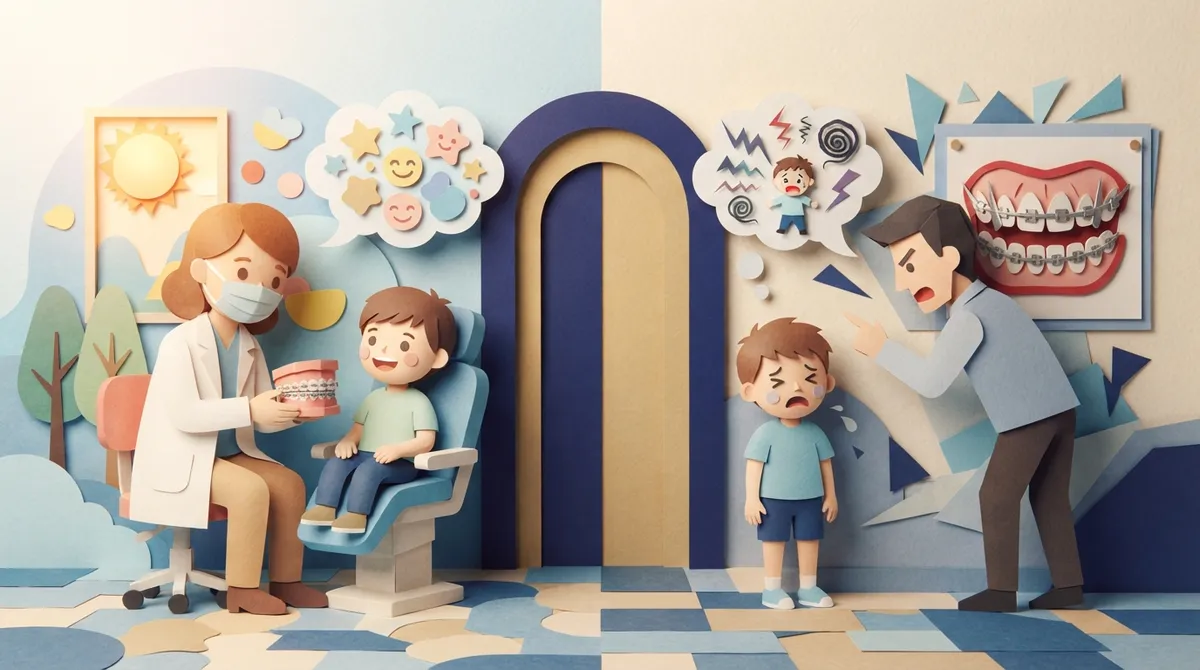
The good news? You do not need fancy words or a perfect script. You just need a calm, honest, and kid-sized way to talk about it. In this guide, we compare two styles of talking with kids: the calm, concrete approach and the vague, fear-driven approach. You will see which one helps kids feel brave, and how to use simple language that fits your child’s age.
We will also cover what a first visit looks like, which words to use (and skip), and what to do when your child feels nervous. At Brockway Orthodontics, we love helping families feel at ease from the very first hello, so we have packed in the same friendly tips we share with parents every week.
Why the Way You Explain Orthodontics Matters
Young children take their cues from the adults they trust. If you sound worried, they feel worried. If you sound curious and relaxed, they usually follow your lead.
Kids also fill in blanks on their own. When they do not know what will happen, they often imagine something scarier than reality. A short, clear explanation takes away that guesswork.
The American Association of Orthodontists (AAO) recommends a first orthodontic check-up by age 7, or sooner if you or your dentist notice a concern. That means many kids hear about the orthodontist at an age when they are still learning what a “check-up” even is. A calm conversation turns an unknown into something familiar.
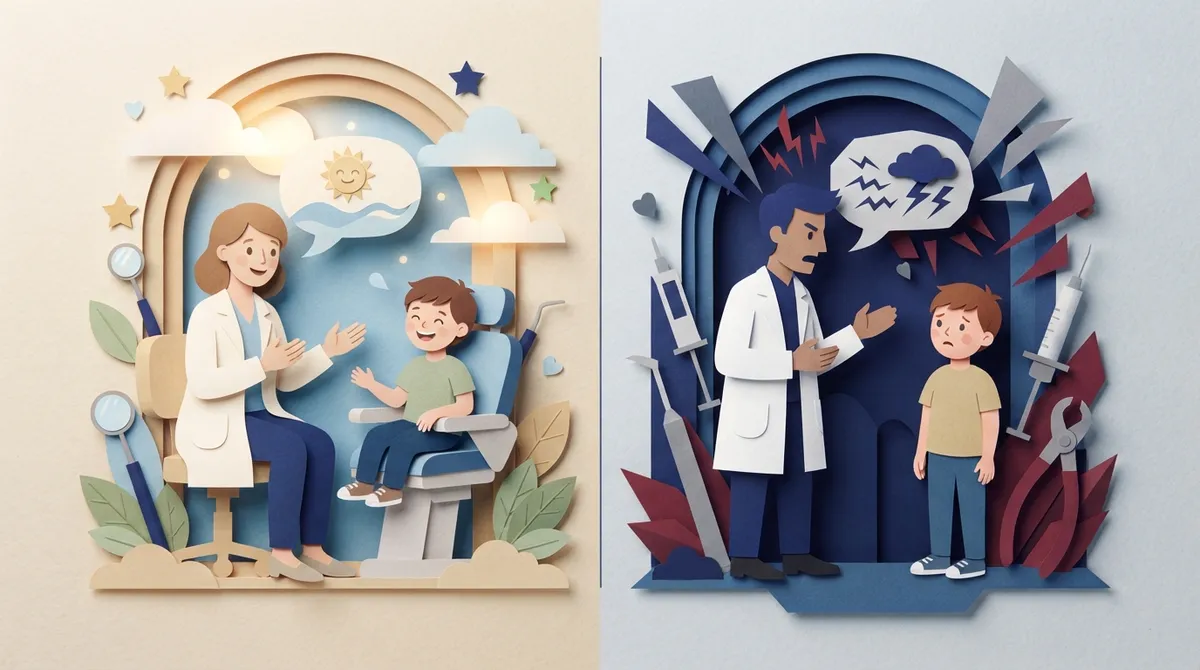
Calm Talk vs. Scary Talk: The Two Styles Compared
Most parents land somewhere between two styles without even meaning to. Here is how they stack up.
| Feature | Calm, Concrete Talk | Vague or Scary Talk |
|---|---|---|
| Example phrase | “The doctor will look at how your teeth are growing.” | “They might need to fix your crooked teeth.” |
| What your child imagines | A friendly look and a few pictures | Something painful or wrong with them |
| Effect on trust | Builds trust in you and the team | Can create worry before the visit |
| Handling questions | Invites them and answers honestly | Brushes them off or over-promises |
| Self-image | Teeth are growing and changing | Smile is “wrong” or needs fixing |
The calm style wins for one simple reason: it gives your child true, small facts they can hold onto. It does not promise too much, and it does not hide anything either.
Start With the Right Big Idea
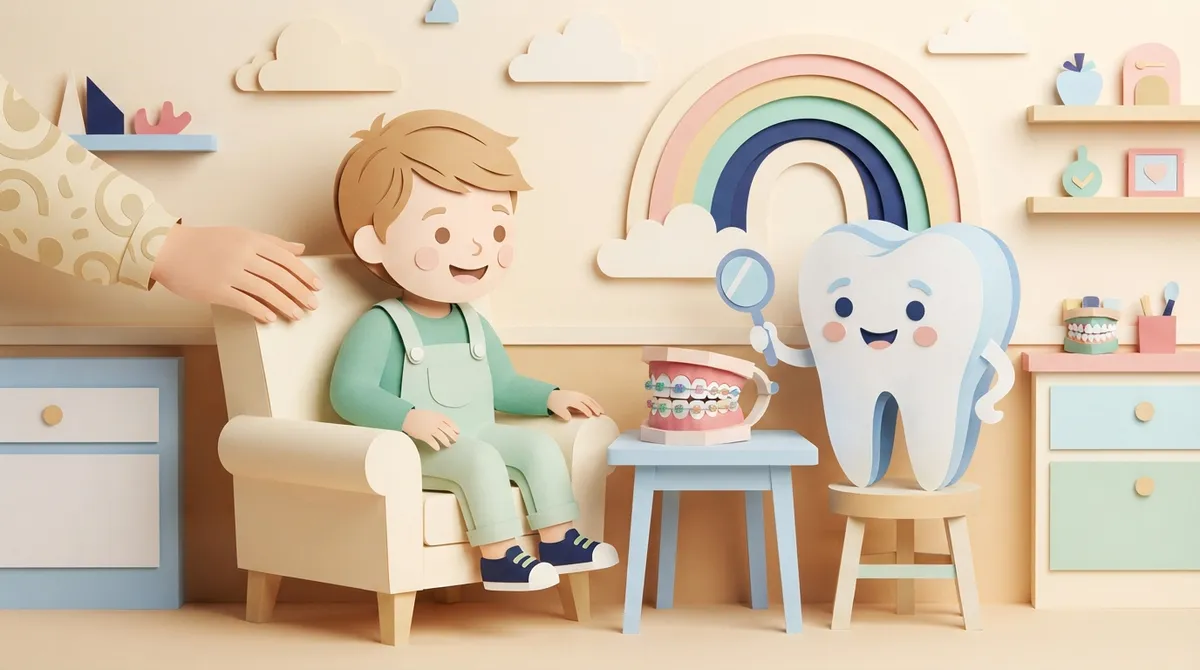
Before you pick your words, decide on the one big idea you want your child to walk away with. Here is a good one: “The orthodontist is a teeth helper who checks how your teeth and jaws are growing.”
Notice what that sentence leaves out. It does not say braces. It does not say crooked. It does not say fix. That matters because a first visit is an evaluation, not a promise of treatment.
Many children at around age 7 have a mix of baby teeth and permanent teeth. That gives an orthodontist a helpful window to see how teeth are coming in, how the bite lines up, and how the jaws are developing while growth is still happening. You can tell your child something as simple as, “Your grown-up teeth are starting to arrive, and the doctor wants to see how they are doing.”
If you would like a deeper look at timing, our guide on Age 7 vs. Waiting: When Should a Child See an Orthodontist? walks through the pros of an early look.
How to Explain It Step by Step
Here is a simple way to walk your child through the conversation. You can adjust it based on your child’s age and personality.
- Pick a relaxed moment. Choose a calm time, like during a snack or on a car ride. Avoid bedtime or right before the appointment.
- Share the big idea. Say, “We are going to meet a teeth helper who looks at how your teeth are growing.”
- Describe what will happen. Tell them the doctor will count teeth, look at their bite, and maybe take pictures or images if needed.
- Name the good parts. Mention fun details, like the comfy chair, the friendly team, or a sticker or prize if the office offers one.
- Invite questions. Ask, “What do you wonder about?” Then answer honestly, even if the answer is “I am not sure, but we can ask the doctor.”
- Give them a signal. Let them know they can raise a hand or say “I feel worried” at any time.
Short and simple wins here. A five-year-old does not need the science of tooth movement. They need to know it will not be a surprise.
Words That Help and Words to Skip
The words you choose carry real weight. Small swaps can change the whole feeling of the conversation.
Try These Kid-Friendly Phrases
- “The orthodontist checks how your teeth and jaws are growing.”
- “Your teeth are like a team, and the doctor helps them fit together.”
- “They might take some pictures of your teeth. It does not hurt.”
- “If you feel worried, you can tell the doctor.”
- “Some kids need help later, and some kids do not. We will find out together.”
Skip These Phrases
- “Your teeth are crooked and ugly.”
- “You are going to get braces.” (You do not know that yet.)
- “It will not hurt at all.” (Avoid promises you cannot keep.)
- “Be brave, there is nothing to cry about.”
- “If you do not brush better, they will have to fix it.”
The goal is neutral, kind language. Orthodontics is about helping teeth and jaws fit and work together. It is not about judging your child’s looks or suggesting their smile is wrong.
What Can Happen After the First Visit?
Here is something many parents (and kids) are relieved to hear: a check-up at age 7 does not mean braces are coming. The visit can lead to one of three outcomes, and you can share these with your child in simple terms.
| Outcome | What It Means | Kid-Friendly Way to Say It |
|---|---|---|
| No treatment needed | Teeth and jaws look like they are growing well | “Your teeth are doing great! We will check again later.” |
| Monitoring | The orthodontist watches growth over time | “The doctor wants to keep an eye on your teeth as they grow.” |
| Early treatment | A targeted plan for a specific issue | “The doctor has a special helper for one part of your mouth.” |
Many children are simply monitored until the timing is right. AAO guidance notes that many patients who do get treatment begin between ages 9 and 16, depending on dental development and individual needs. So there is no rush to prepare your child for braces on day one.
For parents who want to understand the difference between looking and treating, this article on why early evaluation is not treatment is a helpful read.
Explaining Early Treatment Without Fear
Sometimes an orthodontist does recommend early, or interceptive, care. This is always individualized. For certain issues, the plan may include a device such as an expander or partial braces. Other kids do better waiting until more permanent teeth have come in.
If your child needs early treatment, keep the same calm approach. Try something like: “The doctor found one spot where your teeth need a little help. They have a special tool that gently guides your mouth while it grows.”
Be honest about what to expect. Avoid saying it will be painless, because some kids feel pressure or mild soreness at first. A better line is: “You might feel something new in your mouth, and it can feel funny at first. We will help you get used to it.” Our post on palatal expanders explains one common early device in plain language.
It also helps to know that early treatment does not always mean a child skips braces later. Some children still need comprehensive treatment after Phase 1. You can learn how the two stages differ in 14 Phase One vs Phase Two Orthodontics Facts.
Tailoring Your Talk by Age
A four-year-old and a nine-year-old need very different conversations. Here is a quick guide.
Ages 4 to 6: Keep It Tiny and Playful
Little ones love stories and play. Try a pretend check-up at home. Let your child count your teeth with a spoon, then let them be the “teeth doctor” for a favorite stuffed animal. Use one or two sentences, and keep the focus on what they will see and do.
Ages 7 to 9: Add a Little More Why
This is the age when most kids have their first check-up. They can handle a bit more detail. Explain that grown-up teeth are arriving and the doctor wants to see how everything fits. Show them a picture of a smile with baby and adult teeth mixed together. Kids often find it fun.
Ages 10 and Up: Include Them in the Plan
Older kids want a say. Let them write down their own questions before the visit. If they are curious about braces or aligners, the guide to questions to ask an orthodontist is a great starting point for older kids and teens.
What Happens at the First Visit (So You Can Tell Your Child)
Knowing the steps makes it easier to describe them. A first visit usually includes:
- A friendly hello and a chance to look around the office
- A look at your child’s teeth, bite, and jaws
- Photos or images of the teeth and mouth, if the orthodontist needs them
- A chat with you about what the doctor sees and what the next steps might be
At Brockway Orthodontics, we use modern tools such as digital impressions instead of messy molds, and 3D imaging that helps with precise planning. For many kids, that means a more comfortable visit. You can read more about what to expect at your child’s first orthodontic visit so you can describe it with confidence.
When you tell your child about the visit, you can say: “The doctor will look at your teeth and take a few pictures. Then we will talk about what the doctor saw.” That is clear, honest, and not at all scary.
Helping a Nervous Child Feel Safe
Even with a great explanation, some kids still feel jittery. That is completely normal. Here are a few gentle ways to help.
- Name the feeling. Say, “It is okay to feel nervous. Lots of kids do.”
- Practice at home. Do the pretend check-up again and let your child lead.
- Bring a comfort item. A favorite toy or small book can help in the waiting room.
- Stay calm yourself. Slow breaths and a relaxed voice go a long way.
- Celebrate after. Plan a small treat or fun activity so the visit ends on a happy note.
Remember to let your child know they can tell the orthodontist if they feel worried or uncomfortable. That small bit of control can make a big difference. If you are looking for a team that makes kids feel welcome, here are some signs you have found a kid-friendly orthodontist.
Smart Questions Parents Can Ask the Orthodontist
Your explanation to your child is only half of the picture. You also deserve clear answers from the orthodontist. Here are good questions to bring along:
- What problem are we trying to address?
- Why is treatment recommended now rather than later?
- What other options do we have?
- How long might treatment take?
- What follow-up visits and costs should we expect?
It also helps to know that early treatment does not necessarily remove the need for later comprehensive care. Asking about the full path helps you avoid surprises. Our guide on how to ask the right questions about early treatment gives you a ready-made list.
For trusted general oral health information, the American Dental Association is a helpful reference for families.
Why Families Choose Brockway Orthodontics
At Brockway Orthodontics in Clearwater, Florida, we believe understanding your treatment is the key to feeling confident. Dr. Brockway takes time to listen, explain things in a friendly way, and make sure both kids and parents feel comfortable from start to finish. We offer metal braces, ceramic (clear) braces, and Spark™ Clear Aligners for families of all ages, with modern tools that help keep visits comfortable.
Want to see what other families say? You can visit us on Google — Brockway Orthodontics and read reviews from neighbors across Clearwater. And if you want to follow along with our team, you can find us on Facebook too.
Conclusion: Calm Talk Wins Every Time
When it comes to explaining orthodontic treatment to young children, calm and concrete beats vague and scary every time. Keep your words short, honest, and kind. Describe the visit as a check on how teeth and jaws are growing, not a promise of braces or a comment on appearance. Invite questions, and let your child know it is always okay to speak up.
You do not have to be an expert. You just have to be a steady, friendly voice. If you would like help from a team that loves working with kids, we would be happy to meet your family. Book an appointment online and let us help your child feel at ease, one small smile at a time.
FAQs
Q: When should a child first see an orthodontist?
A: The American Association of Orthodontists recommends a first check-up no later than age 7, or sooner if you or your dentist notice a concern. Think of it as a friendly look at how your child’s teeth and jaws are growing, not a sign that braces are on the way.
Q: Does an orthodontic check-up at age 7 mean my child needs braces?
A: Not at all! The visit can lead to no treatment, regular monitoring, or targeted early care for a specific issue. Many kids are simply watched until the timing is right, and the orthodontist decides based on your child’s development.
Q: How can I explain an orthodontist visit to a young child?
A: Keep it short and kind. Try, “The teeth helper will look at how your teeth are growing and may take a few pictures.” Skip words like crooked or fix, and let your child know they can say so if they ever feel worried.
Q: What happens during a child’s first orthodontic visit?
A: The orthodontist looks at your child’s teeth, bite, and jaw growth, and may take pictures or images if they are needed. Then you will chat about what the doctor sees and what comes next. It is a calm, low-pressure visit for most kids.
Q: Will early orthodontic treatment mean my child will not need braces later?
A: Not always. Early, or interceptive, treatment can help with specific problems, but some children still need comprehensive treatment once more permanent teeth have come in. Your orthodontist can explain what to expect for your child’s individual needs.
Our Service Area