Key Takeaways
-
Ceramic braces use tooth-colored or clear brackets bonded to your teeth with a thin archwire, applying gentle, steady pressure that slowly moves teeth while looking less noticeable than metal.
-
Teeth move because the archwire applies constant light pressure, prompting bone to break down on one side and rebuild on the other, a process your body does gradually.
-
Treatment length depends on your case, not the bracket type: a study of 134 patients found no significant difference between ceramic and metal, with compliance and bite severity mattering most.
-
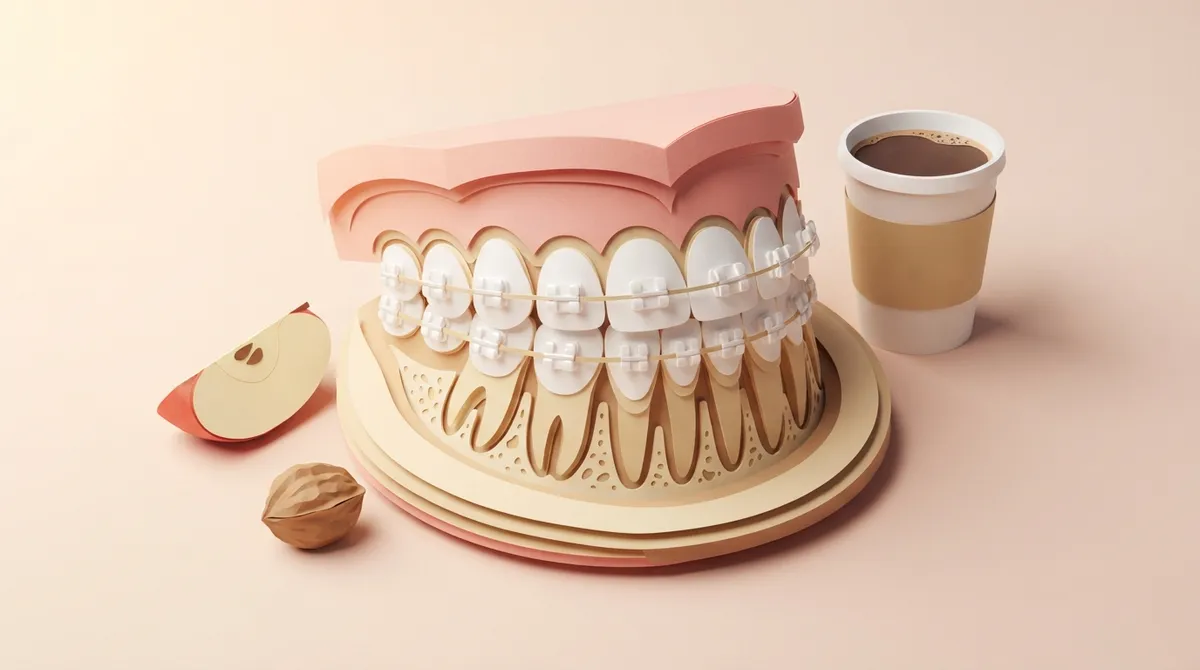
Ceramic brackets are more brittle than metal, so avoid hard, sticky, and biting-into foods like nuts, caramel, popcorn, and whole apples to prevent chips and breaks.
-
Elastic ties can stain from coffee, tea, and red wine, so limit dark drinks and brush after meals, since ties are replaced at regular appointments.
-
A retainer is essential after treatment because without it, teeth can slowly drift back toward their original positions.
If you’ve ever wished for straighter teeth but didn’t love the idea of a mouth full of shiny metal, you’re not alone. Many teens, parents, and busy adults ask the same thing: is there a more discreet way to get braces? That’s where ceramic braces come in. Understanding how ceramic braces work can help you feel confident about choosing them.
In short, ceramic braces use clear or tooth-colored brackets that blend in with your smile. They move teeth the same way metal braces do, with gentle and steady pressure. The big difference is how they look and how you care for them.
In this guide, we’ll walk through each step in plain language. You’ll learn how the parts fit together, how teeth actually move, what a typical timeline looks like, and what to watch out for. Whether you’re a parent helping your child, a teen thinking about prom photos, or an adult juggling a demanding career, this guide is for you.
What Are Ceramic Braces?
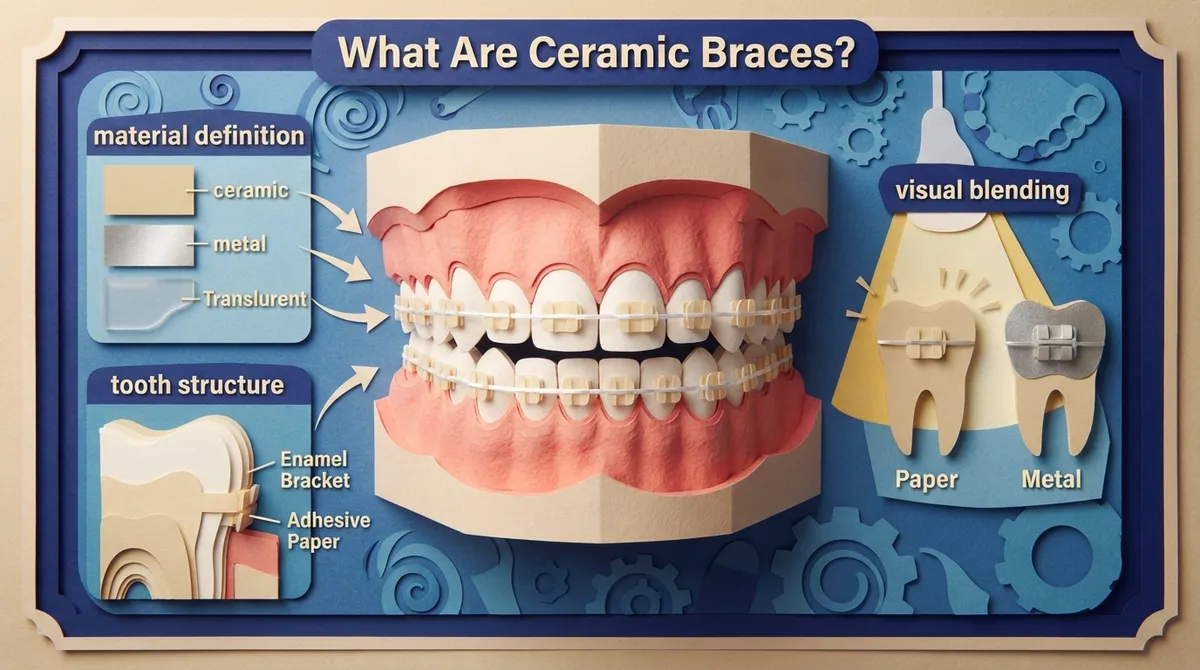
Ceramic braces are fixed orthodontic appliances. That means they stay on your teeth for the whole treatment. Small brackets made from tooth-colored or clear ceramic are bonded to the front of each tooth. A thin archwire connects them all.
Because the brackets match the shade of your teeth, they are much less noticeable than metal ones. They are not invisible, but many people find them a great middle ground. If you’d like a deeper look at the different styles, our guide on types of braces breaks down your options.
The Main Parts of Ceramic Braces
Every set of ceramic braces has a few key pieces working together:
- Ceramic brackets: Small clear or tooth-colored squares bonded to the front of each tooth.
- Archwire: A thin wire that runs through the brackets and guides your teeth into place.
- Ligatures or clips: Tiny elastic ties (or a built-in clip on some designs) that hold the wire in the bracket slots.
- Bonding adhesive: A dental glue that attaches each bracket to the tooth surface.
Think of the brackets as handles, and the wire as the steering wheel. Together, they steer each tooth to its new spot.
How Ceramic Braces Work to Move Teeth
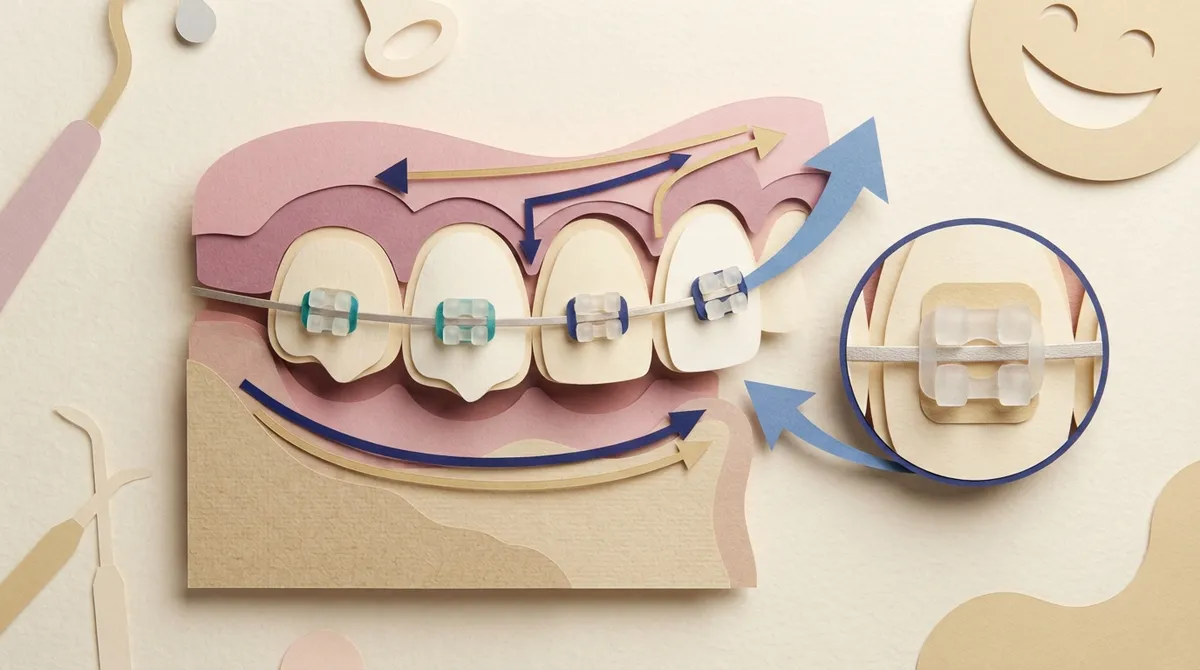
Here’s the part most people are curious about. How ceramic braces work comes down to controlled, steady force. The archwire is shaped to match the ideal curve of your smile. When it’s placed in the brackets, it gently pushes and pulls your teeth toward that shape.
That light, constant pressure matters. It stimulates the bone and tissues around each tooth to remodel. Bone breaks down a little on the pressure side and rebuilds on the other side. Over time, the tooth shifts into its new position. It’s a slow, safe process, and your body does the hard work.
Step-by-Step: What Happens Inside Your Mouth
- Brackets are bonded. Your orthodontist cleans and preps each tooth, then places a bracket with adhesive.
- The archwire is placed. The wire is threaded through each bracket and secured with ties or clips.
- Gentle force begins. The wire tries to return to its original shape, which applies steady pressure to your teeth.
- Bone and tissue remodel. The supporting structures adapt, letting each tooth move bit by bit.
- Adjustments keep things moving. At regular visits, your orthodontist swaps or tweaks wires and other parts to guide the next stage.
This is the same basic science used in metal braces. The brackets are the part that looks different. If you want to see how this process compares with other methods, take a look at What Are Braces? Your Friendly Guide to Orthodontic Treatment.
What Problems Can Ceramic Braces Fix?
Ceramic braces can treat many of the same issues as metal braces. Whether they are right for you depends on your exam and treatment plan. Common concerns they can address include:
- Crowded teeth that overlap or twist
- Gaps and spacing between teeth
- Overbites, underbites, and crossbites
- Teeth that are tilted or out of alignment
For a closer look at bite issues, you may enjoy How Do Braces Fix a Deep Overbite?. Your orthodontist will decide if ceramic brackets can handle your specific needs. Some complex cases may call for a different approach, and that’s okay.
How Long Do Ceramic Braces Take?
This is one of the most common questions, and the honest answer is: it depends. Every smile is different. Many patient-facing sources mention a broad range of about 18 to 24 months, but that’s not a promise for everyone.
One prospective cohort study of 134 orthodontic patients found an average treatment time of about 28.6 months. It also found no statistically significant difference in treatment length between ceramic and metal brackets. What did matter was things like how well patients followed instructions, whether teeth needed to be extracted, and how severe the bite problem was.
So ceramic braces are not automatically faster or slower. Your timeline depends on your case. For more on this topic, see our friendly timeline guide.
What Affects Your Treatment Time?
- How severe your alignment or bite problem is
- Whether any teeth need to be removed
- How closely you follow care instructions
- Keeping your scheduled appointments
- The specific bracket and wire design your orthodontist uses
Ceramic Braces vs. Metal Braces
Both options work well. The choice often comes down to looks, comfort, and lifestyle. Here’s a quick side-by-side to help you compare:
| Feature | Ceramic Braces | Metal Braces |
|---|---|---|
| Appearance | Clear or tooth-colored, less noticeable | Silver, more visible |
| How they move teeth | Steady pressure from archwire | Steady pressure from archwire |
| Durability | More brittle; can chip or break | Very strong and sturdy |
| Staining | Brackets resist stains; elastic ties can stain | Ties can change color too, but brackets are not a concern |
| Friction with wire | Some designs create more friction | Typically smoother sliding |
| Best for | Teens and adults who want a discreet look | Active kids and complex cases |
If you’re still weighing the choice, our article on Metal vs Ceramic Braces: Which Is Right for You? goes into more detail.
Pros and Cons of Ceramic Braces
The Good Stuff
- Discreet look: The brackets blend in with your natural teeth, which is a big plus for photos, interviews, and big life moments.
- Proven method: They use the same trusted mechanics as traditional braces.
- Stain-resistant brackets: The ceramic itself is generally resistant to discoloration.
Things to Keep in Mind
- More fragile: Ceramic is more brittle than stainless steel, so brackets can chip or break more easily.
- Elastic ties can stain: Clear or light ties may pick up color from coffee, tea, or sauces. The good news is they’re replaced at your appointments.
- Friction in some systems: Certain bracket and wire combos can create more friction during sliding movements. This depends on the design and your orthodontist’s approach.
- Not invisible: They are subtle, but people can still see them up close.
Some patients also look at clear aligners as another discreet option. If that sounds interesting, check out our Spark™ Clear Aligners page to see how they compare.
Caring for Ceramic Braces Day to Day
Good habits protect both your braces and your smile. A little care goes a long way, and you’ll get the hang of it quickly. Here’s a simple routine to follow:
- Brush after meals. Take extra time around each bracket and along the gumline.
- Floss daily. Use a floss threader or small interdental brush to get under the wire.
- Rinse well. This helps wash away food and keeps elastic ties looking fresh.
- Skip hard and sticky foods. These can break or loosen brackets.
- Call if something breaks. A broken bracket should be reported to your orthodontist’s office right away.
Need tips on what to eat? Our friendly food guide and our list of foods to avoid with braces will keep you on track. For cleaning help, try How to Brush Teeth With Braces and Keep Your Smile Healthy.
Foods to Be Careful With
- Hard foods like nuts, hard candy, and ice
- Sticky treats like caramel and taffy
- Crunchy snacks like popcorn and chips
- Foods you bite into directly, such as whole apples (cut them up instead)
- Dark drinks like coffee, tea, and red wine, which can stain ties
What Happens When Treatment Ends?
Reaching the finish line is exciting! But the work isn’t quite over. After your braces come off, your teeth need support to stay in their new spots. That’s where retainers come in.
Without a retainer, teeth can slowly drift back toward their old positions. Your orthodontist will recommend the right type and tell you how long to wear it. Learn more about options on our Retainers page, and see How to Wear a Retainer After Braces and Keep Your Smile for helpful daily tips.
Who Are Ceramic Braces Best For?
Ceramic braces can be a lovely fit for many people. Here’s how they might work for different groups:
- Teens and young adults: A more discreet option for school, sports, graduation, and social events. Just remember to be careful with hard foods.
- Adult professionals: A less noticeable choice for those who meet clients and colleagues all day. See our Adult Treatment page for more.
- Parents of older kids: A good conversation to have with your orthodontist, especially for responsible teens who will follow care rules. Our Adolescent Treatment page can help.
- Relapse patients: Adults who had braces years ago and want to refine their smile again.
- Health-conscious patients: Anyone who wants a customized plan that looks great and supports long-term oral health.
Ceramic Braces at Brockway Orthodontics
At Brockway Orthodontics, we love helping families in Clearwater, Florida, find the right fit. Dr. Brockway offers metal braces, ceramic (clear) braces, and Spark™ Clear Aligners, so you can compare real options in one friendly place. She takes the time to listen to your goals, explain each step, and make sure you feel comfortable from the very first visit.
Our practice uses modern tools like digital impressions and 3D imaging, so there are no messy molds and your plan is more precise. In certain cases, we can even offer same-day treatment to fit your busy schedule. Curious about local options? Read more about ceramic braces in Clearwater, and see what your neighbors say on Google — visit Brockway Orthodontics.
You can also learn about Dr. Brockway and what to expect at your first visit. For general oral health guidance, the American Dental Association is a trusted resource, and you can find more about the specialty through the Florida Association of Orthodontists.
Ready to Learn More?
Now you know how ceramic braces work: clear brackets, a gentle archwire, and steady pressure that guides your teeth over time. They’re a wonderful option for people who want a more discreet smile, as long as you’re ready to give them a little extra care. Your orthodontist will help you decide if they’re right for your teeth.
The best next step is a conversation. Book your free consultation online and let Dr. Brockway map out a plan just for you. Prefer to chat first? You can also contact our friendly team anytime. We can’t wait to help you smile with confidence!
FAQs
Q: How do ceramic braces move teeth?
A: Ceramic braces use clear or tooth-colored brackets and an archwire to apply gentle, steady pressure. That pressure helps the bone and tissues around each tooth remodel, so your teeth shift slowly into place. Your orthodontist adjusts the wires over time to keep progress going.
Q: Do ceramic braces stain or turn yellow?
A: The ceramic brackets themselves are generally resistant to staining. The small elastic ties that hold the wire can pick up color from foods and drinks like coffee or tea, but they’re replaced at your appointments. Good brushing and limiting dark drinks help keep things looking fresh.
Q: Are ceramic braces more likely to break than metal braces?
A: Yes, ceramic is more brittle than stainless steel, so brackets can chip or break more easily. Avoiding hard and sticky foods and following your orthodontist’s tips helps a lot. If a bracket breaks, just let your orthodontic office know.
Q: Are ceramic braces faster or slower than metal braces?
A: Not necessarily. Research has found no significant difference in treatment time between ceramic and metal brackets. Your timeline depends more on your case, your goals, and how well you follow care instructions.
Q: Will I need a retainer after ceramic braces?
A: Yes, a retainer is an important part of treatment. It holds your teeth in their new positions and lowers the chance of them shifting back. Your orthodontist will recommend the best type and how long to wear it.
Our Service Area